Ethan Brooks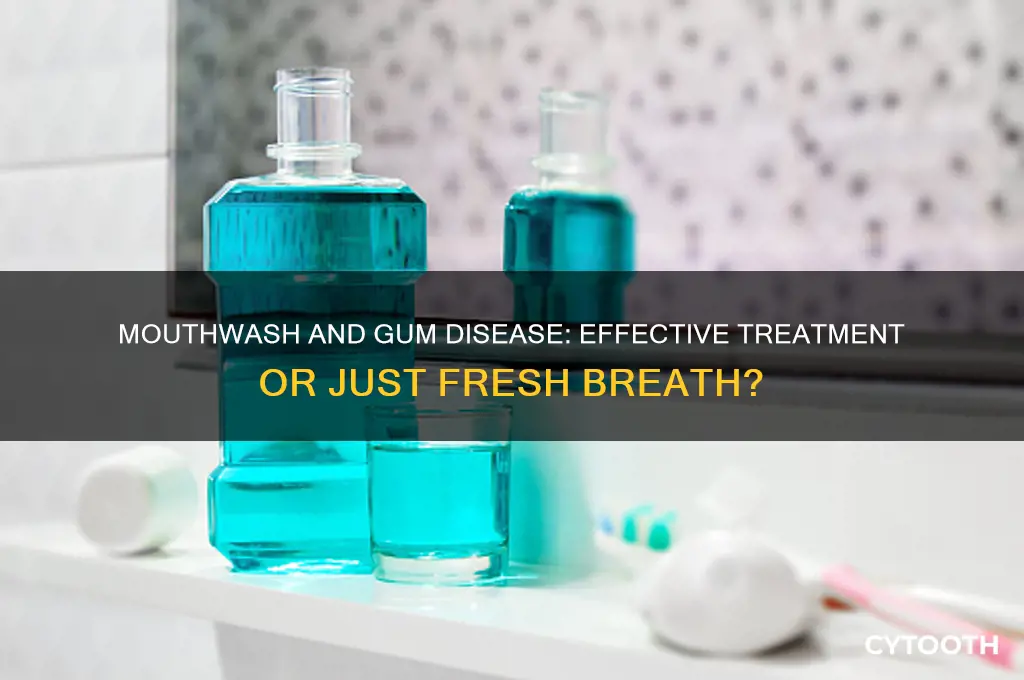
Mouthwash is a popular oral hygiene product often used as an adjunct to brushing and flossing, but its effectiveness in treating gum disease remains a topic of interest. Gum disease, or periodontal disease, is a common condition caused by bacterial buildup, leading to inflammation and potential damage to the gums and supporting structures of the teeth. While mouthwash can provide additional benefits such as reducing plaque, freshening breath, and controlling bacteria, its role in managing gum disease is more nuanced. Some mouthwashes contain antimicrobial agents that may help reduce the bacterial load in the mouth, potentially slowing the progression of gum disease. However, mouthwash alone is typically not sufficient to treat advanced stages of the condition, and it should be used in conjunction with proper brushing, flossing, and professional dental care for optimal oral health.
What You'll Learn
- Mouthwash types: antimicrobial, fluoride, natural, and their effectiveness against gum disease
- Active ingredients: chlorhexidine, essential oils, and their role in reducing inflammation
- Mouthwash vs. brushing: can it replace proper oral hygiene practices
- Frequency of use: daily, twice daily, or as recommended by dentists
- Side effects: potential risks like staining, irritation, or altered taste buds

Mouthwash types: antimicrobial, fluoride, natural, and their effectiveness against gum disease
Antimicrobial mouthwashes are often the first line of defense recommended by dentists for combating gum disease. These rinses contain active ingredients like chlorhexidine or essential oils (e.g., thymol, eucalyptol) that target harmful bacteria responsible for plaque buildup and gingivitis. Chlorhexidine, in particular, is highly effective at reducing inflammation and bacterial load but should be used cautiously—typically for no more than 2 weeks at a time due to potential side effects like tooth staining or altered taste perception. For best results, rinse with 15 mL of chlorhexidine mouthwash for 30 seconds, twice daily, after brushing.
Fluoride mouthwashes, while primarily known for strengthening enamel and preventing cavities, also play a role in gum health. Fluoride helps remineralize tooth surfaces, reducing sensitivity often associated with gum recession. However, its direct impact on gum disease is limited compared to antimicrobial options. Dentists often recommend fluoride rinses for patients with early-stage gingivitis or those prone to tooth decay. Use a fluoride mouthwash daily, but avoid eating or drinking for 30 minutes post-rinse to maximize its benefits. This type is particularly suitable for children over 6 and adults seeking preventive care.
Natural mouthwashes, often alcohol-free and infused with ingredients like tea tree oil, aloe vera, or neem, appeal to those seeking chemical-free alternatives. While these rinses can soothe irritated gums and reduce inflammation, their effectiveness against advanced gum disease is less consistent. Tea tree oil, for instance, has antimicrobial properties but requires higher concentrations to match the potency of chlorhexidine. Natural mouthwashes are best used as a complementary treatment for mild gingivitis or as a daily maintenance rinse for those with sensitive gums. Always check for reputable brands and follow label instructions, as natural doesn’t always mean safe for everyone.
Comparing these types, antimicrobial mouthwashes offer the most direct and clinically proven benefits for treating gum disease, especially in moderate to severe cases. Fluoride rinses excel in preventive care and enamel support, making them ideal for long-term oral health. Natural mouthwashes, while gentler, lack the robust evidence needed to recommend them as standalone treatments for gum disease. The key is to match the mouthwash type to the specific stage and severity of gum disease, often in consultation with a dentist. Combining these rinses with proper brushing, flossing, and regular dental check-ups maximizes their effectiveness in maintaining gum health.
Understanding the Timeline: How Long Does Gum Disease Develop?
You may want to see also
Active ingredients: chlorhexidine, essential oils, and their role in reducing inflammation
Chlorhexidine, a potent antimicrobial agent, is often the go-to active ingredient in prescription mouthwashes for gum disease. Its effectiveness lies in its ability to bind to oral tissues, creating a protective barrier that reduces plaque accumulation and bacterial growth. Studies show that a 0.12% chlorhexidine mouthwash, used twice daily for 30 seconds each time, can significantly decrease gingivitis and bleeding gums within two weeks. However, it’s not without drawbacks—prolonged use (beyond 6 months) may lead to tooth staining or altered taste perception. For this reason, it’s typically recommended as a short-term solution under dental supervision, particularly for adults with moderate to severe gum issues.
In contrast, essential oil-based mouthwashes offer a more natural approach, combining oils like thymol, eucalyptol, menthol, and methyl salicylate. These oils work synergistically to disrupt bacterial cell membranes, reduce inflammation, and inhibit plaque formation. A 2014 study published in the *Journal of Clinical Periodontology* found that essential oil mouthwashes were as effective as chlorhexidine in reducing gingivitis over a 6-month period, with fewer side effects. Unlike chlorhexidine, essential oil mouthwashes are safe for long-term use and are suitable for individuals aged 6 and above. For optimal results, rinse with 20 ml of the mouthwash for 30 seconds, twice daily, after brushing.
While both chlorhexidine and essential oils target inflammation, their mechanisms differ. Chlorhexidine acts as a broad-spectrum antiseptic, directly killing bacteria and reducing the inflammatory response. Essential oils, on the other hand, modulate inflammation by inhibiting pro-inflammatory cytokines and enzymes, such as COX-2, which play a key role in gum disease progression. This makes essential oils a gentler yet effective option for those seeking a less invasive treatment. However, they may not be as fast-acting as chlorhexidine in acute cases.
Practical tip: If using chlorhexidine, avoid rinsing with water or eating immediately after use to maximize its tissue-binding effect. For essential oil mouthwashes, consistency is key—incorporate it into your daily routine to maintain long-term oral health. Always consult a dentist to determine which active ingredient aligns best with your specific gum disease stage and overall oral care needs.
Can Gum Disease Be Cured? Understanding Treatment and Prevention Options
You may want to see also
Mouthwash vs. brushing: can it replace proper oral hygiene practices?
Mouthwash, while a popular addition to oral care routines, cannot replace the mechanical action of brushing and flossing. The American Dental Association (ADA) emphasizes that brushing twice daily with fluoride toothpaste and flossing once daily are the cornerstone of preventing gum disease. Mouthwash, even therapeutic varieties containing chlorhexidine or essential oils, lacks the physical ability to remove plaque and food debris from tooth surfaces and gum lines. Think of mouthwash as a supplementary tool, not a standalone solution.
Mouthwash can be a valuable adjunct to brushing and flossing, particularly for individuals with specific needs. For example, those with braces or orthodontic appliances may benefit from an antimicrobial mouthwash to reach areas difficult to clean with a toothbrush. Similarly, individuals with dry mouth (xerostomia) can find relief from mouthwashes designed to moisturize and stimulate saliva production. However, it's crucial to choose a mouthwash appropriate for your specific condition and follow the recommended usage instructions, typically rinsing for 30 seconds to one minute after brushing.
The idea of replacing brushing with mouthwash is particularly concerning for children and adolescents. The Centers for Disease Control and Prevention (CDC) reports that cavities are one of the most common chronic diseases in children aged 6 to 19. Brushing with fluoride toothpaste is essential for strengthening enamel and preventing cavities in this age group. Mouthwash, especially those containing alcohol, should be used with caution in children under 6 years old due to the risk of accidental ingestion.
A persuasive argument for prioritizing brushing over mouthwash lies in the long-term consequences of neglecting proper oral hygiene. Gum disease, if left untreated, can progress to periodontitis, leading to tooth loss and potentially contributing to systemic health issues like heart disease and diabetes. While mouthwash may provide a temporary fresh feeling, it cannot address the root cause of gum disease – plaque buildup.
In conclusion, while mouthwash can be a beneficial addition to a comprehensive oral care routine, it is no substitute for the fundamental practices of brushing and flossing. For optimal oral health, prioritize consistent brushing, flossing, and regular dental checkups. Consult your dentist to determine if mouthwash is right for you and which type would be most beneficial based on your individual needs.
Understanding the Timeline: How Periodontal Disease Progresses Over Time
You may want to see also
Frequency of use: daily, twice daily, or as recommended by dentists
The frequency of mouthwash use is a critical factor in its effectiveness against gum disease. While daily use is a common practice, twice-daily rinsing may offer enhanced benefits, particularly for individuals with existing gingivitis or periodontitis. Dentists often recommend this increased frequency to maximize the antimicrobial and anti-inflammatory properties of mouthwash, which can help reduce plaque buildup and gum inflammation. However, it’s essential to note that not all mouthwashes are created equal; some are designed for daily use, while others contain higher concentrations of active ingredients that may require less frequent application to avoid irritation.
For optimal results, follow the instructions on the mouthwash label or your dentist’s guidance. For instance, antiseptic mouthwashes containing chlorhexidine, a potent antimicrobial agent, are typically recommended for twice-daily use but should not exceed a 2-week period due to potential side effects like tooth staining. On the other hand, fluoride mouthwashes, which primarily focus on cavity prevention, are generally safe for daily or twice-daily use without time restrictions. Age is another consideration: children under 6 should avoid mouthwash altogether due to the risk of swallowing, while adolescents and adults can adhere to the recommended frequency based on their oral health needs.
A comparative analysis reveals that twice-daily mouthwash use can be particularly beneficial for high-risk groups, such as smokers, diabetics, or those with a genetic predisposition to gum disease. These individuals often experience accelerated plaque accumulation and inflammation, making consistent and frequent rinsing a vital component of their oral care routine. However, over-reliance on mouthwash without proper brushing and flossing can lead to suboptimal results, as mouthwash is meant to complement, not replace, mechanical cleaning methods.
Practical tips for incorporating mouthwash into your routine include rinsing for the full recommended duration (usually 30–60 seconds) and avoiding eating or drinking for 30 minutes afterward to maximize efficacy. If using multiple oral care products, apply mouthwash after brushing and flossing to ensure the active ingredients can work undisturbed. Lastly, monitor your gums for signs of improvement or irritation; if redness, swelling, or discomfort persists, consult your dentist, who may adjust the frequency or type of mouthwash to better suit your needs.
Understanding Gum Disease Progression: How Quickly Can It Advance?
You may want to see also
Side effects: potential risks like staining, irritation, or altered taste buds
Mouthwash can be a double-edged sword in the fight against gum disease. While it may reduce plaque and gingivitis, its side effects warrant careful consideration. One common issue is staining, particularly with chlorhexidine-based rinses. These products can leave brown or yellow discoloration on teeth, especially when used for more than 2 weeks. To minimize this, dilute the mouthwash with water (1:1 ratio) or use a straw to bypass tooth surfaces. Alternatively, opt for alcohol-free, non-staining formulas like those containing cetylpyridinium chloride.
Irritation is another concern, especially for individuals with sensitive gums or oral mucosa. Alcohol-containing mouthwashes can exacerbate dryness, peeling, or soreness, creating an environment conducive to bacterial growth. For those prone to irritation, rinse with a saline solution (1 teaspoon salt in 1 cup warm water) after using mouthwash to neutralize its effects. Avoid overuse; limit chlorhexidine rinses to 2–4 weeks unless directed by a dentist. Children under 6 should not use mouthwash due to choking risks and potential chemical burns.
Perhaps the most overlooked side effect is altered taste buds. Mouthwashes with strong antiseptic agents can temporarily impair taste perception, particularly for sweet or salty flavors. This occurs because the chemicals disrupt taste bud receptors. If you experience this, rinse your mouth with water 30 minutes after using mouthwash to restore saliva flow and taste function. Consider switching to a milder formula or reducing frequency to every other day.
Comparatively, natural mouthwashes (e.g., oil pulling with coconut oil or rinsing with diluted tea tree oil) pose fewer risks but may lack clinical efficacy against gum disease. For instance, while tea tree oil reduces inflammation, it requires precise dilution (1–2 drops in 1 cup water) to avoid mucosal damage. Always patch-test natural remedies before full use. Ultimately, balancing mouthwash benefits with side effects requires personalized adjustments—consult a dentist to tailor a regimen that addresses gum disease without compromising oral comfort or aesthetics.
Reversing Gum Disease: Understanding the Timeline for Healthy Gums
You may want to see also
Frequently asked questions
Yes, mouthwash can help with gum disease, especially when used as part of a comprehensive oral care routine. Antiseptic or antimicrobial mouthwashes reduce plaque and bacteria, which are primary contributors to gum disease. However, mouthwash alone is not a cure and should be used alongside brushing, flossing, and professional dental care.
Mouthwashes containing chlorhexidine or essential oils (like Listerine) are most effective for gum disease. Chlorhexidine is a prescription-strength antimicrobial, while essential oil-based mouthwashes reduce inflammation and kill bacteria. Always consult a dentist to determine the best option for your specific needs.
Mouthwash cannot reverse gum disease on its own, but it can help manage symptoms and prevent progression when combined with proper oral hygiene and professional treatment. Advanced stages of gum disease, like periodontitis, require dental intervention, such as deep cleaning or surgery, in addition to using mouthwash.