Samantha Blake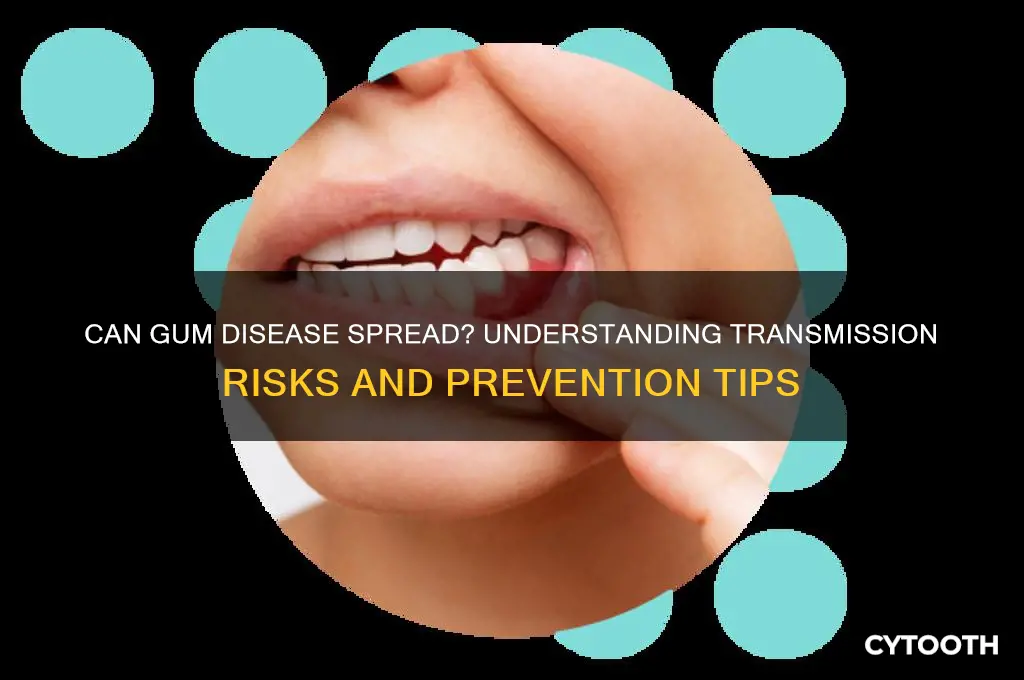
Gum disease, also known as periodontal disease, is a common oral health issue that affects the gums and supporting structures of the teeth. It typically begins with the buildup of plaque and bacteria, leading to inflammation and infection. A pressing question for many is whether gum disease can spread, and the answer is yes—it can progress from mild gingivitis to more severe periodontitis if left untreated. Additionally, the bacteria responsible for gum disease can potentially spread to other areas of the mouth or even to other individuals through close contact, such as sharing utensils or kissing. Understanding the contagious nature and progression of gum disease underscores the importance of early detection, proper oral hygiene, and regular dental check-ups to prevent its spread and mitigate long-term health risks.
| Characteristics | Values |
|---|---|
| Contagiousness | Gum disease itself is not contagious, but the bacteria causing it can spread through saliva. |
| Transmission Methods | Sharing utensils, kissing, or other activities involving saliva exchange can transfer bacteria. |
| Risk Factors for Spread | Poor oral hygiene, weakened immune system, smoking, and genetic predisposition increase susceptibility. |
| Types of Gum Disease | Gingivitis (early stage) and periodontitis (advanced stage) can both be influenced by bacterial spread. |
| Prevention | Regular brushing, flossing, dental check-ups, and avoiding saliva-sharing activities reduce risk. |
| Treatment | Professional cleaning, antibiotics, and improved oral care can manage and prevent spread. |
| Long-Term Impact | Untreated gum disease can lead to tooth loss, systemic health issues, and increased bacterial transmission. |
| Research Findings | Studies confirm that specific oral bacteria (e.g., Porphyromonas gingivalis) can be transmitted between individuals. |
What You'll Learn
- Transmission through saliva: Can gum disease spread via kissing or shared utensils
- Systemic health impact: How does gum disease affect overall body health and immunity
- Contagiousness within families: Is gum disease more likely to spread among family members
- Bacterial transfer mechanisms: How do gum disease bacteria move between individuals or teeth
- Prevention of spread: What measures can stop gum disease from spreading to others

Transmission through saliva: Can gum disease spread via kissing or shared utensils?
Gum disease, or periodontal disease, is primarily caused by bacterial infections in the mouth. These bacteria thrive in plaque and can lead to inflammation, bleeding gums, and eventually tooth loss. A common question arises: can this bacterial infection spread through saliva, particularly via intimate actions like kissing or sharing utensils? The answer lies in understanding the nature of the bacteria and the mechanisms of transmission.
Analyzing the Risk Factors
The bacteria responsible for gum disease, such as *Porphyromonas gingivalis* and *Treponema denticola*, are present in the oral cavity of affected individuals. Saliva acts as a carrier for these microorganisms, making it a potential medium for transmission. However, transmission isn’t automatic. Factors like the duration of exposure, the amount of saliva exchanged, and the recipient’s oral health play critical roles. For instance, a quick peck on the cheek poses minimal risk, while deep kissing or frequent utensil sharing increases the likelihood of bacterial transfer. Studies suggest that prolonged, intimate contact is more likely to facilitate the spread of oral bacteria, but this alone doesn’t guarantee infection.
Practical Steps to Minimize Risk
To reduce the risk of transmitting gum disease through saliva, follow these actionable steps:
- Maintain Oral Hygiene: Brush twice daily, floss regularly, and use an antimicrobial mouthwash to reduce bacterial load.
- Avoid Sharing Utensils: Especially with individuals known to have gum disease, as this directly introduces foreign bacteria into your mouth.
- Limit Intimate Contact During Active Infections: If you or your partner has active gum disease symptoms (e.g., bleeding gums), consider reducing behaviors that involve saliva exchange until treatment is underway.
- Regular Dental Check-Ups: Early detection and treatment of gum disease can prevent its progression and reduce transmissibility.
Comparing Transmission Scenarios
While kissing and sharing utensils are often grouped together, their transmission risks differ. Kissing involves direct saliva exchange, making it a more immediate route for bacterial transfer. Shared utensils, on the other hand, introduce bacteria indirectly, with the risk depending on factors like how long the utensil remains contaminated and the recipient’s oral microbiome. For example, a spoon used briefly and rinsed immediately poses less risk than a toothbrush shared over time. Understanding these nuances helps in making informed decisions to protect oral health.
The Role of Individual Immunity
Not everyone exposed to gum disease bacteria will develop the condition. The recipient’s immune system and oral microbiome play a significant role in determining susceptibility. For instance, individuals with compromised immunity or poor oral hygiene are more likely to develop gum disease after exposure. Conversely, those with robust oral health and strong immune responses may resist infection even after repeated exposure. This highlights the importance of holistic health in preventing transmission.
In conclusion, while gum disease can theoretically spread via saliva through kissing or shared utensils, the risk is not absolute. By adopting preventive measures and understanding the dynamics of transmission, individuals can significantly reduce their chances of contracting or spreading this condition. Awareness and proactive oral care remain the most effective tools in combating its spread.
Recognizing Early Signs of Periodontal Disease: Symptoms and Prevention Tips
You may want to see also
Systemic health impact: How does gum disease affect overall body health and immunity?
Gum disease, or periodontal disease, isn't just a localized oral health issue; it's a gateway to systemic inflammation that can compromise overall health and immunity. The mouth is a mirror to the body’s well-being, and when harmful bacteria from gum infections enter the bloodstream, they trigger an inflammatory cascade that affects distant organs. For instance, studies show that individuals with severe gum disease have a 25% higher risk of developing heart disease, as oral bacteria can attach to fatty plaques in arteries, exacerbating atherosclerosis. This interconnectedness highlights why treating gum disease is critical for more than just saving teeth.
Consider the immune system’s response to chronic gum inflammation. When the body is constantly battling oral infections, immune resources are diverted, leaving less capacity to fight other pathogens. This is particularly concerning for older adults (ages 65+) and immunocompromised individuals, who are more susceptible to infections like pneumonia. Research indicates that oral bacteria can travel to the lungs, increasing the risk of respiratory infections by up to 40%. Practical steps to mitigate this include daily flossing, using antimicrobial mouthwash, and scheduling dental check-ups every six months to detect early signs of gum disease.
Pregnant individuals should also be vigilant, as gum disease has been linked to preterm birth and low birth weight. The inflammatory markers released during periodontal infections can interfere with fetal development, underscoring the need for diligent oral hygiene during pregnancy. A 2020 study found that pregnant women with untreated gum disease were 52% more likely to deliver prematurely. Incorporating a diet rich in vitamin C, calcium, and omega-3 fatty acids can support gum health and reduce inflammation, offering a dual benefit for both mother and baby.
Finally, the link between gum disease and diabetes illustrates the bidirectional relationship between oral and systemic health. Diabetics are three times more likely to develop gum disease due to impaired immune function and higher blood sugar levels, which promote bacterial growth. Conversely, untreated gum disease can worsen glycemic control, creating a vicious cycle. Managing this requires a two-pronged approach: maintaining blood sugar levels below 7% HbA1c and adhering to rigorous oral care routines. Dentists and endocrinologists often collaborate to address these interconnected issues, emphasizing the need for holistic healthcare strategies.
Cost of Gum Disease Treatment: What to Expect and Budget For
You may want to see also
Contagiousness within families: Is gum disease more likely to spread among family members?
Gum disease, or periodontal disease, is primarily caused by bacterial infections and poor oral hygiene. While it’s not contagious in the same way as a cold or flu, the bacteria responsible for it can be transmitted through saliva. This raises a critical question: are family members more susceptible to spreading these bacteria among themselves? The answer lies in shared habits, genetics, and close contact, which can inadvertently facilitate the transfer of harmful oral bacteria.
Consider the daily routines of a household. Sharing utensils, kissing, or even coughing can transfer oral bacteria between family members. For instance, parents often pre-chew food for infants or share spoons, a practice that directly introduces bacteria from one mouth to another. While this doesn’t guarantee gum disease will develop, it increases the risk, especially if the recipient has poor oral hygiene or a weakened immune system. Families should be mindful of these behaviors, particularly when one member is already diagnosed with gum disease, to minimize transmission risk.
Genetics also play a significant role in family susceptibility. Research indicates that up to 30% of the population may be genetically predisposed to severe gum disease, regardless of oral care habits. If one family member has this predisposition, others may share it, making them more vulnerable to the disease even without direct bacterial transfer. This genetic link underscores the importance of proactive dental care for all family members, including regular check-ups and cleanings.
Practical steps can mitigate the risk of gum disease spreading within families. First, avoid sharing personal items like toothbrushes or utensils. Encourage thorough handwashing, especially after coughing or sneezing, to reduce bacterial spread. For children, teach proper brushing and flossing techniques early, as habits formed in childhood often persist into adulthood. Finally, maintain a balanced diet low in sugar, as sugary foods fuel the bacteria that cause gum disease.
In conclusion, while gum disease isn’t traditionally contagious, the bacteria causing it can spread within families through shared behaviors and close contact. Genetic predisposition further complicates this dynamic, making certain families more at risk. By adopting preventive measures and fostering good oral hygiene practices, families can significantly reduce the likelihood of gum disease transmission and ensure healthier smiles for all members.
Can Gum Disease Be Fatal? Uncovering the Serious Health Risks
You may want to see also
Bacterial transfer mechanisms: How do gum disease bacteria move between individuals or teeth?
Gum disease, or periodontal disease, is primarily caused by bacteria that thrive in the oral cavity. These bacteria can spread not only between teeth but also between individuals, making understanding their transfer mechanisms crucial for prevention and control. The primary culprits, such as *Porphyromonas gingivalis* and *Treponema denticola*, are part of the oral microbiome but become harmful when they overgrow due to poor oral hygiene or other risk factors.
Direct Contact: The Most Common Route
The simplest and most direct way gum disease bacteria spread is through saliva exchange. Activities like kissing, sharing utensils, or even toothbrushes can transfer these microorganisms between individuals. For instance, a study published in the *Journal of Clinical Periodontology* found that couples who kissed regularly had a higher likelihood of sharing the same strains of periodontal bacteria. To minimize risk, avoid sharing personal items and maintain good oral hygiene, especially if you or your partner have symptoms of gum disease, such as bleeding gums or persistent bad breath.
Aerosolization: Breathing Out Bacteria
Less obvious but equally important is the spread of gum disease bacteria through respiratory droplets. When an infected person coughs, sneezes, or even speaks, tiny particles containing bacteria can become airborne and be inhaled by others. This mechanism is particularly relevant in crowded environments like offices or schools. While the risk of transmission via this route is lower compared to direct contact, it underscores the importance of covering your mouth when coughing and maintaining a healthy distance from individuals with active infections.
Biofilm Migration: From Tooth to Tooth
Within the mouth, gum disease bacteria spread by forming biofilms—sticky, protective matrices that adhere to teeth and gums. These biofilms allow bacteria to colonize new areas, moving from one tooth to another or from the teeth to the gums. Mechanical disruption, such as flossing or brushing, can temporarily dislodge these biofilms, but without consistent oral care, they quickly reform. Using antimicrobial mouthwashes containing chlorhexidine (0.12% concentration) can help reduce biofilm formation, but they should be used under dental supervision due to potential side effects like tooth staining.
Practical Tips for Prevention
To limit bacterial transfer, adopt a rigorous oral hygiene routine: brush twice daily with fluoride toothpaste, floss daily, and visit your dentist every six months. For individuals at higher risk, such as smokers or those with diabetes, more frequent dental check-ups are recommended. Additionally, replace your toothbrush every three months or sooner if the bristles are frayed, as worn brushes are less effective at removing plaque and can harbor bacteria. By understanding and addressing these transfer mechanisms, you can significantly reduce the risk of gum disease spreading between individuals or worsening within your own mouth.
Understanding Gum Disease Progression: How Quickly Can It Advance?
You may want to see also
Prevention of spread: What measures can stop gum disease from spreading to others?
Gum disease, primarily caused by bacterial infections, is not directly contagious like the flu or a cold. However, the bacteria responsible for it can be transmitted through saliva, making shared utensils, toothbrushes, or intimate contact potential vectors. To prevent the spread, personal hygiene practices must be rigorously maintained. Avoid sharing personal items that come into contact with the mouth, such as drinking glasses, straws, or lip balm. This simple measure significantly reduces the risk of transferring harmful bacteria between individuals.
Instructive steps extend beyond avoiding shared items. Regular dental check-ups are essential for early detection and treatment of gum disease. Dentists recommend biannual visits for most adults, though those with a history of gum issues may need more frequent monitoring. At home, brushing twice daily with fluoride toothpaste and flossing daily are non-negotiable habits. For added protection, incorporate an antimicrobial mouthwash into your routine, especially if you’re at higher risk. Children should be taught proper oral hygiene from a young age, as habits formed early often persist into adulthood.
Persuasively, it’s worth noting that prevention isn’t just about avoiding transmission—it’s about fostering a culture of health. Encourage family members or roommates to adopt similar oral care practices. For instance, if one person in a household uses an electric toothbrush, consider investing in one for everyone to minimize cross-contamination risks. Similarly, replace toothbrushes every three months or sooner if bristles are frayed, as worn brushes are less effective and can harbor bacteria. Small changes like these create a safer environment for all.
Comparatively, while gum disease itself doesn’t spread like a virus, its risk factors—such as smoking, poor diet, and stress—often overlap within social groups. Addressing these collectively can lower the overall prevalence. For example, quitting smoking not only improves your oral health but also reduces secondhand smoke exposure for others, which is linked to gum disease. Similarly, adopting a diet rich in fruits, vegetables, and whole grains while limiting sugary snacks benefits everyone in the household. Collaborative efforts amplify individual actions, creating a protective barrier against potential transmission.
Descriptively, imagine a scenario where a family member is diagnosed with advanced gum disease. Immediate steps should include isolating their toothbrush and ensuring they use a separate hand towel in the bathroom. Disinfect shared surfaces like faucet handles and countertops regularly. If they undergo dental procedures, follow post-treatment care instructions meticulously to prevent bacterial spread. By visualizing such situations, you can proactively implement measures that safeguard everyone’s oral health. Practicality and vigilance are key in preventing the indirect spread of gum disease.
Effective Home Remedies to Treat Gum Disease Without Dental Visits
You may want to see also
Frequently asked questions
No, gum disease (periodontal disease) is not contagious and cannot spread from one person to another. It is caused by bacterial buildup in the mouth, not by direct transmission.
Yes, gum disease can spread from one tooth to another if left untreated. The bacteria causing the infection can migrate and affect surrounding teeth and gums.
Yes, untreated gum disease can lead to systemic health issues. The bacteria can enter the bloodstream and contribute to conditions like heart disease, diabetes complications, and respiratory problems.
Yes, factors like smoking, poor oral hygiene, diabetes, and a weakened immune system can accelerate the spread and severity of gum disease.
Yes, advanced gum disease (periodontitis) can destroy the bone supporting the teeth, leading to bone loss in the jaw and potentially tooth loss if not treated promptly.