Samantha Blake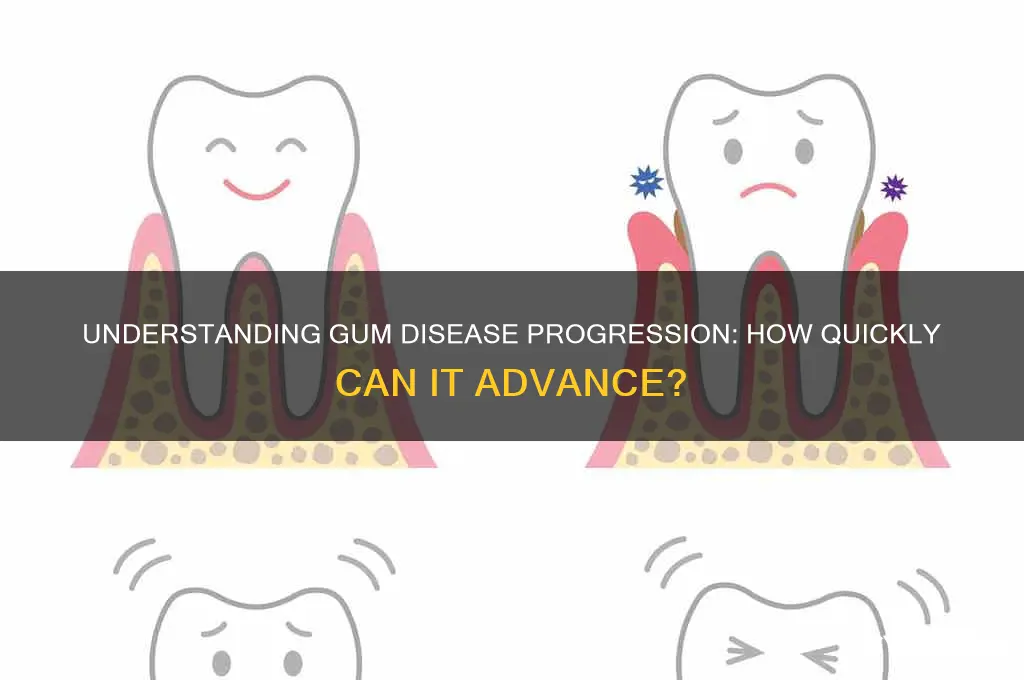
Gum disease, also known as periodontal disease, progresses at varying rates depending on individual factors such as oral hygiene, genetics, and overall health. In its early stage, gingivitis, symptoms like gum redness, swelling, and bleeding may appear but can often be reversed with proper care. If left untreated, it can advance to periodontitis, where the gums pull away from the teeth, forming pockets that become infected, leading to bone and tissue damage. Without intervention, this stage can cause tooth loss and spread to other areas of the mouth, typically over months to years. Factors like smoking, diabetes, and a weakened immune system can accelerate its progression, making timely diagnosis and treatment crucial to prevent irreversible harm.
| Characteristics | Values |
|---|---|
| Initial Stage (Gingivitis) | Can develop within days to weeks due to plaque buildup and poor oral hygiene. Reversible with proper care. |
| Progression to Periodontitis | May take months to years, depending on risk factors like smoking, diabetes, or genetics. |
| Aggressive Periodontitis | Rapid progression, often within months, with severe bone loss and gum detachment. |
| Chronic Periodontitis | Slow progression over years, with gradual bone and tissue destruction. |
| Factors Accelerating Progression | Poor oral hygiene, smoking, diabetes, genetic predisposition, and immune system disorders. |
| Symptom Onset | Early symptoms (e.g., bleeding gums) appear within weeks to months of plaque accumulation. |
| Irreversible Damage | Occurs after years of untreated periodontitis, leading to tooth loss and systemic health issues. |
| Treatment Impact | Early intervention can halt progression, while delayed treatment allows rapid deterioration. |
What You'll Learn

Early Gingivitis Symptoms
Gum disease doesn't announce its arrival with a bang. It creeps in subtly, often masked by habits we dismiss as harmless. Early gingivitis, the first stage, is a silent alarm, easily ignored but crucial to heed. It's the body's initial protest against bacterial buildup, a warning that your oral hygiene routine needs tightening.
Recognizing these early signs is key to halting the disease's progression.
Imagine your gums as a fortress wall. Healthy gums are firm, pink sentinels, tightly guarding your teeth. Gingivitis weakens this defense, causing the gums to become inflamed and tender. You might notice a subtle redness, a slight puffiness, like a faint shadow on the horizon. This inflammation is your body's immune response to the bacterial invasion, a red flag signaling the need for action.
Brushing might become a slightly uncomfortable experience, with gums bleeding easily, even with gentle pressure. This isn't normal, despite what you might think. It's a clear sign of gum irritation and a call to arms for better oral care.
Bad breath, that persistent unwelcome guest, can also be an early indicator. The bacteria feasting on plaque and food debris produce volatile sulfur compounds, the culprits behind that unpleasant odor. While occasional bad breath is common, persistent halitosis, especially when accompanied by other symptoms, warrants attention.
Don't wait for pain to sound the alarm. Gingivitis is often painless in its early stages, making it even more insidious. Regular dental checkups are crucial, as dentists can detect subtle changes in gum health that you might miss. Remember, early intervention is key. A simple adjustment in your oral hygiene routine, perhaps incorporating interdental cleaning tools like floss or interdental brushes, can often reverse gingivitis and prevent its progression to more serious gum disease.
Gum Disease in Your 20s: Prevalence, Risks, and Prevention Tips
You may want to see also
Factors Speeding Progression
Gum disease, or periodontal disease, doesn't progress at a uniform rate. Several factors act as accelerants, pushing it from mild gingivitis to advanced periodontitis more rapidly. Understanding these factors is crucial for early intervention and prevention.
One key factor is poor oral hygiene. Plaque, a sticky film of bacteria, constantly forms on teeth. When not removed through regular brushing and flossing, it hardens into tartar, irritating the gums and triggering inflammation. This inflammation, if left unchecked, leads to gum recession and bone loss. Think of it as a fire: plaque is the spark, and poor hygiene provides the fuel for it to become a raging blaze.
Regular dental checkups and cleanings are essential. Dentists can remove tartar buildup that brushing alone can't tackle, preventing further damage.
Lifestyle choices also play a significant role. Smoking is a major culprit, as it weakens the immune system, making it harder for the body to fight off gum infections. Smokers are twice as likely to develop gum disease compared to non-smokers. Similarly, excessive alcohol consumption can dry out the mouth, reducing saliva production. Saliva is crucial for washing away food particles and neutralizing acids, so a dry mouth creates a breeding ground for bacteria.
Limiting smoking and alcohol intake is vital for slowing gum disease progression. Additionally, a balanced diet rich in fruits, vegetables, and whole grains provides essential nutrients for gum health.
Certain medical conditions can exacerbate gum disease. Diabetes, for example, impairs the body's ability to fight infection, making diabetics more susceptible to gum problems. Hormonal changes during pregnancy can also increase gum sensitivity and inflammation. Individuals with these conditions require extra vigilance with oral hygiene and regular dental visits.
Finally, genetics can predispose some individuals to gum disease. While you can't change your genes, knowing your family history allows for proactive measures. If gum disease runs in your family, be extra diligent with oral care and inform your dentist, who can tailor a preventive plan accordingly.
Holistic Dentistry Approaches: Natural Gum Disease Treatment Strategies Explained
You may want to see also
Transition to Periodontitis
Gum disease doesn't leap from gingivitis to periodontitis overnight. It's a gradual process, often taking years, but the transition can accelerate under certain conditions. Understanding this progression is crucial for early intervention.
Periodontitis begins when the inflammation of gingivitis deepens, allowing bacteria to penetrate below the gum line. This triggers a destructive immune response, attacking both the bacteria and the surrounding tissues. Over time, this leads to the breakdown of the periodontal ligament and alveolar bone, the structures that anchor your teeth.
Several factors influence the speed of this transition. Poor oral hygiene is the primary culprit, allowing plaque and tartar to accumulate unchecked. Smoking significantly increases risk, impairing blood flow to the gums and hindering healing. Diabetes, a weakened immune system, and certain medications can also accelerate the process. Genetic predisposition plays a role, with some individuals being more susceptible to severe gum disease.
Recognizing the signs of this transition is vital. Persistent bad breath, receding gums, deepening pockets between teeth and gums, loose teeth, and changes in bite are all red flags. If you experience any of these symptoms, seeking immediate dental care is essential.
Preventing the transition to periodontitis hinges on diligent oral hygiene. Brushing twice daily with fluoride toothpaste, flossing regularly, and using antiseptic mouthwash are fundamental. Regular dental checkups and cleanings are crucial for removing tartar buildup and detecting early signs of disease. Addressing risk factors like smoking cessation and managing underlying health conditions are equally important. Remember, early intervention can halt the progression of gum disease and preserve your oral health.
Impact of Oral Hygiene
Gum disease, or periodontal disease, progresses at varying rates depending on individual factors, but one of the most influential determinants is oral hygiene. Poor oral hygiene accelerates the onset and severity of gum disease, while consistent care can significantly slow or even prevent its progression. Plaque, a sticky film of bacteria, constantly forms on teeth, and if not removed daily through brushing and flossing, it hardens into tartar, which irritates the gums and leads to gingivitis—the earliest stage of gum disease. Within just 10 to 21 days of neglecting oral hygiene, gingivitis can manifest as red, swollen, or bleeding gums. This highlights the immediate impact of oral hygiene on gum health.
The progression from gingivitis to periodontitis, a more severe form of gum disease, is not inevitable but is directly tied to the continuation of poor oral hygiene practices. Periodontitis occurs when the infection spreads below the gum line, causing the gums to pull away from the teeth and form pockets that harbor bacteria. Without intervention, these pockets deepen, leading to bone and tissue loss, which can result in tooth mobility and eventual tooth loss. Studies show that individuals who brush twice daily and floss once daily reduce their risk of periodontitis by up to 40% compared to those with inconsistent habits. This underscores the critical role of daily oral hygiene in halting disease progression.
Children and adolescents are not immune to the impact of oral hygiene on gum disease. Poor habits established early can lead to gingivitis, which, if untreated, may progress to periodontitis in adulthood. Parents should supervise brushing until age 7 and encourage flossing as soon as two teeth touch. For adults, incorporating interdental cleaners like water flossers or dental picks can enhance plaque removal, especially in hard-to-reach areas. Additionally, using antimicrobial mouthwash can reduce bacterial load, complementing mechanical cleaning methods. These age-specific strategies emphasize the importance of tailored oral hygiene practices across different life stages.
Beyond mechanical cleaning, dietary choices play a pivotal role in oral hygiene and gum disease progression. Consuming sugary or acidic foods and beverages increases plaque formation and acid attacks on tooth enamel, exacerbating gum inflammation. Limiting sugar intake to less than 10% of daily calories, as recommended by the World Health Organization, can mitigate this risk. Similarly, staying hydrated with water helps neutralize acids and stimulates saliva production, which naturally cleanses the mouth. Combining proper oral hygiene with mindful dietary habits creates a holistic approach to slowing gum disease progression.
Finally, regular dental check-ups are an extension of good oral hygiene and a critical factor in managing gum disease. Dentists can detect early signs of gingivitis or periodontitis that may be invisible to the untrained eye and provide professional cleanings to remove tartar buildup. Adults should aim for biannual visits, while those with risk factors like smoking, diabetes, or a family history of gum disease may require more frequent monitoring. By integrating professional care with daily oral hygiene, individuals can effectively control the speed and severity of gum disease progression, preserving their oral health for the long term.
Reversibility Timeline
Gum disease, or periodontal disease, progresses in stages, from gingivitis to advanced periodontitis. The speed of this progression varies based on factors like oral hygiene, genetics, and lifestyle. However, the critical question is: how reversible is it, and within what timeframe? The reversibility timeline hinges on early detection and intervention, with gingivitis being entirely reversible within weeks to months. Once it advances to periodontitis, the damage becomes partially irreversible, but further progression can be halted with prompt and consistent treatment.
Stage-Specific Reversibility:
Gingivitis, the earliest stage, is marked by inflamed gums, bleeding during brushing, and mild discomfort. At this point, the damage is confined to the gums and hasn’t affected the underlying bone. With rigorous oral hygiene—brushing twice daily, flossing, and using antimicrobial mouthwash—gingivitis can be reversed within 10 to 14 days. Professional dental cleanings accelerate this process, removing plaque and tartar that contribute to inflammation. For example, a patient with mild gingivitis who adheres to this routine can expect significant improvement within 2 weeks and complete resolution within 1 to 2 months.
The Tipping Point:
Once gingivitis progresses to periodontitis, the timeline shifts dramatically. Periodontitis involves bone loss and the formation of periodontal pockets, which harbor bacteria and deepen over time. Early periodontitis can still be managed, but the damage to bone and tissue is no longer fully reversible. Scaling and root planing, a deep-cleaning procedure, can remove bacterial deposits and smooth tooth roots, allowing gums to reattach. This process typically takes 2 to 3 months, with multiple sessions spaced 2 weeks apart. While bone regeneration is limited, further bone loss can be prevented with consistent care.
Advanced Periodontitis and Realistic Expectations:
In advanced stages, the reversibility timeline becomes more about damage control than restoration. Surgical interventions like flap surgery, bone grafts, or tissue regeneration may be necessary to salvage teeth and stabilize the condition. These procedures can take 3 to 6 months for healing, with long-term maintenance requiring frequent dental check-ups and meticulous oral hygiene. For instance, a patient with 5mm periodontal pockets might see a reduction to 3mm post-treatment, but the bone loss remains permanent. The goal here is to preserve function and prevent tooth loss, not to restore the mouth to its pre-disease state.
Practical Tips for Maximizing Reversibility:
To optimize the reversibility timeline, act swiftly at the first signs of gum disease. Incorporate interdental brushes or water flossers for hard-to-reach areas, and consider using a toothpaste with stannous fluoride or triclosan for added antimicrobial benefits. Dietary adjustments, such as reducing sugar intake and increasing vitamin C, can support gum health. For smokers, quitting is non-negotiable, as smoking accelerates disease progression and impairs healing. Regular dental visits every 3 to 6 months are essential for monitoring and early intervention. By understanding the reversibility timeline and taking proactive steps, individuals can significantly influence the trajectory of gum disease.
Frequently asked questions
The progression from gingivitis to periodontitis varies, but without treatment, gingivitis can advance to periodontitis within a few months to a few years, depending on factors like oral hygiene, genetics, and overall health.
Yes, untreated gum disease can worsen rapidly, especially in aggressive forms like aggressive periodontitis, which can cause significant bone loss and tooth mobility within months.
No, the rate of progression differs based on individual factors such as immune response, smoking, diabetes, and oral hygiene practices. Some people may experience faster deterioration than others.
Yes, improving oral hygiene, quitting smoking, managing diabetes, and adopting a healthy diet can significantly slow the progression of gum disease and even reverse early stages like gingivitis.
Yes, gum disease can progress silently, especially in its early stages. Symptoms like bleeding gums or bad breath may not appear until the disease has advanced, making regular dental check-ups crucial for early detection.