Olivia Bennett
Treating gum disease, also known as periodontal disease, involves a range of costs depending on the severity of the condition and the chosen treatment methods. Early-stage gum disease, such as gingivitis, can often be managed with professional dental cleanings, improved oral hygiene, and possibly antimicrobial mouthwashes, typically costing between $75 to $200 per session. More advanced cases, like periodontitis, may require deep cleaning procedures (scaling and root planing), which can range from $140 to $300 per quadrant, or surgical interventions like flap surgery or bone grafts, which can cost anywhere from $1,000 to $10,000 or more, depending on the extent of the damage and the complexity of the procedure. Additionally, ongoing maintenance visits and potential medications can add to the overall expense. Insurance coverage varies, so it’s essential to consult with a dentist and your insurance provider to understand the specific costs and potential out-of-pocket expenses.
| Characteristics | Values |
|---|---|
| Mild Gum Disease (Gingivitis) | $50 - $150 (professional dental cleaning, scaling, and polishing) |
| Moderate to Severe Gum Disease (Periodontitis) | $500 - $10,000+ (depending on treatment complexity) |
| Non-Surgical Treatments | $100 - $500 per session (scaling and root planing, antibiotic therapy) |
| Surgical Treatments | $1,000 - $10,000+ (flap surgery, bone grafts, tissue regeneration) |
| Laser Therapy | $1,000 - $5,000 (depending on extent of treatment) |
| Maintenance Costs | $100 - $300 per visit (regular cleanings and check-ups, 3-4 times/year) |
| Insurance Coverage | Varies; typically covers 50-80% of preventive care, less for surgery |
| Geographic Location | Costs are higher in urban areas (e.g., NYC, LA) compared to rural areas |
| Dentist Expertise | Specialists (periodontists) charge more than general dentists |
| Severity of Disease | Early stages are cheaper to treat; advanced cases require costly procedures |
| Additional Costs | X-rays ($20-$200), medications ($10-$100), sedation ($200-$800) |
| Preventive Measures | $0-$50 (regular brushing, flossing, mouthwash, and check-ups) |
What You'll Learn
- Cost of Initial Diagnosis: Includes dental exams, X-rays, and consultation fees for assessing gum disease severity
- Non-Surgical Treatment Costs: Scaling, root planing, and antimicrobial therapy expenses for mild to moderate cases
- Surgical Treatment Expenses: Costs for flap surgery, bone grafts, or tissue regeneration in advanced gum disease
- Maintenance and Follow-Up: Regular check-ups, cleanings, and preventive care costs post-treatment
- Insurance Coverage and Financing: How dental insurance, payment plans, or discounts impact overall treatment affordability

Cost of Initial Diagnosis: Includes dental exams, X-rays, and consultation fees for assessing gum disease severity
The first step in addressing gum disease is understanding its extent, and this begins with a comprehensive initial diagnosis. This phase is crucial, as it sets the stage for all subsequent treatments. The cost of this initial assessment can vary widely, typically ranging from $100 to $300, depending on your location, the dental clinic, and the specific tests required. For instance, a basic dental exam might cost around $50 to $100, while a full set of X-rays can add another $100 to $200. Consultation fees, which often include a detailed discussion of your oral health and treatment options, can range from $50 to $150. These costs are essential investments, as they provide a clear picture of the disease’s severity and guide the most effective treatment plan.
Analyzing these costs reveals that while they may seem significant upfront, they are a fraction of the potential expenses associated with untreated gum disease. For example, advanced periodontal treatments, such as deep cleaning (scaling and root planing), can cost between $150 to $300 per quadrant, and surgical interventions like gum grafts or bone regeneration can run into thousands of dollars. Early diagnosis not only saves money in the long run but also prevents irreversible damage to your teeth and gums. Insurance coverage can mitigate some of these costs, but it’s important to verify what your plan covers, as many policies have annual maximums or exclusions for certain procedures.
From a practical standpoint, here’s how to navigate this phase effectively: Schedule your initial appointment with a periodontist or general dentist who specializes in gum health. During the exam, expect a thorough inspection of your gums, teeth, and bite, along with measurements of pocket depths between your teeth and gums—a key indicator of disease progression. X-rays will assess bone loss, while the consultation will help you understand your condition and treatment options. To keep costs manageable, ask for a detailed breakdown of fees beforehand and inquire about payment plans or financing options if needed.
Comparatively, the cost of an initial diagnosis is modest when weighed against the alternatives. For instance, ignoring symptoms like bleeding gums or bad breath can lead to tooth loss, which may require costly implants or dentures, each costing upwards of $1,000 to $3,000 per tooth. Additionally, gum disease has been linked to systemic health issues like heart disease and diabetes, adding another layer of potential medical expenses. By prioritizing early diagnosis, you’re not just investing in your oral health but also in your overall well-being.
In conclusion, the cost of an initial diagnosis for gum disease is a critical yet manageable expense. It includes dental exams, X-rays, and consultation fees, typically totaling $100 to $300. This investment provides a foundation for effective treatment, prevents more severe—and expensive—complications, and ensures you’re taking proactive steps toward maintaining your oral and systemic health. Treat this phase as a necessary first step, not an optional expense, and approach it with the same urgency you would any other health concern.
Gum Disease in Your 20s: Prevalence, Risks, and Prevention Tips
You may want to see also
Non-Surgical Treatment Costs: Scaling, root planing, and antimicrobial therapy expenses for mild to moderate cases
For mild to moderate gum disease, non-surgical treatments like scaling, root planing, and antimicrobial therapy are often the first line of defense. These procedures, while less invasive than surgery, still come with costs that vary widely based on location, severity, and insurance coverage. On average, scaling and root planing (also known as deep cleaning) can range from $140 to $200 per quadrant of the mouth, meaning a full-mouth treatment could cost between $560 and $800. This price often includes local anesthesia but excludes additional fees for X-rays or follow-up visits.
Antimicrobial therapy, which may involve prescription mouth rinses like chlorhexidine (0.12% concentration, used twice daily for 30–60 seconds) or localized antibiotics such as Arestin (a tiny dose of minocycline inserted into gum pockets), adds another layer of expense. Chlorhexidine rinses typically cost $10–$40 per bottle, while Arestin can add $100–$300 per session, depending on the number of affected teeth. These therapies are often recommended alongside mechanical cleaning to target bacteria that scaling alone cannot remove.
Insurance plays a critical role in reducing out-of-pocket costs. Most dental plans cover 50–80% of scaling and root planing, categorizing it as a basic or major procedure. However, antimicrobial treatments may be partially or fully uncovered, depending on the policy. Patients without insurance can expect to pay the full amount, though some dentists offer payment plans or discounts for upfront payments. It’s essential to verify coverage details before starting treatment to avoid unexpected bills.
For those seeking cost-effective alternatives, dental schools often provide these services at reduced rates, typically 20–50% less than private practices. While appointments may take longer due to student involvement, procedures are supervised by licensed professionals. Additionally, maintaining oral hygiene post-treatment—brushing twice daily with a soft-bristled toothbrush, flossing daily, and using interdental brushes for tight spaces—can prevent recurrence and save money in the long run.
In summary, non-surgical gum disease treatments are a manageable expense for many, but costs can escalate without insurance or proper planning. Understanding the breakdown of fees, exploring cost-saving options, and prioritizing preventive care are key to navigating this aspect of dental health effectively.
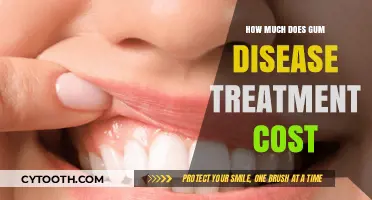
Gum Disease Treatment Costs: What to Expect and How to Budget
You may want to see also
Surgical Treatment Expenses: Costs for flap surgery, bone grafts, or tissue regeneration in advanced gum disease
Advanced gum disease, or periodontitis, often requires surgical intervention when non-surgical treatments fail to halt its progression. Among the most common procedures are flap surgery, bone grafts, and tissue regeneration, each with distinct cost implications. Flap surgery, for instance, involves lifting back the gums to remove tartar and smooth irregular surfaces, typically costing between $1,000 and $3,000 per quadrant of the mouth. This price range reflects the complexity of the procedure and the expertise required, making it a significant investment for patients.
Bone grafts, another surgical option, aim to regenerate lost bone structure due to severe gum disease. These procedures can range from $500 to $1,200 per graft, depending on the material used—whether synthetic, donor, or taken from the patient’s own body. For example, a natural bone graft harvested from the hip or chin may increase costs due to additional surgical steps and recovery considerations. Tissue regeneration, which often accompanies bone grafts, involves the use of membranes or growth factors to stimulate new tissue growth. This can add another $500 to $1,500 per site, depending on the technique and materials employed.
When considering these expenses, it’s crucial to factor in additional costs such as pre-surgical consultations, anesthesia, and post-operative care. For instance, local anesthesia is typically included in the procedure cost, but sedation or general anesthesia may add $200 to $800. Post-operative medications, follow-up visits, and potential complications can further inflate the total expense. Patients should also inquire about insurance coverage, as many dental plans cover a portion of these procedures, though advanced treatments often require out-of-pocket contributions.
A comparative analysis reveals that while flap surgery is generally the least expensive among these options, it may not address severe bone loss, necessitating additional interventions like grafts or regeneration. For example, a patient with moderate to advanced periodontitis might spend $4,000 to $8,000 on a combination of flap surgery and bone grafts for a full-mouth treatment. In contrast, tissue regeneration, though costlier per site, can be more effective in restoring oral health in localized areas, potentially reducing long-term expenses by preventing further deterioration.
Practical tips for managing these costs include seeking multiple quotes from periodontists, exploring dental schools for discounted rates, and discussing payment plans with providers. Patients should also prioritize early intervention, as less invasive treatments like scaling and root planing ($140–$200 per quadrant) are significantly cheaper and can prevent the need for surgery. Ultimately, while surgical treatments for advanced gum disease carry substantial expenses, their ability to restore oral function and prevent tooth loss often justifies the investment.
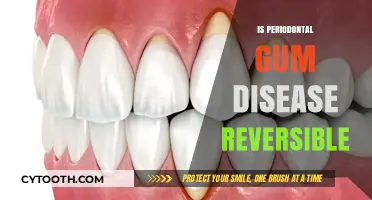
Understanding the Timeline: How Periodontal Disease Progresses Over Time
You may want to see also
Maintenance and Follow-Up: Regular check-ups, cleanings, and preventive care costs post-treatment
Post-treatment maintenance for gum disease is not a one-and-done affair. Think of it as managing a chronic condition—regular check-ups, cleanings, and preventive care are essential to prevent recurrence. Skipping these steps can lead to the disease progressing, potentially resulting in tooth loss or more invasive (and expensive) procedures down the line.
Frequency Matters: The American Dental Association recommends that individuals with a history of gum disease visit their dentist every three to four months for cleanings and check-ups. This is more frequent than the standard six-month interval for those with healthy gums. These visits typically include scaling and root planing to remove plaque and tartar buildup, as well as a thorough examination to monitor gum health.
Cost Breakdown: The cost of maintenance care varies widely depending on location, the severity of the disease, and insurance coverage. On average, a deep cleaning (scaling and root planing) can range from $140 to $200 per quadrant, with most patients needing all four quadrants treated. Follow-up visits for monitoring and preventive care, such as fluoride treatments or antimicrobial mouth rinses, may add another $50 to $150 per visit. Without insurance, annual maintenance costs can easily exceed $1,000, but many dental plans cover at least part of these expenses.
Preventive Measures at Home: While professional care is critical, at-home maintenance plays a pivotal role. Dentists often recommend using a soft-bristled toothbrush and fluoride toothpaste twice daily, along with daily flossing and an antimicrobial mouthwash. For those with advanced gum disease, interdental brushes or water flossers may be advised. Consistency is key—skipping these habits can undo the progress made during professional treatments.
Long-Term Savings: Investing in regular maintenance may seem costly upfront, but it pales in comparison to the expenses of treating advanced gum disease or tooth loss. Dental implants, for example, can cost $3,000 to $4,500 per tooth, not to mention the discomfort and time involved. By prioritizing preventive care, patients not only protect their oral health but also their wallet in the long run.
Proactive Communication: Patients should maintain open communication with their dentist, reporting any signs of gum inflammation, bleeding, or sensitivity immediately. Early intervention can often prevent minor issues from escalating into major problems. Additionally, discussing financial concerns with your dental office can lead to payment plans or alternative solutions, ensuring that cost doesn’t become a barrier to essential care.
Holistic Dentistry Approaches: Natural Gum Disease Treatment Strategies Explained
You may want to see also
Insurance Coverage and Financing: How dental insurance, payment plans, or discounts impact overall treatment affordability
The cost of treating gum disease can vary widely, but insurance coverage and financing options often determine whether patients can afford necessary care. Dental insurance plans typically cover preventive services like cleanings at 100%, but their contribution to periodontal treatments like scaling and root planing or surgical procedures is far less predictable. Most plans cap annual benefits at $1,000–$1,500, which may only partially cover deep cleanings ($200–$400 per quadrant) or gum grafting ($600–$1,200 per tooth). Patients with advanced periodontitis requiring laser therapy or bone regeneration could face out-of-pocket costs exceeding $5,000, even with insurance. Understanding your plan’s exclusions, waiting periods, and frequency limitations is critical to avoiding unexpected expenses.
For those without insurance, payment plans offered by dental offices can make treatment more manageable. Many providers partner with third-party financing companies like CareCredit to offer 0% interest for 6–12 months, provided the balance is paid in full by the promotional period’s end. For example, a $3,000 treatment split over 12 months would require $250 monthly payments. However, missed payments often trigger retroactive interest rates of 20% or higher, turning a budget-friendly option into a financial burden. Patients should calculate their repayment capacity before enrolling and explore alternatives like Health Savings Accounts (HSAs) or Flexible Spending Accounts (FSAs), which allow pre-tax dollars to cover eligible dental expenses.
Discounts and membership programs provide another avenue to reduce costs, particularly for uninsured patients. Dental Savings Plans, such as those offered by Aetna or Cigna, provide 10–60% discounts on services for an annual fee of $80–$200. While these plans don’t cover the full cost, they can significantly lower fees—for instance, reducing a $150 exam to $75 or a $1,000 crown to $600. Some offices also offer sliding-scale fees based on income or senior/military discounts. Patients should inquire about such programs directly, as they’re often unadvertised but widely available.
Comparing financing options requires weighing short-term relief against long-term financial impact. Insurance provides predictable copays but may limit provider choice or treatment frequency. Payment plans offer flexibility but risk high-interest penalties. Discounts yield immediate savings but require upfront research and eligibility verification. For example, a patient with moderate gum disease might save $800 using a dental savings plan for scaling and root planing but need to combine it with a 6-month payment plan for subsequent antibiotic therapy. Ultimately, the most affordable strategy depends on individual financial health, treatment urgency, and willingness to navigate administrative complexities.
Understanding the Timeline: How Long Does Gum Disease Develop?
You may want to see also
Frequently asked questions
Treating early-stage gum disease (gingivitis) typically costs between $50 to $200 per visit, depending on the dentist and location. This usually involves a professional dental cleaning (prophylaxis) and improved oral hygiene practices at home.
Treating advanced gum disease (periodontitis) can range from $500 to $10,000 or more, depending on the severity and required procedures. Treatments may include deep cleaning (scaling and root planing), antibiotics, or surgical interventions like flap surgery or bone grafts.
Most dental insurance plans cover a portion of gum disease treatment, but coverage varies. Basic procedures like cleanings may be fully covered, while advanced treatments like surgery may have higher out-of-pocket costs. Check your policy for specifics.
Yes, affordable options include dental schools (which offer discounted rates), community health clinics, payment plans, or dental savings plans. Costs can vary, but these options can reduce expenses significantly.