Matthew Grant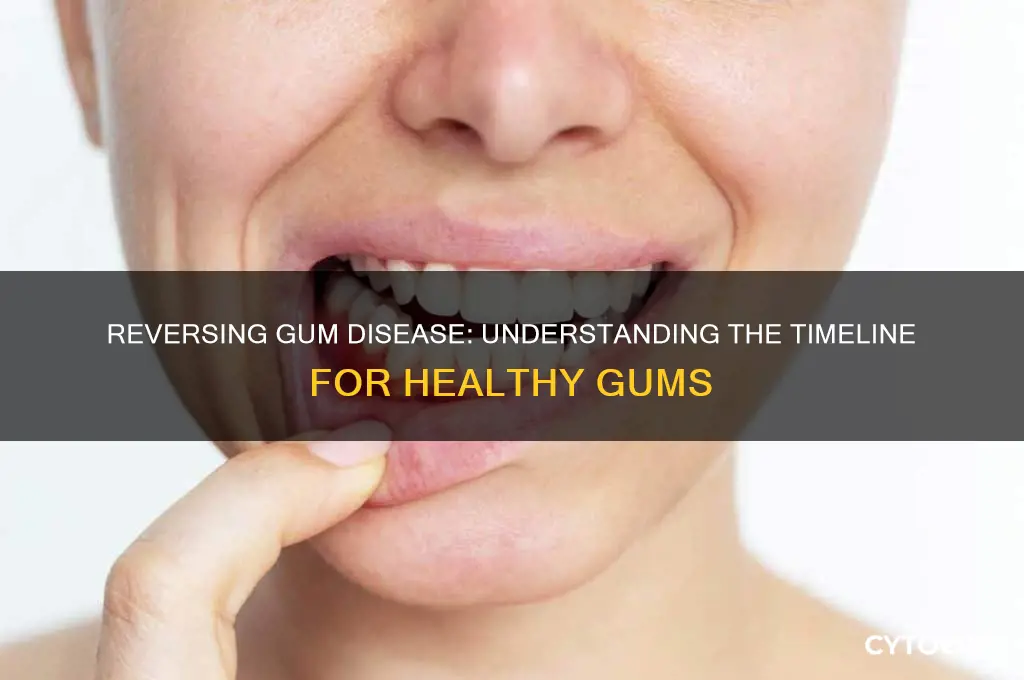
Reversing gum disease, also known as periodontal disease, is a process that varies in duration depending on the severity of the condition and the individual's commitment to treatment and oral hygiene. Early-stage gum disease, or gingivitis, can often be reversed within a few weeks to a few months with consistent brushing, flossing, and professional dental cleanings. However, more advanced stages, such as periodontitis, may require several months to a year or more of intensive treatment, including deep cleanings (scaling and root planing), antimicrobial therapies, and, in some cases, surgical interventions. Success also hinges on lifestyle changes, such as quitting smoking and maintaining a healthy diet, to support gum healing and prevent recurrence. Regular follow-ups with a dentist or periodontist are essential to monitor progress and ensure long-term oral health.
| Characteristics | Values |
|---|---|
| Mild Gingivitis (Early Stage) | 1-2 weeks with proper oral hygiene (brushing, flossing, and professional cleaning) |
| Moderate Periodontitis | 3-6 months with deep cleaning (scaling and root planing), improved oral care, and possible antimicrobial therapy |
| Severe Periodontitis | 6 months to 1 year or more, often requiring surgical intervention, ongoing maintenance, and lifestyle changes |
| Factors Affecting Reversal Time | Oral hygiene consistency, smoking status, diabetes control, genetic predisposition, and frequency of dental check-ups |
| Maintenance Phase | Lifelong commitment to oral hygiene and regular dental visits to prevent recurrence |
| Professional Treatments Required | Dental cleanings, scaling and root planing, antibiotics, or surgical procedures in advanced cases |
| Lifestyle Changes Needed | Quitting smoking, improving diet, managing stress, and controlling systemic conditions like diabetes |
| Typical Recovery Timeline | Varies widely; early stages may reverse quickly, while advanced stages require prolonged treatment and care |
| Recurrence Risk | High without consistent oral hygiene and regular dental care |
What You'll Learn

Early intervention benefits
Gum disease, or periodontal disease, progresses silently, often without noticeable symptoms until it reaches advanced stages. Early intervention can halt this progression, but the timeline for reversal varies. Typically, gingivitis—the initial stage—can be reversed within 10 to 14 days with proper oral hygiene. However, more severe forms, like periodontitis, may take 3 to 6 months of consistent treatment to show significant improvement. The key lies in acting swiftly before irreversible damage occurs.
Consider the analogy of a small leak in a roof. Addressing it immediately prevents structural damage, but delaying repairs leads to costly restoration. Similarly, early intervention in gum disease involves simple measures: brushing twice daily with a fluoride toothpaste, flossing daily, and using an antimicrobial mouthwash. For instance, a 0.12% chlorhexidine rinse, used for 30 seconds twice daily, can reduce plaque and gingivitis within two weeks. Adding a professional dental cleaning every six months amplifies these efforts, removing tartar buildup that brushing alone cannot address.
The benefits of early intervention extend beyond oral health. Research shows a strong link between gum disease and systemic conditions like diabetes, heart disease, and pregnancy complications. For example, a 2018 study in the *Journal of Clinical Periodontology* found that treating gum disease in diabetic patients improved glycemic control within three months. By addressing gum disease promptly, individuals not only preserve their teeth but also reduce the risk of exacerbating these conditions.
Age plays a critical role in the effectiveness of early intervention. Younger adults and adolescents often respond faster to treatment due to healthier bone density and quicker healing rates. For instance, a 25-year-old with gingivitis might see complete reversal within two weeks, while a 60-year-old with the same condition could take up to a month. This underscores the importance of age-specific oral care strategies, such as softer toothbrushes for older adults or fluoride treatments for younger patients.
Finally, early intervention is cost-effective. Treating gingivitis costs significantly less than managing advanced periodontitis, which may require surgeries like flap procedures or bone grafts. A routine dental cleaning averages $75–$200, whereas periodontal surgery can range from $500 to $10,000 per quadrant. By prioritizing prevention, individuals save money and avoid the discomfort and time associated with extensive treatments. In essence, early intervention is not just a health strategy—it’s a practical investment in long-term well-being.
Gum Disease in Your 20s: Prevalence, Risks, and Prevention Tips
You may want to see also
Stages of gum disease reversal
Gum disease, or periodontal disease, progresses in stages, and reversing it requires a tailored approach depending on its severity. The earliest stage, gingivitis, is the most straightforward to reverse. Characterized by red, swollen gums that bleed easily, gingivitis is primarily caused by plaque buildup. Reversal at this stage can take as little as 10 to 14 days with consistent oral hygiene. Brushing twice daily with a fluoride toothpaste, flossing daily, and using an antimicrobial mouthwash can eliminate plaque and restore gum health. Professional dental cleaning may also be recommended to remove hardened plaque (tartar) that brushing alone cannot address.
Once gingivitis advances to early periodontitis, the process becomes more complex. At this stage, the infection has begun to damage the bone and connective tissue supporting the teeth. Reversal here typically takes 3 to 6 months of dedicated care. Deep cleaning procedures like scaling and root planing are essential to remove bacteria and smooth the tooth roots, preventing further buildup. Patients may also need to incorporate antimicrobial treatments, such as chlorhexidine mouthwash (0.12% concentration, used twice daily for 30 seconds) or antibiotic gels like doxycycline (20% gel applied locally). Regular follow-ups with a periodontist are crucial to monitor progress and adjust treatment as needed.
Moderate to advanced periodontitis presents the greatest challenge in reversal. Here, significant bone loss and deep periodontal pockets (over 5mm) have occurred, often leading to tooth mobility. Reversal in these cases can take 6 months to 2 years, depending on the extent of damage and the patient’s commitment to treatment. Surgical interventions, such as flap surgery or bone grafts, may be necessary to repair the damage. Post-surgery, patients must adhere strictly to a maintenance plan, including professional cleanings every 3 months and meticulous home care. Even with optimal treatment, complete reversal may not be possible, and the focus shifts to managing the condition to prevent further progression.
Throughout all stages, lifestyle modifications play a critical role in supporting gum disease reversal. Smoking cessation is non-negotiable, as tobacco use impairs healing and increases the risk of recurrence. A balanced diet rich in vitamins C and D, calcium, and antioxidants supports tissue repair and immune function. Stress management is also important, as chronic stress can exacerbate inflammation. For patients with systemic conditions like diabetes, maintaining stable blood sugar levels is essential, as uncontrolled diabetes slows healing and worsens periodontal outcomes.
Ultimately, the timeline for reversing gum disease is highly individualized, influenced by factors like the stage of disease, patient compliance, and overall health. Early intervention offers the best chance for complete reversal, while advanced cases may require long-term management. The key lies in consistent, proactive care—both at home and with professional guidance. By understanding the stages and committing to the necessary steps, patients can halt the progression of gum disease and preserve their oral health for years to come.
Understanding the Timeline: How Long Does Gum Disease Develop?
You may want to see also
Professional treatment timeline
The professional treatment timeline for reversing gum disease, or periodontal disease, hinges on its severity. For gingivitis, the earliest stage, a dental professional can often reverse the condition within 2 to 4 weeks with a thorough dental cleaning (scaling and root planing) and improved oral hygiene practices. This stage is marked by inflammation and bleeding gums but no irreversible bone loss, making it highly treatable with prompt intervention.
In contrast, periodontitis, a more advanced stage, requires a longer and more structured treatment plan. Here, the timeline extends to 3 to 6 months or more, depending on the extent of damage. Deep cleaning procedures, such as scaling and root planing, are typically performed in multiple sessions to remove plaque and tartar below the gumline. In severe cases, surgical interventions like flap surgery or bone grafts may be necessary, adding months to the recovery process.
A critical factor in this timeline is patient compliance. Professionals often prescribe antimicrobial mouthwashes (e.g., chlorhexidine 0.12%) or antibiotics (e.g., doxycycline 20 mg twice daily for 7 days) to control bacterial infection. Adhering to these regimens, along with daily brushing and flossing, accelerates healing. For instance, patients who follow post-treatment instructions meticulously can reduce their recovery time by up to 30%.
Comparatively, maintenance therapy plays a pivotal role in preventing recurrence. After initial treatment, patients typically require 3-month check-ups for the first year, followed by 6-month intervals thereafter. These visits include professional cleanings and assessments to monitor gum health. Neglecting these appointments can lead to disease progression, resetting the timeline and potentially requiring more invasive treatments.
Finally, age and overall health influence the timeline. Younger patients with gingivitis may respond faster, often within 2 weeks, while older adults or those with compromised immune systems may take 8 to 12 weeks to show significant improvement. Practical tips, such as using a soft-bristled toothbrush and avoiding smoking, further enhance treatment efficacy. In essence, the professional treatment timeline is a dynamic process, tailored to individual needs and dependent on both clinical intervention and personal commitment.
Holistic Dentistry Approaches: Natural Gum Disease Treatment Strategies Explained
You may want to see also
Home care impact on recovery
Effective home care can significantly accelerate the reversal of gum disease, often cutting recovery time by weeks or even months. The cornerstone of this process is meticulous oral hygiene, which disrupts the bacterial biofilm responsible for inflammation and tissue damage. Brushing twice daily with a soft-bristled toothbrush and fluoride toothpaste is essential, but technique matters more than frequency. Hold the brush at a 45-degree angle to the gum line and use short, circular motions to avoid irritation. Flossing daily removes plaque from interdental spaces, a common breeding ground for harmful bacteria. For those with dexterity challenges, interdental brushes or water flossers can be equally effective alternatives.
Beyond mechanical cleaning, incorporating antimicrobial agents into your routine can enhance recovery. A 0.12% chlorhexidine mouthwash, used once daily for 30 seconds, reduces bacterial load without disrupting beneficial oral flora when used short-term. Alternatively, a diluted hydrogen peroxide (1:1 with water) rinse can provide similar benefits, though it should be limited to twice weekly to prevent mucosal irritation. For natural remedies, oil pulling with coconut oil for 10–15 minutes daily has shown promise in reducing plaque and gingivitis, though it should complement, not replace, conventional care.
Nutrition plays a pivotal role in supporting gum health and expediting recovery. A diet rich in vitamin C (found in citrus fruits, bell peppers, and broccoli) strengthens gum tissue and promotes healing. Omega-3 fatty acids, abundant in fatty fish and flaxseeds, reduce inflammation, while calcium and phosphorus from dairy or fortified plant-based sources fortify tooth and bone structure. Conversely, limiting sugar and refined carbohydrates starves the bacteria that drive gum disease. Hydration is equally critical; drinking water throughout the day helps maintain saliva production, the mouth’s natural defense against acid and plaque.
Consistency is the linchpin of home care success. Irregular efforts yield minimal results, as gum disease reversal requires sustained disruption of bacterial activity. Tracking progress with a journal or app can reinforce accountability, noting symptoms like bleeding gums or sensitivity. Regular self-assessment, combined with professional check-ins every 3–6 months, ensures early detection of setbacks. While home care alone can resolve mild gingivitis within 2–4 weeks, more advanced cases (periodontitis) may require 3–6 months of diligent effort alongside professional interventions like scaling and root planing.
Lastly, lifestyle modifications amplify the impact of home care. Smoking cessation is non-negotiable, as tobacco impairs blood flow to gums and hinders healing. Stress management through techniques like mindfulness or exercise reduces cortisol levels, which are linked to increased susceptibility to gum disease. Adequate sleep (7–9 hours nightly) supports immune function, aiding tissue repair. By integrating these practices into daily life, individuals can not only reverse gum disease but also establish habits that prevent its recurrence.
Understanding Gum Disease Progression: How Quickly Can It Advance?
You may want to see also
Factors affecting healing speed
The speed at which gum disease reverses depends heavily on its stage. Gingivitis, the earliest form, can often be reversed within 10 to 14 days with rigorous oral hygiene. Scaling and root planing, professional deep-cleaning procedures, typically take 2 to 3 months to show significant improvement. Advanced periodontitis, however, may require surgical intervention and can take 6 months to a year or more for noticeable healing. The body’s ability to regenerate bone and tissue slows as the disease progresses, making early intervention critical.
Lifestyle choices play a pivotal role in healing speed. Smoking, for instance, reduces blood flow to the gums, delaying tissue repair by up to 50%. Alcohol consumption can also impair immune function, slowing recovery. Conversely, a diet rich in vitamin C (found in citrus fruits, bell peppers, and broccoli) and omega-3 fatty acids (from fish, flaxseeds, and walnuts) can accelerate healing. Aim for 75–90 mg of vitamin C daily and at least two servings of omega-3-rich foods per week to support gum health.
Age and overall health introduce variability in healing timelines. Younger individuals, particularly those under 40, tend to recover faster due to higher collagen production and immune function. Older adults, especially those over 65, may experience slower healing due to reduced cell turnover and chronic conditions like diabetes or hypertension. Managing these conditions through medication adherence and regular check-ups can mitigate delays. For example, diabetics maintaining an A1C level below 7% often see improved gum disease outcomes.
Consistency in oral care is non-negotiable. Brushing twice daily with a soft-bristled toothbrush and fluoride toothpaste, flossing daily, and using antimicrobial mouthwash (e.g., 0.12% chlorhexidine gluconate) are essential. However, overdoing it—such as brushing too hard or using highly abrasive toothpaste—can irritate gums and hinder healing. Electric toothbrushes with pressure sensors can help maintain optimal technique. Professional cleanings every 3 to 4 months are also crucial for removing plaque buildup that home care might miss.
Stress and sleep patterns are often overlooked but significantly impact healing. Chronic stress elevates cortisol levels, suppressing the immune system and prolonging inflammation. Incorporating stress-reduction techniques like mindfulness meditation or 30 minutes of daily exercise can improve recovery. Similarly, inadequate sleep (less than 7 hours per night) disrupts tissue repair processes. Prioritizing sleep hygiene—such as maintaining a consistent sleep schedule and creating a restful environment—can enhance gum disease reversal.
Understanding the Timeline: How Periodontal Disease Progresses Over Time
You may want to see also
Frequently asked questions
Early-stage gum disease (gingivitis) can often be reversed within 1-2 weeks with proper oral hygiene practices, including regular brushing, flossing, and professional dental cleanings.
Advanced gum disease (periodontitis) cannot be fully reversed but can be managed and improved. It typically takes 3-6 months of consistent treatment, including deep cleaning (scaling and root planing), improved oral care, and sometimes medication or surgery.
Yes, professional dental treatment is essential, especially for moderate to advanced gum disease. A dentist or periodontist will perform deep cleanings and monitor progress to ensure effective management.
Lifestyle factors like smoking, poor diet, and stress can slow down the reversal process. Quitting smoking, eating a balanced diet, and managing stress can significantly improve outcomes and speed up recovery.
Yes, gum disease can return if proper oral hygiene is not maintained. Regular dental check-ups, consistent brushing, flossing, and a healthy lifestyle are crucial to prevent recurrence.