Samantha Blake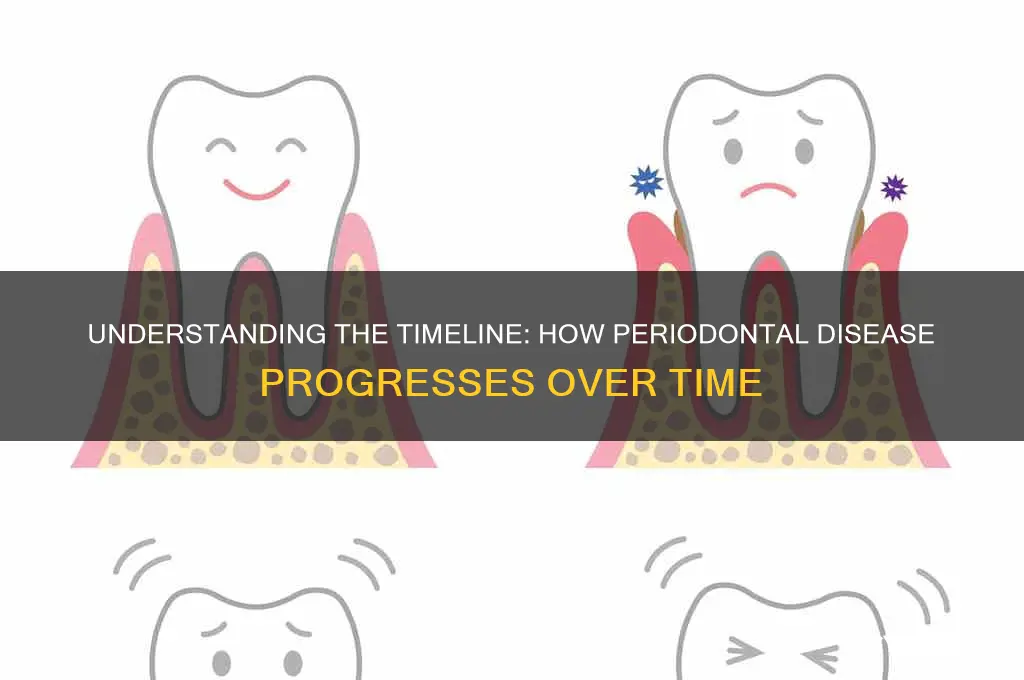
Periodontal disease, a serious gum infection that damages the soft tissue and bone supporting the teeth, typically develops gradually over time, often without noticeable symptoms in its early stages. The progression can vary widely depending on individual factors such as oral hygiene, genetic predisposition, smoking, and overall health. Gingivitis, the initial stage, can emerge within days to weeks of poor oral care, characterized by red, swollen gums that bleed easily. If left untreated, it may advance to periodontitis, where the gums pull away from the teeth, forming pockets that become infected. This stage can take months to years to develop, with severe cases leading to tooth loss and systemic health issues. Early detection and intervention are crucial to prevent irreversible damage and prolong oral health.
| Characteristics | Values |
|---|---|
| Development Time | Varies; can take months to years depending on risk factors |
| Early Stage (Gingivitis) | Develops within days to weeks with poor oral hygiene |
| Progression to Periodontitis | Can take several months to years without intervention |
| Aggressive Periodontitis | Rapid progression, often within months, especially in younger adults |
| Chronic Periodontitis | Slow progression, typically over several years |
| Risk Factors Influencing Speed | Smoking, diabetes, genetics, poor oral hygiene, immune disorders |
| Reversibility of Early Stages | Gingivitis can be reversed within weeks with proper care |
| Irreversible Damage | Occurs after progression to advanced periodontitis (months to years) |
| Symptom Onset | Early symptoms (e.g., bleeding gums) appear within weeks to months |
| Bone Loss Progression | Gradual, typically over years, but accelerates with neglect |
| Impact of Treatment | Early intervention can halt progression within weeks to months |
What You'll Learn

Early Gum Inflammation Signs
Gum inflammation, or gingivitis, is often the first stage of periodontal disease, and it can develop surprisingly quickly—sometimes within just a few weeks of poor oral hygiene. The process begins when plaque, a sticky film of bacteria, builds up along the gum line. If not removed through regular brushing and flossing, this plaque hardens into tartar, irritating the gums and triggering an inflammatory response. Recognizing the early signs of gum inflammation is crucial, as it allows for timely intervention before the condition progresses to irreversible periodontal disease.
One of the most noticeable early signs of gum inflammation is bleeding gums, particularly during brushing or flossing. While occasional bleeding might seem minor, it’s a clear indicator that the gums are under stress. Another common symptom is redness and swelling along the gum line. Healthy gums should appear firm and pale pink, so any deviation from this norm warrants attention. Additionally, persistent bad breath or a bad taste in the mouth can signal bacterial overgrowth, a key contributor to gum inflammation. These symptoms often appear subtly at first, making them easy to overlook, but addressing them early can prevent further damage.
To combat early gum inflammation, adopt a rigorous oral hygiene routine. Brush your teeth twice daily with a fluoride toothpaste, ensuring you clean along the gum line where plaque tends to accumulate. Floss daily to remove debris between teeth, and consider using an antimicrobial mouthwash to reduce bacterial levels. For those over 40, who are at higher risk due to age-related gum recession, incorporating a soft-bristled toothbrush and gentle flossing techniques can minimize irritation. Regular dental check-ups every six months are essential for professional cleaning and early detection of issues.
Comparatively, ignoring these early signs can lead to rapid progression of periodontal disease. While gingivitis can develop within weeks, advanced periodontitis may take years to manifest, but the damage is far more severe and often irreversible. For instance, untreated gum inflammation can lead to pocket formation between the gums and teeth, bone loss, and eventually tooth mobility. By contrast, early intervention at the gingivitis stage typically requires only improved oral hygiene and professional cleaning, without the need for invasive treatments like gum surgery or tooth extraction.
In summary, early gum inflammation signs—bleeding, redness, swelling, and bad breath—are your body’s warning signals. They indicate that immediate action is needed to halt the progression of periodontal disease. By maintaining a consistent oral care routine and seeking regular dental care, you can effectively manage and reverse gingivitis, safeguarding your oral health for the long term.
Gum Disease in Your 20s: Prevalence, Risks, and Prevention Tips
You may want to see also
Progression from Gingivitis to Periodontitis
The journey from gingivitis to periodontitis is a gradual process, often spanning months to years, depending on various factors such as oral hygiene, genetic predisposition, and lifestyle choices. Gingivitis, the initial stage, is characterized by inflammation of the gums due to bacterial plaque buildup. If left untreated, this inflammation can progress to periodontitis, a more severe condition where the inner layer of the gum and bone pull away from the teeth, forming pockets that can become infected.
Analytical Perspective:
Research suggests that the progression from gingivitis to periodontitis can take anywhere from 10 to 15 years in adults, but this timeline can be significantly shortened in individuals with risk factors such as smoking, diabetes, or a weakened immune system. For instance, smokers are 3 to 6 times more likely to develop periodontitis than non-smokers, and the disease tends to progress more rapidly in this population. Similarly, individuals with uncontrolled diabetes may experience accelerated periodontal destruction due to impaired immune function and increased susceptibility to infection.
Instructive Approach:
To prevent the progression from gingivitis to periodontitis, it is essential to maintain good oral hygiene practices, including brushing twice daily with a fluoride toothpaste, flossing daily, and using an antiseptic mouthwash. Regular dental check-ups and cleanings are also crucial, as they allow dentists to detect and treat gingivitis before it progresses. In cases where gingivitis is already present, a dentist may recommend a deep cleaning procedure, known as scaling and root planing, to remove plaque and tartar buildup below the gum line.
Comparative Analysis:
Compared to gingivitis, periodontitis is a more aggressive and destructive condition that can lead to tooth loss, bone damage, and systemic health problems. While gingivitis is generally reversible with proper treatment and oral hygiene, periodontitis requires more intensive intervention, including surgical procedures, antibiotics, and ongoing maintenance therapy. The key difference lies in the extent of tissue damage and the formation of periodontal pockets, which provide a breeding ground for bacteria and make it difficult to control the infection.
Practical Tips and Takeaways:
For individuals concerned about the progression from gingivitis to periodontitis, here are some practical tips:
- Schedule regular dental check-ups every 6 months, or more frequently if you have risk factors.
- Quit smoking or using tobacco products, as they significantly increase the risk of periodontitis.
- Maintain a healthy diet rich in vitamins and minerals, particularly vitamin C, which is essential for gum health.
- Consider using a water flosser or interdental brushes to improve cleaning between teeth and below the gum line.
- If you notice any signs of gingivitis, such as red, swollen, or bleeding gums, seek prompt dental treatment to prevent further progression.
By understanding the progression from gingivitis to periodontitis and taking proactive steps to maintain oral health, individuals can reduce their risk of developing this debilitating disease and preserve their teeth and overall well-being.
Understanding the Timeline: How Long Does Gum Disease Develop?
You may want to see also
Factors Speeding Up Disease Development
Poor oral hygiene is the primary accelerator of periodontal disease, but certain factors can significantly shorten the timeline from initial gingivitis to advanced periodontitis. Smoking, for instance, doubles the risk of developing the disease and triples the rate of progression. The chemicals in tobacco interfere with gum tissue’s ability to repair itself, while reducing blood flow to the gums, which slows nutrient delivery and waste removal. Even occasional smoking or secondhand exposure can exacerbate inflammation, making it harder for the body to combat bacterial infection.
Dietary choices play a subtle yet critical role in disease acceleration. A high-sugar diet feeds the bacteria responsible for plaque formation, while low intake of vitamins C and D weakens the immune system and impairs collagen production in gum tissue. For example, studies show that adults consuming less than 10 mg of vitamin C daily (the equivalent of one small orange) experience gum bleeding and attachment loss at twice the rate of those meeting the recommended 75–90 mg. Similarly, a deficiency in vitamin D, common in older adults and those with limited sun exposure, reduces the body’s ability to produce antimicrobial peptides, leaving gums more vulnerable to infection.
Systemic health conditions act as hidden catalysts for periodontal disease progression. Diabetes, for instance, creates a hyperglycemic environment that promotes bacterial growth and impairs neutrophil function, the immune cells responsible for fighting oral infections. Uncontrolled diabetics (HbA1c > 9%) are three times more likely to develop severe periodontitis within five years compared to non-diabetics. Similarly, autoimmune disorders like rheumatoid arthritis or Crohn’s disease trigger chronic inflammation throughout the body, including the gums, while medications such as corticosteroids or immunosuppressants suppress the immune response, allowing periodontal bacteria to proliferate unchecked.
Stress and hormonal fluctuations introduce another layer of risk by altering the body’s inflammatory response. Prolonged stress elevates cortisol levels, which temporarily increases blood sugar and suppresses immune function, creating an ideal environment for bacterial overgrowth. Pregnant women, due to hormonal shifts, are particularly susceptible to "pregnancy gingivitis," with up to 70% experiencing gum inflammation by the second trimester. While often reversible postpartum, untreated cases can progress to periodontitis within 12–18 months, especially if compounded by poor oral hygiene or nutritional deficiencies during pregnancy.
Genetic predisposition remains an uncontrollable yet significant factor in disease acceleration. Certain genetic variants, such as those affecting interleukin-1 production, increase susceptibility to severe periodontitis by amplifying the inflammatory response to bacterial plaque. Individuals with these variants may experience bone loss at twice the rate of the general population, even with adequate oral care. Identifying such predispositions through genetic testing allows for proactive measures, such as more frequent dental check-ups (every 3–4 months instead of 6) and targeted antimicrobial therapies to mitigate accelerated progression.
Holistic Dentistry Approaches: Natural Gum Disease Treatment Strategies Explained
You may want to see also
Silent Symptoms and Late Detection
Periodontal disease often progresses silently, with early symptoms so subtle they’re easily overlooked. Unlike a sudden toothache, its onset is gradual, making it a master of disguise. For instance, mild gum bleeding during brushing or flossing is frequently dismissed as normal, when in reality, it’s one of the first signs of gingivitis—the precursor to periodontal disease. Similarly, slight gum recession or persistent bad breath might be attributed to aging or diet, delaying recognition of the underlying issue. This stealthy nature allows the disease to advance unchecked, often until irreversible damage occurs.
The timeline for periodontal disease development varies, but it typically takes years to reach advanced stages. Early gingivitis can manifest within weeks to months of poor oral hygiene, while progression to periodontitis—where bone and tissue loss begin—may take 5 to 10 years or more. However, certain factors accelerate this process: smoking, diabetes, genetic predisposition, and even stress. For example, smokers are three to six times more likely to develop periodontitis, and diabetics often experience faster disease progression due to impaired immune responses. These risk factors underscore why late detection is common—symptoms remain silent until structural damage becomes apparent.
Late detection of periodontal disease often results from a lack of proactive dental care. Many individuals only visit the dentist when pain or noticeable issues arise, by which time the disease may have already caused significant bone loss. Regular dental check-ups, ideally every six months, are critical for early intervention. Dentists can detect subtle changes—like pocket depth increases or bone density loss—through tools like periodontal probes and X-rays, long before symptoms become obvious. Without this vigilance, patients may not realize they’re losing bone until teeth become loose or shift, a stage where treatment is more invasive and less predictable.
Practical steps can mitigate the risk of late detection. First, monitor for silent symptoms: gums that appear red or swollen, changes in tooth alignment, or a persistent metallic taste. Second, maintain a rigorous oral hygiene routine: brush twice daily with fluoride toothpaste, floss daily, and use an antimicrobial mouthwash. Third, address modifiable risk factors—quit smoking, manage blood sugar levels, and reduce stress through techniques like mindfulness or exercise. Finally, prioritize regular dental visits, especially if you fall into high-risk categories. Early detection not only preserves oral health but also prevents systemic complications, as periodontal disease is linked to conditions like heart disease and diabetes.
Understanding Gum Disease Progression: How Quickly Can It Advance?
You may want to see also
Preventive Measures to Slow Progression
Periodontal disease doesn’t appear overnight; it’s a gradual process that can take years to develop, often starting with gingivitis and progressing silently if left unchecked. While the timeline varies based on factors like genetics, oral hygiene, and lifestyle, preventive measures can significantly slow its progression. The key lies in disrupting the cycle of plaque buildup and inflammation before it damages gum tissue and bone.
Daily Habits as the First Line of Defense
Consistent oral hygiene is the cornerstone of prevention. Brush twice daily with a fluoride toothpaste, using a soft-bristled toothbrush at a 45-degree angle to the gums. Floss daily to remove plaque from interdental spaces, and consider adding an antimicrobial mouthwash to reduce bacterial load. For those prone to periodontal issues, interdental brushes or water flossers can be more effective than traditional floss. Avoid aggressive brushing, as it can irritate gums and exacerbate inflammation.
Professional Care and Early Intervention
Regular dental check-ups every six months are critical for detecting early signs of periodontal disease. Dentists can perform deep cleanings (scaling and root planing) to remove tartar and smooth root surfaces, making it harder for bacteria to reattach. For high-risk individuals, more frequent visits—every three to four months—may be recommended. Don’t delay treatment; early intervention can halt progression and preserve gum health.
Lifestyle Adjustments to Reduce Risk
Smoking and tobacco use are major risk factors for periodontal disease, as they impair blood flow to gums and hinder healing. Quitting smoking can dramatically improve oral health outcomes. A balanced diet rich in vitamins C and D, calcium, and antioxidants supports gum tissue and bone health. Limit sugary and acidic foods, which fuel bacterial growth, and stay hydrated to maintain saliva production, a natural defense against plaque.
Advanced Tools and Techniques
For those at higher risk, adjunctive therapies can provide additional protection. Prescription antimicrobial rinses like chlorhexidine (0.12% solution, used twice daily for 30 seconds) can reduce gum inflammation when used short-term. Probiotics containing strains like *Lactobacillus reuteri* may help balance oral microbiota, though evidence is still emerging. Laser therapy, offered by some dentists, can target bacteria and promote gum healing with minimal discomfort.
By combining these preventive measures, individuals can significantly slow the progression of periodontal disease, preserving oral health and avoiding the need for invasive treatments. Consistency and proactive care are key—small daily efforts yield long-term benefits.
Frequently asked questions
Periodontal disease can develop gradually over several years, but its progression varies depending on factors like oral hygiene, genetics, and overall health. Early stages, such as gingivitis, may appear within weeks to months if plaque and tartar are not properly managed.
Yes, some individuals, particularly those with compromised immune systems, diabetes, or genetic predispositions, may experience rapid progression of periodontal disease, sometimes within months if left untreated.
Early signs include gum redness, swelling, bleeding, and bad breath, which can appear within weeks to months of poor oral hygiene or plaque buildup. Addressing these symptoms promptly can prevent further progression.