Logan Hayes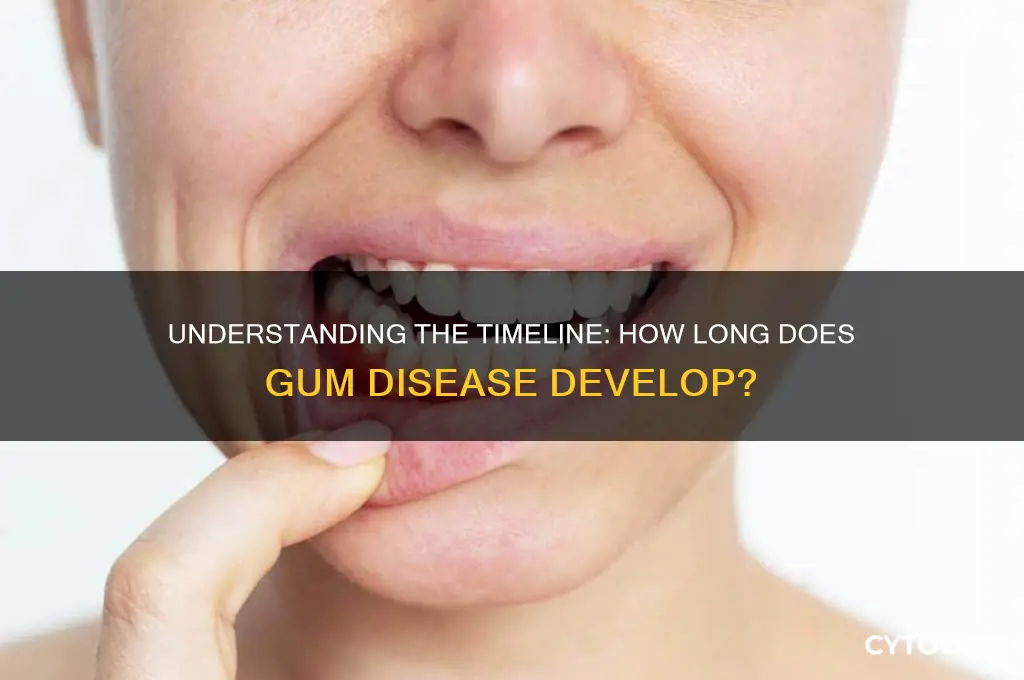
Gum disease, also known as periodontal disease, typically develops gradually over time, often without noticeable symptoms in its early stages. The progression can vary widely depending on individual factors such as oral hygiene, genetics, lifestyle, and overall health. Gingivitis, the initial stage, can emerge within days to weeks of poor oral care, characterized by inflamed gums and bleeding during brushing. If left untreated, it may advance to periodontitis, a more severe form that damages the gums, bones, and tissues supporting the teeth, which can take months to years to develop. Factors like smoking, diabetes, and a weakened immune system can accelerate this timeline, making early detection and preventive measures crucial to halting its progression.
| Characteristics | Values |
|---|---|
| Early Stage (Gingivitis) | Develops within 1-2 weeks of poor oral hygiene or plaque buildup. |
| Progression to Periodontitis | Can take several months to years if gingivitis is left untreated. |
| Advanced Periodontitis | Develops over several years, often 5-10 years without intervention. |
| Factors Influencing Speed | Smoking, diabetes, genetics, poor nutrition, and weakened immune system. |
| Reversibility | Gingivitis is reversible with proper care within 2-6 weeks. |
| Irreversible Damage | Periodontitis causes permanent damage to gums and bone over time. |
| Symptom Onset | Initial symptoms (e.g., bleeding gums) appear within days to weeks. |
| Silent Progression | Can progress silently for months to years without noticeable symptoms. |
| Treatment Impact | Early treatment can halt progression; advanced stages require ongoing care. |
What You'll Learn

Early signs of gingivitis
Gum disease doesn't appear overnight. It's a gradual process, often taking years to progress from the early stage of gingivitis to more severe periodontitis. But the early signs of gingivitis are your body's alarm bells, ringing loudly to warn you of potential trouble.
Ignoring these signs can lead to irreversible damage, making early detection crucial.
One of the most noticeable early signs is bleeding gums. If your gums bleed when you brush or floss, it's not normal, despite what you might think. Healthy gums shouldn't bleed. This bleeding is caused by inflammation due to plaque buildup, the sticky film of bacteria constantly forming on your teeth. Think of it as your gums protesting against the bacterial invasion.
Regular, gentle brushing and flossing twice daily are essential to remove plaque and prevent this inflammation.
Another red flag is gum redness and swelling. Healthy gums should be a pale pink color and firm to the touch. If your gums appear red, swollen, or tender, it's a clear indication of gingivitis. This inflammation is your body's immune response to the bacteria in plaque.
Imagine your gums as a battlefield, with your immune system fighting off the bacterial invaders. The swelling and redness are the collateral damage of this battle.
A saltwater rinse can provide temporary relief from discomfort, but it's crucial to address the underlying cause by improving your oral hygiene routine.
Bad breath that lingers despite brushing and mouthwash can also be an early sign of gingivitis. The bacteria in plaque produce volatile sulfur compounds, which are responsible for that unpleasant odor.
Think of it as the bacteria's calling card, a pungent reminder of their presence. While mouthwash can temporarily mask the smell, it won't address the root cause. Regular brushing, flossing, and tongue scraping are essential to remove the bacteria and freshen your breath.
Remember, gingivitis is reversible with proper care. By recognizing these early signs and taking action, you can prevent the progression to periodontitis, a more severe form of gum disease that can lead to tooth loss and other serious health complications. Don't ignore your gums' warning signals – listen to them and take control of your oral health.
Understanding Gum Disease Progression: How Quickly Can It Advance?
You may want to see also
Progression to periodontitis
Gum disease doesn't appear overnight. It's a stealthy process, often beginning with seemingly harmless gingivitis. This early stage, characterized by red, swollen gums that bleed easily during brushing, is a warning sign. Left unchecked, gingivitis can progress to periodontitis, a far more serious condition with potentially devastating consequences.
Understanding this progression is crucial, as it highlights the importance of early intervention.
The journey from gingivitis to periodontitis is fueled by bacterial plaque buildup. This sticky film, constantly forming on teeth, harbors harmful bacteria that irritate the gums. Over time, the body's immune response to this irritation leads to inflammation, causing the gums to pull away from the teeth, forming pockets. These pockets become breeding grounds for more bacteria, accelerating the destructive process. As periodontitis advances, the bacteria and their toxins destroy the bone and connective tissue supporting the teeth, leading to loosening and eventual tooth loss.
Unlike gingivitis, which can often be reversed with diligent oral hygiene, periodontitis is a chronic condition requiring professional treatment.
Several factors influence the speed of this progression. Poor oral hygiene is the primary culprit, but other contributors include smoking, diabetes, certain medications, and genetic predisposition. Individuals with these risk factors should be particularly vigilant about their oral health and schedule regular dental checkups. Early detection and treatment can significantly slow down the progression of periodontitis and preserve dental health.
While the timeline for progression varies, it's not an overnight process. Gingivitis can develop within days to weeks of inadequate oral care, but the transition to periodontitis typically takes months or even years. This gradual nature provides a crucial window of opportunity for intervention. Regular brushing, flossing, and professional cleanings are essential in preventing gingivitis and halting its progression to periodontitis. Remember, healthy gums are the foundation of a healthy smile, and proactive care is key to preserving them.
Gum Disease in Your 20s: Prevalence, Risks, and Prevention Tips
You may want to see also
Impact of oral hygiene habits
Gum disease, or periodontal disease, doesn't appear overnight. It's a gradual process, often taking years to develop, and is heavily influenced by oral hygiene habits. The time it takes for gum disease to progress from its early stage, gingivitis, to the more severe periodontitis, varies widely depending on individual factors, but one thing is clear: consistent, effective oral care can significantly delay or even prevent its onset.
The Daily Battle: Brushing and Flossing
Imagine your mouth as a battlefield where bacteria constantly wage war on your gums. Brushing twice a day with fluoride toothpaste is your first line of defense, removing plaque buildup that harbors harmful bacteria. Flossing daily is equally crucial, reaching areas your toothbrush can't, and disrupting bacterial colonies before they strengthen. Neglecting this routine allows plaque to harden into tartar, which can only be removed by a dental professional. Studies show that individuals who brush and floss regularly have a significantly lower risk of developing gum disease, with the American Dental Association recommending a minimum of two minutes per brushing session.
Beyond the Basics: Lifestyle Choices and Their Impact
While brushing and flossing are fundamental, other lifestyle choices play a significant role in gum health. Smoking, for instance, is a major risk factor, as it weakens the immune system and reduces blood flow to the gums, hindering their ability to fight infection. Similarly, a diet high in sugar and carbohydrates provides fuel for bacteria, accelerating plaque formation. Conversely, a diet rich in fruits, vegetables, and whole grains provides essential nutrients for gum health. Research suggests that individuals who consume a balanced diet and avoid smoking have a 50% lower risk of developing severe gum disease compared to those with poor dietary habits and smoking tendencies.
The Power of Professional Care: Regular Checkups and Cleanings
Even the most diligent home care routine can't replace the expertise of a dentist or hygienist. Regular dental checkups, ideally every six months, allow for early detection of gum disease and professional removal of tartar buildup. During these visits, your dentist can also assess your brushing and flossing technique, providing personalized guidance for improvement. Studies have shown that individuals who receive regular professional dental care have a significantly slower progression of gum disease compared to those who only seek treatment when problems arise.
A Lifelong Commitment: Consistency is Key
Developing good oral hygiene habits is an investment in your long-term health. While gum disease can take years to develop, the damage it causes can be irreversible. By consistently practicing proper brushing and flossing techniques, making healthy lifestyle choices, and prioritizing regular dental checkups, you can significantly reduce your risk of gum disease and enjoy a healthy smile for years to come. Remember, prevention is always easier than cure, and when it comes to your gums, consistency is the key to success.
Holistic Dentistry Approaches: Natural Gum Disease Treatment Strategies Explained
You may want to see also
Role of diet and lifestyle
Gum disease, or periodontal disease, doesn’t appear overnight. It’s a gradual process influenced heavily by diet and lifestyle choices. Poor nutrition, particularly high sugar intake, creates an environment where harmful bacteria thrive, accelerating plaque buildup and inflammation. Conversely, a diet rich in vitamins C and D, antioxidants, and omega-3 fatty acids strengthens gum tissue and reduces infection risk. For instance, adults consuming less than 60 mg of vitamin C daily are three times more likely to develop gum disease compared to those meeting the recommended 75-90 mg intake.
Consider this: sugary drinks and refined carbohydrates aren’t just empty calories—they’re fuel for oral bacteria. A single 12-ounce soda contains about 40 grams of sugar, exceeding the daily limit recommended by the American Heart Association. Over time, this habit weakens enamel and gums, making them susceptible to disease. Similarly, smoking or vaping introduces toxins that impair blood flow to gums, slowing healing and worsening inflammation. Studies show smokers are twice as likely to develop advanced gum disease as nonsmokers, with risks increasing proportionally to daily cigarette consumption.
Practical changes can mitigate these risks. Incorporate crunchy, fiber-rich foods like apples, carrots, and celery into your diet—their texture naturally cleans teeth while stimulating saliva production, which neutralizes acids. Limit snacks between meals to reduce bacterial activity, and if you consume sugary or acidic foods, rinse with water immediately afterward. For smokers, quitting is non-negotiable; even cutting back significantly lowers gum disease progression. Pair these dietary adjustments with consistent oral hygiene—brushing twice daily, flossing, and using antimicrobial mouthwash—to create a robust defense against periodontal issues.
Age and stress also intersect with diet and lifestyle in gum disease development. Older adults, particularly those over 65, face higher risks due to reduced saliva production and potential medication side effects. Staying hydrated and using sugar-free gum can alleviate dry mouth symptoms. Chronic stress, meanwhile, weakens the immune system, making gums more vulnerable to infection. Incorporating stress-reducing activities like yoga, meditation, or even 30 minutes of daily walking can improve overall oral health. Remember, gum disease is preventable—your choices today shape your oral health tomorrow.
Genetic and systemic factors
Genetic predisposition plays a significant role in the development of gum disease, often dictating how quickly and severely it progresses. For instance, individuals with a family history of periodontitis are up to six times more likely to develop the condition themselves. Specific genetic variations, such as those in the IL-1 gene cluster, can impair the immune response to bacterial plaque, accelerating tissue damage. If you notice early signs like bleeding gums or persistent bad breath despite good oral hygiene, consider discussing your family history with a dentist. Early genetic testing or targeted preventive measures, like more frequent cleanings, can mitigate risks.
Systemic conditions, particularly diabetes, act as a double-edged sword in gum disease progression. Uncontrolled diabetes weakens the body’s ability to fight infection and slows healing, making gum tissues more susceptible to bacterial invasion. Research shows that diabetic patients with HbA1c levels above 7% are three times more likely to experience severe periodontitis. Conversely, gum disease can exacerbate diabetes by increasing systemic inflammation and insulin resistance. Managing blood sugar levels through diet, medication, and regular monitoring is crucial. Dentists often recommend diabetic patients schedule cleanings every three months instead of the standard six to control periodontal risks.
Autoimmune disorders, such as rheumatoid arthritis (RA), create a systemic environment ripe for gum disease. RA patients produce antibodies that attack both joint tissues and oral bacteria, leading to chronic inflammation in the gums. Studies indicate that 70% of RA patients also suffer from periodontitis, with disease progression often mirroring joint deterioration. Medications like methotrexate, commonly used to treat RA, can suppress the immune system, further complicating oral health. If you have an autoimmune condition, coordinate care between your rheumatologist and dentist to tailor treatments that address both systemic inflammation and oral hygiene.
Nutritional deficiencies, particularly in vitamin C, vitamin D, and calcium, can silently undermine gum health. Scurvy, a condition caused by severe vitamin C deficiency, leads to bleeding gums and tooth loss within 3–12 months of inadequate intake. Similarly, vitamin D deficiency impairs bone metabolism, weakening the alveolar bone that supports teeth. Adults should aim for 75–90 mg of vitamin C daily and 600–800 IU of vitamin D, adjusting based on sun exposure and dietary sources. Incorporating foods like citrus fruits, fatty fish, and fortified dairy can help maintain optimal levels and slow gum disease progression.
Aging introduces systemic changes that indirectly contribute to gum disease. Reduced saliva production, common in older adults due to medications or natural aging, deprives the mouth of its primary defense against bacteria. Saliva neutralizes acids and remineralizes enamel, so its absence accelerates plaque buildup. Seniors should stay hydrated, avoid sugary medications, and consider saliva substitutes if dry mouth persists. Additionally, age-related immune decline makes it harder to combat infections, necessitating stricter oral care routines. Electric toothbrushes and water flossers can be particularly effective for older adults with limited dexterity.
Frequently asked questions
Gum disease can begin to develop within a few weeks to months if proper oral hygiene is neglected, but it often progresses gradually over several years.
Gum disease typically develops slowly, but symptoms like bleeding gums or inflammation can appear suddenly if plaque and bacteria accumulate rapidly due to poor oral care.
Early signs include red, swollen gums, bleeding during brushing or flossing, persistent bad breath, and mild gum tenderness, which can appear within weeks to months of poor oral hygiene.
No, the rate of progression varies depending on factors like genetics, oral hygiene habits, smoking, diet, and overall health. Some individuals may develop gum disease faster than others.
Yes, early-stage gum disease (gingivitis) can often be reversed with improved oral hygiene, regular brushing, flossing, and professional dental cleanings within a few weeks to months.