Olivia Bennett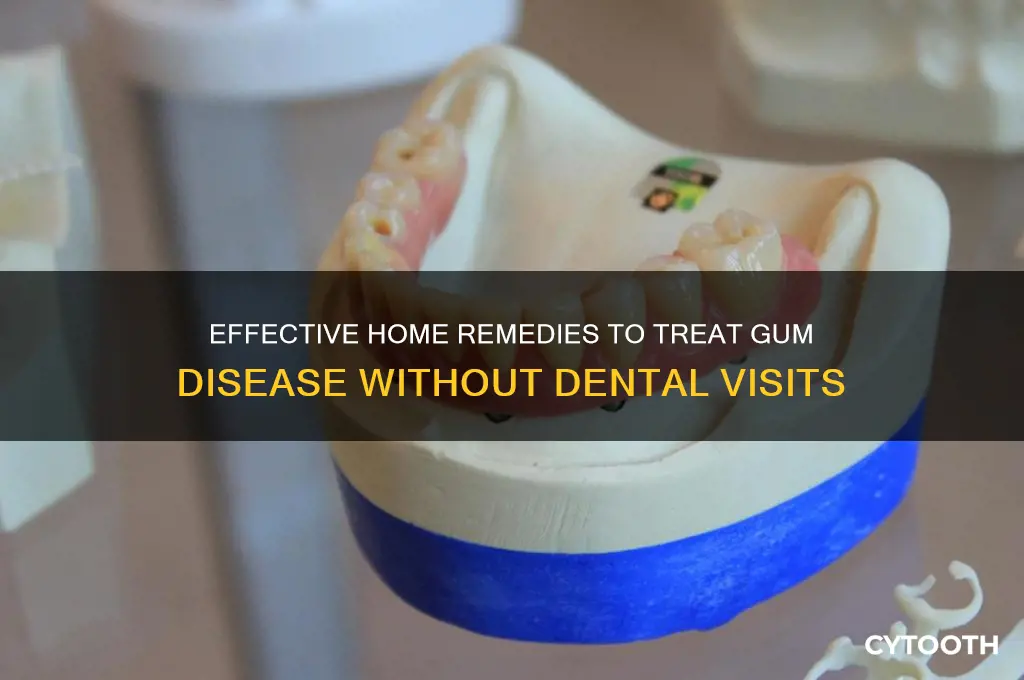
Treating gum disease without a dentist involves adopting a rigorous oral hygiene routine and making lifestyle changes to combat the condition effectively. Gum disease, or gingivitis, often stems from plaque buildup, so consistent brushing twice daily with fluoride toothpaste and flossing are essential. Incorporating an antimicrobial mouthwash can help reduce bacteria, while using a soft-bristled toothbrush ensures gentle yet thorough cleaning. Additionally, maintaining a balanced diet rich in vitamins C and D, avoiding sugary foods, and quitting smoking can significantly improve gum health. While these measures can manage mild cases, it’s crucial to monitor symptoms and seek professional care if the condition worsens or persists.
What You'll Learn
- Saltwater Rinses: Dissolve salt in warm water, rinse mouth daily to reduce inflammation and bacteria
- Oil Pulling: Swish coconut or sesame oil for 15–20 minutes to remove toxins
- Herbal Remedies: Use aloe vera, tea tree oil, or turmeric gel to soothe gums
- Proper Brushing: Use a soft brush, clean teeth twice daily, focus on gum lines
- Healthy Diet: Eat vitamin C-rich foods, avoid sugar, and stay hydrated for gum health

Saltwater Rinses: Dissolve salt in warm water, rinse mouth daily to reduce inflammation and bacteria
Saltwater rinses have been a go-to home remedy for oral health issues for centuries, and their effectiveness in treating gum disease is backed by both tradition and science. The process is simple: dissolve half a teaspoon of salt in a cup of warm water, ensuring the solution is neither too hot nor too cold. Swish this mixture around your mouth for 30 seconds to one minute, focusing on areas where inflammation or discomfort is most noticeable. This daily practice can significantly reduce bacteria and soothe irritated gums, making it a cornerstone of self-care for gum disease.
From an analytical perspective, the efficacy of saltwater rinses lies in their osmotic properties and mild antiseptic qualities. Salt draws out fluids from gum tissues, reducing swelling and creating an environment hostile to bacteria. Additionally, sodium chloride disrupts the cell walls of many oral pathogens, curbing their growth. While it’s not a cure-all, this method complements other treatments by maintaining oral hygiene and alleviating symptoms. For best results, use this rinse after brushing or before bed, ensuring consistent application to maximize its anti-inflammatory benefits.
For those seeking a practical, step-by-step approach, start by measuring the salt carefully—too much can cause a burning sensation or dry out oral tissues. Stir the salt into warm water until fully dissolved, then take a small sip and tilt your head back slightly to allow the solution to reach all areas of the mouth. Gargle gently, letting the rinse flow between teeth and along the gum line. Spit it out after a minute, avoiding swallowing to prevent sodium intake. Repeat this process once or twice daily, especially after meals, to maintain cleanliness and reduce bacterial buildup.
Comparatively, saltwater rinses offer a cost-effective and accessible alternative to commercial mouthwashes, which often contain alcohol or chemicals that can irritate sensitive gums. Unlike prescription treatments, this method is safe for all age groups, including children over six who can rinse and spit effectively. However, it’s important to note that while saltwater can manage symptoms, it doesn’t address underlying causes like plaque buildup or advanced periodontal disease. Pairing this remedy with proper brushing, flossing, and regular dental check-ups ensures a comprehensive approach to gum health.
In conclusion, saltwater rinses are a versatile and gentle tool in the fight against gum disease. Their simplicity belies their effectiveness, offering immediate relief from inflammation while supporting long-term oral hygiene. By incorporating this practice into your daily routine, you can take proactive steps toward healthier gums without relying solely on professional intervention. Just remember: consistency is key, and while saltwater rinses are powerful, they’re most effective as part of a broader oral care strategy.
Understanding the Timeline: How Periodontal Disease Progresses Over Time
You may want to see also
Oil Pulling: Swish coconut or sesame oil for 15–20 minutes to remove toxins
Oil pulling, an ancient Ayurvedic practice, involves swishing a tablespoon of coconut or sesame oil in your mouth for 15–20 minutes to purportedly draw out toxins and improve oral health. Unlike modern treatments, this method relies on natural ingredients and mechanical action to address gum disease symptoms. The process is simple: upon waking, before eating or drinking, place the oil in your mouth and gently swish it between your teeth and around your gums. As you move the oil, it mixes with saliva, creating a viscous fluid that may trap bacteria, plaque, and other harmful substances. After the session, spit the oil into a trash can (not the sink, as it can solidify and cause plumbing issues) and rinse your mouth with warm water.
Analyzing its effectiveness, oil pulling lacks extensive scientific backing but has anecdotal support for reducing gum inflammation and improving overall oral hygiene. Studies suggest that coconut oil, rich in lauric acid, exhibits antimicrobial properties that may combat *Streptococcus mutans*, a bacterium linked to gum disease. Sesame oil, on the other hand, contains sesamol and sesamin, compounds with antioxidant and anti-inflammatory effects. While not a replacement for professional dental care, oil pulling can complement daily brushing and flossing, particularly for those seeking natural remedies.
For optimal results, consistency is key. Perform oil pulling daily for at least 2–3 weeks to notice improvements in gum health. Adults and children over 12 can safely practice this method, but it’s crucial to ensure the oil is not swallowed, as it may contain toxins drawn from the mouth. Pregnant women or individuals with sensitive gums should consult a healthcare provider before starting. Practical tips include using organic, cold-pressed oils for purity and starting with shorter sessions (5–10 minutes) if 20 minutes feels uncomfortable initially.
Comparatively, oil pulling stands out as a low-cost, accessible alternative to conventional treatments like antimicrobial mouthwashes or deep cleanings. While it may not reverse advanced gum disease, it can alleviate early symptoms such as bleeding gums, bad breath, and mild inflammation. Its appeal lies in its simplicity and use of household ingredients, making it a viable option for those without immediate access to dental care. However, it’s essential to pair this practice with a balanced diet, proper oral hygiene, and regular dental check-ups for comprehensive gum health management.
In conclusion, oil pulling offers a natural, preventive approach to managing gum disease symptoms. By dedicating 15–20 minutes daily to this practice, individuals can potentially reduce oral bacteria, soothe inflamed gums, and enhance overall mouth cleanliness. While not a cure-all, its ease of implementation and minimal side effects make it a worthwhile addition to any oral care routine, especially for those exploring non-invasive, dentist-free solutions.
Understanding the Timeline: How Long Does Gum Disease Develop?
You may want to see also
Herbal Remedies: Use aloe vera, tea tree oil, or turmeric gel to soothe gums
Aloe vera, a succulent known for its healing properties, offers a natural remedy for gum disease. Its gel contains antioxidants and antibacterial compounds that reduce inflammation and promote tissue repair. To use, extract fresh gel from an aloe leaf and apply it directly to the gums, massaging gently for 2–3 minutes. Alternatively, mix a tablespoon of aloe vera gel with warm water and use it as a mouthwash twice daily. This method is particularly effective for mild gingivitis and can be used by adults and children over 12, though it’s best to consult a healthcare provider for younger individuals.
Tea tree oil, derived from the leaves of the Melaleuca alternifolia plant, is a potent antimicrobial agent that combats the bacteria causing gum disease. Dilute 2–3 drops of tea tree oil in a teaspoon of coconut oil or water to avoid irritation, then apply it to the gums using a clean finger or cotton swab. Leave it on for 5–10 minutes before rinsing thoroughly. Avoid swallowing the oil, as it can be toxic. This remedy is suitable for adults but should be avoided by pregnant women and individuals with sensitive gums. For best results, use it once daily, paired with regular brushing.
Turmeric gel, infused with the active compound curcumin, reduces inflammation and fights oral pathogens. Commercial turmeric gels are available, but you can make your own by mixing ½ teaspoon of turmeric powder with a tablespoon of coconut oil to form a paste. Apply it to the gums for 10 minutes, then rinse. Repeat daily for at least two weeks. While turmeric is safe for most adults, it may stain teeth temporarily, so follow up with a gentle brush. This remedy is ideal for those seeking a natural anti-inflammatory solution without harsh chemicals.
Comparing these herbal remedies, aloe vera is the gentlest option, suitable for long-term use and mild cases. Tea tree oil is the most potent but requires careful dilution to prevent irritation. Turmeric gel strikes a balance, offering strong anti-inflammatory benefits with minimal side effects. Each remedy complements traditional oral hygiene practices and can be tailored to individual needs. However, none replace professional dental care for advanced gum disease. Always monitor your gums’ response and discontinue use if irritation occurs.
Understanding Gum Disease Progression: How Quickly Can It Advance?
You may want to see also
Proper Brushing: Use a soft brush, clean teeth twice daily, focus on gum lines
Gum disease often begins at the gum line, where plaque accumulates and irritates sensitive tissues. Proper brushing is your first line of defense, but not all techniques are created equal. Start by selecting a soft-bristled toothbrush—firm or medium bristles can damage enamel and gums, exacerbating inflammation. Angle the brush at 45 degrees to your gum line, ensuring the bristles reach the junction where gums meet teeth. This area is a hotspot for bacterial buildup, making it critical to focus your efforts here.
Twice-daily brushing is non-negotiable, but timing matters. Spend at least two minutes each session, dividing your mouth into four quadrants and dedicating 30 seconds to each. Use short, gentle strokes rather than aggressive scrubbing, which can harm gums. Electric toothbrushes with pressure sensors can be particularly effective for those who struggle with technique, ensuring consistent cleaning without overdoing it. Remember, the goal is to remove plaque, not punish your gums.
Children and older adults require special attention. For kids under 12, supervise brushing to ensure proper technique and prevent swallowing toothpaste. Adults over 60, especially those with arthritis, may benefit from ergonomic toothbrush handles or electric models for easier maneuverability. Regardless of age, replace your toothbrush every three months or sooner if bristles fray, as worn brushes lose effectiveness.
A common mistake is neglecting the gum line in favor of surface teeth. To counter this, imagine you’re massaging your gums rather than just cleaning teeth. Use a circular motion along the gum line, both on the outer and inner surfaces of teeth. Pair brushing with flossing to remove debris between teeth, where brushes can’t reach. Consistency is key—skipping sessions allows plaque to harden into tartar, which only a dentist can remove.
Finally, pair proper brushing with a fluoride toothpaste to strengthen enamel and reduce sensitivity. Avoid whitening or tartar-control toothpastes if you have gum disease, as these can irritate already inflamed tissues. While brushing is a cornerstone of gum disease treatment, it’s not a standalone solution. Combine it with antimicrobial mouthwash, a balanced diet, and regular dental check-ups for comprehensive care. Proper brushing buys you time, but it’s only one piece of the puzzle.
Gum Disease in Your 20s: Prevalence, Risks, and Prevention Tips
You may want to see also
Healthy Diet: Eat vitamin C-rich foods, avoid sugar, and stay hydrated for gum health
Vitamin C is a powerhouse nutrient for gum health, acting as a cornerstone in collagen production—a protein essential for maintaining the integrity of your gums. Without adequate vitamin C, gums can become weak, inflamed, and prone to bleeding, a hallmark of gum disease. Incorporating vitamin C-rich foods into your diet is a proactive step toward combating gum issues. Aim for a daily intake of 75–90 mg for adults, easily achievable through foods like oranges (70 mg per medium fruit), strawberries (89 mg per cup), bell peppers (95 mg per cup, raw), and broccoli (51 mg per cup, raw). For those with advanced gum disease, consulting a healthcare provider for a higher dosage or supplement may be beneficial, though dietary sources should remain the primary focus.
Sugar is the arch-nemesis of gum health, fueling the growth of harmful bacteria that produce acids and lead to plaque buildup. This plaque hardens into tartar, which irritates the gums and triggers inflammation—the root cause of gingivitis and periodontitis. To protect your gums, minimize added sugars to less than 25 grams (6 teaspoons) daily, as recommended by the American Heart Association. Practical tips include swapping sugary beverages for water or herbal tea, choosing whole fruits over processed snacks, and reading labels to avoid hidden sugars in sauces, dressings, and packaged foods. A sugar-conscious diet not only safeguards your gums but also reduces the risk of systemic inflammation linked to chronic diseases.
Hydration plays a silent yet critical role in gum health by stimulating saliva production, which acts as a natural cleanser, washing away food particles and neutralizing acids. Dehydration can lead to dry mouth, a condition that accelerates bacterial growth and increases the risk of gum disease. Aim for 8–10 cups of water daily, adjusting for activity level, climate, and health status. Incorporate hydrating foods like cucumbers, watermelon, and celery into your diet, and carry a reusable water bottle as a reminder to drink consistently throughout the day. For those who struggle with plain water, infuse it with mint, lemon, or cucumber for added flavor without sugar.
Combining these dietary strategies creates a synergistic effect, fortifying your gums against disease. Vitamin C strengthens gum tissue, reducing susceptibility to damage; a low-sugar diet starves harmful bacteria, preventing plaque formation; and proper hydration ensures a clean oral environment, minimizing bacterial overgrowth. For instance, starting the day with a glass of water and a vitamin C-rich breakfast (e.g., strawberry spinach smoothie) sets a protective tone, while ending with a sugar-free dinner (e.g., grilled chicken with broccoli) and a hydrating dessert (e.g., watermelon slices) reinforces gum health. Consistency is key—small, mindful choices in diet can yield significant improvements in gum health over time, offering a practical, dentist-free approach to managing gum disease.
Cost of Gum Disease Treatment: What to Expect and Budget For
You may want to see also
Frequently asked questions
While mild cases of gum disease (gingivitis) can sometimes be managed at home, it’s crucial to consult a dentist for proper diagnosis and treatment. Home care includes consistent brushing twice daily, flossing daily, using an antimicrobial mouthwash, and maintaining a healthy diet. However, untreated gum disease can progress to periodontitis, which requires professional intervention.
Natural remedies like oil pulling with coconut oil, rinsing with warm salt water, or using aloe vera gel may help reduce inflammation and bacteria. Additionally, herbal mouthwashes containing tea tree oil or clove oil can have antimicrobial properties. However, these remedies should complement, not replace, professional dental care.
To prevent gum disease from worsening, maintain excellent oral hygiene by brushing and flossing regularly, avoiding tobacco, and reducing sugar intake. Use a soft-bristled toothbrush to avoid irritating gums, and consider using interdental brushes or water flossers for better cleaning. Monitor symptoms closely, and seek dental care if bleeding, swelling, or pain persists.