Olivia Bennett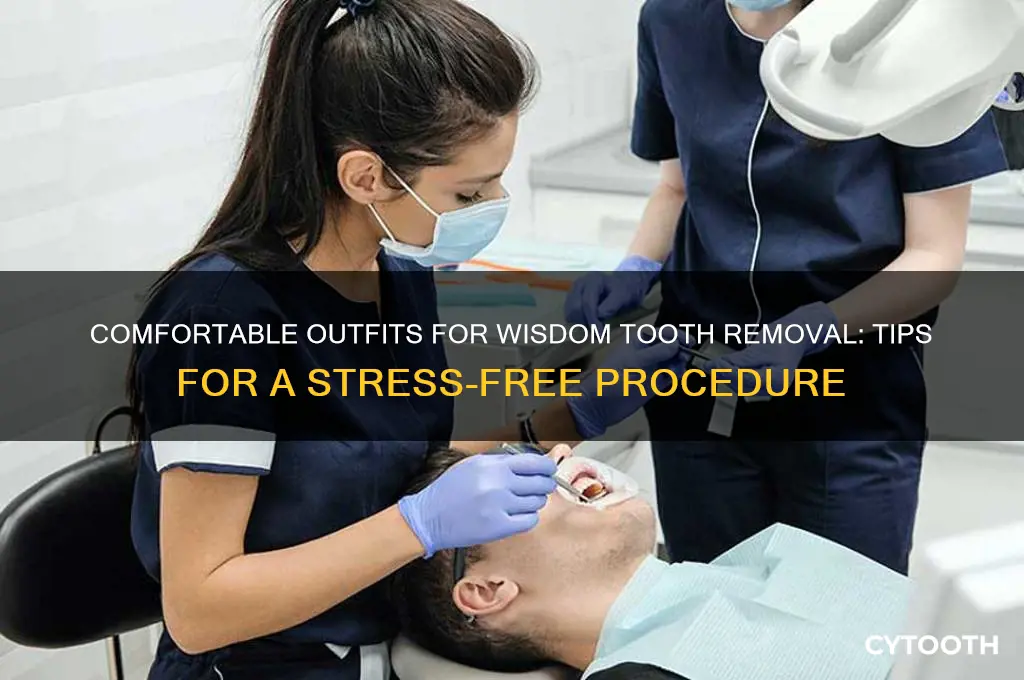
When preparing for wisdom tooth removal, choosing the right attire can significantly enhance your comfort during and after the procedure. Opt for loose-fitting, comfortable clothing, such as a soft shirt or sweater, to avoid any pressure on your face or jaw post-surgery. Avoid tight collars or accessories that might irritate your skin or interfere with medical equipment. Additionally, wear flat, slip-on shoes to make it easier to change in and out of clothing, especially if you’re feeling groggy from anesthesia. Layering with a light jacket or cardigan is also practical, as you may experience temperature fluctuations during recovery. Prioritizing comfort and ease of movement will ensure a smoother experience as you focus on healing.
| Characteristics | Values |
|---|---|
| Clothing Comfort | Loose-fitting, comfortable clothes (e.g., t-shirts, sweatshirts, joggers) |
| Ease of Removal | Avoid tight collars, buttons, or zippers near the neck |
| Sleeve Type | Short sleeves or easily rollable sleeves for IV access |
| Footwear | Slip-on shoes (e.g., sneakers, flats) for easy wear after sedation |
| Temperature Regulation | Layers (e.g., a light jacket) as clinics can be cold |
| Fabric Material | Soft, breathable fabrics (e.g., cotton) to avoid irritation |
| Accessories | Minimal jewelry; avoid necklaces or earrings that could get in the way |
| Hair Management | Tie long hair back to keep it away from the face |
| Post-Procedure Comfort | Clothes that are easy to clean in case of bleeding or stains |
| Sedation Considerations | Clothes that allow for monitoring devices (e.g., blood pressure cuffs) |
| Transportation | Clothes that are easy to move in, as you may feel groggy after sedation |
What You'll Learn

Comfortable Clothing Options
Loose-fitting, breathable fabrics are your best allies when preparing for wisdom tooth removal. Opt for soft materials like cotton or bamboo, which allow your skin to breathe and minimize irritation. Avoid tight clothing, especially around the neck and chest, as it can restrict blood flow and cause discomfort during and after the procedure. A simple, oversized t-shirt paired with elastic-waist pants or leggings ensures ease of movement and accommodates any post-surgery swelling.
Layering is a practical strategy for temperature fluctuations, both in the dental office and during recovery at home. Start with a lightweight base layer, such as a tank top or short-sleeved shirt, and add a zip-up hoodie or cardigan for warmth. This approach allows you to adjust your clothing easily, especially if you experience chills or fever post-surgery. Remember, comfort should trump style here—leave the fashion statements for another day.
Footwear deserves attention too, as bending down to tie shoes can be painful after the procedure. Slip-on shoes like loafers, sneakers with elastic laces, or even cozy slippers are ideal. Ensure they provide adequate support, as you may feel unsteady due to anesthesia or pain medication. Avoid heels or tight boots, which can exacerbate discomfort and make walking difficult.
Finally, consider the practicality of your outfit for post-surgery care. Choose clothing that is easy to remove or adjust, especially if you anticipate changing gauze or ice packs frequently. Button-down shirts or zip-up tops are excellent choices, as they allow access to your face and mouth without pulling garments over your head. By prioritizing functionality and comfort, you’ll create a stress-free environment for recovery.
Cavity in Wisdom Tooth? Here’s What to Do Next
You may want to see also
Easy-to-Remove Tops
Choosing the right attire for wisdom tooth removal can significantly impact your comfort during and after the procedure. One critical aspect often overlooked is the ease of removing and putting back on your topwear. Post-surgery, you’ll likely experience swelling, numbness, or discomfort, making complex clothing a hassle. Opt for tops that are simple to slip on and off, avoiding buttons, zippers, or tight necklines that require maneuvering your head through small openings. A loose-fitting, pullover shirt or a button-down left partially undone can make the dressing process seamless.
Consider the fabric of your top as well. Soft, breathable materials like cotton or modal are ideal, as they minimize irritation against sensitive skin. Avoid synthetic fabrics that can cause sweating or itching, which may exacerbate post-procedure discomfort. Additionally, choose a top with a wide neckline or a V-neck design to avoid pressure on your jaw or face. This small detail can prevent accidental contact with the surgical area while dressing or undressing.
For those who prefer layering, a lightweight cardigan or open-front sweater worn over a tank top can provide warmth without the struggle of pulling it over your head. Ensure the outer layer is loose enough to drape over your shoulders without needing to lift your arms excessively. This approach allows you to remove or adjust your clothing with minimal effort, which is particularly useful if you’re groggy from anesthesia or in pain.
Lastly, plan ahead by wearing your chosen top to the appointment. After the procedure, you won’t want to deal with changing into something uncomfortable or complicated. A well-thought-out outfit ensures you can focus on recovery rather than wrestling with your clothes. Remember, simplicity and comfort are key—your post-surgery self will thank you.
Soothe Sore Wisdom Tooth Pain: Essential Remedies and Relief Tips
You may want to see also
Warm Layers for Recovery
After wisdom tooth removal, your body’s energy is diverted to healing, often leaving you feeling chilled even in a warm room. This is partly due to anesthesia, which can disrupt your body’s temperature regulation, and partly due to reduced physical activity during recovery. Warm layers aren’t just about comfort—they’re a practical strategy to maintain stability in your core temperature, which supports the healing process. Opt for soft, breathable fabrics like cotton or bamboo that sit gently against your skin, avoiding irritation around the surgical site.
Layering is key, as it allows you to adjust to temperature fluctuations without overexerting yourself. Start with a lightweight base layer, such as a thermal undershirt or a soft long-sleeved tee. Add a mid-layer like a fleece jacket or a cozy cardigan, which can be easily removed if you feel too warm. Finish with a loose, zip-up hoodie or a soft robe that provides warmth without pressure on your jaw or face. Avoid tight necklines or heavy fabrics that could rub against sensitive areas or restrict movement.
For lower body warmth, choose loose-fitting sweatpants or leggings made from soft, stretchy material. Pair them with cozy socks or slippers, as cold feet can exacerbate overall discomfort. If you’re recovering during colder months, consider adding a lightweight blanket or throw that you can drape over your shoulders without covering your face. This setup ensures you stay warm without interfering with ice packs or gauze changes.
One often-overlooked detail is the importance of warmth during the car ride home after surgery. Bring a soft blanket or a large scarf to wrap around yourself, as vehicle temperatures can be unpredictable. If you’re prone to feeling cold, a heated blanket (set on low) can be a game-changer, but ensure it’s positioned away from direct contact with your skin or surgical area.
Finally, remember that staying warm isn’t just physical—it’s psychological. Feeling snug and secure in your clothing can reduce anxiety and promote relaxation, which are critical for a smooth recovery. Warm layers act as a subtle reminder to slow down, rest, and prioritize healing. By preparing your wardrobe thoughtfully, you’re not just dressing for comfort; you’re creating an environment that supports your body’s recovery from the inside out.
Broken Wisdom Tooth? Immediate Steps and Remedies for Quick Relief
You may want to see also
Slip-On Shoes Convenience
After a wisdom tooth extraction, the last thing you want is to struggle with shoelaces or tight footwear. Slip-on shoes emerge as a practical solution, offering ease and comfort during a time when bending over or exerting yourself can be painful. Their design eliminates the need for tying, buckling, or zipping, making them ideal for post-surgery mobility.
Consider the scenario: you’re groggy from anesthesia, your jaw is sore, and you need to move around minimally. Slip-on shoes allow you to slide your feet in and out effortlessly, reducing strain on your body. Opt for styles with elastic panels or stretchy materials for a snug fit without pressure. Avoid backless designs like flip-flops, as they lack support and stability, which are crucial when navigating post-surgery dizziness or swelling.
From a comparative standpoint, slip-on sneakers or loafers outperform lace-up shoes or boots in this context. They provide adequate arch support and cushioning, which is essential if you’re prescribed to take short walks to promote blood circulation. Brands like Crocs, Vans Slip-Ons, or Skechers Go Walk are popular choices due to their lightweight construction and shock-absorbing soles. Pair them with non-slip socks for added warmth and grip, especially if you’re moving around tile or hardwood floors.
A practical tip: prepare your slip-on shoes the night before your procedure. Place them near your recovery area so you don’t have to search for them afterward. If swelling is a concern, choose a half-size larger than your usual fit to accommodate any temporary foot enlargement. Remember, the goal is to minimize effort and maximize comfort, ensuring your focus remains on healing rather than footwear hassles.
Wisdom Tooth Removal Recovery: What to Expect Post-Extraction
You may want to see also
Loose-Fitting Bottoms Choice
Comfort is paramount when preparing for wisdom tooth removal, and your choice of bottoms plays a crucial role in ensuring a stress-free experience. Loose-fitting bottoms are highly recommended for several reasons. First, they allow for easy movement, which is essential when transitioning from the waiting room to the dental chair and back. Second, they accommodate any swelling or discomfort that may occur post-procedure, ensuring you don’t feel restricted. Opt for elastic waistbands or drawstring pants, such as joggers or sweatpants, which provide flexibility and adjustability. Avoid tight jeans or tailored trousers, as they can dig into your waist or hips, exacerbating any post-surgery discomfort.
The material of your bottoms is equally important. Soft, breathable fabrics like cotton or fleece are ideal, as they minimize irritation and allow air circulation, which can aid in recovery. Synthetic materials or rough textures should be avoided, as they may cause skin irritation or discomfort, especially if you’re lying still for extended periods. For colder climates, consider layering with thermal leggings underneath loose pants, ensuring warmth without adding bulk or tightness. In warmer weather, lightweight, loose-fitting shorts or linen pants can provide comfort without overheating.
Practicality extends beyond the procedure itself. Loose-fitting bottoms make it easier to change in and out of clothing, which is particularly useful if you’re groggy from anesthesia or experiencing limited mobility. Additionally, they allow for easy access if you need to apply ice packs or adjust bandages post-surgery. For those returning home to rest, loose bottoms ensure you can move freely around the house without aggravating the surgical site. Think of your outfit as a tool to support your recovery, not just a fashion choice.
Lastly, consider the psychological benefits of wearing loose-fitting bottoms. Feeling physically comfortable can significantly reduce anxiety and stress, which are common before and after dental procedures. When you’re not worrying about tight clothing or discomfort, you can focus on relaxation and healing. Pair your loose bottoms with a similarly comfortable top, such as a soft t-shirt or hoodie, to create a cohesive outfit that prioritizes ease and functionality. By choosing the right bottoms, you’re not just dressing for the occasion—you’re setting yourself up for a smoother, more comfortable recovery.
Pre-Wisdom Tooth Surgery Checklist: Essential Steps for a Smooth Recovery
You may want to see also
Frequently asked questions
Wear comfortable, loose-fitting clothing to your wisdom tooth removal appointment. Avoid tight or restrictive outfits, as you may feel swollen or uncomfortable afterward.
It’s best to avoid wearing jewelry, especially necklaces or earrings, as they may interfere with the procedure or get in the way during recovery.
Wear comfortable, slip-on shoes, as you may feel groggy or unsteady after the procedure due to anesthesia. Avoid laces or complicated footwear.
Avoid wearing makeup, especially around the eyes and face, as it may need to be removed or could interfere with the procedure.
It’s recommended to wear glasses instead of contact lenses, as your eyes may become dry or irritated during the procedure due to anesthesia.