Olivia Bennett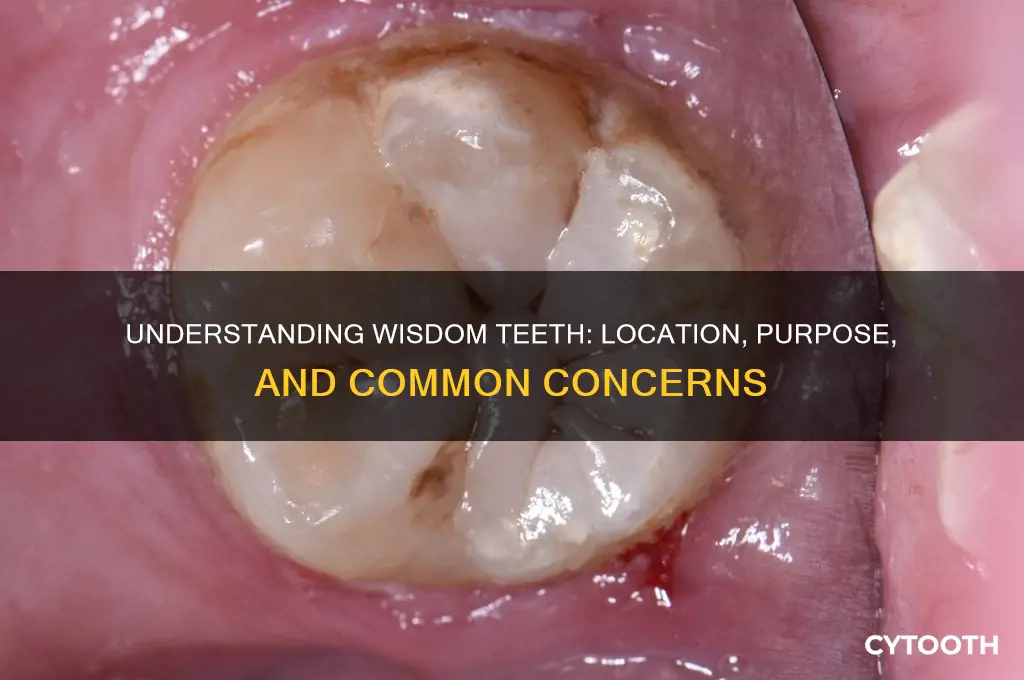
The wisdom tooth, also known as the third molar, is the last set of molars located at the very back of the mouth, typically emerging between the ages of 17 and 25. These teeth are considered vestigial remnants from our ancestors, who needed them to chew coarse, unprocessed foods. However, in modern times, many people’s jaws are not large enough to accommodate these additional teeth, often leading to impaction, misalignment, or other dental issues. As a result, wisdom teeth are frequently extracted to prevent complications such as pain, infection, or damage to adjacent teeth. Understanding their role, development, and potential problems is essential for maintaining oral health.
| Characteristics | Values |
|---|---|
| Tooth Type | Third molars |
| Location | Furthest back in the mouth (posterior), one in each quadrant (upper and lower jaws, left and right sides) |
| Eruption Age | Typically between 17 and 25 years old |
| Number | Four (one in each quadrant) |
| Function | Originally used for grinding plant tissue in early humans; less functional in modern diets |
| Size | Often smaller than other molars due to reduced jaw size in modern humans |
| Common Issues | Impaction (partial or full blockage), misalignment, crowding, decay, gum disease, cysts, or infections |
| Extraction Frequency | Commonly extracted due to lack of space, pain, or potential complications |
| Anthropological Significance | Considered vestigial structures due to evolutionary changes in jaw size and diet |
| Alternative Names | Third molars, "teeth of wisdom" (due to eruption age coinciding with adulthood) |
What You'll Learn
- Wisdom Tooth Location: Found at the back of the mouth, one in each corner
- Eruption Age: Typically emerge between late teens and early twenties
- Purpose of Wisdom Teeth: Originally helped early humans chew coarse, rough foods
- Impaction Issues: Often become impacted due to lack of space in the jaw
- Extraction Reasons: Commonly removed to prevent pain, infection, or dental misalignment

Wisdom Tooth Location: Found at the back of the mouth, one in each corner
Wisdom teeth, scientifically known as third molars, occupy a specific and strategic position in the mouth. Located at the very back, one in each corner of the upper and lower jaws, they are the final set of teeth to emerge, typically between the ages of 17 and 25. This positioning is both their defining characteristic and a source of potential complications. Unlike other molars, their placement at the end of the dental arch often leaves them with limited space, leading to issues like impaction or misalignment. Understanding this unique location is crucial for anyone seeking to comprehend the challenges associated with wisdom teeth.
From an anatomical perspective, the wisdom tooth’s location serves as a testament to human evolutionary history. As our diets shifted from coarse, fibrous foods to softer, processed options, the need for additional molars diminished. This evolutionary change often results in jaws that are too small to accommodate these late-arriving teeth. Their position at the back of the mouth, where the jawbone curves and space is minimal, exacerbates the problem. Dentists frequently analyze this area using X-rays to predict whether a wisdom tooth will erupt properly or require extraction.
For those experiencing discomfort or swelling in the back corners of the mouth, the wisdom tooth’s location is a key diagnostic clue. Pain in this area, particularly in late adolescence or early adulthood, often signals the emergence of these molars. Practical tips for managing discomfort include rinsing with warm salt water, applying a cold compress to the cheek, and taking over-the-counter pain relievers like ibuprofen (200–400 mg every 4–6 hours, as needed). However, persistent symptoms warrant a dental evaluation, as impacted wisdom teeth can lead to infections or damage neighboring teeth.
Comparatively, the location of wisdom teeth sets them apart from other molars in terms of accessibility and treatment. While first and second molars are easier to clean and monitor, wisdom teeth’s rear position makes them harder to reach with a toothbrush or floss. This inaccessibility increases the risk of decay and gum disease, emphasizing the importance of regular dental check-ups. In cases where extraction is necessary, their location also complicates the procedure, often requiring specialized techniques and longer recovery times compared to other tooth removals.
Finally, the wisdom tooth’s location influences decisions about retention or removal. If fully erupted and properly aligned, they can function as valuable chewing surfaces. However, their position at the mouth’s corners means they are often trapped beneath the gums or angled incorrectly, rendering them more trouble than they’re worth. Dentists typically recommend extraction if they cause pain, crowd other teeth, or are difficult to clean. Knowing their precise location helps patients and providers make informed decisions, ensuring oral health is maintained without unnecessary intervention.
Post-Wisdom Tooth Removal Essentials: What to Pack for Recovery
You may want to see also
Eruption Age: Typically emerge between late teens and early twenties
The wisdom teeth, officially known as third molars, often make their debut during a pivotal life stage: the late teenage years to early twenties. This timing coincides with a period of significant physical and emotional development, adding another layer to the already complex transition into adulthood. For many, this eruption age marks the final stage of dental growth, signaling the completion of the adult dentition.
Imagine a 17-year-old high school senior, already navigating the pressures of college applications and social dynamics, suddenly experiencing discomfort at the back of their mouth. This scenario is not uncommon, as the average eruption age for wisdom teeth falls between 17 and 21 years old. However, it's essential to note that this range is not set in stone; some individuals may experience eruption as early as 15 or as late as 25. Factors such as genetics, overall health, and even geographic location can influence the timing of wisdom tooth emergence.
From a developmental perspective, the eruption of wisdom teeth during this age range can be seen as a rite of passage. It's a tangible reminder that the body is still growing and changing, even as young adults begin to assert their independence. However, this process is not without its challenges. The late teens and early twenties are also a time when many individuals are leaving home for the first time, whether for college, work, or travel. Managing the discomfort and potential complications associated with wisdom tooth eruption in a new environment can be daunting.
To navigate this transition effectively, it's crucial to stay informed and proactive. Regular dental check-ups, particularly during the late teenage years, can help identify potential issues before they become problematic. Dentists may recommend monitoring the progress of wisdom teeth or, in some cases, suggest extraction to prevent overcrowding, impaction, or other complications. For those experiencing discomfort, over-the-counter pain relievers like ibuprofen (200-400 mg every 4-6 hours, as needed) can provide temporary relief. However, it's essential to consult a healthcare professional if symptoms persist or worsen.
In the context of overall health, the eruption age of wisdom teeth serves as a reminder of the interconnectedness of bodily systems. Maintaining a balanced diet, rich in nutrients like calcium and vitamin D, can support not only dental health but also overall well-being during this critical period. As young adults embark on their journey into adulthood, understanding and managing the emergence of wisdom teeth can be a valuable step in taking control of their health and wellness. By staying informed, proactive, and attentive to their body's needs, individuals can navigate this milestone with confidence and ease.
Wisdom Tooth Removal Recovery: What to Expect Post-Extraction
You may want to see also
Purpose of Wisdom Teeth: Originally helped early humans chew coarse, rough foods
Wisdom teeth, or third molars, are often viewed as troublesome latecomers in modern dentistry, but their origins tell a story of survival and adaptation. In early humans, these teeth played a crucial role in processing a diet vastly different from today’s. Coarse, unprocessed foods like roots, nuts, and raw meats required significant chewing power, and the additional molars provided the necessary grinding surface. This evolutionary advantage allowed our ancestors to extract nutrients from tough, fibrous materials, ensuring their survival in environments where food was scarce and tools were primitive.
Consider the dietary contrast: early humans consumed foods that were uncooked, unrefined, and mechanically demanding to break down. Modern diets, rich in soft, processed foods, no longer require the same level of molar strength. This shift has rendered wisdom teeth functionally obsolete, often leading to impaction, misalignment, or infection. Yet, their presence remains a biological relic of our hunter-gatherer past, a reminder of how our bodies evolved to meet specific environmental challenges.
From an anatomical perspective, the eruption of wisdom teeth typically occurs between the ages of 17 and 25, a period when the jawbone has reached its full size. In early humans, this timing coincided with the need for additional chewing capacity as diets became more varied and demanding. Today, however, the jawbone is often too small to accommodate these late-erupting molars, leading to common issues like crowding or cyst formation. This mismatch highlights the disconnect between our evolutionary heritage and contemporary lifestyles.
For those experiencing discomfort or complications, proactive dental care is essential. Regular monitoring through X-rays can predict potential issues before they escalate. In cases where extraction is necessary, it’s best performed earlier rather than later, as younger patients (late teens to early 20s) typically recover faster and with fewer complications. Post-extraction care, including cold compresses, soft foods, and avoiding strenuous activity, can minimize pain and promote healing.
While wisdom teeth may seem like an inconvenience today, their historical purpose underscores the remarkable adaptability of the human body. Understanding their role in our evolutionary journey not only provides context for their existence but also informs how we manage them in modern dental practice. By recognizing their origins, we can approach their care with a blend of respect for the past and practicality for the present.
Effective Remedies for Swelling Caused by a Bad Wisdom Tooth
You may want to see also
Impaction Issues: Often become impacted due to lack of space in the jaw
Wisdom teeth, or third molars, are the last set of teeth to emerge, typically between the ages of 17 and 25. Their late arrival often coincides with a jaw that has already accommodated the other 28 teeth, leaving limited space for proper eruption. This spatial constraint is a primary reason why wisdom teeth frequently become impacted—a condition where the tooth fails to fully emerge or grows at an incorrect angle. Impaction can lead to a host of oral health issues, making it a critical concern for both patients and dental professionals.
Consider the anatomy of the jaw: the mandibular and maxillary bones have finite room, and modern diets, which are softer than those of our ancestors, have contributed to reduced jaw size. When wisdom teeth attempt to erupt, they may encounter resistance from adjacent teeth, bone, or gum tissue. This obstruction forces the tooth to grow sideways, partially emerge, or remain trapped beneath the gums. For instance, a mesial impaction, where the tooth angles toward the front of the mouth, is the most common type and often results from insufficient space. Such scenarios highlight the delicate balance between dental development and skeletal structure.
Preventing impaction-related complications begins with early monitoring. Orthodontic evaluations around age 16 can assess jaw space and predict potential issues. Panoramic X-rays provide a comprehensive view of the wisdom teeth’s position and development, allowing dentists to recommend timely interventions. If impaction is likely, extraction is often advised to prevent future problems. Delaying this procedure can increase surgical risks, as the roots of the wisdom teeth continue to develop, making removal more complex after age 25.
For those already experiencing impaction, symptoms like jaw pain, swelling, and difficulty opening the mouth warrant immediate attention. Partial eruptions can create gum flaps that trap food and bacteria, leading to pericoronitis—a painful infection. In severe cases, impacted wisdom teeth may damage adjacent molars or contribute to cysts and tumors in the jaw. Addressing these issues promptly through extraction or other treatments can alleviate discomfort and preserve oral health.
While not all wisdom teeth require removal, understanding the risks of impaction is crucial. Patients should maintain regular dental check-ups and be proactive in discussing concerns with their dentist. By recognizing the spatial challenges that often lead to impaction, individuals can take informed steps to manage their oral health effectively. After all, prevention and early intervention are key to avoiding the complications associated with these late-blooming molars.
Broken Wisdom Tooth? Immediate Steps and Remedies for Quick Relief
You may want to see also
Extraction Reasons: Commonly removed to prevent pain, infection, or dental misalignment
Wisdom teeth, the third set of molars located at the very back of the mouth, often emerge between the ages of 17 and 25. While some individuals experience no issues, many face complications that necessitate extraction. The primary reasons for removal revolve around preventing pain, infection, and dental misalignment, which can arise due to the teeth’s late arrival and limited jaw space. Understanding these risks helps in making informed decisions about oral health.
Pain is a common indicator that wisdom teeth may need extraction. When these molars partially erupt or become impacted (stuck beneath the gum line), they can cause persistent discomfort. This pain often radiates to the jaw, ears, or neck, disrupting daily activities. Over-the-counter pain relievers like ibuprofen (200–400 mg every 4–6 hours) may provide temporary relief, but they do not address the root cause. Extraction eliminates the source of pain and prevents further complications, such as nerve damage or cyst formation.
Infection is another critical reason for wisdom tooth removal. Partially erupted teeth create pockets where bacteria can accumulate, leading to conditions like pericoronitis—an infection of the gum tissue surrounding the tooth. Symptoms include swelling, redness, bad breath, and difficulty opening the mouth. Antibiotics (e.g., amoxicillin 500 mg three times daily for 7 days) can treat acute infections but are not a long-term solution. Extraction reduces the risk of recurrent infections and protects overall oral health.
Dental misalignment is a less immediate but equally important concern. Wisdom teeth can exert pressure on existing teeth, causing crowding or shifting. This is particularly problematic for individuals who have undergone orthodontic treatment, as it can undo years of alignment work. For example, a study published in the *American Journal of Orthodontics and Dentofacial Orthopedics* found that 47% of patients experienced dental crowding after wisdom tooth eruption. Early extraction, ideally before age 25, minimizes this risk by taking advantage of the teeth’s less developed roots and more flexible bone structure.
In summary, wisdom tooth extraction is a proactive measure to avoid pain, infection, and misalignment. Dentists often recommend removal based on X-rays and symptoms, even if issues are not yet apparent. Practical tips include maintaining good oral hygiene, attending regular dental check-ups, and addressing discomfort promptly. While extraction may seem daunting, it is a routine procedure that significantly reduces long-term dental problems, ensuring a healthier smile for years to come.
Wisdom Tooth Woes: Essential Steps for Pain Relief and Recovery
You may want to see also
Frequently asked questions
The wisdom tooth, also known as the third molar, is the last set of molars located at the back of the mouth.
Most people have four wisdom teeth, one in each corner of the mouth (upper left, upper right, lower left, and lower right).
Wisdom teeth typically begin to erupt between the ages of 17 and 25, though this can vary from person to person.