Hailey Morgan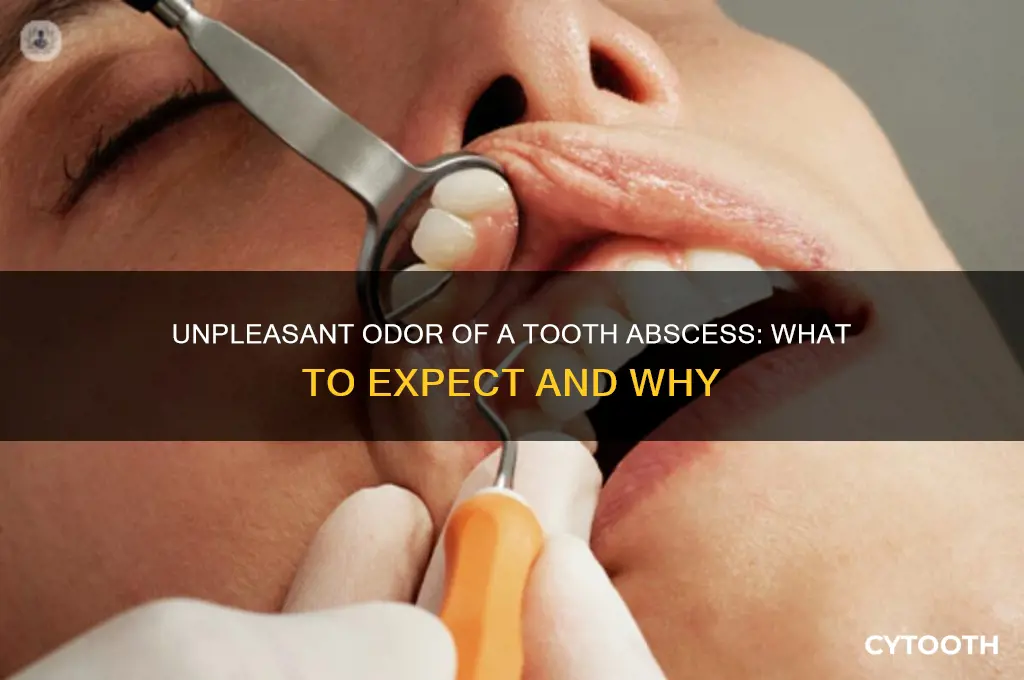
A tooth abscess, a painful infection at the root of a tooth or between the gum and a tooth, often raises concerns beyond discomfort, including its potential odor. The smell associated with a tooth abscess can be quite distinct and unpleasant, typically described as foul or putrid, resembling the scent of decaying matter. This odor arises from the accumulation of pus, bacteria, and dead tissue within the abscess, which may drain into the mouth, releasing a noticeable smell. Recognizing this characteristic odor is crucial, as it can serve as an early warning sign of an underlying dental issue that requires prompt attention to prevent further complications.
| Characteristics | Values |
|---|---|
| Odor Description | Foul, putrid, or unpleasant smell |
| Smell Source | Drainage from the abscess, which may contain pus, bacteria, and dead tissue |
| Common Descriptions | Similar to rotten meat, garbage, or sewage |
| Intensity | Strong and persistent, often noticeable to others |
| Associated Symptoms | Bad taste in the mouth, swollen gums, severe toothache, fever, and general malaise |
| Cause of Smell | Bacterial infection and breakdown of tissue within the abscess |
| Treatment Impact | Proper treatment (e.g., drainage, antibiotics, root canal) reduces or eliminates the smell |
| Complications | If left untreated, the smell may worsen as the infection spreads |
What You'll Learn
- Odor Description: Pungent, foul, and similar to rotten meat or sewage, often noticeable when draining
- Causes of Smell: Bacteria breakdown of tissue and pus creates volatile sulfur compounds
- When Smell Occurs: Most prominent during drainage or when infection is advanced?
- Related Symptoms: Bad breath, swollen gums, pain, fever, and unpleasant taste
- When to See a Dentist: Immediate care needed if smell is accompanied by severe pain or fever?

Odor Description: Pungent, foul, and similar to rotten meat or sewage, often noticeable when draining
The smell of a tooth abscess is often described as pungent and foul, akin to the odor of rotten meat or sewage. This distinctive scent is not merely unpleasant; it serves as a critical indicator of an underlying infection. When bacteria invade the dental pulp or surrounding tissues, they produce volatile sulfur compounds (VSCs) such as hydrogen sulfide and methyl mercaptan. These compounds are responsible for the putrid smell, which becomes particularly noticeable when the abscess drains. Understanding this odor can prompt timely dental intervention, preventing further complications like bone loss or systemic infection.
To identify this odor, consider the context in which it arises. The smell is most apparent when the abscess ruptures, releasing pus and bacteria into the oral cavity or surrounding tissues. Patients often report a sudden, intense odor that lingers even after rinsing with mouthwash. If you notice a persistent, sewage-like smell accompanied by symptoms such as throbbing pain, swelling, or a bad taste in the mouth, seek dental care immediately. Ignoring these signs can lead to abscess recurrence or the spread of infection to other parts of the body.
Comparatively, the odor of a tooth abscess differs from other oral malodor conditions like halitosis. While halitosis may result from poor oral hygiene or dietary factors, the abscess smell is more localized and intense. Halitosis often improves with brushing, flossing, or using antimicrobial mouth rinses, whereas the abscess odor persists until the infection is treated. This distinction underscores the importance of professional diagnosis to differentiate between benign and serious oral health issues.
For those experiencing this odor, practical steps can alleviate discomfort while awaiting dental treatment. Rinsing with warm saltwater (1/2 teaspoon of salt in 8 ounces of water) can help reduce inflammation and temporarily mask the smell. Avoid using alcohol-based mouthwashes, as they may irritate the infected area. Over-the-counter pain relievers like ibuprofen (200–400 mg every 4–6 hours) can manage pain, but they do not address the infection itself. Most importantly, refrain from self-treatment methods like popping the abscess, as this can worsen the infection and delay proper care.
In conclusion, the pungent, foul odor of a tooth abscess is a red flag that demands immediate attention. Its similarity to rotten meat or sewage is a direct result of bacterial activity and VSC production. Recognizing this smell, understanding its causes, and taking prompt action can prevent severe dental and systemic complications. If you suspect a tooth abscess, consult a dentist without delay—your oral health depends on it.
Effective Dental Treatments to Eliminate Tooth Abscess and Restore Oral Health
You may want to see also
Causes of Smell: Bacteria breakdown of tissue and pus creates volatile sulfur compounds
The putrid odor emanating from a tooth abscess is a telltale sign of bacterial invasion and tissue destruction. At the heart of this foul smell lies the breakdown of tissue and pus by bacteria, a process that releases volatile sulfur compounds (VSCs) such as hydrogen sulfide, methyl mercaptan, and dimethyl sulfide. These compounds are notorious for their unpleasant odors, often likened to rotten eggs, decaying flesh, or garbage. When bacteria infiltrate the dental pulp or surrounding tissues, they initiate a cascade of events that lead to the production of these malodorous gases, which can permeate the mouth and even be detected on the breath.
To understand the mechanism behind this odor, consider the bacterial metabolism that occurs within the abscess. As bacteria proliferate, they secrete enzymes that break down proteins, lipids, and other organic matter in the affected tissue. This degradation process releases amino acids, particularly cysteine and methionine, which are rich in sulfur. Bacterial enzymes, such as cysteine desulfhydrase, further metabolize these amino acids, producing hydrogen sulfide and other VSCs. The concentration of these compounds can be influenced by factors like the type of bacteria present, the extent of tissue damage, and the individual's oral hygiene practices. For instance, anaerobic bacteria like Porphyromonas gingivalis and Fusobacterium nucleatum are particularly efficient at producing VSCs, exacerbating the odor.
A practical tip for managing the smell of a tooth abscess involves addressing the bacterial source. Rinsing with a warm saltwater solution (1/2 teaspoon of salt in 8 ounces of water) can help reduce bacterial load and temporarily alleviate odor. However, this is a palliative measure, not a cure. Antibacterial mouthwashes containing chlorhexidine (0.12% concentration) can also be effective, but they should be used under dental supervision, especially for prolonged periods, as overuse can disrupt oral flora and stain teeth. Ultimately, the definitive solution lies in professional treatment, such as root canal therapy or abscess drainage, to eliminate the infection and halt the production of VSCs.
Comparing the odor of a tooth abscess to other oral conditions highlights its distinctiveness. While bad breath (halitosis) often stems from poor oral hygiene or dietary factors, the smell of an abscess is more intense and persistent, reflecting the ongoing bacterial activity and tissue necrosis. Unlike the transient odor from foods like garlic or onions, which dissipates within hours, the smell from an abscess persists until the infection is treated. This comparison underscores the urgency of addressing a tooth abscess, as the odor is not merely a social inconvenience but a symptom of a serious, potentially systemic infection.
In conclusion, the smell of a tooth abscess is a direct consequence of bacterial breakdown of tissue and pus, resulting in the release of volatile sulfur compounds. Recognizing this odor as a red flag for infection is crucial, as it signals the need for immediate dental intervention. While temporary measures can mitigate the smell, they do not address the underlying issue. By understanding the biological processes at play, individuals can take informed steps to seek treatment and prevent complications, ensuring both oral health and olfactory peace.
Identifying Cat Tooth Abscesses: Symptoms, Appearance, and Treatment Options
You may want to see also
When Smell Occurs: Most prominent during drainage or when infection is advanced
The pungent odor associated with a tooth abscess is not a constant companion but rather a telltale sign that manifests at specific stages of the infection. It is during the drainage of pus or when the infection reaches an advanced state that the smell becomes most noticeable and concerning. This odor is a crucial indicator, often prompting individuals to seek dental care.
The Science Behind the Smell: When a tooth abscess progresses, it leads to the accumulation of pus, a thick fluid containing white blood cells, dead tissue, and bacteria. As the infection advances, the body's immune response intensifies, causing the breakdown of tissues and the release of volatile sulfur compounds (VSCs). These VSCs, such as hydrogen sulfide and methyl mercaptan, are responsible for the distinct, unpleasant odor. The smell is often described as similar to rotten eggs or garbage, a result of the high sulfur content.
Drainage and Odor Release: The act of drainage, whether spontaneous or through dental intervention, provides a direct pathway for the odor to escape. As the abscess ruptures, the trapped pus is released, carrying with it the concentrated VSCs. This is why the smell can be particularly strong and sudden during drainage. For instance, a patient might notice a brief but intense odor when an abscess drains into the mouth, followed by a sense of relief as the pressure subsides.
Advanced Infections and Persistent Smell: In cases where the abscess remains untreated, the infection can spread, leading to a chronic condition. Here, the smell may become a persistent issue. As the infection advances, it can erode bone and tissue, creating more pockets for bacteria to thrive. This ongoing bacterial activity continues to produce VSCs, resulting in a constant, foul odor that may be noticeable to both the affected individual and those around them.
Practical Tips for Management: If you suspect a tooth abscess, prompt dental attention is crucial. In the interim, here are some measures to consider:
- Rinsing: Gently rinsing the mouth with warm saltwater can help draw out some of the infection and temporarily reduce odor.
- Pain Management: Over-the-counter pain relievers can provide comfort, but they do not treat the infection.
- Avoidance: Refrain from hot or cold foods and drinks that may exacerbate pain and potentially increase drainage.
- Dental Visit: Seek professional care without delay. Dentists can provide antibiotics to control the infection and perform procedures to drain the abscess safely, offering long-term relief from both pain and odor.
Understanding the correlation between the smell and the stage of infection is essential for timely intervention. While the odor may be a distressing symptom, it serves as a vital clue, guiding individuals towards the necessary dental treatment to address the underlying issue.
Ruptured Tooth Abscess: Visual Symptoms, Risks, and Immediate Care Guide
You may want to see also
Related Symptoms: Bad breath, swollen gums, pain, fever, and unpleasant taste
A tooth abscess is often accompanied by a distinct, unpleasant odor that can be described as a mix of foul, metallic, or even sweetish scents. This smell is a byproduct of the infection, where bacteria break down tissue and release volatile sulfur compounds. However, the odor alone isn’t the only red flag—it’s part of a cluster of symptoms that signal a deeper issue. Bad breath, for instance, is a common complaint, but when it persists despite oral hygiene, it’s a warning sign. This isn’t your average morning breath; it’s a persistent, pungent odor that lingers even after brushing or using mouthwash. The source? The bacterial activity within the abscess, which produces gases like hydrogen sulfide, the same compound responsible for the smell of rotten eggs.
Swollen gums are another telltale symptom, often overlooked until the pain becomes unbearable. The swelling occurs as the body’s immune system responds to the infection, causing inflammation. This isn’t just a slight puffiness—it’s noticeable, tender, and may even make it difficult to chew or speak. For adults, especially those over 40, this symptom can be exacerbated by pre-existing gum disease or weakened immunity. A practical tip: if you notice swelling accompanied by redness or pus, apply a cold compress to reduce inflammation temporarily, but seek dental care immediately. Ignoring this symptom can lead to the infection spreading to the jawbone or bloodstream, a potentially life-threatening condition.
Pain is the most immediate and undeniable symptom of a tooth abscess, often described as throbbing, sharp, or radiating. It’s not just localized to the tooth—it can extend to the ear, jaw, or neck. Over-the-counter pain relievers like ibuprofen (600–800 mg every 6–8 hours) can provide temporary relief, but they’re not a cure. The pain worsens when lying down because blood rushes to the head, increasing pressure on the infected area. Children, particularly those under 12, may express pain through irritability or refusal to eat, making it crucial for parents to monitor for other symptoms like fever.
Fever is the body’s alarm system, signaling that the infection is spreading. A low-grade fever (100–101°F) is common with localized abscesses, but if it climbs higher or is accompanied by chills, it indicates a systemic infection. This is especially dangerous for individuals with diabetes, HIV, or compromised immune systems, as their bodies may struggle to contain the infection. Hydration and rest are essential, but a fever above 102°F requires immediate medical attention. Antibiotics like amoxicillin (500 mg, 3 times daily for adults) are often prescribed, but only a dentist can address the root cause by draining the abscess.
Finally, an unpleasant taste in the mouth is a symptom often dismissed as a minor annoyance. This taste, often described as salty, bitter, or metallic, is caused by pus or blood from the abscess mixing with saliva. It’s a clear sign that the infection is active and draining internally. Gargling with warm saltwater (1/2 teaspoon of salt in 8 ounces of water) can provide temporary relief, but it won’t resolve the issue. This symptom, combined with others, is a critical indicator that professional intervention is needed. Ignoring it can lead to complications like sepsis or Ludwig’s angina, a severe infection of the floor of the mouth. The takeaway? Don’t wait for symptoms to worsen—act at the first sign of trouble.
Tooth Abscess Popped? Immediate Steps to Take for Relief and Recovery
You may want to see also
When to See a Dentist: Immediate care needed if smell is accompanied by severe pain or fever
A tooth abscess can produce a foul odor, often described as a mix of rotten food, sulfur, or a metallic tang. This smell arises from the bacteria and decaying tissue within the infected area. While unpleasant, the odor itself isn’t always an emergency. However, when paired with severe pain or fever, it signals a critical situation requiring immediate dental intervention.
Recognizing the Red Flags: Severe pain from an abscess can feel throbbing, sharp, or constant, radiating to the jaw, ear, or neck. Fever, typically above 100.4°F (38°C), indicates the infection may be spreading. If the abscess ruptures, you might notice a sudden foul taste or salty fluid in your mouth, but this doesn’t always alleviate the risk. These symptoms, combined with the distinctive odor, suggest the infection has progressed beyond a minor issue.
Why Immediate Care is Non-Negotiable: Delaying treatment can lead to serious complications, including sepsis, bone loss, or even systemic infection. Dentists can drain the abscess, prescribe antibiotics (commonly amoxicillin 500mg every 8 hours for adults), and address the root cause, such as a cavity or gum disease. Over-the-counter pain relievers like ibuprofen (600mg every 6 hours) may temporarily ease discomfort but aren’t a substitute for professional care.
Practical Steps Until Your Appointment: Rinse your mouth with warm saltwater (1/2 teaspoon salt in 8 ounces of water) to reduce bacteria. Avoid hot or cold foods that exacerbate pain. If swelling is severe, apply a cold compress for 15–20 minutes at a time. Do not attempt to drain the abscess yourself, as this can worsen the infection.
Preventive Measures Moving Forward: Regular dental check-ups every six months, proper brushing and flossing, and addressing toothaches promptly can prevent abscesses. If you’re prone to cavities or gum issues, consider fluoride treatments or antimicrobial mouthwashes recommended by your dentist. Ignoring early signs, like persistent bad breath or mild tooth sensitivity, can lead to the dire scenario described above. Act swiftly when the smell is accompanied by severe pain or fever—your health depends on it.
Tooth Abscess After Popping: Appearance, Symptoms, and What to Expect
You may want to see also
Frequently asked questions
A tooth abscess often produces a foul, unpleasant odor due to the presence of bacteria, pus, and decaying tissue. The smell is typically described as putrid or similar to rotten meat.
Yes, the smell from a tooth abscess can be strong enough to be noticeable to others, especially if the infection is severe or the abscess has ruptured.
The smell may intensify as the infection progresses or if the abscess drains, releasing more pus and bacteria into the mouth.
The smell may be constant, but it can also fluctuate depending on factors like oral hygiene, whether the abscess has drained, or if food particles get trapped near the infection.
While mouthwash or mints may temporarily mask the odor, they do not address the underlying infection. The smell will persist until the abscess is treated by a dentist.