Matthew Grant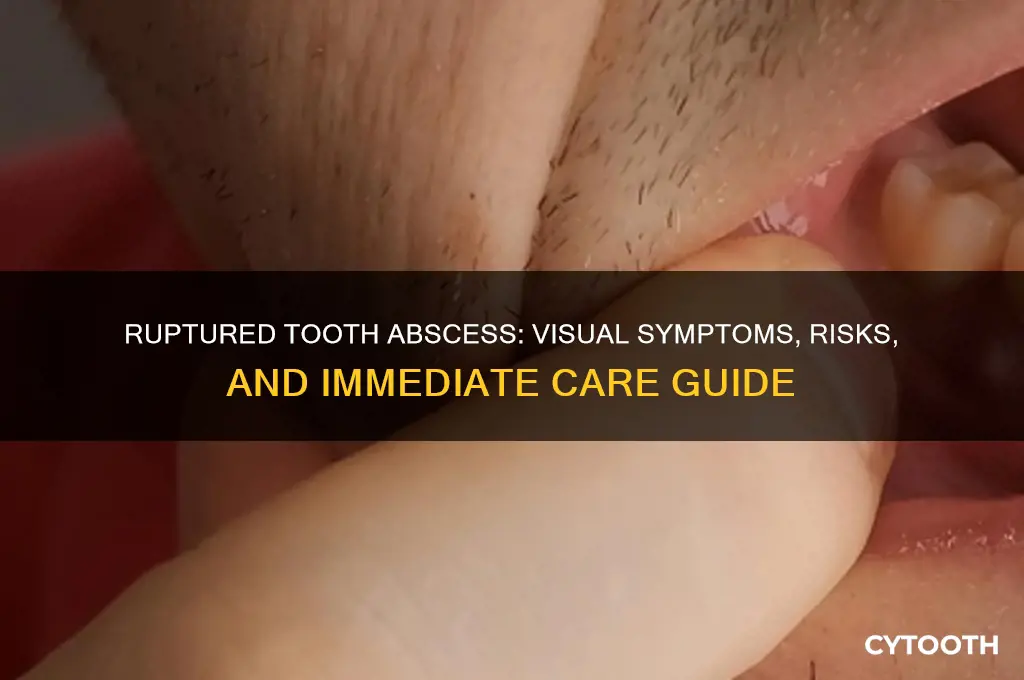
A ruptured tooth abscess is a serious dental condition that occurs when a bacterial infection in the tooth or gum spreads, causing a pus-filled pocket to form. When this abscess ruptures, it often results in a sudden release of foul-tasting or foul-smelling pus, which may be accompanied by immediate relief from intense pain. The affected area may appear swollen, red, and tender, with possible drainage of pus from the gum line or a visible hole in the tooth. In some cases, the rupture can lead to a noticeable bad taste in the mouth or even swelling in the face or jaw. Recognizing these symptoms is crucial, as a ruptured abscess can still pose risks of further infection or complications if not promptly treated by a dental professional.
What You'll Learn
- Visible Swelling: Noticeable puffiness around the infected tooth, often extending to the cheek or jawline
- Pus Discharge: Thick, yellowish fluid oozing from the gum near the affected tooth
- Redness and Inflammation: Gums appear bright red, tender, and swollen around the abscess site
- Open Sore or Bump: A small, pimple-like bump (draining fistula) on the gum surface
- Tooth Discoloration: Darkening or grayish hue of the tooth due to nerve damage or infection

Visible Swelling: Noticeable puffiness around the infected tooth, often extending to the cheek or jawline
One of the most unmistakable signs of a ruptured tooth abscess is the visible swelling that accompanies it. This swelling, often described as puffiness, typically originates around the infected tooth but doesn’t stop there. It can extend to the cheek or jawline, creating a noticeable asymmetry in the face. The area may appear red, warm to the touch, and tender, signaling the body’s inflammatory response to the infection. This swelling is not merely cosmetic; it’s a red flag indicating that the abscess has likely ruptured, releasing pus and bacteria into the surrounding tissues.
To manage this swelling effectively, apply a cold compress to the affected area for 15–20 minutes at a time, repeating every 2–3 hours. This helps reduce inflammation and provides temporary pain relief. Over-the-counter anti-inflammatory medications like ibuprofen (200–400 mg every 4–6 hours, as directed by a pharmacist or physician) can also alleviate discomfort and minimize swelling. However, these measures are palliative, not curative—immediate dental intervention is crucial to address the root cause.
Comparatively, the swelling from a ruptured abscess differs from that of a non-ruptured one. In the latter, swelling is often localized and less pronounced, while a rupture leads to more widespread inflammation as the infection spreads. For instance, a ruptured abscess might cause the entire side of the face to appear swollen, whereas an intact abscess may only cause mild puffiness around the tooth. Recognizing this distinction is key to understanding the urgency of the situation.
Practically, monitor the swelling closely. If it worsens, spreads to the neck or throat, or is accompanied by fever, difficulty breathing, or swallowing, seek emergency dental or medical care immediately. These symptoms could indicate a severe infection, such as Ludwig’s angina, which requires prompt treatment. For children or elderly individuals, who may be more susceptible to complications, vigilance is especially critical. Early detection and treatment not only alleviate discomfort but also prevent potentially life-threatening conditions.
Identifying Tooth Abscess Symptoms: Visual Signs and What to Look For
You may want to see also
Pus Discharge: Thick, yellowish fluid oozing from the gum near the affected tooth
A ruptured tooth abscess often presents with a distinctive and alarming symptom: pus discharge. This thick, yellowish fluid oozes from the gum near the affected tooth, signaling a bacterial infection that has breached the tooth's inner layers and spread to the surrounding tissues. The pus is a mixture of white blood cells, dead tissue, and bacteria, a tangible sign of the body’s attempt to fight the infection. Its appearance is both a relief, as it indicates the abscess is draining, and a warning, as it confirms the severity of the dental issue.
Analyzing the characteristics of this discharge provides insight into the infection’s progression. The yellowish hue stems from the presence of dead neutrophils, a type of white blood cell, while the thickness results from the concentration of cellular debris and bacteria. Unlike clear or serous fluid, which might indicate a less severe condition, pus is a clear marker of an active, suppurative infection. Its consistency can vary, but it typically leaves a lingering, unpleasant taste and odor, further emphasizing the need for immediate dental intervention.
For those experiencing this symptom, prompt action is critical. Rinsing the mouth with warm saltwater can temporarily alleviate discomfort and help keep the area clean, but it is not a substitute for professional treatment. Avoid applying pressure or attempting to squeeze the abscess, as this can force bacteria deeper into tissues or bloodstream, potentially leading to systemic complications like sepsis. Instead, schedule an emergency dental appointment to address the infection’s root cause, which often involves draining the abscess, administering antibiotics, and treating the damaged tooth.
Comparatively, pus discharge from a ruptured tooth abscess differs from other oral conditions. For instance, gingivitis may cause redness and bleeding but rarely produces pus. A periodontal abscess, while similar, typically forms on the gum rather than near a specific tooth. Recognizing these distinctions is key to seeking appropriate care. Ignoring pus discharge can lead to bone loss, tooth extraction, or even life-threatening infections, underscoring the urgency of treating this symptom as a dental emergency.
Practically, maintaining oral hygiene can reduce the risk of abscesses, but once pus is present, home remedies are insufficient. Over-the-counter pain relievers like ibuprofen (200–400 mg every 4–6 hours) can manage pain temporarily, but antibiotics such as amoxicillin (500 mg every 8 hours) or clindamycin (300 mg every 6 hours) must be prescribed by a dentist or physician. For children, dosages are weight-based, typically 20–40 mg/kg/day of amoxicillin, divided into doses. Always follow professional guidance, as misuse of antibiotics can lead to resistance and further complications.
Treating Abscessed Teeth: Dentists' Role in Diagnosis and Relief
You may want to see also
Redness and Inflammation: Gums appear bright red, tender, and swollen around the abscess site
The gums surrounding a ruptured tooth abscess often exhibit a striking redness, a telltale sign of the body's inflammatory response to infection. This bright red discoloration, akin to a sunburn but localized to the affected area, is caused by increased blood flow as the immune system rushes to combat the bacterial invasion. The redness typically extends beyond the immediate abscess site, forming a halo-like pattern that can be easily distinguished from the healthy pink hue of normal gum tissue.
Upon closer inspection, the inflamed gums may appear shiny and swollen, with a puffy texture that feels tender to the touch. This swelling, known as edema, occurs as fluid accumulates in the gum tissues in response to the infection. In severe cases, the inflammation can spread to the face, causing noticeable facial swelling and discomfort. It is crucial to note that attempting to drain or squeeze the abscess at home can exacerbate the condition, potentially leading to further complications.
To alleviate the redness and inflammation associated with a ruptured tooth abscess, prompt dental intervention is essential. A dentist may prescribe a course of antibiotics, such as amoxicillin (500 mg, 3 times daily for 7–10 days), to combat the infection. Over-the-counter pain relievers like ibuprofen (200–400 mg every 4–6 hours) can help reduce inflammation and manage pain. Additionally, rinsing the mouth with a warm saltwater solution (1/2 teaspoon of salt in 8 ounces of water) several times a day can provide temporary relief and promote healing.
Comparing the appearance of healthy gums to those affected by a ruptured abscess highlights the importance of early detection and treatment. While healthy gums are firm, pale pink, and snugly fit around the teeth, abscess-affected gums display a dramatic transformation, with redness, swelling, and tenderness dominating the clinical picture. By recognizing these signs and seeking timely dental care, individuals can prevent the progression of the infection and minimize the risk of complications, such as tooth loss or systemic spread of bacteria.
In practice, individuals experiencing symptoms of a ruptured tooth abscess should prioritize scheduling a dental appointment as soon as possible. In the interim, maintaining good oral hygiene, including gentle brushing and flossing, can help prevent further irritation to the affected area. Avoiding hot, spicy, or acidic foods and beverages can also reduce discomfort and promote a more comfortable healing process. By combining professional treatment with self-care measures, patients can effectively manage the redness and inflammation associated with this condition, paving the way for a swift and successful recovery.
Unpleasant Taste of a Burst Tooth Abscess: What to Expect
You may want to see also
Open Sore or Bump: A small, pimple-like bump (draining fistula) on the gum surface
A small, pimple-like bump on the gum surface, often referred to as a draining fistula, is a telltale sign of a ruptured tooth abscess. This bump, though seemingly minor, is a critical indicator of an underlying infection that has breached the tooth’s pulp and spread to the surrounding tissues. Unlike a typical pimple, this lesion is a gateway for pus to drain from the infected area, providing temporary relief from pressure but signaling a serious oral health issue. Recognizing this symptom early can prevent complications such as bone loss or systemic infection.
Analyzing its appearance, the bump is usually red, swollen, and tender to the touch. It may rupture spontaneously, releasing a foul-tasting or foul-smelling discharge. This drainage is a mix of pus, bacteria, and debris from the infected tooth. While the rupture might reduce pain temporarily, it does not resolve the infection. Instead, it highlights the need for immediate dental intervention. Ignoring this symptom can lead to recurrent abscesses or deeper tissue damage, emphasizing the importance of professional treatment.
From a practical standpoint, if you notice a pimple-like bump on your gums, avoid attempting to pop or squeeze it, as this can worsen the infection or spread bacteria. Instead, rinse your mouth with warm saltwater (1/2 teaspoon of salt in 8 ounces of water) to help reduce inflammation and promote drainage. Over-the-counter pain relievers like ibuprofen (200–400 mg every 6 hours) can manage discomfort, but they are not a substitute for dental care. Schedule an emergency dental appointment to address the root cause, which often involves root canal therapy or tooth extraction.
Comparatively, while a ruptured abscess may resemble a harmless gum boil, its implications are far more severe. Unlike superficial skin issues, this bump is a symptom of an internal infection that requires targeted treatment. Antibiotics (e.g., amoxicillin 500 mg three times daily for adults) may be prescribed to control the infection, but they cannot eliminate the source. Only a dentist can remove the infected tissue or treat the affected tooth, making prompt action essential. Delaying care risks the infection spreading to the jawbone, sinuses, or bloodstream, with potentially life-threatening consequences.
In conclusion, a small, pimple-like bump on the gum surface is a red flag for a ruptured tooth abscess. Its presence demands immediate attention, as it indicates an infection that has progressed beyond the tooth’s interior. By understanding its appearance, avoiding harmful self-treatment, and seeking professional care, you can prevent further damage and restore oral health. Remember, this symptom is not just a minor irritation—it’s a warning sign that should never be ignored.
Abscessed Tooth Treatment: What to Expect and How to Heal
You may want to see also
Tooth Discoloration: Darkening or grayish hue of the tooth due to nerve damage or infection
A ruptured tooth abscess often presents with visible signs of distress, and one of the most telling indicators is tooth discoloration. When a tooth takes on a darkening or grayish hue, it’s a red flag signaling underlying nerve damage or infection. This change occurs because the blood supply to the tooth’s pulp becomes compromised, leading to the breakdown of red blood cells and the release of hemoglobin byproducts, which stain the dentin from within. Unlike surface stains caused by food or drink, this discoloration is intrinsic, meaning it originates from inside the tooth and cannot be removed by brushing or whitening treatments.
To identify this issue, examine the affected tooth under good lighting. A healthy tooth typically appears bright and uniform in color, whereas a darkened or grayish tooth stands out as an anomaly. In some cases, the discoloration may start subtly, with a slight yellow or brown tint, and gradually deepen over time. If you notice this change, especially accompanied by symptoms like persistent pain, swelling, or a foul taste in the mouth, it’s critical to seek dental care immediately. Ignoring these signs can lead to further complications, including the spread of infection to surrounding tissues or even systemic health issues.
Preventing tooth discoloration from nerve damage or infection begins with proactive oral hygiene and regular dental check-ups. For adults, brushing twice daily with fluoride toothpaste and flossing daily are non-negotiable habits. Children under 12 should use a pea-sized amount of toothpaste to avoid fluorosis, while adults can use a full strip. Additionally, limiting sugary foods and beverages reduces the risk of decay, which can progress to abscesses if left untreated. If you experience a tooth injury, such as a crack or chip, visit a dentist within 24 hours to prevent bacteria from reaching the pulp and causing infection.
Comparatively, tooth discoloration from nerve damage differs from other types of staining, such as those caused by aging or external factors. While surface stains may respond to professional whitening or at-home remedies, intrinsic discoloration often requires more invasive treatments. Root canal therapy is the gold standard for addressing this issue, as it removes the infected or damaged pulp, halts the progression of discoloration, and saves the natural tooth. In severe cases, extraction may be necessary, followed by replacement options like implants or bridges. Early intervention is key to preserving both the appearance and function of the tooth.
In conclusion, a darkened or grayish tooth is a visible symptom of a ruptured abscess or internal damage that demands attention. By understanding the causes, recognizing the signs, and taking preventive measures, you can protect your oral health and avoid the aesthetic and functional consequences of untreated infection. If you suspect an issue, don’t delay—consult a dentist to determine the appropriate course of action and restore your smile’s health and vibrancy.
Identifying Cat Tooth Abscesses: Symptoms, Appearance, and Treatment Options
You may want to see also
Frequently asked questions
A ruptured tooth abscess may appear as a swollen, red, or inflamed area on the gum near the affected tooth. It can also cause a visible pimple-like bump (called a parulis or gum boil) that may ooze pus.
Yes, the gums around the abscess may appear bright red or dark red due to inflammation. In some cases, the affected tooth may darken or change color due to nerve damage or infection.
The pus from a ruptured abscess is typically thick, yellowish-white, or greenish in color. It may have a foul odor and can be accompanied by a bad taste in the mouth.
Yes, a ruptured tooth abscess can lead to noticeable facial swelling on the side of the affected tooth. The swelling may extend to the cheek, jawline, or even the neck in severe cases.