Samantha Blake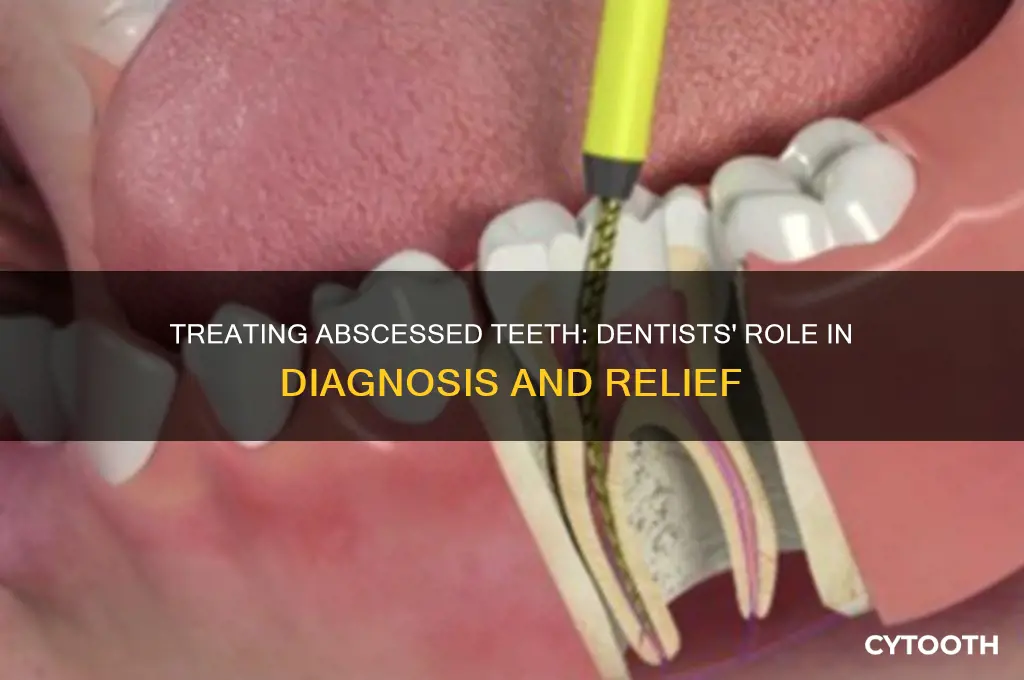
Dentists play a crucial role in treating an abscessed tooth, a painful condition caused by a bacterial infection that leads to the formation of pus within the tooth or gums. When a patient presents with symptoms such as severe toothache, swelling, fever, or a pimple-like bump on the gums, the dentist will first conduct a thorough examination, which may include X-rays, to diagnose the abscess. Treatment typically involves draining the pus to relieve pain and eliminate the infection, often through a root canal procedure if the abscess is inside the tooth, or by making a small incision in the gum if it is periodontal. Additionally, antibiotics may be prescribed to combat the infection, and in severe cases, extraction of the tooth might be necessary to prevent further complications. The dentist will also address the underlying cause, such as decay or gum disease, to prevent future abscesses and ensure long-term oral health.
| Characteristics | Values |
|---|---|
| Diagnosis | Dentists examine the tooth, gums, and surrounding tissues, often using X-rays to assess the extent of infection. |
| Drainage | Incision and drainage of the abscess to relieve pain and remove pus. |
| Antibiotics | Prescribe antibiotics to control or eliminate the bacterial infection. |
| Pain Management | Provide pain relievers or recommend over-the-counter medications. |
| Root Canal Therapy | Perform a root canal to remove infected pulp and save the tooth. |
| Tooth Extraction | Extract the tooth if it cannot be saved or if the infection is severe. |
| Cleaning and Disinfection | Clean the affected area to prevent further infection. |
| Follow-Up Care | Schedule follow-up appointments to monitor healing and prevent recurrence. |
| Oral Hygiene Guidance | Educate patients on proper oral hygiene to prevent future abscesses. |
| Referral to Specialist | Refer to an endodontist or oral surgeon for complex cases. |
| Symptom Management | Address symptoms like swelling, fever, or difficulty swallowing. |
| Preventive Measures | Recommend regular dental check-ups and cleanings to avoid future issues. |
What You'll Learn

Drainage of pus to relieve pain and pressure
An abscessed tooth is a painful condition caused by a bacterial infection that leads to a buildup of pus within the gum tissue or at the tooth's root. One of the most immediate and effective ways dentists address this issue is by draining the pus to alleviate pain and pressure. This procedure, known as incision and drainage, is often the first step in managing a dental abscess, providing rapid relief and preventing further complications.
The Procedure: A Step-by-Step Guide
The drainage process begins with a thorough examination, often including X-rays, to determine the abscess's location and severity. Local anesthesia is administered to ensure patient comfort, as the area around the abscess can be extremely sensitive. Using a sterile instrument, the dentist makes a small incision in the gum tissue overlying the abscess, allowing the trapped pus to drain. This immediate release not only reduces pain but also decreases swelling and pressure, providing instant relief to the patient. The area is then thoroughly cleaned to remove any remaining bacteria and debris, minimizing the risk of reinfection.
Why Drainage is Crucial
From an analytical perspective, drainage serves multiple purposes. Firstly, it provides symptomatic relief, addressing the intense pain and discomfort associated with dental abscesses. Secondly, it helps prevent the spread of infection. Left untreated, the bacteria can migrate to other parts of the body, leading to serious systemic complications such as sepsis. By draining the abscess, dentists not only improve the patient's immediate condition but also reduce the risk of long-term health issues. This procedure is particularly critical in cases of periapical abscesses, where the infection originates at the tooth's root, and periodontal abscesses, which affect the gum tissue.
Practical Tips for Patients
After the drainage procedure, patients are typically prescribed antibiotics to combat any remaining infection and prevent recurrence. Pain management is also addressed with over-the-counter medications like ibuprofen or acetaminophen, following the dentist's recommended dosage. It’s essential to maintain good oral hygiene, including gentle brushing and rinsing with warm salt water, to aid healing. Patients should avoid hot or cold foods and beverages that could irritate the treated area. Follow-up appointments are crucial to monitor healing and determine if additional treatments, such as root canal therapy or tooth extraction, are necessary.
Comparative Analysis: Drainage vs. Other Treatments
While drainage is highly effective for immediate relief, it is often part of a broader treatment plan. For instance, root canal therapy may be required to remove infected pulp and save the tooth, whereas extraction is considered if the tooth is irreparably damaged. Compared to these treatments, drainage is less invasive and provides quicker symptom relief, making it the preferred initial intervention. However, it does not address the underlying cause of the abscess, emphasizing the need for comprehensive care. In contrast to home remedies like garlic or clove oil, which may offer temporary relief, professional drainage is evidence-based and ensures proper management of the infection.
Drainage of pus is a cornerstone in the management of dental abscesses, offering immediate pain relief and preventing the infection from worsening. While it is not a standalone solution, it plays a critical role in the overall treatment strategy. Patients experiencing symptoms of a dental abscess should seek prompt dental care to benefit from this procedure and avoid potential complications. With proper follow-up and additional treatments as needed, most individuals can achieve full recovery and maintain oral health.
DIY Remedies for Cracked Tooth Abscess Relief at Home
You may want to see also
Prescribing antibiotics to fight bacterial infection
Antibiotics are a cornerstone in the dental management of abscessed teeth, targeting the bacterial infection at its core. When a tooth abscess forms, bacteria proliferate within the confined space, leading to localized infection and potential systemic spread. Dentists often prescribe antibiotics like amoxicillin (500 mg, three times daily for adults) or clindamycin (300 mg, four times daily for those allergic to penicillin) to combat these pathogens. These medications work by disrupting bacterial cell wall synthesis or inhibiting protein production, effectively halting infection progression. However, antibiotics alone are not a cure—they must be paired with definitive dental treatment, such as root canal therapy or extraction, to address the source of the infection.
The decision to prescribe antibiotics involves a careful assessment of the infection’s severity and the patient’s overall health. Mild, localized abscesses in healthy individuals may not require antibiotics, as the body’s immune system can often resolve the infection with proper dental intervention. Conversely, systemic symptoms like fever, swelling, or lymph node enlargement indicate a more aggressive infection, necessitating antibiotic therapy. Pediatric patients and older adults, or those with compromised immune systems, are prioritized for antibiotics due to their increased risk of complications. Dentists must also consider antibiotic resistance, opting for the narrowest-spectrum drug effective for the suspected pathogens.
While antibiotics are effective, their misuse can lead to adverse effects and antibiotic resistance. Common side effects include gastrointestinal upset, allergic reactions, and disruption of gut flora, which can cause secondary infections like *Clostridioides difficile* colitis. To minimize risks, patients should complete the full course of antibiotics as prescribed, even if symptoms improve before the medication is finished. Probiotics or yogurt with live cultures can help maintain gut health during treatment. Dentists also educate patients on proper oral hygiene and regular dental check-ups to prevent recurrent infections, reducing the need for repeated antibiotic use.
Comparatively, antibiotics are just one tool in the dentist’s arsenal against tooth abscesses. They are most effective when combined with drainage of the abscess, either through root canal treatment or incision and drainage for periodontal abscesses. For example, a periapical abscess requires root canal therapy to remove infected pulp tissue, while antibiotics control the infection during the procedure. In contrast, a periodontal abscess may resolve with drainage alone, with antibiotics reserved for severe cases. This combined approach ensures both immediate relief and long-term resolution, highlighting the importance of tailored treatment plans in dental care.
Root canal therapy to save the tooth
A dental abscess is a painful infection at the root of a tooth or between the gum and a tooth, often caused by severe decay, trauma, or gum disease. When left untreated, it can lead to serious complications, including tooth loss. Root canal therapy is a highly effective procedure designed to save the tooth by removing the infected pulp, cleaning the canal, and sealing it to prevent further infection. This process not only alleviates pain but also preserves the natural tooth, maintaining proper chewing function and aesthetic appearance.
The procedure begins with a thorough examination, often including X-rays, to assess the extent of the infection. Local anesthesia is administered to ensure patient comfort. The dentist then creates a small opening in the tooth’s crown to access the pulp chamber. Using specialized instruments, the infected pulp is carefully removed, and the root canal is cleaned and shaped to eliminate bacteria and debris. This step is critical to prevent reinfection and ensure the long-term success of the treatment. For example, a file with a specific diameter (e.g., #25 or #30) may be used to match the canal’s size, ensuring thorough cleaning.
Once the canal is prepared, it is filled with a biocompatible material called gutta-percha, which seals the space and prevents bacteria from re-entering. A temporary filling is placed to protect the tooth until a permanent restoration, such as a crown, can be fabricated. This final step is crucial, as it strengthens the tooth and restores its full function. For instance, a ceramic crown is often recommended for molars due to its durability and natural appearance, while a metal crown might be suggested for less visible teeth.
Root canal therapy is not only a practical solution but also a cost-effective one compared to tooth extraction and replacement options like implants or bridges. While the procedure may require multiple visits depending on the complexity of the case, the success rate is high, with over 90% of treated teeth lasting up to 10 years or more. Patients are advised to maintain good oral hygiene and attend regular dental check-ups to monitor the treated tooth and prevent future issues. For those with dental anxiety, sedation options like nitrous oxide or oral sedatives can be discussed with the dentist to ensure a comfortable experience.
In summary, root canal therapy is a precise and proven method to save an abscessed tooth, offering both immediate relief and long-term benefits. By addressing the infection at its source and preserving the natural tooth structure, this procedure not only eliminates pain but also supports overall oral health. With proper care, a tooth treated with root canal therapy can function effectively for years, making it a valuable investment in one’s dental well-being.
Tooth extraction if the tooth is unsalvageable
In cases where an abscessed tooth is beyond repair, extraction becomes the necessary course of action to prevent further complications. The decision to remove a tooth is not taken lightly, as dentists prioritize preserving natural teeth whenever possible. However, when infection has severely compromised the tooth’s structure or surrounding bone, extraction is the safest and most effective solution. This procedure eliminates the source of infection, alleviates pain, and prevents the spread of bacteria to other areas of the mouth or body.
The extraction process begins with a thorough examination, often including X-rays, to assess the extent of damage and plan the procedure. Local anesthesia is administered to ensure the patient remains comfortable during the extraction. For more complex cases, such as impacted teeth or severe infections, a dentist may prescribe antibiotics beforehand to reduce inflammation and risk of complications. The tooth is then carefully loosened using specialized instruments before being removed. Post-extraction care is critical, with patients advised to avoid strenuous activity, rinse gently with warm salt water, and follow a soft food diet for several days to promote healing.
While tooth extraction may seem daunting, modern techniques and anesthesia make the procedure relatively straightforward and pain-free. Patients typically experience minimal discomfort during the process, though some soreness and swelling are common afterward. Over-the-counter pain relievers, such as ibuprofen (600–800 mg every 6–8 hours) or acetaminophen (500–1000 mg every 4–6 hours), can manage post-operative pain effectively. It’s essential to avoid smoking or using straws for at least 48 hours, as these actions can dislodge the blood clot forming in the socket and lead to a painful condition known as dry socket.
Comparatively, extraction is often a more definitive solution than root canal therapy or other restorative treatments when a tooth is unsalvageable. While root canals aim to save the tooth by removing infected pulp, they are not always feasible if the infection has caused extensive damage. Extraction, on the other hand, provides immediate relief from infection and eliminates the risk of recurrence in the affected tooth. Following extraction, patients can explore replacement options such as dental implants, bridges, or dentures to restore function and aesthetics, ensuring long-term oral health.
In summary, tooth extraction for an unsalvageable abscessed tooth is a decisive step to protect overall health. By removing the source of infection, patients can avoid more serious complications, such as systemic infection or bone loss. While the procedure may seem like a last resort, it is often the most practical and effective solution in severe cases. With proper care and follow-up, patients can recover smoothly and explore suitable tooth replacement options to maintain a healthy, functional smile.
Pain management with medications or local anesthesia
Effective pain management is a cornerstone of treating an abscessed tooth, ensuring patient comfort while addressing the underlying infection. Dentists often prescribe analgesics like ibuprofen (400–600 mg every 6–8 hours) or acetaminophen (500–1000 mg every 4–6 hours) to reduce pain and inflammation. For severe cases, opioids such as hydrocodone or codeine may be considered, but their use is limited due to addiction risks and side effects like nausea or constipation. Always follow dosage instructions carefully, especially for children or elderly patients, who may require adjusted amounts based on weight or kidney function.
Local anesthesia plays a critical role during dental procedures to drain the abscess or perform root canals. Lidocaine (2% with 1:100,000 epinephrine) is commonly used for its rapid onset and duration of 30–60 minutes, allowing dentists to work efficiently without causing discomfort. For patients with epinephrine sensitivity or cardiovascular concerns, alternatives like articaine or mepivacaine are available. The injection technique matters—a slow, steady delivery minimizes pain, and pre-numbing the area with a topical anesthetic (e.g., benzocaine gel) can further enhance patient tolerance.
Comparing systemic medications to local anesthesia reveals their complementary roles. While analgesics provide broad relief, they do not target the localized pain during invasive procedures. Local anesthesia, on the other hand, offers immediate, site-specific numbness but does not address systemic inflammation or infection. Dentists often combine both approaches, using analgesics pre-procedure to reduce baseline pain and local anesthesia during treatment for precise pain control. This dual strategy ensures patients remain comfortable throughout the process.
Practical tips can improve the effectiveness of pain management. For analgesics, take medications with food to avoid stomach irritation, and maintain consistent dosing to keep pain levels stable. If using ice packs for swelling, apply them for 20 minutes on, then 20 minutes off to prevent tissue damage. After local anesthesia wears off, resume analgesics as needed, but avoid chewing on the numb side to prevent accidental injury. Communicate openly with your dentist about pain levels, as adjustments to medication or anesthesia can often be made to improve comfort.
In conclusion, pain management for an abscessed tooth requires a tailored approach, balancing systemic medications with local anesthesia to address both immediate and procedural discomfort. By understanding the options, following guidelines, and staying proactive, patients can navigate treatment with minimal pain and maximum relief. Always consult your dentist for personalized advice, as individual needs and medical histories vary.
Frequently asked questions
An abscessed tooth is a bacterial infection causing a pocket of pus in the gums or tooth. Dentists diagnose it through a physical exam, X-rays, and symptoms like severe pain, swelling, fever, or a bad taste in the mouth.
Dentists may drain the abscess to relieve pain and pressure, prescribe antibiotics to fight infection, and recommend pain relievers. They may also perform a root canal or extract the tooth if necessary.
In many cases, a dentist can save the tooth with a root canal treatment, which removes the infected pulp and seals the tooth. Extraction is only considered if the tooth is severely damaged or cannot be saved.
Treatment time varies. Draining an abscess can provide immediate relief, but a root canal may take one or more visits. Antibiotics typically take a few days to clear the infection.
Untreated abscesses can lead to serious complications, including tooth loss, bone damage, sinus infections, or the spread of infection to other parts of the body, potentially becoming life-threatening.