Matthew Grant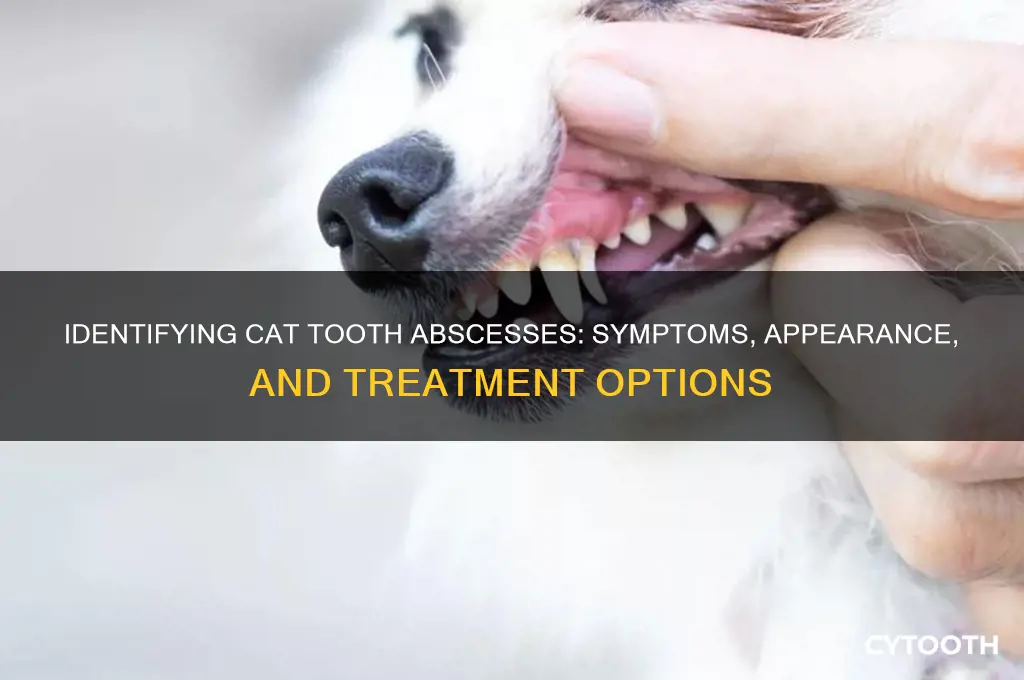
A cat tooth abscess is a painful condition that occurs when bacteria infect the tissues surrounding a tooth, leading to a buildup of pus. Typically, it appears as a swollen, red, and tender area on the face, often near the affected tooth, which may be difficult to identify without a thorough examination. Externally, you might notice a lump or bump under the skin, sometimes accompanied by drainage of foul-smelling pus if the abscess has ruptured. Internally, the gum around the tooth may appear red, inflamed, or receded, and the cat may exhibit signs of discomfort, such as reluctance to eat, pawing at the face, or excessive drooling. Early detection and veterinary treatment are crucial to prevent further complications and alleviate the cat's pain.
| Characteristics | Values |
|---|---|
| Appearance | Swelling around the face, particularly under the eye or on the jawline. |
| Color | Redness or discoloration of the skin near the affected area. |
| Texture | Warm, soft, or fluctuant (filled with pus) swelling. |
| Odor | Foul-smelling breath or discharge from the mouth. |
| Discharge | Pus or blood draining from the mouth or near the affected tooth. |
| Behavioral Changes | Pawing at the face, reluctance to eat, or difficulty chewing. |
| Tooth Involvement | Loose tooth, broken tooth, or visible gum inflammation. |
| Systemic Signs | Fever, lethargy, or loss of appetite in severe cases. |
| Pain | Sensitivity or pain when the area is touched. |
| Location | Commonly found near the canines or premolars, but can occur anywhere. |
What You'll Learn

Swollen, red gums around affected tooth
One of the most visible signs of a cat tooth abscess is the pronounced swelling and redness of the gums surrounding the affected tooth. This inflammation occurs as the body responds to the infection, causing the gum tissue to become engorged with blood and pus. The area may appear noticeably puffy, often extending beyond the immediate vicinity of the tooth, and can be tender to the touch. If your cat allows it, gently lifting its lip to inspect the gums can reveal this telltale redness and swelling, which typically contrasts sharply with the healthy pink hue of normal gum tissue.
Analyzing this symptom further, the redness and swelling are not merely cosmetic concerns but indicators of an active infection. The body’s immune response floods the area with white blood cells to combat the bacteria, leading to the accumulation of pus and subsequent inflammation. In severe cases, the swelling may progress to the point where the gum tissue feels warm or even hot compared to the surrounding areas. This localized heat is a critical clue that the abscess is not only present but also advancing, potentially spreading infection to deeper tissues or the bloodstream if left untreated.
To address swollen, red gums in a cat with a suspected tooth abscess, immediate veterinary intervention is essential. A veterinarian will likely perform a thorough oral examination, possibly under anesthesia, to identify the source of the infection. Treatment typically involves draining the abscess, administering antibiotics to combat the bacterial infection, and addressing the underlying dental issue, such as extracting the affected tooth. At home, you can support your cat’s recovery by ensuring it stays hydrated, providing soft food to minimize chewing discomfort, and following the veterinarian’s prescribed medication regimen, which may include antibiotics and pain relief.
Comparing this symptom to other dental issues in cats, swollen and red gums in the context of an abscess are distinct from general gingivitis or periodontal disease. While gingivitis often presents as mild redness and inflammation along the gum line, an abscess-related swelling is more localized, severe, and often accompanied by additional symptoms like facial swelling, fever, or reluctance to eat. Recognizing this difference is crucial for timely intervention, as an untreated abscess can lead to systemic illness, bone loss, or even tooth fracture. Regular dental check-ups and prompt attention to changes in your cat’s oral health can prevent such complications.
Finally, a practical tip for cat owners is to monitor your pet’s eating habits and behavior closely. Cats with a tooth abscess may show reluctance to eat hard food, paw at their face, or exhibit signs of pain when chewing. If you notice swollen, red gums or any of these behaviors, refrain from attempting to treat the issue at home, as this can worsen the infection. Instead, schedule a veterinary appointment immediately. Early detection and treatment not only alleviate your cat’s pain but also prevent the abscess from progressing to a more serious, potentially life-threatening condition.
Tooth Abscess Burst: Immediate Steps and Emergency Care Guide
You may want to see also
Pus discharge or foul odor from mouth
A cat with a tooth abscess often exhibits pus discharge or a foul odor from the mouth, signaling a painful and potentially serious infection. This symptom is a direct result of bacteria accumulating in the affected area, leading to the formation of pus—a thick, yellowish fluid composed of white blood cells, dead tissue, and bacteria. If you notice a persistent bad smell emanating from your cat’s mouth or see pus around the gums or teeth, it’s critical to act promptly. Ignoring these signs can allow the infection to spread, causing systemic issues or even bone loss in the jaw.
To address pus discharge or foul odor, start by examining your cat’s mouth carefully. Gently lift the lips to inspect for swollen gums, redness, or visible pockets of pus near the tooth root. Avoid forcing the mouth open, as this can cause distress or injury. If pus is present, do not attempt to drain it at home, as improper handling can worsen the infection. Instead, consult a veterinarian immediately. They may prescribe antibiotics to combat the infection and recommend a dental procedure, such as a tooth extraction or abscess drainage, under anesthesia.
Preventing tooth abscesses begins with regular dental care. Brush your cat’s teeth daily using a pet-safe toothpaste and toothbrush, focusing on the gum line where bacteria accumulate. For cats resistant to brushing, consider dental treats, water additives, or enzymatic gels designed to reduce plaque. Routine veterinary check-ups, including dental cleanings, are essential for early detection of issues like gum disease or tooth decay, which often precede abscesses. Cats over the age of 5 are particularly susceptible, so increased vigilance is necessary as they age.
If your cat shows signs of discomfort, such as pawing at the mouth, drooling excessively, or refusing food, these behaviors often accompany pus discharge or foul odor. Pain management is crucial during this time. Your veterinarian may prescribe a short course of pain medication, but never administer human medications like ibuprofen or aspirin, as they are toxic to cats. Keep your cat’s environment stress-free and provide soft, moist food to encourage eating without exacerbating pain.
In summary, pus discharge or foul odor from a cat’s mouth is a red flag for a tooth abscess that demands immediate veterinary attention. Early intervention, combined with consistent dental care, can prevent complications and ensure your cat’s long-term oral health. By staying observant and proactive, you can protect your feline companion from the discomfort and risks associated with this condition.
Identifying a Dog Tooth Abscess: Symptoms and Visual Signs
You may want to see also
Visible hole or bump on face
A visible hole or bump on a cat's face is a telltale sign of a tooth abscess, often appearing near the affected tooth. This symptom typically arises from a bacterial infection that has spread from the tooth root to the surrounding tissues. The hole, or fistula, may ooze pus, while the bump can feel warm and swollen due to inflammation. Both are the body’s attempt to drain the infection, but they indicate a serious underlying dental issue that requires immediate veterinary attention.
Analyzing the appearance, the hole often resembles a small, open sore, sometimes with a reddish or pinkish rim. The bump, on the other hand, can vary in size and firmness, ranging from a soft, fluid-filled cyst to a harder, more defined lump. These abnormalities are usually found under the eye, on the cheek, or near the lips, corresponding to the location of the infected tooth. Observing these signs early can prevent the abscess from worsening, as untreated infections can spread to other parts of the body, including vital organs.
To address a visible hole or bump, start by gently examining your cat’s face, ensuring not to cause pain or distress. Avoid attempting to drain the abscess or apply home remedies, as this can exacerbate the infection. Instead, consult a veterinarian promptly. Treatment typically involves antibiotics to combat the infection, pain management, and dental procedures such as tooth extraction or root canal therapy. Regular dental check-ups and at-home dental care can prevent such issues, especially in older cats or breeds prone to dental disease.
Comparatively, while a visible hole or bump is a clear indicator of a tooth abscess, other symptoms like bad breath, drooling, or reluctance to eat may accompany it. However, the facial abnormality is often the most noticeable and alarming sign for pet owners. Unlike superficial wounds or insect bites, which may also cause bumps or sores, a tooth abscess-related lesion persists and is often accompanied by systemic signs like lethargy or fever. Recognizing this distinction is crucial for timely intervention.
In conclusion, a visible hole or bump on a cat’s face is a critical red flag for a tooth abscess, demanding swift veterinary care. Early detection and treatment not only alleviate your cat’s pain but also prevent complications. Regular dental hygiene and professional cleanings play a vital role in avoiding such issues, ensuring your feline companion maintains a healthy, pain-free life.
Effective Dental Treatments to Eliminate Tooth Abscess and Restore Oral Health
You may want to see also
Difficulty eating or pawing at mouth
A cat pawing at its mouth or struggling to eat is a red flag that demands immediate attention. This behavior often indicates severe oral pain, and a tooth abscess could be the culprit. Abscesses are localized infections, typically filled with pus, that form around the root of a damaged tooth. The pressure and inflammation cause intense discomfort, making it difficult for the cat to chew or even close its mouth properly. If you notice your cat dropping food, eating more slowly than usual, or pawing at its face, it’s crucial to inspect its mouth for signs of swelling, redness, or discharge—common indicators of an abscess.
Analyzing this behavior reveals a clear pattern: cats are stoic creatures, and overt signs of pain, like pawing at the mouth, suggest the issue is advanced. Unlike humans, cats won’t vocalize mild discomfort; they’ll endure it until it becomes unbearable. This means that by the time you observe difficulty eating or pawing, the abscess has likely progressed to a critical stage. The infection may have spread to surrounding tissues or even entered the bloodstream, posing systemic risks. Early intervention is key, but many owners miss subtle precursors like bad breath or slight drooling, which often precede more dramatic symptoms.
To address this issue, start by gently examining your cat’s mouth, if it allows. Look for swollen gums, missing or discolored teeth, or puss-filled pockets near the tooth root. If an abscess is suspected, avoid home remedies like warm compresses, which can worsen the infection. Instead, consult a veterinarian immediately. Treatment typically involves antibiotics to control the infection, pain management with medications like buprenorphine (dosage varies by weight, usually 0.01–0.02 mg/kg every 8–12 hours), and dental procedures such as tooth extraction or root canal. Delaying care risks complications like bone loss or sepsis, especially in older cats or those with compromised immune systems.
Comparing this to other oral issues, like gingivitis or tooth resorption, highlights the urgency of abscesses. While gingivitis causes gum inflammation and tooth resorption leads to gradual enamel erosion, abscesses are acute and rapidly deteriorating. Unlike these conditions, which may respond to dental cleanings or dietary changes, abscesses require immediate medical intervention. The takeaway? Difficulty eating or pawing at the mouth isn’t just a minor inconvenience—it’s a distress signal that your cat is in pain and needs prompt veterinary care to prevent long-term damage or life-threatening complications.
Effective Treatments for Tooth Abscess: What Dentists Do to Relieve Pain
You may want to see also
Tooth discoloration or loose tooth appearance
A cat tooth abscess can manifest in subtle yet alarming ways, and one of the most noticeable signs is tooth discoloration or a loose tooth appearance. Discoloration often presents as a darkening or yellowing of the affected tooth, which may indicate underlying infection or decay. This change in color is typically caused by the spread of bacteria or the breakdown of tooth structure due to the abscess. If you notice your cat’s tooth appears darker than usual, it’s crucial to inspect further, as this could be a red flag for an abscess.
Loose teeth in cats are not normal and should never be ignored. An abscess can weaken the supporting structures of the tooth, such as the periodontal ligament and alveolar bone, causing it to become mobile. You might observe your cat tilting their head while eating or dropping food, which could signal discomfort or instability in the tooth. Gently examine your cat’s mouth (if they allow it) and look for any teeth that seem out of place or wobbly. Early detection of a loose tooth can prevent further complications, such as bone loss or systemic infection.
To address tooth discoloration or looseness, start by scheduling a veterinary dental exam. Your vet may recommend a dental X-ray to assess the extent of the damage and determine if the tooth can be saved or needs extraction. In the meantime, avoid giving your cat hard treats or toys that could exacerbate the issue. Instead, focus on soft, palatable food to minimize discomfort. If the abscess is causing systemic symptoms like fever or lethargy, your vet may prescribe antibiotics to control the infection before proceeding with dental treatment.
Prevention is key to avoiding tooth abscesses in cats. Regular dental care, including daily brushing with pet-safe toothpaste and annual veterinary check-ups, can help maintain oral health. For older cats or those prone to dental issues, consider incorporating dental diets or water additives recommended by your vet. Monitoring your cat’s eating habits and behavior can also provide early clues to dental problems, allowing for prompt intervention before discoloration or looseness becomes severe.
In summary, tooth discoloration or a loose tooth appearance in cats should never be dismissed as minor issues. These signs often indicate a painful and potentially dangerous abscess that requires immediate veterinary attention. By staying vigilant and proactive with your cat’s dental care, you can protect their oral health and overall well-being, ensuring they lead a comfortable and pain-free life.
DIY Remedies for Cracked Tooth Abscess Relief at Home
You may want to see also
Frequently asked questions
A cat tooth abscess often appears as a swollen, red, and painful area on the face, typically near the affected tooth. You may notice a lump or bump, discharge (pus or blood), and sometimes a foul odor. The cat may also have difficulty eating, drool excessively, or paw at its face.
Yes, a cat tooth abscess can cause visible changes in the mouth, such as swollen gums, a broken or discolored tooth, or a pocket of pus near the tooth root. The cat may also have bad breath due to the infection.
A cat with a tooth abscess may show signs of pain, such as reluctance to eat, facial swelling, or a tilted head. Externally, you might see a swollen cheek, a visible lump under the eye, or discharge from the nose or mouth, indicating the abscess has ruptured or is draining.