Hailey Morgan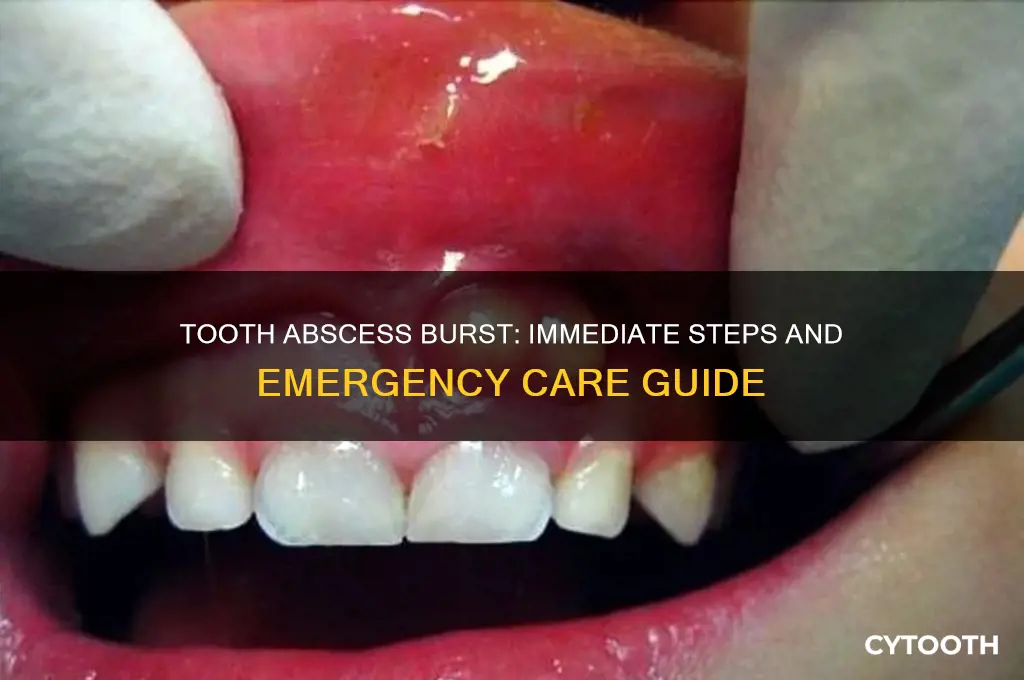
If a tooth abscess bursts, it’s crucial to act promptly to prevent further complications. A burst abscess may temporarily relieve pressure and pain, but it also releases bacteria into the mouth, increasing the risk of infection spreading to surrounding tissues or even entering the bloodstream. Immediately rinse your mouth with warm saltwater to help clean the area, and contact your dentist or seek emergency dental care as soon as possible. Avoid self-treatment or delaying care, as professional intervention is necessary to address the underlying infection, drain any remaining pus, and determine if a root canal, extraction, or antibiotics are needed to prevent recurrence and ensure proper healing.
| Characteristics | Values |
|---|---|
| Immediate Action | Rinse mouth with warm saltwater to clean the area and reduce bacteria. |
| Pain Management | Take over-the-counter pain relievers like ibuprofen or acetaminophen. |
| Fever Management | Use fever-reducing medications if a fever develops. |
| Swelling Reduction | Apply a cold compress to the affected area to reduce swelling. |
| Avoid Irritants | Stay away from hot, spicy, or acidic foods and drinks. |
| Oral Hygiene | Continue brushing gently and avoid the abscessed area. |
| Drainage | Do not attempt to drain the abscess yourself; let it drain naturally. |
| Seek Emergency Care | Visit a dentist or emergency room immediately for professional treatment. |
| Antibiotics | A dentist may prescribe antibiotics to treat the infection. |
| Follow-Up Care | Schedule a follow-up appointment to address the underlying cause. |
| Preventive Measures | Maintain good oral hygiene and address dental issues promptly. |
What You'll Learn
- Immediate Steps: Rinse mouth with warm salt water, take pain relief, and contact dentist urgently
- Cleaning the Area: Gently clean with saline solution to prevent infection spread
- Managing Pain: Use over-the-counter painkillers and cold compresses to reduce discomfort
- Antibiotics: Follow dentist’s prescription to fight infection and prevent complications
- Follow-Up Care: Schedule a dental appointment for drainage, root canal, or extraction

Immediate Steps: Rinse mouth with warm salt water, take pain relief, and contact dentist urgently
A tooth abscess is a painful and potentially serious condition, and if it bursts, immediate action is crucial to manage pain, reduce infection, and prevent complications. The first step is to rinse your mouth with warm salt water, a simple yet effective remedy that has been used for centuries. Mix half a teaspoon of salt in a glass of warm water, ensuring it’s not too hot to avoid burns. Swish the solution around your mouth for 30 seconds, focusing on the affected area. This helps to clean the wound, reduce inflammation, and alleviate discomfort by drawing out fluids and killing bacteria. Repeat this process every 2–3 hours or as needed to maintain oral hygiene and minimize infection risk.
Pain relief is the next priority, as a burst abscess can cause intense discomfort. Over-the-counter analgesics like ibuprofen (200–400 mg every 4–6 hours for adults) or acetaminophen (500–1000 mg every 4–6 hours for adults) can help manage pain and reduce inflammation. Always follow the recommended dosage based on age and weight, and avoid exceeding the daily maximum. For children, consult a pharmacist or healthcare provider for appropriate dosing. Applying a cold compress to the outside of the cheek can also provide temporary relief by numbing the area and reducing swelling.
While home remedies offer temporary relief, contacting a dentist urgently is non-negotiable. A burst abscess indicates an advanced infection that requires professional treatment. Delaying care can lead to the spread of infection, potential bone loss, or even systemic complications like sepsis. Call your dentist immediately, explaining the situation to secure an emergency appointment. If you cannot reach your dentist, visit an urgent care clinic or emergency room, as prompt intervention is critical to prevent further damage.
In summary, the immediate steps of rinsing with warm salt water, taking pain relief, and contacting a dentist urgently form a critical response to a burst tooth abscess. These actions address pain, reduce infection, and ensure professional care is sought promptly. Remember, while these measures provide temporary relief, they are not a substitute for definitive dental treatment. Act swiftly to protect your oral health and overall well-being.
Effective Dental Treatments to Eliminate Tooth Abscess and Restore Oral Health
You may want to see also
Cleaning the Area: Gently clean with saline solution to prevent infection spread
A burst tooth abscess releases pus, bacteria, and debris into your mouth, creating a breeding ground for further infection. Immediate and proper cleaning of the area is crucial to minimize complications. Saline solution, a simple mixture of salt and water, acts as a gentle yet effective disinfectant, reducing bacterial load and promoting healing.
Unlike harsh mouthwashes containing alcohol, which can irritate the sensitive tissues around the abscess, saline solution is mild and safe for repeated use.
Preparing a saline solution is straightforward. Dissolve ½ teaspoon of table salt in 8 ounces of warm water, ensuring complete dissolution. The warmth enhances salt’s solubility and provides soothing relief. For children under 6, consult a dentist for appropriate dosage, as swallowing large amounts of salt water can be harmful. Adults and older children can gently rinse their mouths with the solution for 30 seconds, focusing on the affected area, and repeat every 2–3 hours or after meals.
While saline solution is a valuable first aid measure, it’s not a substitute for professional care. Persistent pain, swelling, or fever after cleaning indicates the need for urgent dental intervention. Antibiotics or drainage may be necessary to address the underlying infection. Think of saline rinses as a supportive step to manage symptoms and prevent worsening while awaiting professional treatment.
The simplicity of saline solution belies its effectiveness. Its osmotic properties draw out excess fluid from inflamed tissues, reducing swelling and discomfort. Additionally, salt’s natural antimicrobial properties help curb bacterial growth, lowering the risk of the infection spreading to adjacent teeth or gums. Incorporating this practice into your immediate response to a burst abscess can significantly improve outcomes, buying critical time until you see a dentist.
Treating Abscessed Teeth: Dentists' Role in Diagnosis and Relief
You may want to see also
Managing Pain: Use over-the-counter painkillers and cold compresses to reduce discomfort
A tooth abscess is a painful condition, and when it bursts, the discomfort can intensify. Immediate pain management is crucial to provide relief and prevent further complications. Over-the-counter (OTC) painkillers and cold compresses are your first line of defense in this scenario, offering a simple yet effective way to alleviate the agony.
The Power of Painkillers: A Temporary Solution
In the battle against abscess-related pain, OTC painkillers are your allies. Nonsteroidal anti-inflammatory drugs (NSAIDs) like ibuprofen (e.g., Advil, Motrin) or naproxen (Aleve) are particularly effective. These medications reduce inflammation and provide substantial pain relief. For adults, a typical dosage is 200-400 mg of ibuprofen every 4-6 hours, not exceeding 1200 mg in 24 hours. Naproxen can be taken as 220-440 mg every 8-12 hours, with a maximum daily dose of 660 mg. It's essential to follow the instructions on the packaging or consult a pharmacist for precise dosing, especially for children or the elderly, as their dosage requirements may differ.
Cautionary Note: While these medications are readily available, they are not without risks. Prolonged use or exceeding the recommended dosage can lead to stomach ulcers, bleeding, or kidney problems. Always take them with food to minimize stomach irritation, and if you have a history of gastrointestinal issues, consult a healthcare professional before use.
The Soothing Effect of Cold Compresses
In conjunction with painkillers, cold compresses offer a natural, drug-free approach to pain management. The cold temperature helps constrict blood vessels, reducing swelling and numbing the affected area. This method is especially useful for immediate relief while waiting for painkillers to take effect. Simply wrap a few ice cubes in a thin towel or use a cold pack, and apply it to the cheek or jaw area near the abscess for 15-20 minutes at a time, with 10-minute breaks in between.
Practical Tips for Maximum Relief:
- Timing is Key: Alternate between painkillers and cold compresses for continuous relief. Take the medication as directed, and use the compress during the intervals.
- Consistency Matters: Regularity is essential for managing pain effectively. Set reminders if needed to ensure you don't miss doses or compress application times.
- Monitor and Adjust: Pay attention to your body's response. If pain persists or worsens, consult a dentist or healthcare provider, as this may indicate a more severe infection requiring professional intervention.
In the event of a burst tooth abscess, these measures can significantly improve your comfort. However, it's crucial to remember that they are temporary solutions. Seeking professional dental care is imperative to address the underlying issue and prevent potential complications. This two-pronged approach of self-care and professional treatment ensures a comprehensive strategy for managing this dental emergency.
Tooth Abscess Treatment: Immediate Steps and When to See a Dentist
You may want to see also
Antibiotics: Follow dentist’s prescription to fight infection and prevent complications
A tooth abscess is a painful infection at the root of a tooth or between the gum and a tooth, often caused by severe tooth decay, gum disease, or a cracked tooth. If left untreated, the abscess can burst, releasing pus and bacteria into the mouth and potentially leading to more serious health complications. When this happens, antibiotics play a crucial role in managing the infection and preventing further issues.
Understanding the Role of Antibiotics
Antibiotics are not a cure-all for a tooth abscess but are essential in controlling the bacterial infection that causes it. Once an abscess bursts, the risk of the infection spreading to other parts of the body, such as the jaw, neck, or even the bloodstream, increases significantly. Dentists typically prescribe antibiotics like amoxicillin (500 mg every 8 hours for adults) or clindamycin (300 mg every 6 hours) if the patient is allergic to penicillin. These medications target the bacteria causing the infection, reducing inflammation and preventing systemic complications like sepsis or Ludwig’s angina, a severe infection of the floor of the mouth.
Following the Prescription: Dos and Don’ts
Adhering strictly to the dentist’s prescription is critical for the antibiotics to be effective. Complete the full course of medication, even if symptoms improve within a few days. Skipping doses or stopping early can lead to antibiotic resistance, making future infections harder to treat. For example, a typical course of amoxicillin for a dental abscess lasts 7–10 days. Avoid alcohol while on antibiotics, as it can interfere with their effectiveness and worsen side effects like nausea or dizziness. If you miss a dose, take it as soon as you remember, but never double-dose to make up for a missed one.
Practical Tips for Managing Side Effects
Antibiotics can sometimes cause side effects such as stomach upset, diarrhea, or yeast infections. To minimize these, take the medication with food, unless otherwise instructed. Probiotics (e.g., yogurt or supplements) can help restore healthy gut bacteria disrupted by antibiotics. If side effects persist or worsen, contact your dentist or doctor immediately. For children or elderly patients, monitor closely for adverse reactions, as their immune systems may be more sensitive to medication.
The Bigger Picture: Antibiotics as Part of Comprehensive Care
While antibiotics are vital in managing a burst tooth abscess, they are not a standalone solution. They must be paired with dental treatment, such as draining the abscess, root canal therapy, or tooth extraction, to address the underlying cause. Ignoring this step can lead to recurring infections, even with antibiotic use. For instance, a patient prescribed amoxicillin for a burst abscess still needs to see a dentist to remove the infected tissue or treat the damaged tooth. Antibiotics buy time and control the infection, but definitive dental care is non-negotiable.
By following the dentist’s antibiotic prescription meticulously and understanding their role in the broader treatment plan, patients can effectively combat infection, alleviate pain, and avoid serious complications from a burst tooth abscess.
DIY Remedies for Cracked Tooth Abscess Relief at Home
You may want to see also
Follow-Up Care: Schedule a dental appointment for drainage, root canal, or extraction
A burst tooth abscess is a dental emergency that requires immediate attention, but the real work begins after the initial crisis. The pus may have drained, providing temporary relief, but the underlying infection remains a ticking time bomb. Left untreated, it can spread to other parts of your body, leading to serious health complications. This is why scheduling a follow-up dental appointment is crucial.
During this appointment, your dentist will assess the extent of the damage and determine the best course of action. Drainage might be necessary if there's still pus trapped within the tooth or surrounding tissues. This involves a small incision to allow for complete drainage and may be accompanied by antibiotic therapy to combat the infection. Root canal therapy is often the preferred treatment if the tooth can be saved. This procedure involves removing the infected pulp, cleaning and shaping the root canal, and sealing it to prevent further infection. While it may sound daunting, modern techniques and anesthesia make root canals relatively comfortable.
Extraction becomes necessary if the tooth is severely damaged or the infection has spread extensively. While losing a tooth is never ideal, it's sometimes the best option to prevent further complications.
The specific treatment plan will depend on factors like the location and severity of the abscess, your overall health, and your personal preferences. Your dentist will discuss all options with you, outlining the benefits and risks of each approach. Remember, delaying treatment can lead to more complex and costly procedures down the line.
Don't let fear or cost deter you from seeking professional care. Many dental offices offer payment plans or work with insurance providers to make treatment more accessible.
Think of this follow-up appointment as an investment in your long-term oral health. By addressing the root cause of the abscess, you're not only alleviating immediate pain but also preventing future infections and potential systemic health issues. So, don't hesitate – schedule that appointment and take control of your dental well-being.
Frequently asked questions
Rinse your mouth with warm saltwater to help clean the area, and contact your dentist or seek emergency dental care as soon as possible.
Some discomfort is common, but if the pain is severe or persists, it may indicate an infection or complications, requiring immediate dental attention.
Home remedies like saltwater rinses can provide temporary relief, but professional dental treatment is essential to address the underlying infection and prevent further issues.
Ignoring a burst abscess can lead to the spread of infection, potential bone loss, systemic health issues, and the need for more extensive dental procedures.