Olivia Bennett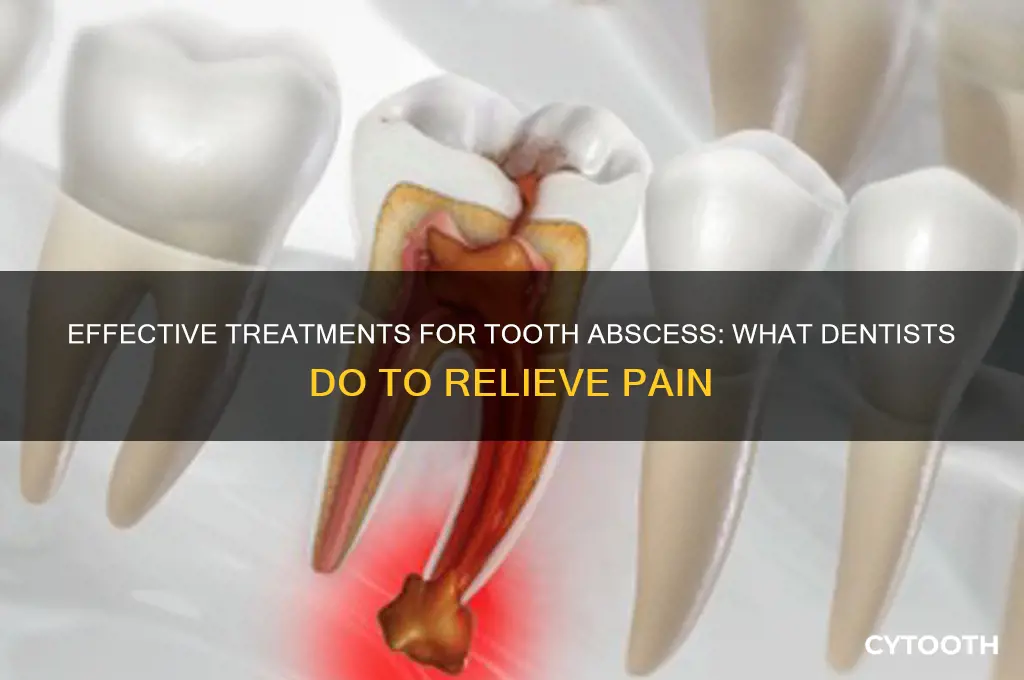
A tooth abscess is a painful infection that occurs when bacteria invade the dental pulp or the surrounding tissues of a tooth, often due to untreated cavities, gum disease, or dental trauma. When addressing a tooth abscess, the primary goal is to eliminate the infection and alleviate pain. Treatment typically begins with a dental professional draining the abscess to remove pus and bacteria, followed by a thorough cleaning of the affected area. Antibiotics may be prescribed to combat the infection, especially if it has spread to nearby tissues or the bloodstream. In many cases, a root canal procedure is necessary to remove the infected pulp and save the tooth, or extraction may be required if the tooth is severely damaged. Pain management is also crucial, often involving over-the-counter or prescription pain relievers. Preventive measures, such as maintaining good oral hygiene and regular dental check-ups, are essential to avoid future abscesses.
| Characteristics | Values |
|---|---|
| Diagnosis | Visual examination, X-rays, and symptoms assessment (e.g., pain, swelling). |
| Drainage | Incision and drainage to remove pus and relieve pressure. |
| Antibiotics | Prescribed if infection has spread (e.g., amoxicillin, clindamycin). |
| Pain Management | Over-the-counter pain relievers (e.g., ibuprofen, acetaminophen). |
| Root Canal Therapy | Performed to remove infected pulp and save the tooth. |
| Tooth Extraction | Recommended if the tooth is severely damaged or untreatable. |
| Warm Saltwater Rinses | Used to reduce pain and draw out pus. |
| Follow-Up Care | Regular dental check-ups to monitor healing and prevent recurrence. |
| Oral Hygiene | Emphasis on proper brushing, flossing, and mouthwash use. |
| Dietary Adjustments | Avoiding hot, cold, or hard foods that may aggravate the abscess. |
| Preventive Measures | Addressing underlying issues like cavities or gum disease to prevent future abscesses. |
What You'll Learn
- Antibiotics: Prescribed to fight infection if it has spread beyond the affected area
- Drainage: Incision made to drain pus and relieve pressure, reducing pain and swelling
- Root Canal: Removes infected pulp, cleans the tooth, and seals it to save the tooth
- Tooth Extraction: Removes severely damaged or untreatable teeth to prevent further infection
- Pain Management: Over-the-counter pain relievers or prescribed medications to manage discomfort during treatment

Antibiotics: Prescribed to fight infection if it has spread beyond the affected area
A tooth abscess is a painful infection that can spread rapidly if left untreated. When the infection extends beyond the confines of the tooth, antibiotics become a critical intervention to prevent systemic complications. These medications are not a standalone cure but a vital component in managing the infection, especially when it threatens to affect other parts of the body.
The Role of Antibiotics in Controlling Spread
Antibiotics target bacteria that have migrated from the abscess site into surrounding tissues, the jawbone, or even the bloodstream. Common prescriptions include amoxicillin (500 mg every 8 hours for adults) or clindamycin (300 mg every 6 hours) for penicillin-allergic patients. The goal is to halt bacterial proliferation and reduce the risk of cellulitis, sepsis, or Ludwig’s angina—life-threatening conditions linked to untreated dental infections. Dosage and duration (typically 5–7 days) are tailored to the infection’s severity and the patient’s health status, with adjustments for children or elderly individuals based on weight and kidney function.
Not every tooth abscess requires antibiotics. Dentists prescribe them when signs of spreading infection are present: swelling extending to the face or neck, fever, malaise, or lymph node enlargement. For localized abscesses, drainage via root canal or incision is often sufficient. However, if the infection breaches the tooth’s apex and enters systemic circulation, antibiotics become non-negotiable. Ignoring this step risks complications like endocarditis in susceptible individuals, such as those with heart valve disorders.
Practical Tips for Antibiotic Use
Adherence is key: complete the full course even if symptoms improve within days. Missing doses fosters antibiotic resistance, rendering future treatments less effective. Pair antibiotics with over-the-counter pain relievers (e.g., ibuprofen 600 mg every 6 hours) to manage discomfort until the infection subsides. Avoid alcohol, as it can intensify side effects like nausea or dizziness. If severe diarrhea occurs, contact your dentist—this could signal *Clostridioides difficile* infection, a complication of antibiotic use.
Limitations and Complementary Measures
Antibiotics alone cannot resolve a tooth abscess; they merely control bacterial spread. Definitive treatment requires dental intervention: draining the abscess, performing a root canal, or extracting the tooth. Delaying such procedures while relying solely on antibiotics allows the infection to persist, potentially leading to bone loss or chronic pain. Always follow antibiotic therapy with a dental appointment to address the root cause, ensuring long-term oral health.
Tooth Abscess Popped? Immediate Steps to Take for Relief and Recovery
You may want to see also
Drainage: Incision made to drain pus and relieve pressure, reducing pain and swelling
A tooth abscess is a painful condition caused by a bacterial infection, often leading to a buildup of pus within the gums or teeth. One of the most immediate and effective treatments for relieving the excruciating pain and swelling associated with this condition is drainage. This procedure involves making a small incision to allow the pus to escape, thereby reducing pressure and providing instant relief. It’s a straightforward yet critical intervention that can prevent further complications, such as the spread of infection to surrounding tissues or even systemic issues like sepsis.
The process of draining a tooth abscess is typically performed by a dentist or oral surgeon in a clinical setting. After numbing the area with a local anesthetic, a precise incision is made at the site of the abscess. This allows the accumulated pus, which contains bacteria, dead tissue, and white blood cells, to drain out. The relief is often immediate, as the pressure that causes intense pain is significantly reduced. Following the procedure, the area may be irrigated with saline to remove any remaining debris and reduce the risk of reinfection. Patients are usually prescribed antibiotics to combat any residual infection and prevent recurrence.
While drainage is highly effective, it’s not a standalone cure for the underlying cause of the abscess. For instance, if the abscess is due to a decayed tooth, a root canal or extraction may be necessary to address the root problem. Similarly, gum disease or a cracked tooth could require additional treatments like deep cleaning or restorative procedures. Drainage is a temporary but essential step to manage symptoms and create a window for further intervention. Ignoring the need for drainage can lead to worsening pain, facial swelling, and even life-threatening conditions if the infection spreads.
Practical tips for post-drainage care include maintaining oral hygiene with gentle brushing and rinsing with warm saltwater to keep the area clean. Avoid smoking or consuming hot, spicy, or hard foods that could irritate the wound. Over-the-counter pain relievers like ibuprofen can help manage residual discomfort, but always follow the dentist’s recommendations. Regular follow-up appointments are crucial to monitor healing and address any underlying dental issues. For children or elderly patients, caregivers should ensure they adhere to the prescribed care regimen, as these age groups may be more susceptible to complications.
In comparison to other treatments like antibiotics alone, drainage offers a more immediate solution to the pain and swelling caused by a tooth abscess. While antibiotics are vital for fighting infection, they cannot alleviate the pressure that drainage addresses. Combining both approaches, however, provides comprehensive care. Drainage is particularly advantageous in cases where the abscess is large or the infection is severe, as it accelerates recovery and improves patient comfort. It’s a testament to the principle that sometimes, the simplest procedures can yield the most profound relief.
Effective Dental Treatments to Eliminate Tooth Abscess and Restore Oral Health
You may want to see also
Root Canal: Removes infected pulp, cleans the tooth, and seals it to save the tooth
A tooth abscess is a painful infection that can spread if left untreated, potentially leading to serious health complications. When the infection reaches the pulp—the innermost part of the tooth containing nerves and blood vessels—a root canal becomes a critical intervention. This procedure is not just about alleviating pain; it’s about saving the natural tooth and preventing further damage. By removing the infected pulp, thoroughly cleaning the canals, and sealing the tooth, a root canal stops the infection in its tracks while preserving the tooth’s structure and function.
The process begins with a thorough examination, often including X-rays, to assess the extent of the infection. Once diagnosed, the dentist administers local anesthesia to ensure the procedure is painless. Using specialized instruments, the infected pulp is carefully removed from the tooth’s interior. This step is crucial, as the pulp is often the source of the infection and cannot heal on its own. After removal, the canals are meticulously cleaned and shaped to eliminate bacteria and debris, a step that may involve irrigating the area with antimicrobial solutions like sodium hypochlorite.
Next, the cleaned canals are filled with a biocompatible material called gutta-percha, which acts as a barrier against future infection. The tooth is then sealed with a temporary or permanent filling, depending on the case. In many instances, a dental crown is recommended to restore strength and protect the tooth from further damage, especially if it’s a molar or has been significantly weakened by decay. This multi-step process ensures the tooth remains functional and avoids extraction, which can lead to more complex issues like misalignment or bone loss.
While root canals have a reputation for being painful, modern techniques and anesthesia make the procedure comparable to getting a filling. Post-procedure care is straightforward but essential: avoid chewing on the treated tooth until it’s fully restored, and take any prescribed antibiotics or pain relievers as directed. Swelling or discomfort is normal for a few days and can be managed with over-the-counter pain medication (e.g., ibuprofen 600 mg every 6 hours, as needed). Follow-up appointments are critical to ensure the tooth has healed properly and to place a permanent crown if necessary.
Root canals are a highly successful treatment, with over 90% of cases resulting in long-term tooth preservation. They are particularly valuable for adults, as losing a permanent tooth can have lasting consequences for oral health and self-esteem. By addressing the infection at its source and restoring the tooth’s integrity, a root canal not only relieves pain but also maintains the natural bite and smile. It’s a testament to modern dentistry’s ability to turn a potentially devastating situation into a manageable, routine procedure.
DIY Remedies for Cracked Tooth Abscess Relief at Home
You may want to see also
Tooth Extraction: Removes severely damaged or untreatable teeth to prevent further infection
A tooth abscess is a painful infection at the root of a tooth or between the gum and a tooth, often caused by severe decay, trauma, or gum disease. When the infection becomes untreatable through root canals, antibiotics, or other conservative methods, tooth extraction emerges as a critical intervention. This procedure involves removing the entire tooth to eliminate the source of infection and prevent its spread to surrounding tissues, the jawbone, or even the bloodstream. While extraction is a last resort, it is sometimes the only way to safeguard oral and overall health.
The process of extracting a severely damaged or infected tooth begins with a thorough examination, often including X-rays, to assess the extent of the damage and plan the procedure. Local anesthesia is administered to numb the area, ensuring the patient remains comfortable during the extraction. Using specialized instruments, the dentist or oral surgeon loosens the tooth from its socket and carefully removes it. In some cases, the tooth may need to be sectioned into smaller pieces for easier extraction, particularly if it is extensively decayed or fractured. The procedure typically takes 20–40 minutes, depending on the complexity of the case.
Post-extraction care is crucial to promote healing and prevent complications. Patients are advised to bite down gently on a gauze pad for 30–45 minutes to control bleeding and allow a blood clot to form in the socket. Pain management is often addressed with over-the-counter medications like ibuprofen (600–800 mg every 6–8 hours) or prescribed stronger analgesics if needed. Avoiding strenuous activities, rinsing the mouth vigorously, or using straws for 24–48 hours helps prevent dislodging the blood clot, a condition known as dry socket. A soft diet and good oral hygiene, excluding the extraction site, are recommended for the first few days.
While tooth extraction effectively resolves the immediate infection, it leaves a gap that can impact bite alignment, chewing function, and aesthetics. Dentists often discuss replacement options, such as dental implants, bridges, or partial dentures, to restore oral function and prevent adjacent teeth from shifting. For example, dental implants, considered the gold standard, involve placing a titanium post into the jawbone to support a crown, but this requires sufficient bone density and a healing period of 3–6 months. Early planning for tooth replacement ensures long-term oral health and minimizes complications.
Tooth extraction for an untreatable abscess is a decisive step that prioritizes infection control and systemic health. While it may seem drastic, it is often the most effective way to alleviate pain, prevent the spread of infection, and pave the way for restorative solutions. By understanding the procedure, aftercare, and potential follow-up treatments, patients can approach extraction with confidence, knowing it is a well-established and often necessary intervention in dental care.
Tooth Abscess Treatment: Immediate Steps and When to See a Dentist
You may want to see also
Pain Management: Over-the-counter pain relievers or prescribed medications to manage discomfort during treatment
Tooth abscesses are notoriously painful, and managing this discomfort is a critical part of treatment. Over-the-counter (OTC) pain relievers are often the first line of defense. Nonsteroidal anti-inflammatory drugs (NSAIDs) like ibuprofen (e.g., Advil, Motrin) are highly effective due to their dual action as both pain relievers and inflammation reducers. Adults can typically take 400–600 mg every 6 hours, but it’s essential to follow the label or consult a pharmacist, especially for those with stomach issues or kidney concerns. Acetaminophen (Tylenol) is another option, particularly for those who cannot tolerate NSAIDs, with a standard adult dose of 650–1000 mg every 4–6 hours, not exceeding 3000 mg daily. Always avoid exceeding recommended dosages to prevent liver damage or other complications.
While OTC medications can provide relief, they may not suffice for severe abscess-related pain. In such cases, prescribed medications become necessary. Dentists or physicians often recommend stronger analgesics like opioids (e.g., hydrocodone or codeine) for short-term use. These medications are potent but carry risks of dependency and side effects like nausea or constipation. They are typically prescribed for a few days to manage acute pain until the infection is addressed. It’s crucial to take these medications exactly as directed and never share them with others, given their potential for misuse.
Children and older adults require special consideration when managing abscess pain. For children, ibuprofen or acetaminophen dosages are weight-based, and liquid formulations are often used. For example, a child weighing 24–35 pounds might receive 150–250 mg of ibuprofen every 6–8 hours. Always consult a pediatrician or dentist for precise dosing. Older adults, particularly those on multiple medications or with chronic conditions, should exercise caution with NSAIDs due to increased risks of gastrointestinal bleeding or kidney strain. Acetaminophen is generally safer but should still be used judiciously, especially in those with liver issues.
Practical tips can enhance the effectiveness of pain management. Applying a cold compress to the affected area for 15–20 minutes at a time can reduce swelling and numb pain temporarily. Avoiding hot foods and beverages can prevent exacerbating sensitivity. Maintaining good oral hygiene, even with an abscess, can prevent further irritation. Finally, combining medication with elevation of the head while sleeping can minimize throbbing pain by reducing blood flow to the inflamed area. These measures, paired with proper medication use, create a comprehensive approach to managing abscess discomfort until definitive treatment is completed.
Tooth Abscess Burst: Immediate Steps and Emergency Care Guide
You may want to see also
Frequently asked questions
The primary treatment for a tooth abscess involves draining the pus to relieve pain and eliminate infection, often followed by a root canal or tooth extraction.
No, antibiotics alone cannot cure a tooth abscess. They can help control the infection but must be paired with dental procedures like drainage or root canal therapy.
A dentist or oral surgeon will make a small incision in the abscess to allow the pus to drain, providing immediate relief from pressure and pain.
If left untreated, a tooth abscess can lead to serious complications, including the spread of infection to the jaw, neck, or brain, and potentially life-threatening conditions like sepsis.
You can manage pain temporarily with over-the-counter pain relievers like ibuprofen, warm saltwater rinses, and applying a cold compress to the affected area, but professional treatment is essential.