Matthew Grant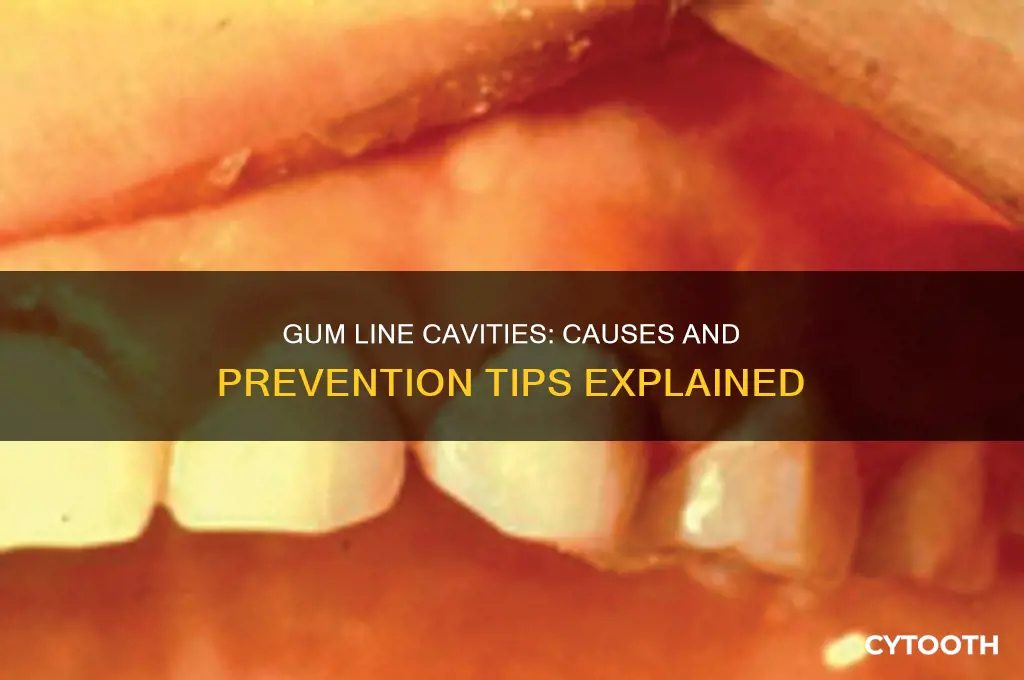
Cavities at the gum line, also known as gingival cavities, occur when bacteria in the mouth produce acids that erode the enamel near the gum tissue. This area is particularly vulnerable due to factors such as poor oral hygiene, plaque buildup, and receding gums, which expose the tooth's root surface—a softer, less mineralized area compared to enamel. Additionally, frequent consumption of sugary or acidic foods, dry mouth, and aging can contribute to the development of these cavities. Early detection and preventive measures, such as regular brushing, flossing, and dental check-ups, are crucial to addressing this issue effectively.
| Characteristics | Values |
|---|---|
| Poor Oral Hygiene | Inadequate brushing and flossing allow plaque buildup along the gum line. |
| Plaque Accumulation | Plaque produces acids that erode enamel and cause decay at the gum line. |
| Gum Recession | Exposed tooth roots due to receding gums are more susceptible to cavities. |
| Dry Mouth (Xerostomia) | Reduced saliva flow decreases natural protection against acid erosion. |
| Diet High in Sugars/Carbohydrates | Frequent consumption of sugary foods fuels acid production by bacteria. |
| Aging | Older adults are at higher risk due to gum recession and enamel wear. |
| Genetic Predisposition | Some individuals naturally have weaker enamel or gum structure. |
| Acid Reflux or GERD | Stomach acid can erode enamel near the gum line over time. |
| Bruxism (Teeth Grinding) | Wear and tear from grinding weakens enamel, making it prone to decay. |
| Inadequate Fluoride Exposure | Lack of fluoride weakens enamel, increasing cavity risk. |
| Smoking/Tobacco Use | Tobacco reduces blood flow to gums, impairing healing and increasing risk. |
| Certain Medications | Drugs that reduce saliva flow (e.g., antihistamines) contribute to decay. |
| Misaligned Teeth | Crooked teeth make cleaning difficult, leading to plaque buildup. |
| Previous Dental Work | Fillings or crowns near the gum line can weaken over time, allowing decay. |
What You'll Learn

Poor oral hygiene leads to plaque buildup, causing decay near gums
Plaque, a sticky film of bacteria, constantly forms on teeth, especially along the gum line where brushing often misses. When oral hygiene falters—brushing less than twice daily, skipping flossing, or using improper technique—plaque hardens into tartar. This tartar traps acids that erode enamel, creating cavities near the gums. Adults over 30 are particularly vulnerable due to receding gums, which expose more vulnerable tooth surfaces.
Consider this: flossing removes up to 80% of plaque between teeth and along the gum line, yet only 4 in 10 adults floss daily. Without this crucial step, plaque thrives in these hidden areas. Electric toothbrushes with pressure sensors can improve gum line cleaning by ensuring you don’t brush too hard, which can damage gums and expose roots to decay. Pairing this with antimicrobial mouthwash reduces plaque by 20% more than brushing alone.
The process is insidious. Plaque bacteria metabolize sugars, producing acids that demineralize enamel over 20 minutes of exposure. Saliva neutralizes these acids, but frequent snacking or sugary drinks overwhelm this defense. Within 48 hours, untreated plaque mineralizes into tartar, which only a dentist can remove. This tartar acts as a reservoir for bacteria, accelerating decay at the gum line where enamel is thinnest.
To combat this, adopt a targeted routine: brush for two minutes twice daily with fluoride toothpaste, angling the bristles 45 degrees toward the gums. Floss nightly, curving the floss around each tooth in a “C” shape to scrape plaque from the gum line. Every six months, visit a dentist for professional cleaning and tartar removal. For high-risk individuals (diabetics, smokers, or those with dry mouth), consider prescription fluoride treatments or xylitol gum to inhibit bacterial growth.
Ignoring these steps invites not just cavities but also gum disease, which 47% of adults over 30 already face. Gum recession from disease exposes root surfaces, which lack enamel and decay 8 times faster. The takeaway? Plaque buildup near the gums isn’t inevitable—it’s a preventable consequence of neglect. Act now to protect this vulnerable zone, where decay starts silently but spreads swiftly.
Stress and Gum Recession: Uncovering the Surprising Connection and Prevention Tips
You may want to see also
Acidic foods and drinks erode enamel at the gum line
Acidic foods and drinks are silent saboteurs of dental health, particularly at the gum line. When you consume items like citrus fruits, sodas, vinegar-based dressings, or energy drinks, their low pH levels begin to dissolve the mineral structure of your enamel. This process, known as demineralization, weakens the protective outer layer of your teeth, making them more susceptible to cavities. The gum line is especially vulnerable because it’s where enamel is naturally thinner and more exposed, offering less resistance to acid attacks.
Consider this: a single sip of soda with a pH of 2.5 (highly acidic) can start eroding enamel in as little as 20 seconds. Frequent snacking or sipping on acidic foods and drinks prolongs this exposure, creating an environment where enamel erosion becomes inevitable. For instance, someone who sips on lemon water throughout the day or regularly enjoys a glass of wine is inadvertently bathing their teeth in acid for hours, accelerating damage at the gum line.
To mitigate this risk, adopt a two-pronged strategy. First, limit direct contact between acidic substances and your teeth. Use a straw when drinking acidic beverages to bypass the teeth, and rinse your mouth with water immediately after consumption to neutralize acids. Second, wait at least 30 minutes before brushing your teeth after consuming acidic foods or drinks. Brushing immediately can worsen enamel erosion, as the softened surface is more prone to abrasion.
Children and older adults are particularly at risk due to developing or thinning enamel, respectively. Parents should monitor juice intake in kids, as even natural fruit juices can be highly acidic. For adults, especially those with receding gums, reducing acidic foods and maintaining a balanced diet rich in calcium and phosphorus can help remineralize enamel. Practical tip: Chew sugar-free gum after meals to stimulate saliva production, which naturally neutralizes acids and aids in remineralization.
In summary, while acidic foods and drinks are a common part of many diets, their impact on enamel erosion at the gum line cannot be overlooked. By understanding the mechanism of damage and implementing simple preventive measures, you can enjoy these foods while safeguarding your dental health. Awareness and moderation are key to preserving your smile.
Anemia and Bleeding Gums: Uncovering the Surprising Connection and Risks
You may want to see also
Dry mouth reduces saliva, increasing cavity risk near gums
Saliva is the unsung hero of oral health, acting as a natural cleanser and protector against tooth decay. It neutralizes acids, remineralizes enamel, and washes away food particles. However, dry mouth, or xerostomia, disrupts this defense system by significantly reducing saliva production. This condition can stem from medications (over 400 types, including antihistamines and antidepressants), aging, radiation therapy, or autoimmune disorders like Sjögren’s syndrome. Without adequate saliva, bacteria thrive, producing acids that erode enamel, particularly at the vulnerable gum line where plaque accumulates easily.
Consider this scenario: a 50-year-old taking daily antihypertensive medication notices increased tooth sensitivity near the gums. The culprit? Dry mouth induced by the medication, which has slashed saliva flow by up to 50%. Over time, this creates an ideal environment for *Streptococcus mutans*, the primary bacteria responsible for cavities, to flourish. The gum line, already prone to plaque buildup due to its recessed position, becomes a hotspot for decay. Addressing dry mouth isn’t just about comfort—it’s about halting the progression of gum-line cavities before they require invasive treatments like root canals or crowns.
To combat dry mouth, start with simple hydration: aim for 2–3 liters of water daily, sipping regularly rather than gulping. Avoid caffeine and alcohol, which exacerbate dryness. Chewing sugar-free gum (with xylitol) stimulates saliva production, as does sucking on sugar-free lozenges. For severe cases, over-the-counter saliva substitutes or prescription medications like pilocarpine (5–10 mg, 3 times daily) can restore moisture. Humidifiers at night alleviate dryness caused by mouth breathing. Pair these measures with meticulous oral hygiene: brush twice daily with fluoride toothpaste, floss to remove gum-line plaque, and use a fluoride mouthwash to strengthen enamel.
Comparing dry mouth to a drought in a forest illustrates its impact: just as parched trees become susceptible to pests, a dry mouth leaves teeth defenseless against decay. The gum line, akin to the forest floor, is particularly at risk due to its hidden, hard-to-clean nature. While systemic causes of dry mouth may require medical intervention, proactive oral care can mitigate the damage. Regular dental check-ups are crucial, as dentists can detect early gum-line cavities through X-rays and apply preventive treatments like fluoride varnishes or sealants.
In conclusion, dry mouth isn’t merely an inconvenience—it’s a silent saboteur of gum-line health. By understanding its role in cavity formation and adopting targeted strategies, individuals can protect this vulnerable area. Whether through lifestyle adjustments, hydration, or professional interventions, addressing dry mouth is essential for preserving a healthy smile. After all, saliva isn’t just saliva—it’s the first line of defense against decay.
Dry Mouth and Gum Recession: Uncovering the Surprising Connection
You may want to see also
Receding gums expose vulnerable root surfaces to decay
Receding gums, a condition often associated with aging or poor oral hygiene, leave the delicate root surfaces of teeth exposed. Unlike enamel, which covers the crown of the tooth, roots are protected by a thinner layer called cementum. This cementum is more susceptible to decay-causing acids, making exposed roots a prime target for cavities. Imagine a tree with its bark stripped away—the vulnerable inner layers are left defenseless against external threats. Similarly, when gums recede, the roots lose their natural shield, inviting bacterial invasion and decay.
The process begins with plaque buildup along the gum line. Plaque, a sticky film of bacteria and food debris, produces acids that erode cementum. Over time, this erosion weakens the root surface, creating tiny crevices where bacteria can thrive. Unlike cavities on the tooth crown, which often cause noticeable pain, root cavities may go undetected until they reach advanced stages. This silent progression makes regular dental check-ups crucial, especially for individuals over 40, who are more prone to gum recession due to natural aging or conditions like periodontal disease.
Preventing root cavities starts with addressing gum recession. While receding gums cannot always be reversed, their progression can be slowed. Daily habits such as brushing with a soft-bristled toothbrush and fluoride toothpaste, flossing gently to avoid further irritation, and using antimicrobial mouthwash can help. For those with moderate to severe recession, dentists may recommend treatments like gum grafting to cover exposed roots. Additionally, reducing acid exposure from foods and drinks (e.g., citrus fruits, soda) and maintaining a balanced diet rich in calcium and vitamin D can strengthen both gums and roots.
A comparative look at enamel and cementum highlights why root cavities are particularly problematic. Enamel, the hardest substance in the body, resists acid attacks far better than cementum. When decay occurs on the crown, it typically progresses slowly, allowing time for intervention. In contrast, cementum’s softer composition means root cavities advance rapidly, often reaching the tooth’s pulp and causing infections or abscesses. This underscores the urgency of protecting exposed roots through proactive oral care and professional monitoring.
In conclusion, receding gums act as a gateway for decay by exposing vulnerable root surfaces. Unlike enamel, cementum offers minimal resistance to acid erosion, making root cavities both aggressive and stealthy. By adopting targeted preventive measures—such as gentle oral hygiene practices, dietary adjustments, and regular dental visits—individuals can safeguard their roots and maintain oral health. Ignoring this issue risks not only tooth loss but also systemic health complications linked to untreated dental infections.
Gum Disease and Headaches: Uncovering the Surprising Connection and Relief
You may want to see also
Frequent snacking prolongs acid exposure, damaging gum-line enamel
Every time you snack, especially on sugary or starchy foods, oral bacteria feast on these remnants, producing acids as waste. This acid bath, if left unchecked, erodes tooth enamel. The gum line, where enamel is naturally thinner, is particularly vulnerable. Frequent snacking means repeated acid attacks, giving saliva less time to neutralize acids and remineralize teeth. Over time, this cycle weakens enamel at the gum line, creating the perfect environment for cavities to form.
Consider this: a single snack can lower your mouth's pH to acidic levels for up to 30 minutes. If you snack every hour, your teeth are under constant assault. Children and teenagers, who often graze throughout the day, are especially at risk. Sticky snacks like granola bars or dried fruit are double trouble—they linger on teeth longer, prolonging acid exposure. Even seemingly healthy snacks like citrus fruits or vinegar-based dressings can contribute due to their acidity.
To break this cycle, rethink your snacking habits. Limit snacks to 2-3 times daily, and choose tooth-friendly options like cheese, nuts, or raw vegetables. Cheese, for instance, stimulates saliva production and neutralizes acids. If you must snack frequently, rinse your mouth with water afterward to dilute acids. Wait at least 30 minutes after snacking before brushing to avoid damaging softened enamel. For added protection, chew sugar-free gum with xylitol, which reduces acid-producing bacteria.
Compare this to mindless munching: swapping a bag of chips for carrot sticks with hummus not only reduces acid exposure but also provides nutrients that support oral health. Similarly, replacing sugary drinks with water or unsweetened tea eliminates a constant source of acid and sugar. Small changes, like setting designated snack times or keeping a water bottle handy, can significantly reduce the risk of gum-line cavities.
In essence, frequent snacking isn’t just about what you eat—it’s about how often you disrupt your mouth’s natural balance. By spacing out snacks, choosing wisely, and practicing good oral hygiene, you can protect your gum-line enamel from the cumulative damage of prolonged acid exposure. It’s a simple yet powerful strategy to keep cavities at bay.
Gum Disease and Dry Mouth: Unraveling the Connection and Solutions
You may want to see also
Frequently asked questions
Cavities at the gum line, also known as cervical decay, are often caused by a combination of factors, including poor oral hygiene, acid erosion from foods and drinks, gum recession, and bacterial plaque buildup.
Gum recession exposes the tooth's root surface, which is softer and more vulnerable to decay than enamel. Without the protective gum tissue, this area is more susceptible to acid attacks from bacteria and dietary acids.
Yes, frequent consumption of sugary or acidic foods and drinks can erode enamel and contribute to cavities, especially near the gum line. Poor nutrition can also weaken teeth, making them more prone to decay.
Absolutely. Inadequate brushing and flossing allow plaque to accumulate along the gum line, producing acids that attack the tooth enamel and cause decay.
Older adults are more susceptible due to gum recession from aging, years of wear and tear, and potential dry mouth caused by medications. However, anyone with risk factors like poor hygiene or acidic diets can develop them.