Logan Hayes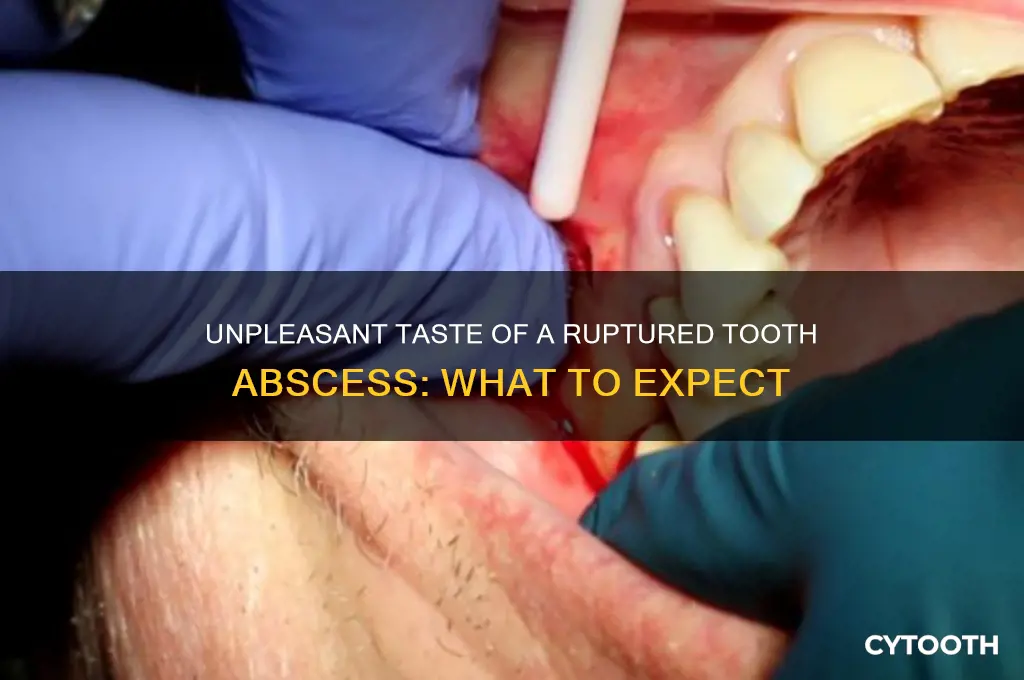
A ruptured tooth abscess can release pus and bacteria into the mouth, often resulting in an unpleasant taste that is commonly described as metallic, bitter, or foul. This taste may be accompanied by a bad odor and can linger due to the presence of infection byproducts and decaying tissue. The specific flavor can vary depending on the severity of the infection and individual factors, but it is generally unpleasant and may be a sign of a serious dental issue requiring immediate attention. If you suspect a ruptured abscess, it’s crucial to seek dental care promptly to prevent further complications.
What You'll Learn

Metallic Taste Sensation
A ruptured tooth abscess can unleash a symphony of unpleasant sensations, and among them, the metallic taste often takes center stage. This peculiar flavor profile isn't merely a figment of imagination; it's a tangible consequence of the body's inflammatory response. When the abscess ruptures, it releases a cocktail of bacteria, pus, and tissue debris into the oral cavity. These substances contain trace amounts of blood, which carries iron – the culprit behind the metallic tang.
Imagine sucking on a penny, but instead of the cold, hard metal, it's a warm, unpleasant liquid coating your tongue. This is the essence of the metallic taste associated with a ruptured abscess. It's not a fleeting sensation; it lingers, persisting even after rinsing or brushing. The intensity can vary, ranging from a subtle hint of copper to a full-blown assault on the taste buds, akin to licking a rusty nail.
The metallic taste isn't merely a nuisance; it's a red flag. It signifies an ongoing infection, a battle between your immune system and the invading bacteria. As the body fights to contain the abscess, white blood cells release enzymes that break down infected tissue, releasing iron-rich compounds. This process, while essential for healing, contributes to the distinctive metallic flavor.
To alleviate this unpleasant sensation, focus on addressing the root cause: the infection. Antibiotics, prescribed by a dentist, are often necessary to combat the bacteria. In the meantime, stay hydrated to dilute the metallic taste and promote saliva production, which helps cleanse the mouth. Avoid acidic or spicy foods, as they can exacerbate the sensation. Instead, opt for bland, soft foods like yogurt or mashed potatoes. Remember, the metallic taste is a symptom, not the disease itself. By treating the underlying infection, you'll not only eliminate the unpleasant flavor but also prevent potential complications, such as the spread of infection to other parts of the body.
In some cases, the metallic taste may persist even after the infection has been treated. This can occur due to nerve damage or altered taste perception. If the sensation lingers, consult an otolaryngologist (ear, nose, and throat specialist) or a neurologist to rule out underlying conditions. They may recommend zinc supplements, alpha-lipoic acid, or other therapies to help restore normal taste function. Remember, while the metallic taste is a common symptom of a ruptured tooth abscess, it's essential to address the underlying issue to ensure a full recovery and prevent future complications.
Identifying Tooth Abscess Symptoms: Visual Signs and What to Look For
You may want to see also
Bitter or Sour Flavor
A ruptured tooth abscess can unleash a cascade of unpleasant sensations, and among the most striking is the bitter or sour flavor that often accompanies it. This taste is not merely a minor inconvenience; it’s a stark signal from your body that something is critically wrong. The bitterness or sourness typically arises from the release of pus, bacteria, and dead tissue into the oral cavity, creating a concoction that assaults the taste buds. This flavor is often described as metallic, acrid, or akin to spoiled food, leaving a lingering aftertaste that can persist even after rinsing the mouth.
Analyzing the chemistry behind this taste reveals a complex interplay of compounds. Pus, a hallmark of infection, contains white blood cells, bacteria, and tissue debris, which can produce volatile sulfur compounds (VSCs) like hydrogen sulfide. These compounds are notorious for their bitter and sour notes, often associated with decay or rot. Additionally, the acidic environment created by bacterial activity can further enhance the sour sensation, mimicking the taste of citrus gone bad. Understanding this mechanism underscores why the flavor is not just unpleasant but also a red flag for immediate dental intervention.
For those experiencing this symptom, practical steps can help manage the discomfort temporarily. Rinsing with a warm saltwater solution (1/2 teaspoon of salt in 8 ounces of water) can help neutralize the taste and reduce bacterial load. Over-the-counter mouthwashes containing chlorhexidine or hydrogen peroxide may also provide relief, but they are not a substitute for professional treatment. Avoid consuming acidic or sugary foods, as they can exacerbate the sour or bitter sensation and worsen the infection. Instead, opt for bland, soft foods and stay hydrated to dilute the taste.
Comparatively, the bitter or sour flavor of a ruptured abscess stands apart from other oral conditions. While cavities or gum disease may cause mild metallic or unpleasant tastes, the intensity and persistence of the abscess-related flavor are distinct. It’s a taste that demands attention, often accompanied by swelling, pain, and fever, making it impossible to ignore. Unlike the fleeting bitterness of certain medications or foods, this flavor is a symptom of a deeper, more urgent issue that requires prompt dental care to prevent complications like systemic infection or bone loss.
In conclusion, the bitter or sour flavor of a ruptured tooth abscess is more than just a taste—it’s a critical warning sign. Recognizing its origin, managing its immediate effects, and seeking professional treatment are essential steps to address the underlying infection. Ignoring this symptom can lead to severe health risks, making it imperative to act swiftly. If you detect this taste, especially alongside other symptoms, consult a dentist immediately to prevent further damage and restore oral health.
Effective Treatments for Tooth Abscess: What Dentists Do to Relieve Pain
You may want to see also
Salty or Pungent Notes
A ruptured tooth abscess can unleash a symphony of unpleasant sensations, and among the most distinctive are the salty and pungent notes that invade your palate. These flavors are not merely unpleasant; they are your body’s alarm system, signaling infection and the urgent need for dental intervention. The saltiness often stems from the release of pus, a mixture of white blood cells, bacteria, and tissue debris, which contains high levels of sodium. Simultaneously, the pungent, almost metallic tang arises from the breakdown of tissues and the release of volatile sulfur compounds produced by bacteria. Together, these flavors create a taste that is both unsettling and unforgettable.
To manage the immediate discomfort of these tastes, rinse your mouth with a warm saltwater solution (1/2 teaspoon of salt in 8 ounces of water) every few hours. This can help reduce bacterial load and temporarily neutralize the pungent notes. Avoid acidic or sugary foods, as they can exacerbate the taste and worsen inflammation. If the salty or pungent flavors persist beyond 24 hours, seek dental care promptly. Delaying treatment can lead to systemic infection or more severe complications, such as a dental cyst or bone loss.
Comparatively, the taste of a ruptured abscess differs from other oral conditions. For instance, a sinus infection may produce a metallic taste but lacks the pronounced saltiness. Dry mouth, often described as "salty," does not carry the pungent, decaying undertones of an abscess. Recognizing these distinctions is crucial for self-assessment, but it should never replace professional diagnosis. A dentist can confirm the presence of an abscess through examination and X-rays, followed by appropriate treatment, such as drainage, antibiotics, or a root canal.
From a descriptive standpoint, the salty and pungent notes of a ruptured abscess are akin to licking a copper penny after biting into a brine-soaked olive—unpleasant, foreign, and impossible to ignore. This taste is not just a nuisance; it’s a symptom of an infection that requires immediate attention. Ignoring it can lead to abscess recurrence or spread to adjacent teeth and bone. For children or elderly individuals, who may be less articulate about their symptoms, caregivers should watch for signs like facial swelling, fever, or reluctance to eat, which often accompany the taste.
In conclusion, the salty and pungent notes of a ruptured tooth abscess are more than just a taste—they are a call to action. While home remedies can provide temporary relief, they are no substitute for professional care. Recognize these flavors as red flags, act swiftly, and prioritize your oral health to prevent further complications. Your taste buds—and your body—will thank you.
Treating Abscessed Teeth: Dentists' Role in Diagnosis and Relief
You may want to see also
Foul or Rotten Taste
A ruptured tooth abscess can unleash a taste so foul, it’s often described as a mix of decay and infection invading your mouth. This isn’t just unpleasant—it’s a red flag your body is fighting a bacterial invasion. The taste is metallic, bitter, and overwhelmingly putrid, often likened to rotten meat or spoiled food. It’s not just in your imagination; the bacteria release toxins and byproducts that trigger this revolting sensation. If you notice this, it’s critical to seek dental care immediately, as the infection can spread and worsen rapidly.
Analyzing the science behind this taste reveals a grim process. When an abscess ruptures, pus—a mixture of white blood cells, dead tissue, and bacteria—drains into your mouth. This pus carries volatile sulfur compounds (VSCs), the same chemicals responsible for bad breath. However, in this case, the concentration is far higher, creating a taste that’s not just foul but almost unbearable. It’s your body’s way of signaling that something is severely wrong. Ignoring this taste can lead to systemic infections, bone loss, or even sepsis in extreme cases.
To manage this taste temporarily while awaiting dental treatment, rinse your mouth with a warm saltwater solution (1/2 teaspoon of salt in 8 ounces of water) every few hours. Avoid alcohol-based mouthwashes, as they can sting and dry out the area. Stay hydrated to dilute the taste, and avoid strong-flavored foods that can amplify the sensation. However, these are stopgap measures—professional intervention is non-negotiable. A dentist will likely drain the abscess, prescribe antibiotics, and address the root cause, such as a cavity or gum disease.
Comparing this taste to other oral issues highlights its severity. While a cavity might cause mild sensitivity or a metallic twinge, a ruptured abscess is a full-blown assault on your senses. It’s not akin to morning breath or the aftermath of eating garlic; it’s a persistent, nauseating reminder of infection. Unlike a canker sore or gingivitis, which may cause localized discomfort, this taste permeates your entire mouth, often affecting your sense of taste and appetite. Recognizing this distinction is key to acting swiftly.
Finally, prevention is far easier than dealing with the aftermath. Regular dental check-ups, proper oral hygiene (brushing twice daily, flossing, and using fluoride rinse), and addressing tooth pain early can prevent abscesses from forming. If you’re prone to cavities or gum issues, consider using antimicrobial mouthwashes or increasing your fluoride intake under a dentist’s guidance. A ruptured abscess isn’t just a taste—it’s a symptom of neglect or underlying oral health issues. Address it promptly, and prioritize prevention to avoid ever experiencing this foul, rotten taste.
Ruptured Tooth Abscess: Visual Symptoms, Risks, and Immediate Care Guide
You may want to see also
Persistent Unpleasant Mouth Flavor
A ruptured tooth abscess can unleash a persistent, unpleasant mouth flavor that lingers despite brushing, rinsing, or even time. This metallic, bitter, or foul taste often signals an infection that has breached the tooth's inner sanctum, releasing bacteria and pus into the oral cavity. Unlike transient bad breath from garlic or coffee, this taste is constant, invasive, and resistant to conventional remedies. It’s your body’s alarm bell, ringing loudly to alert you of a deeper issue that demands immediate attention.
Analyzing the nature of this flavor reveals its complexity. The metallic tang often stems from blood mingling with oral fluids, while the bitter or sour notes may arise from bacterial byproducts. Some describe it as akin to sucking on a penny or licking a battery, though far more unpleasant. This isn’t a taste you can ignore; it permeates every sip, bite, and breath, serving as a relentless reminder of the abscess’s presence. If you notice this, it’s not just discomfort—it’s a symptom of a potentially serious infection that could spread if untreated.
To manage this persistent flavor temporarily, rinse your mouth with a warm saltwater solution (1/2 teaspoon of salt in 8 ounces of water) every few hours. Avoid acidic or sugary foods, which can exacerbate the taste and worsen the infection. Over-the-counter mouthwashes with chlorhexidine may provide brief relief, but they’re no substitute for professional care. The real solution lies in seeing a dentist promptly, as antibiotics or drainage may be necessary to address the root cause.
Comparing this flavor to other oral issues highlights its uniqueness. Unlike the sharp, fleeting sting of a cavity or the dryness of dehydration, the taste from a ruptured abscess is persistent and multifaceted. It’s not just a nuisance—it’s a symptom of pus, bacteria, and tissue breakdown seeping into your mouth. Ignoring it could lead to systemic complications, such as a facial cellulitis or sepsis, making timely intervention critical.
In conclusion, a persistent unpleasant mouth flavor from a ruptured tooth abscess is more than an inconvenience—it’s a red flag. It demands immediate action, from home remedies for temporary relief to urgent dental care for definitive treatment. Don’t let the taste linger; it’s your body’s way of saying, “This isn’t just a toothache—it’s an emergency.”
Effective Treatments: What Doctors Prescribe for Abscessed Tooth Relief
You may want to see also
Frequently asked questions
A ruptured tooth abscess often has a foul, unpleasant taste, described as salty, metallic, or similar to pus.
The taste is usually different from blood, leaning more toward a bitter, sour, or metallic flavor due to the presence of bacteria and infection.
Yes, the bacteria and toxins from the abscess can cause a persistent bad taste, even if pus is not visibly draining.
The taste typically persists until the infection is treated, which may take several days after starting antibiotics or receiving dental treatment.
While the taste can be unpleasant, it doesn’t necessarily indicate the severity of the infection. Other symptoms like pain, swelling, or fever are better indicators of how serious the condition is.