Matthew Grant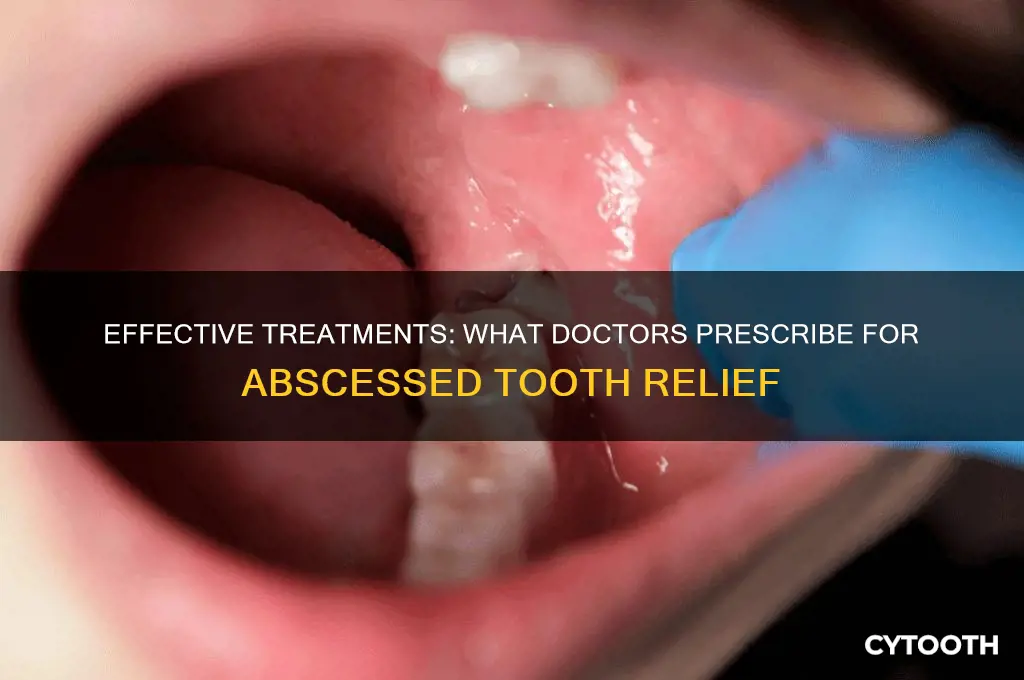
An abscessed tooth is a painful infection that occurs when bacteria invade the dental pulp or the surrounding tissues, often due to untreated cavities, gum disease, or trauma. When addressing this condition, doctors typically prescribe a combination of treatments to alleviate pain, control the infection, and prevent further complications. Antibiotics such as amoxicillin or clindamycin are commonly prescribed to combat bacterial infection, while over-the-counter pain relievers like ibuprofen or acetaminophen may be recommended to manage discomfort. In severe cases, a dentist might perform a root canal to remove the infected pulp or drain the abscess to relieve pressure and promote healing. Additionally, maintaining good oral hygiene and avoiding irritants like smoking are crucial steps in the recovery process.
| Characteristics | Values |
|---|---|
| Primary Treatment | Antibiotics (e.g., Amoxicillin, Clindamycin, Metronidazole) |
| Purpose of Antibiotics | Control bacterial infection and prevent spread |
| Pain Management | Over-the-counter pain relievers (e.g., Ibuprofen, Acetaminophen) |
| Dental Procedures | Drainage of abscess, root canal therapy, or tooth extraction |
| Oral Hygiene | Warm salt water rinses to reduce inflammation and promote healing |
| Follow-Up Care | Regular dental check-ups to monitor healing and prevent recurrence |
| Common Antibiotics | Amoxicillin (first-line), Clindamycin (for penicillin-allergic patients) |
| Duration of Antibiotics | Typically 3–7 days, depending on severity |
| Symptom Relief | Cold compresses for swelling, soft diet to avoid irritation |
| Prevention | Good oral hygiene, regular dental cleanings, and prompt treatment of cavities |
What You'll Learn

Antibiotics for infection control
Antibiotics are a cornerstone in managing dental abscesses, but their role is often misunderstood. While they are essential for controlling the spread of infection, they are not a standalone cure. Abscesses result from bacterial invasion, typically due to untreated cavities or gum disease, leading to pus accumulation at the tooth’s root or gum line. Antibiotics target these bacteria, reducing swelling, pain, and the risk of systemic complications like cellulitis or sepsis. However, they cannot resolve the underlying issue—the infected tooth or gum tissue must still be treated through drainage, root canal therapy, or extraction.
When prescribing antibiotics, dentists follow specific guidelines to ensure efficacy and minimize resistance. Common choices include amoxicillin (500 mg every 8 hours for adults) or clindamycin (300 mg every 6 hours for penicillin-allergic patients). Dosages may vary based on age, weight, and infection severity. For instance, children typically receive amoxicillin at 20–40 mg/kg/day, divided into doses. It’s crucial to complete the full course, even if symptoms improve within days, as premature discontinuation can lead to recurrent or resistant infections. Always inform your dentist of allergies, existing medications, or conditions like pregnancy to avoid adverse interactions.
The decision to prescribe antibiotics isn’t automatic. Dentists assess factors like the abscess’s size, location, and the patient’s overall health. Mild cases with localized swelling may not require antibiotics if immediate drainage is possible. However, systemic symptoms like fever, swollen lymph nodes, or difficulty swallowing often necessitate antibiotic intervention. Combining antibiotics with analgesics (e.g., ibuprofen 600 mg every 6 hours) can manage pain and inflammation effectively. Remember, antibiotics are a temporary measure—definitive treatment, such as a root canal or tooth removal, is non-negotiable for long-term resolution.
Practical tips can enhance antibiotic effectiveness and patient comfort. Take antibiotics with food to reduce stomach upset, and avoid alcohol, as it can interfere with absorption and increase side effects. If nausea persists, discuss alternatives with your dentist. For those with penicillin allergies, clindamycin or metronidazole are viable options, though they may cause metallic taste or diarrhea. Always store antibiotics properly (e.g., at room temperature unless specified) and dispose of unused portions safely. Finally, follow up with your dentist as scheduled—even if you feel better, the infection’s root cause must be addressed to prevent recurrence.
Effective Dental Treatments to Eliminate Tooth Abscess and Restore Oral Health
You may want to see also
Pain management with analgesics
Effective pain management is crucial when dealing with an abscessed tooth, as the discomfort can be intense and debilitating. Analgesics, commonly known as pain relievers, are often the first line of defense prescribed by dentists and doctors to alleviate this pain. These medications work by blocking pain signals to the brain, providing much-needed relief while the underlying infection is addressed. Among the most frequently prescribed analgesics are nonsteroidal anti-inflammatory drugs (NSAIDs) like ibuprofen (e.g., Advil, Motrin) and acetaminophen (e.g., Tylenol). For adults, a typical dose of ibuprofen is 400–600 mg every 6 hours, while acetaminophen is often taken at 650–1000 mg every 4–6 hours, depending on severity and medical history.
While NSAIDs and acetaminophen are effective for mild to moderate pain, severe cases may require stronger options. Opioid analgesics, such as hydrocodone or codeine, are sometimes prescribed for short-term relief of intense pain. However, these medications come with risks, including dependency and side effects like nausea, dizziness, and constipation. Dentists and doctors typically reserve opioids for cases where other analgesics are insufficient, emphasizing the importance of following dosage instructions strictly. For instance, a common prescription might be hydrocodone/acetaminophen (5 mg/325 mg) every 4–6 hours, but only for 3–5 days to minimize risks.
Age and medical history play a critical role in determining the appropriate analgesic. Children and adolescents, for example, should avoid aspirin due to the risk of Reye’s syndrome, making acetaminophen or ibuprofen safer alternatives. Elderly patients or those with kidney or liver conditions may require lower doses or alternative medications to prevent complications. Always consult a healthcare provider to ensure the chosen analgesic aligns with individual health needs. Practical tips include taking NSAIDs with food to reduce stomach irritation and avoiding alcohol while using acetaminophen to prevent liver damage.
Combining analgesics with other treatments, such as antibiotics to address the infection, often yields the best results. However, it’s essential to recognize that analgesics only manage symptoms—they do not cure the abscess. Patients should not rely solely on pain relief and must seek definitive treatment, such as a root canal or tooth extraction, as recommended by their dentist. Misuse or prolonged use of analgesics, especially opioids, can lead to complications, underscoring the need for a balanced approach to pain management. By understanding the role of analgesics and using them responsibly, patients can navigate the discomfort of an abscessed tooth more effectively.
Tooth Abscess Popped? Immediate Steps to Take for Relief and Recovery
You may want to see also
Drainage procedures for abscess relief
An abscessed tooth is a painful condition often requiring immediate intervention, and drainage procedures stand as a cornerstone in providing swift relief. When faced with a dental abscess, the primary goal is to alleviate pressure and remove the source of infection, offering patients much-needed comfort. This process involves a careful and strategic approach to ensure effective treatment.
The Art of Drainage: A Delicate Procedure
In the realm of dental emergencies, incision and drainage is a common technique employed by dentists and oral surgeons. This procedure is a precise art, requiring skill and a steady hand. The dentist will administer a local anesthetic to ensure patient comfort, then make a small incision in the gum tissue overlying the abscess. This allows for the release of pus and debris, providing instant pressure relief. The area is then thoroughly irrigated with saline or antiseptic solutions to flush out any remaining bacteria and infected material. This method is particularly effective for periodontal abscesses, where the infection originates in the gum tissue.
A Step-by-Step Guide to Abscess Drainage:
- Anesthesia: The process begins with numbing the affected area, ensuring the patient remains comfortable throughout.
- Incision: A small, strategic cut is made to access the abscess, allowing for drainage.
- Drainage and Irrigation: Pus and infected material are gently expressed, followed by a thorough rinse to cleanse the area.
- Packing and Dressing: In some cases, a small iodine wick or dressing may be placed to facilitate continued drainage and promote healing.
Comparing Drainage Techniques: A Tailored Approach
Not all abscesses are alike, and neither are their treatments. For periapical abscesses, where the infection stems from the tooth's root, a different tactic may be employed. Here, the dentist might opt for a root canal treatment, which involves drilling into the tooth to access and remove the infected pulp. This procedure not only drains the abscess but also saves the tooth, preventing further complications. In contrast, periodontal abscesses often respond well to the more straightforward incision and drainage method, as mentioned earlier.
Post-Drainage Care: Ensuring Long-Term Relief
After the initial drainage, patients are typically prescribed a course of antibiotics to combat any remaining bacteria and prevent recurrence. Pain management is also crucial, and over-the-counter medications like ibuprofen or acetaminophen can be recommended for comfort. It's essential to follow the dentist's instructions regarding oral hygiene and any prescribed medications to ensure a smooth recovery. Regular dental check-ups are advised to monitor healing and address any underlying issues that may have contributed to the abscess.
In summary, drainage procedures offer a rapid and effective solution for abscessed tooth pain. Whether through a precise incision or a root canal treatment, these techniques provide much-needed relief, allowing patients to regain their oral health and comfort. With proper aftercare, individuals can look forward to a swift recovery and a reduced risk of future dental emergencies.
Abscessed Tooth Treatment: What to Expect and How to Heal
You may want to see also
Dental referral for root canal
An abscessed tooth often requires immediate intervention, and while antibiotics like amoxicillin (500 mg every 8 hours for adults) or clindamycin (300 mg every 6 hours for penicillin-allergic patients) can manage infection, they are not a cure. The definitive solution frequently involves a root canal, a procedure that removes infected pulp and saves the tooth. However, general dentists may not perform this specialized treatment, necessitating a dental referral for root canal to an endodontist. This step ensures precision and reduces the risk of complications like reinfection or tooth loss.
Consider the referral process as a critical bridge between diagnosis and resolution. When a dentist identifies an abscessed tooth with significant pulp involvement, they will typically assess the extent of damage through X-rays and clinical examination. If the case is complex—for instance, involving multiple canals or a severely calcified root—they will refer the patient to an endodontist. This specialist uses advanced tools like microscopes and ultrasonic instruments to navigate intricate root systems, increasing the success rate of the procedure. Delaying this referral can lead to abscess progression, bone loss, or systemic infection, underscoring its urgency.
From the patient’s perspective, understanding the referral process empowers informed decision-making. Upon receiving a referral, schedule the endodontic consultation promptly, as abscesses can worsen rapidly. During the root canal, the endodontist will administer local anesthesia (e.g., lidocaine with epinephrine) and may prescribe post-procedure pain management, such as ibuprofen (600 mg every 6 hours) or acetaminophen (1000 mg every 8 hours). Follow-up care, including placement of a permanent crown, is essential to prevent fracture of the treated tooth. Insurance coverage for endodontic treatment varies, so verify benefits beforehand to avoid unexpected costs.
Comparatively, while extraction might seem simpler, a root canal referral preserves natural dentition, maintaining bite function and aesthetics. Studies show that endodontically treated teeth can last a lifetime with proper care, whereas implants or bridges require more maintenance and expense. For patients hesitant about the procedure, sedation options like nitrous oxide or oral sedatives (e.g., 0.5 mg of triazolam for anxious adults) can alleviate discomfort. Ultimately, a timely referral to an endodontist transforms a painful abscess into an opportunity to restore oral health effectively.
Understanding Tooth Abscess Pain: Symptoms, Sensations, and Relief Tips
You may want to see also
Oral hygiene improvement recommendations
Antibiotics like amoxicillin (500 mg every 8 hours for adults) or clindamycin (300 mg every 6 hours for penicillin-allergic patients) are commonly prescribed to combat the bacterial infection driving a tooth abscess. Yet, these medications only address the symptom, not the root cause. To prevent recurrence and promote long-term oral health, targeted hygiene improvements are essential.
Consider the toothbrush as your first line of defense. For most adults, a soft-bristled brush used twice daily for two minutes each session is ideal. Children under 12 benefit from age-appropriate brushes with smaller heads and softer bristles. Pair this with fluoride toothpaste—a pea-sized amount for kids, a strip the length of the brush head for adults. Technique matters: angle bristles 45 degrees to the gum line and use short, circular motions to dislodge plaque without damaging enamel.
Flossing is non-negotiable, yet often overlooked. Traditional string floss works well, but water flossers or interdental brushes are excellent alternatives for those with braces, bridges, or dexterity issues. Aim to floss once daily, preferably before bedtime, to remove debris antibiotics can’t reach. For added protection, incorporate an antimicrobial mouthwash containing chlorhexidine (0.12% solution, used twice daily for one minute) after brushing. Note: long-term use of chlorhexidine can stain teeth, so limit it to 2–4 weeks unless otherwise directed.
Diet plays a silent but critical role. Sugary and acidic foods fuel bacterial growth, exacerbating infection risk. Swap soda and candy for water and fiber-rich fruits like apples or carrots, which naturally clean teeth surfaces. Probiotic-rich foods like yogurt or kefir can also support a healthy oral microbiome by balancing harmful bacteria.
Finally, consistency is key. Establish a routine and track progress with a hygiene calendar or app. Schedule dental check-ups every six months, or more frequently if prone to abscesses. While antibiotics treat the immediate crisis, these hygiene practices fortify your defenses, turning a reactive approach into a proactive strategy for lasting oral health.
Tooth Abscess Treatment: Immediate Steps and When to See a Dentist
You may want to see also
Frequently asked questions
Doctors commonly prescribe antibiotics like amoxicillin, clindamycin, or metronidazole to treat an abscessed tooth. The choice depends on the severity of the infection, patient allergies, and the type of bacteria involved.
Not always. If the abscess is small and can be drained, antibiotics may not be necessary. However, for severe or spreading infections, antibiotics are often prescribed alongside drainage or a root canal to control the infection.
Doctors often recommend over-the-counter pain relievers like ibuprofen or acetaminophen. For severe pain, prescription-strength NSAIDs or opioids may be prescribed, but these are used cautiously due to potential side effects.