Olivia Bennett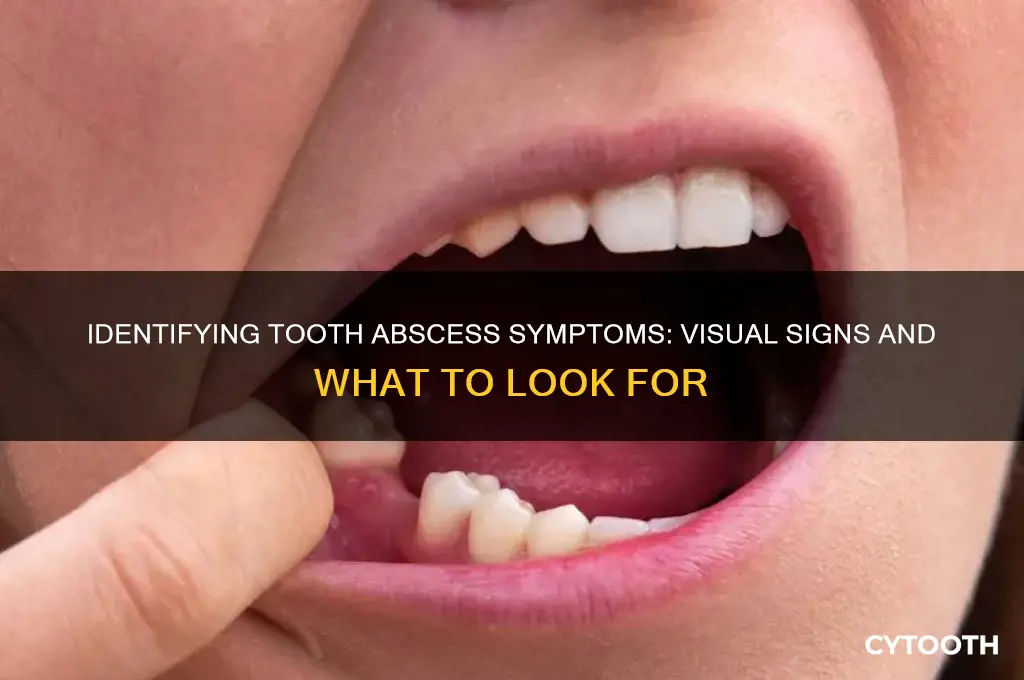
A tooth abscess is a painful infection that occurs when bacteria invade the dental pulp or the tissues surrounding a tooth, often due to decay, gum disease, or injury. Visually, an abscess may appear as a swollen, red, or tender bump on the gum near the affected tooth, sometimes resembling a pimple filled with pus. The swelling can cause the face or cheek to appear puffy, and the area may be warm to the touch. In some cases, the abscess might drain, releasing foul-tasting or foul-smelling pus. Other symptoms include severe toothache, sensitivity to hot or cold, fever, and swollen lymph nodes in the neck. Early recognition of these signs is crucial, as untreated abscesses can lead to serious complications, including the spread of infection to other parts of the body.
What You'll Learn

Swollen, red gums
Analyzing the cause, swollen gums in the context of a tooth abscess are not merely a cosmetic issue but a symptom of deeper infection. The redness and swelling result from increased blood flow to the area as white blood cells rush to combat the invading bacteria. If left untreated, this localized infection can spread to adjacent teeth, the jawbone, or even enter the bloodstream, leading to systemic complications like sepsis. Recognizing these signs early is crucial, as prompt intervention can prevent the infection from worsening and preserve the affected tooth.
For those experiencing swollen, red gums, immediate steps should include rinsing with warm saltwater to reduce discomfort and temporarily alleviating symptoms. However, this is not a substitute for professional care. A dentist will likely prescribe antibiotics to combat the infection and may perform a root canal or drainage procedure to remove the source of the abscess. Over-the-counter pain relievers like ibuprofen (200–400 mg every 4–6 hours) can manage pain, but dosage should be tailored to age and medical history—always consult a healthcare provider for children or individuals with underlying conditions.
Comparatively, swollen gums in a tooth abscess differ from gingivitis-related inflammation, which is typically less localized and often accompanied by bleeding during brushing. In an abscess, the swelling is usually confined to the area around the infected tooth, and the pain is more severe and persistent. While gingivitis can often be managed with improved oral hygiene, an abscess requires targeted medical intervention. Ignoring these symptoms can lead to tooth loss or more serious health issues, underscoring the need for swift action.
Practically, preventing swollen gums and tooth abscesses involves maintaining diligent oral hygiene: brushing twice daily with fluoride toothpaste, flossing daily, and scheduling regular dental check-ups. Avoid sugary foods and beverages, which fuel bacterial growth, and quit smoking, as it impairs gum health and healing. For individuals with recurring dental issues, antimicrobial mouthwashes prescribed by a dentist can provide additional protection. Early detection and proactive care are key to avoiding the pain and complications of a tooth abscess.
Tooth Abscess Treatment: Immediate Steps and When to See a Dentist
You may want to see also
Pus-filled bump (gum boil)
A pus-filled bump on the gums, often referred to as a gum boil or parulis, is a visible sign of a tooth abscess. This small, pimple-like swelling typically forms near the root of an infected tooth, serving as a drainage point for pus accumulating beneath the gum line. Its presence is a clear indicator that the body is attempting to combat a bacterial infection, often stemming from tooth decay, gum disease, or a dental injury. While it may provide temporary relief by allowing the pus to drain, it is a symptom of a deeper issue that requires immediate dental attention.
Identifying a Gum Boil: What to Look For
A gum boil appears as a red, swollen bump on the gum tissue, often tender to the touch. It may fluctuate in size, becoming more pronounced when the infection worsens. In some cases, the bump may rupture, releasing a foul-tasting or foul-smelling pus. This drainage can provide temporary pain relief but does not resolve the underlying infection. If left untreated, the abscess can spread, leading to more severe complications such as bone loss, systemic infection, or even sepsis. Recognizing this symptom early is crucial for prompt intervention.
Steps to Manage a Gum Boil at Home (Temporarily)
While professional treatment is essential, there are steps to manage discomfort before seeing a dentist. Rinse your mouth with a warm saltwater solution (1/2 teaspoon of salt in 8 ounces of water) several times a day to reduce inflammation and promote drainage. Avoid applying pressure to the boil, as this can force bacteria deeper into the tissues. Over-the-counter pain relievers like ibuprofen (200–400 mg every 6 hours, as needed) can help alleviate pain and reduce swelling. However, these measures are not substitutes for dental care—schedule an appointment immediately.
Why Self-Treatment Falls Short
Attempting to "pop" a gum boil or relying solely on home remedies is risky. Draining the pus at home may provide temporary relief but does not eliminate the infection source. The bacteria responsible for the abscess can spread to other teeth, the jawbone, or even the bloodstream, leading to life-threatening conditions like Ludwig’s angina or sepsis. Antibiotics (prescribed by a dentist or physician) may be necessary to control the infection, but they cannot replace the need for definitive treatment, such as a root canal or tooth extraction.
Preventive Measures to Avoid Future Abscesses
To reduce the risk of developing a tooth abscess, maintain rigorous oral hygiene: brush twice daily with fluoride toothpaste, floss daily, and use an antiseptic mouthwash. Schedule regular dental check-ups every six months, or more frequently if you have a history of gum disease or cavities. Address dental issues promptly, such as repairing cracked fillings or treating gum inflammation, to prevent bacteria from penetrating deeper tissues. A healthy diet low in sugar and high in nutrients also supports strong teeth and gums, minimizing the likelihood of infection.
Effective Treatments for Tooth Abscess: What Dentists Do to Relieve Pain
You may want to see also
Severe toothache or throbbing pain
A severe toothache or throbbing pain is often the first alarming symptom of a tooth abscess, signaling an infection that demands immediate attention. This pain is not merely discomfort; it is a persistent, pulsating ache that can radiate to the jaw, ear, or neck, intensifying when lying down. Unlike minor tooth sensitivity, this pain is relentless and may worsen over time, indicating the infection is spreading. Recognizing this symptom early is crucial, as delaying treatment can lead to more serious complications, such as bone loss or systemic infection.
To manage this pain temporarily, over-the-counter pain relievers like ibuprofen (600–800 mg every 6–8 hours) or acetaminophen (500–1000 mg every 4–6 hours) can provide relief, but they do not address the underlying infection. Applying a cold compress to the affected area for 15–20 minutes at a time can also help reduce inflammation and numb the pain. However, these are stopgap measures—professional dental intervention is essential. Avoid placing aspirin directly on the tooth or gums, as it can cause tissue damage and exacerbate the issue.
The throbbing nature of the pain is a result of the abscess pushing against sensitive tissues and nerves. This pressure can also cause facial swelling, making the cheek or jaw appear red, tender, and visibly enlarged. If the abscess ruptures, you may experience sudden pain relief as pus drains, but this is a critical moment to seek care, as the infection can still spread. Persistent fever, foul taste, or difficulty swallowing are red flags that the infection is advancing, requiring urgent dental or medical attention.
Preventing such severe pain starts with diligent oral hygiene: brushing twice daily with fluoride toothpaste, flossing daily, and regular dental check-ups. For those prone to cavities or gum disease, antimicrobial mouthwashes or fluoride treatments can be protective. If you experience a sudden, intense toothache, avoid hot or cold foods, hard substances, and sugary items, as they can aggravate the condition. Instead, opt for soft, lukewarm foods and maintain hydration to minimize discomfort while awaiting professional care.
In summary, severe toothache or throbbing pain is a critical indicator of a tooth abscess, requiring prompt action. While temporary relief measures can ease symptoms, they are no substitute for professional treatment. Recognizing the pain’s unique characteristics and responding swiftly can prevent further damage and ensure a healthier outcome. Always prioritize dental health to avoid the agony and risks associated with untreated abscesses.
Tooth Abscess Popped? Immediate Steps to Take for Relief and Recovery
You may want to see also
Swelling in jaw or face
A tooth abscess often manifests as a noticeable swelling in the jaw or face, a telltale sign that something is amiss beneath the surface. This swelling typically occurs on the side of the face corresponding to the affected tooth, creating an asymmetry that can be both visually striking and concerning. The area may appear red, warm to the touch, and tender, indicating an inflammatory response to the infection. In severe cases, the swelling can extend to the neck or even restrict airway function, necessitating immediate medical attention.
Analyzing the progression of this swelling provides insight into the abscess’s severity. Initially, it may start as a small, localized bump near the infected tooth, often mistaken for a pimple or minor irritation. However, as the infection worsens, the swelling can rapidly expand, causing discomfort and difficulty in opening the mouth or swallowing. This is due to the accumulation of pus and the body’s inflammatory reaction, which can compress nearby tissues and nerves. Monitoring the size, color, and texture of the swelling can help determine whether home care is sufficient or if professional intervention is required.
For those experiencing jaw or facial swelling due to a tooth abscess, immediate action is crucial. Start by rinsing your mouth with warm saltwater to help reduce inflammation and draw out pus. Over-the-counter pain relievers like ibuprofen (200–400 mg every 4–6 hours) can alleviate discomfort, but avoid placing aspirin directly on the gum, as it may cause tissue damage. Applying a cold compress to the affected area for 15–20 minutes at a time can also help minimize swelling. However, these measures are temporary solutions; a dentist must address the underlying infection, often through drainage, antibiotics (such as amoxicillin 500 mg three times daily, as prescribed), or a root canal.
Comparing facial swelling from a tooth abscess to other conditions highlights its unique characteristics. Unlike swelling from an allergic reaction, which is often diffuse and accompanied by itching, abscess-related swelling is typically localized and painful. Similarly, trauma-induced swelling usually follows an injury and may involve bruising, whereas abscess swelling develops gradually and is linked to dental symptoms like toothache or bad taste. Recognizing these distinctions can aid in self-assessment, but a dental professional should confirm the diagnosis to ensure appropriate treatment.
Finally, prevention remains the most effective strategy for avoiding jaw or facial swelling due to a tooth abscess. Maintain meticulous oral hygiene by brushing twice daily with fluoride toothpaste, flossing regularly, and using an antiseptic mouthwash. Schedule dental check-ups every six months to detect and address issues early. Limit sugary foods and beverages, which fuel bacterial growth, and avoid habits like smoking that compromise oral health. By prioritizing preventive care, you can reduce the risk of developing an abscess and the uncomfortable swelling it brings.
Effective Dental Treatments to Eliminate Tooth Abscess and Restore Oral Health
You may want to see also
Foul taste or bad breath
A tooth abscess often manifests as a pocket of pus resulting from a bacterial infection, typically appearing as a swollen, red bump on the gum near the affected tooth. While the visible symptoms are crucial for identification, one of the most unsettling yet overlooked indicators is the foul taste or bad breath that accompanies this condition. This symptom arises from the breakdown of tissue and the release of toxins by the bacteria, which can permeate the mouth and even seep into the nasal passages, causing a persistent metallic or bitter taste. Recognizing this sign early can prompt timely intervention, preventing further complications like bone loss or systemic infection.
Analyzing the cause of this foul taste reveals a complex interplay between bacterial activity and the body’s immune response. As the infection progresses, enzymes and byproducts from the bacteria mix with oral fluids, creating a noxious blend that alters the mouth’s natural chemistry. This not only affects taste perception but also contributes to halitosis, as volatile sulfur compounds (VSCs) are released. Interestingly, the severity of the taste and breath issues often correlates with the abscess’s stage—early infections may produce mild symptoms, while advanced cases can result in a taste so unpleasant it interferes with eating or drinking.
For those experiencing this symptom, immediate steps should be taken to manage discomfort and prevent worsening. Rinsing with a warm saltwater solution (1/2 teaspoon of salt in 8 ounces of water) can help reduce bacterial load and soothe inflamed tissues. Over-the-counter mouthwashes containing chlorhexidine (0.12% concentration) can also be effective, but prolonged use should be avoided to prevent staining. However, these measures are palliative, not curative—a dentist must drain the abscess and address the root cause, whether through root canal therapy, extraction, or antibiotics (e.g., amoxicillin 500 mg, 3 times daily for adults, as prescribed).
Comparatively, the foul taste and bad breath from a tooth abscess differ from those caused by poor oral hygiene or dietary factors. While brushing and flossing can resolve the latter, the former persists due to the localized infection. A key differentiator is the presence of pain or swelling, which almost always accompanies an abscess. Ignoring these symptoms can lead to dangerous outcomes, such as Ludwig’s angina, a life-threatening infection spreading to the neck and chest. Thus, persistent bad breath or taste abnormalities warrant urgent dental evaluation, especially if paired with fever, facial swelling, or difficulty swallowing.
Descriptively, patients often liken the taste to that of “rotten pennies” or “spoiled food,” a sensation that lingers even after brushing or using breath mints. This can significantly impact quality of life, causing embarrassment or avoidance of social interactions. Practically, keeping a log of symptoms, including when the taste is most noticeable (e.g., mornings or after meals), can aid diagnosis. Additionally, staying hydrated and avoiding sugary or acidic foods can minimize bacterial growth temporarily. Ultimately, while the foul taste or bad breath may seem minor, it serves as a critical alarm bell for a potentially serious oral health issue.
Treating Abscessed Teeth: Dentists' Role in Diagnosis and Relief
You may want to see also
Frequently asked questions
A tooth abscess may appear as a swollen, red, or tender area on the gums near the affected tooth. Sometimes, a visible pimple-like bump filled with pus (called a gum boil or parulis) can form, indicating an infection.
Inside the mouth, a tooth abscess can cause swelling, redness, and inflammation around the infected tooth. The gum tissue may appear shiny or swollen, and there might be a bad taste or odor due to the infection.
Yes, a severe tooth abscess can lead to noticeable facial swelling, particularly in the cheek or jaw area near the infected tooth. This swelling may be accompanied by pain, fever, and difficulty opening the mouth.