Ethan Brooks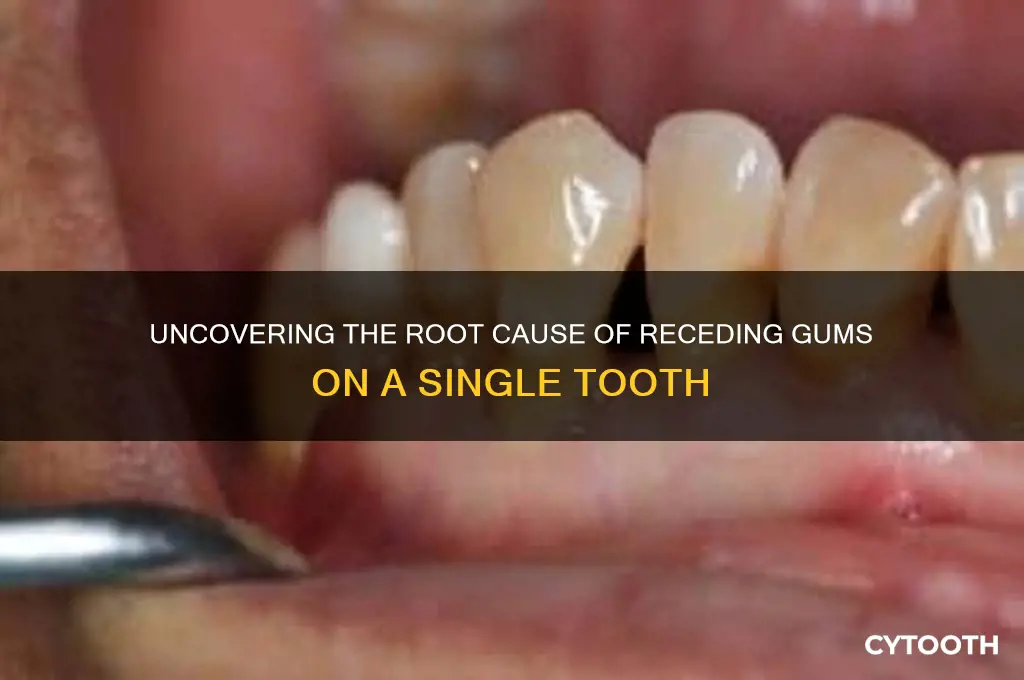
Receding gums on a single tooth can be a concerning issue, often signaling an underlying problem that requires attention. This condition, known as localized gum recession, occurs when the gum tissue surrounding a specific tooth pulls away, exposing more of the tooth's root. Common causes include aggressive brushing, periodontal disease, hormonal changes, or even genetic factors. Poor oral hygiene can lead to plaque buildup, which may result in gum inflammation and eventual recession. Additionally, trauma to the tooth or gums, such as from an injury or orthodontic treatment, can contribute to this issue. Understanding the root cause is crucial for effective treatment and prevention of further gum deterioration.
| Characteristics | Values |
|---|---|
| Gum Disease (Periodontal Disease) | Bacterial infection leading to inflammation and destruction of gum tissue. |
| Aggressive Tooth Brushing | Overbrushing or using a hard-bristled toothbrush causes gum tissue wear. |
| Dental Trauma | Injury to the tooth or gum from accidents, sports, or biting hard objects. |
| Misaligned Teeth | Crooked or crowded teeth create uneven pressure, leading to gum recession. |
| Genetic Predisposition | Inherited traits make some individuals more susceptible to gum recession. |
| Hormonal Changes | Fluctuations during puberty, pregnancy, or menopause affect gum sensitivity. |
| Teeth Grinding (Bruxism) | Excessive grinding or clenching puts pressure on gums and causes recession. |
| Piercings (Oral Jewelry) | Piercings can irritate gum tissue, leading to localized recession. |
| Poor Oral Hygiene | Inadequate brushing and flossing allow plaque buildup, causing gum issues. |
| Tobacco Use | Smoking or chewing tobacco damages gum tissue and reduces blood flow. |
| Aging | Natural thinning of gum tissue over time increases susceptibility. |
| Tooth Position Abnormalities | Teeth that are too high or misaligned cause localized gum recession. |
| Inadequate Nutrition | Deficiency in vitamins (e.g., Vitamin C) weakens gum health. |
| Certain Medications | Drugs reducing saliva production (e.g., antihistamines) increase gum risk. |
| Systemic Diseases | Conditions like diabetes or autoimmune disorders affect gum health. |
What You'll Learn

Aggressive brushing technique
Brushing your teeth is a fundamental part of oral hygiene, but the way you brush matters more than you might think. An aggressive brushing technique, characterized by using a hard-bristled toothbrush or applying excessive force, can lead to gum recession, particularly around a single tooth. This happens because the forceful action wears away the delicate gum tissue and enamel, leaving the tooth root exposed. Over time, this can cause sensitivity, increased risk of decay, and even tooth loss. If you notice one tooth seems more affected than others, your brushing technique might be the culprit.
To avoid this issue, start by evaluating your toothbrush. Opt for a soft-bristled brush, as recommended by dental professionals, and replace it every three months or sooner if the bristles become frayed. The American Dental Association (ADA) emphasizes that the angle and pressure of brushing are just as critical. Hold your toothbrush at a 45-degree angle to your gums and use gentle, circular motions rather than sawing back-and-forth. A common mistake is pressing too hard, thinking it cleans better, but this only accelerates damage. Imagine you’re polishing a delicate surface—light, consistent pressure is key.
Children and adults alike can fall into the habit of aggressive brushing, but the consequences can be more severe for older individuals whose gums are naturally thinner and more vulnerable. If you’re unsure about your technique, ask your dentist for a demonstration during your next checkup. They can also recommend tools like pressure-sensing toothbrushes, which signal when you’re brushing too hard. Pairing proper technique with fluoride toothpaste and regular flossing can significantly reduce the risk of gum recession.
Comparing aggressive brushing to proper technique highlights the importance of mindfulness during oral care. While a vigorous scrub might feel thorough, it’s akin to using sandpaper on your teeth and gums. In contrast, a gentle approach ensures effective cleaning without harm. Think of it as the difference between a marathon and a sprint—sustained, controlled effort yields better results than a quick, forceful burst. By adjusting your technique, you can protect your gums and maintain a healthy smile for years to come.
Anemia and Bleeding Gums: Uncovering the Surprising Connection and Risks
You may want to see also
Gum disease (gingivitis/periodontitis) progression
Gum disease, specifically gingivitis and periodontitis, is a leading cause of receding gums, often starting as a localized issue around a single tooth. Gingivitis, the milder form, begins with bacterial plaque buildup along the gum line. If unchecked, this inflammation can progress to periodontitis, where the gums pull away from the tooth, forming pockets that harbor more bacteria. Over time, these pockets deepen, destroying the bone and tissue supporting the tooth, leading to recession. Poor oral hygiene is the primary culprit, but factors like smoking, diabetes, and genetic predisposition accelerate this process. For instance, smokers are three to six times more likely to develop periodontitis, while diabetics face higher risks due to impaired immune function.
To halt progression, early intervention is critical. Start by brushing twice daily with a soft-bristled toothbrush and fluoride toothpaste, ensuring you clean the gum line thoroughly. Floss daily to remove plaque between teeth, and consider using an antimicrobial mouthwash to reduce bacterial load. If recession is noticeable around one tooth, it may indicate aggressive brushing or misaligned teeth—adjust your technique or consult a dentist for orthodontic solutions. Professional cleanings every six months are essential, as hygienists can remove tartar buildup that home care misses. For advanced cases, a dentist might recommend scaling and root planing, a deep-cleaning procedure to smooth root surfaces and discourage bacterial adhesion.
Comparing gingivitis and periodontitis highlights the importance of timely action. Gingivitis is reversible with improved oral care, but periodontitis causes irreversible damage to the periodontal ligament and alveolar bone. For example, a study in the *Journal of Periodontology* found that untreated periodontitis led to a 2-3mm increase in gum recession annually. This underscores why addressing symptoms like bleeding gums or bad breath immediately is vital. If you notice recession around a single tooth, it could be a warning sign of localized periodontitis, often linked to factors like tooth grinding or a misaligned bite.
Practical tips can mitigate risks. Avoid sugary foods and beverages, as they fuel plaque formation. Incorporate vitamin C-rich foods like oranges and bell peppers into your diet to support gum health, as deficiency is linked to periodontal issues. If you’re over 40, be vigilant—age increases susceptibility due to natural gum tissue thinning. Lastly, monitor stress levels, as it weakens the immune system, making gums more vulnerable to infection. By understanding the progression of gum disease and taking proactive steps, you can prevent localized recession from becoming a widespread oral health crisis.
Braces and Gum Recession: Uncovering the Truth Behind the Myth
You may want to see also
Dental misalignment or crowding issues
Dental misalignment or crowding can create localized pressure points that accelerate gum recession on a single tooth. When teeth are not properly aligned, they may tilt, rotate, or overlap in ways that concentrate biting forces unevenly. For example, a tooth that leans inward might cause its gum margin to bear excessive stress during chewing, leading to tissue breakdown over time. Orthodontic issues like these disrupt the natural distribution of force across the dental arch, making specific areas more vulnerable to recession.
Consider the mechanics: misaligned teeth often create tight spaces where plaque and debris accumulate more easily. This buildup irritates the gums, causing inflammation and eventual recession if left unaddressed. For instance, a crowded lower incisor might trap food particles against its neighbor, fostering bacterial growth that attacks the gum line. Even diligent brushing may struggle to reach these areas, compounding the problem. The result is a targeted recession that contrasts with the healthier gums surrounding better-aligned teeth.
Addressing such issues requires a two-pronged approach. First, orthodontic intervention—whether through braces, clear aligners, or space-maintaining appliances—can correct misalignment to redistribute biting forces evenly. For adolescents, early intervention (ideally between ages 10–14) maximizes the pliability of jawbone and gum tissue, reducing long-term risks. Adults may require more specialized treatments, such as periodontal surgery paired with orthodontics, to restore gum health while realigning teeth.
A critical caution: ignoring misalignment-induced recession can lead to irreversible damage, including tooth mobility or loss. Patients often mistake early signs, like minor gum sensitivity or slight tissue exposure, for harmless variations. However, these are warning signals that demand professional assessment. Dentists may recommend tools like interdental brushes or water flossers to improve cleaning in tight spaces, but these are temporary measures—structural correction remains essential.
In conclusion, dental misalignment or crowding acts as a localized catalyst for gum recession by creating mechanical stress points and hygiene challenges. While orthodontic treatment forms the backbone of prevention and correction, adjunctive measures like targeted cleaning tools and early periodontal care play vital roles. Recognizing the link between alignment and gum health empowers individuals to seek timely interventions, preserving both tooth stability and overall oral function.
Understanding Gum Bleeding: Common Causes and Prevention Tips
You may want to see also
Bruxism (teeth grinding/clenching) effects
Teeth grinding, or bruxism, exerts excessive force on the teeth and surrounding structures, often leading to localized gum recession. This habit, whether conscious or unconscious, can cause the gums to pull away from the tooth’s root, exposing sensitive areas and increasing the risk of decay and infection. While bruxism commonly affects multiple teeth, it can disproportionately target one tooth due to misalignment, stress concentration, or habitual jaw positioning during sleep.
Consider the mechanics: when you grind your teeth, the force isn’t distributed evenly. A single tooth may bear the brunt of this pressure, particularly if it’s already compromised by a filling, crown, or natural misalignment. Over time, the gum tissue around this tooth weakens, recedes, and loses its ability to protect the root. This process is accelerated in individuals who grind their teeth nightly, as the repetitive stress disrupts the gum’s attachment to the tooth.
To mitigate bruxism-induced gum recession, start with a custom-fitted night guard, which acts as a cushion between your teeth. These guards, available over-the-counter or through a dentist, can reduce direct pressure on vulnerable areas. For severe cases, a dentist may recommend a splint or occlusal adjustment to correct bite discrepancies. Pair these interventions with stress-reduction techniques, such as jaw exercises, meditation, or progressive muscle relaxation, to address the root cause of grinding.
A comparative analysis reveals that untreated bruxism not only causes localized gum recession but also contributes to broader oral health issues, including tooth fractures and temporomandibular joint (TMJ) disorders. While gum recession on one tooth might seem minor, it’s often a warning sign of systemic wear. Early intervention—such as monitoring grinding patterns with a sleep study or using wearable devices that track jaw movement—can prevent irreversible damage.
Finally, a descriptive perspective highlights the visible and tactile signs of bruxism-related gum recession: a single tooth may appear longer than its neighbors, feel more sensitive to temperature, or show signs of root exposure. If you notice these symptoms, consult a dentist promptly. They can assess the extent of the damage, recommend targeted treatments, and devise a long-term plan to protect your oral health from further grinding-related harm.
Smoking and Oral Health: Do Cigarettes Cause Gum Disease?
You may want to see also
Poor oral hygiene habits impact
Receding gums on a single tooth often signal a localized issue, and poor oral hygiene is a prime suspect. When plaque and tartar accumulate unchecked, they create a breeding ground for bacteria that irritate and inflame the gum tissue. This inflammation, known as gingivitis, weakens the gum’s attachment to the tooth, causing it to recede. Unlike generalized gum recession, which may stem from systemic factors like genetics or hormonal changes, localized recession often points to a specific area of neglect in your oral care routine.
Consider this scenario: you brush your teeth twice daily but consistently miss the same spot near one molar. Over time, plaque hardens into tartar in that area, leading to persistent irritation. The gum tissue responds by pulling away from the tooth, exposing the root surface. This isn’t just an aesthetic concern—exposed roots are more susceptible to decay and sensitivity, making the problem harder to reverse. The takeaway? Consistency and precision in brushing and flossing are non-negotiable.
To combat this, adopt a targeted approach. Use a soft-bristled toothbrush with a small head to reach tight spaces, and angle the bristles 45 degrees toward the gum line. Spend at least 30 seconds per quadrant, ensuring you cover all surfaces. Incorporate interdental tools like floss or a water flosser to remove debris between teeth, especially around the affected area. For added protection, rinse with an antibacterial mouthwash daily to reduce bacterial load. These steps, when executed diligently, can halt progression and even encourage gum reattachment in early cases.
However, prevention is always superior to correction. Regular dental check-ups are crucial, as professionals can spot early signs of recession and remove tartar buildup that at-home care can’t address. If you notice sensitivity, redness, or bleeding around a specific tooth, don’t delay—these are warning signs that demand immediate attention. Ignoring them risks not only further gum recession but also potential tooth loss. Remember, oral health is a daily commitment, and one overlooked tooth can become a gateway to larger issues.
Uncovering the Root Causes of Gum Recession on a Single Tooth
You may want to see also
Frequently asked questions
Yes, localized gum disease, such as gingivitis or periodontitis, can cause receding gums on a single tooth. Poor oral hygiene, aggressive brushing, or infection in that specific area can lead to tissue loss around the affected tooth.
Absolutely. Physical trauma, such as a sports injury, accident, or even aggressive brushing or flossing, can damage the gum tissue around a single tooth, leading to recession in that area.
Yes, orthodontic treatments like braces or dental procedures such as crown placement can sometimes put pressure on the gums, leading to recession on a specific tooth if not properly managed.