Matthew Grant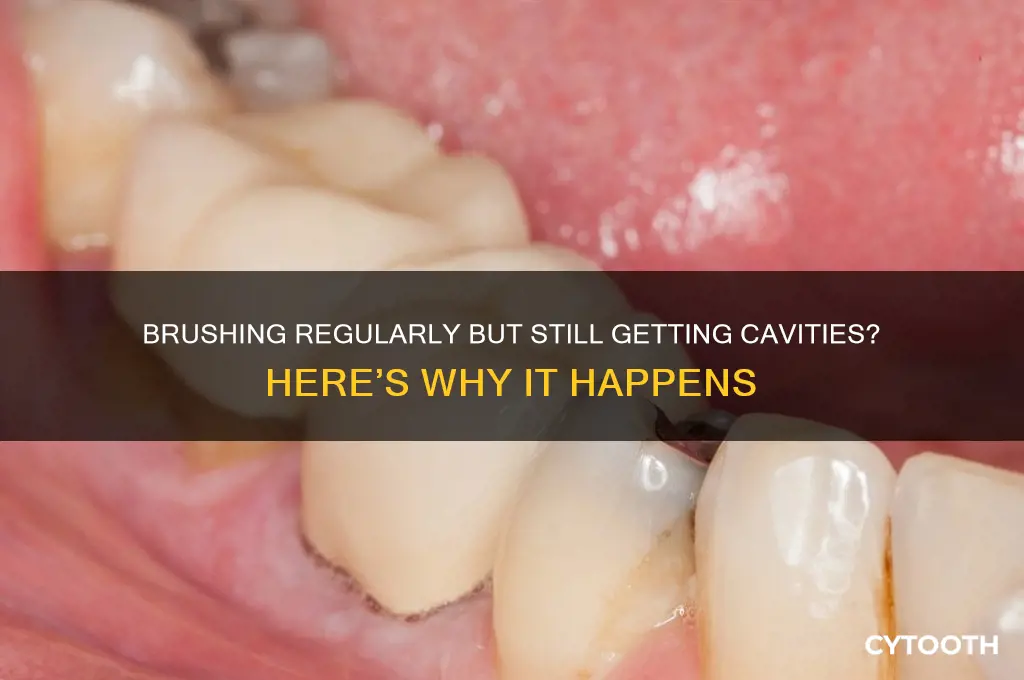
Despite maintaining a regular brushing routine, many people find themselves puzzled by the recurring issue of cavities. This common dental problem can stem from various factors beyond just brushing habits. Factors such as diet, particularly frequent consumption of sugary or acidic foods and drinks, play a significant role in enamel erosion and cavity formation. Additionally, inadequate brushing techniques, insufficient flossing, and not using fluoride toothpaste can leave teeth vulnerable to decay. Other contributors include dry mouth, genetic predisposition, and even certain medications that reduce saliva production, which is crucial for neutralizing acids and protecting teeth. Understanding these underlying causes is essential for developing a comprehensive oral care strategy to prevent cavities effectively.
What You'll Learn

Insufficient brushing technique
Brushing your teeth twice a day is a cornerstone of oral hygiene, but simply going through the motions isn’t enough. Poor technique can leave plaque and food particles behind, creating a breeding ground for cavity-causing bacteria. For instance, many people brush too hard, which wears down enamel and gums, or they fail to reach all surfaces of the teeth, particularly the back molars and along the gumline. Even if you’re diligent about brushing, an ineffective technique undermines your efforts, leaving you vulnerable to cavities despite your best intentions.
Consider the mechanics of brushing. The American Dental Association recommends using a soft-bristled toothbrush at a 45-degree angle to the gums, employing short, gentle strokes. Each session should last at least two minutes, divided evenly among the four quadrants of your mouth. Neglecting these specifics—like rushing through the process or using a sawing motion—means plaque remains intact, especially in hard-to-reach areas. Over time, this plaque hardens into tartar, which can only be removed by a dental professional and significantly increases cavity risk.
Children and older adults are particularly susceptible to the consequences of poor brushing technique. Kids often lack the dexterity to brush effectively, while seniors may struggle with arthritis or other conditions that make thorough cleaning difficult. For these groups, supervised brushing or the use of adaptive tools, such as electric toothbrushes with built-in timers, can make a substantial difference. Even adults who believe they’re brushing correctly might benefit from a refresher—dentists frequently observe patients missing the same spots, like the inner surfaces of lower front teeth.
Improving your technique starts with awareness. Pay attention to how you brush: Are you covering all surfaces? Are you spending enough time on each section? Incorporate flossing into your routine, as it removes debris between teeth that brushing alone can’t reach. If you’re unsure about your method, ask your dentist for a demonstration during your next checkup. They can provide personalized feedback and recommend tools, like angled brushes or water flossers, to enhance your cleaning regimen.
Ultimately, brushing isn’t just about frequency—it’s about precision. A well-executed technique ensures that plaque and food particles are consistently removed, reducing the risk of cavities and other oral health issues. By refining your approach and staying mindful of common pitfalls, you can transform a routine task into a powerful defense against tooth decay.
Chipped Tooth Repair Costs: Affordable Options and Treatment Choices
You may want to see also
Diet high in sugar/acid
A diet high in sugar and acid is a direct assault on your tooth enamel, the protective outer layer of your teeth. Every time you consume sugary or acidic foods and drinks, bacteria in your mouth feast on the sugars, producing acids as a byproduct. These acids, combined with the acids from your food, create a hostile environment that erodes enamel over time. This process, known as demineralization, weakens teeth and makes them susceptible to cavities. Even if you brush regularly, frequent exposure to these substances can outpace your teeth’s natural ability to remineralize, leaving them vulnerable.
Consider this: a single can of soda contains about 39 grams of sugar, which is nearly 10 teaspoons. When you drink it, the pH in your mouth drops to acidic levels (below 5.5) for up to 20 minutes, during which enamel erosion occurs. Multiply this by multiple sugary snacks or drinks throughout the day, and you’re essentially bathing your teeth in acid repeatedly. Even seemingly healthy foods like dried fruits or fruit juices can be culprits due to their concentrated sugars and acids. For children and teenagers, whose enamel is still developing, the risk is even higher, making dietary choices critical during these formative years.
To mitigate this, start by tracking your sugar and acid intake. Limit sugary snacks and beverages, especially between meals, as this reduces the frequency of acid attacks. Opt for water or unsweetened tea instead of soda or juice. If you do indulge in acidic foods like citrus fruits or vinegar-based dressings, rinse your mouth with water afterward to neutralize acids and avoid brushing immediately, as this can further damage softened enamel. Incorporate calcium-rich foods like dairy, leafy greens, and almonds to support remineralization.
A practical tip is to chew sugar-free gum after meals, as it stimulates saliva production, which helps neutralize acids and wash away food particles. For those with a sweet tooth, consider natural sweeteners like xylitol, which has been shown to reduce cavity-causing bacteria. However, moderation is key, as even these alternatives can contribute to acid production if overconsumed. By being mindful of your diet and making small, strategic changes, you can significantly reduce the risk of cavities, even if you’re already brushing regularly.
Achieve a Unique Smile: Guide to Getting a Silver Tooth
You may want to see also
Dry mouth (low saliva)
Saliva is your mouth's first line of defense against cavities. It neutralizes acids produced by bacteria, washes away food particles, and contains minerals that help repair early tooth decay. When saliva production drops, this protective system falters, leaving your teeth vulnerable. Dry mouth, or xerostomia, isn't just uncomfortable—it's a significant risk factor for cavities, even if you brush regularly.
Several factors can contribute to dry mouth. Medications, particularly antidepressants, antihistamines, and blood pressure drugs, are common culprits. Aging can also reduce saliva production, as can certain medical conditions like Sjögren's syndrome or diabetes. Even lifestyle choices, such as smoking or breathing through your mouth, can exacerbate the problem. If you suspect medication is the cause, consult your doctor about alternatives or saliva substitutes.
To combat dry mouth, start with simple hydration. Drink plenty of water throughout the day, but avoid sugary or acidic drinks that can worsen tooth decay. Chewing sugar-free gum or sucking on sugar-free candies can stimulate saliva flow. For nighttime relief, use a humidifier to add moisture to the air. Over-the-counter saliva substitutes or mouth rinses designed for dry mouth can also provide temporary relief, though they don’t address the root cause.
Prevention is key when dealing with dry mouth. Maintain a rigorous oral hygiene routine: brush twice daily with fluoride toothpaste, floss daily, and visit your dentist regularly for check-ups. Your dentist might recommend prescription-strength fluoride treatments or other interventions to protect your teeth. Additionally, avoid alcohol and caffeine, which can dehydrate you further, and quit smoking if you haven’t already.
While dry mouth can feel like an insurmountable issue, it’s manageable with the right approach. By understanding its causes and implementing targeted solutions, you can reduce your cavity risk and maintain a healthier smile. Don’t let low saliva production undermine your dental efforts—take proactive steps to keep your mouth moist and your teeth protected.
Ignoring Cavities: The Risks of Leaving Tooth Decay Untreated
You may want to see also
Genetic predisposition
Genetic factors play a significant role in determining your susceptibility to cavities, even if you maintain a diligent oral hygiene routine. Research shows that certain genetic variations can influence the strength of your enamel, the efficiency of your saliva in neutralizing acids, and your body’s response to oral bacteria. For instance, mutations in genes like *AMELX* (involved in enamel formation) or *MUC7* (related to salivary proteins) can predispose you to weaker tooth structure or reduced protective mechanisms against decay. If cavities run in your family, it’s not just coincidence—it’s biology.
Understanding your genetic predisposition isn’t about resigning to fate but about tailoring your approach to oral care. For example, if you know you’re genetically prone to weaker enamel, consider incorporating fluoride treatments into your routine. Prescription-strength fluoride toothpaste or in-office fluoride applications can fortify enamel and make it more resistant to acid attacks. Additionally, genetic testing kits now available on the market can provide insights into your specific risks, allowing you to work with your dentist to create a personalized prevention plan.
Comparatively, while brushing and flossing are universal recommendations, those with a genetic predisposition may need to go beyond the basics. For instance, if your genes predispose you to reduced salivary flow, you’re at higher risk for dry mouth, a condition that accelerates cavity formation. In such cases, chewing sugar-free gum to stimulate saliva production or using saliva substitutes can be game-changing. Similarly, if your genetics make you more susceptible to harmful oral bacteria, probiotics containing strains like *Lactobacillus reuteri* may help balance your oral microbiome.
A practical takeaway is to view your genetics as a roadmap, not a roadblock. If you’re unsure about your genetic risks, start by discussing your family’s dental history with your dentist. They can recommend targeted interventions, such as more frequent dental check-ups, sealants for vulnerable molars, or dietary adjustments to minimize acid exposure. Remember, while you can’t change your genes, you can outsmart them with proactive, informed care.
Can You Get a Crown on a Front Tooth? Here's What to Know
You may want to see also
Fluoride deficiency or overuse
Fluoride is a double-edged sword in oral health, essential for strengthening enamel yet harmful in excess. Deficiency weakens teeth, making them susceptible to cavities, while overuse leads to fluorosis—a cosmetic issue marked by white streaks or spots on teeth. Striking the right balance is critical, but it’s easier said than done, especially when fluoride lurks in water, toothpaste, mouthwash, and even food.
Consider this: the recommended daily fluoride intake for adults is 0.05–0.07 mg per kilogram of body weight. For a 70 kg adult, that’s roughly 3.5–4.9 mg daily. However, many municipal water supplies already contain 0.7–1.2 ppm (parts per million) of fluoride, delivering about 0.5–2.0 mg per liter of water consumed. Add a pea-sized amount of fluoride toothpaste (0.75–1.5 mg per use), and you’re nearing or exceeding the upper limit without accounting for other sources like processed beverages or foods cooked in fluoridated water.
To manage fluoride intake effectively, start by checking your local water report for fluoride levels. If it’s above 0.7 ppm, consider using fluoride-free toothpaste or limiting fluoridated mouthwash. For children under 6, supervise brushing to ensure they spit, not swallow, toothpaste—a common cause of fluorosis. If your water is naturally low in fluoride (below 0.3 ppm), consult a dentist about fluoride supplements or treatments to prevent cavities.
The key takeaway? Fluoride is not a one-size-fits-all solution. Tailor your exposure based on age, location, and dietary habits. Too little leaves teeth vulnerable; too much damages them. Regular dental check-ups can help monitor your fluoride needs and prevent imbalances before they lead to cavities or fluorosis.
Finally, remember that fluoride is just one piece of the oral health puzzle. Even with optimal fluoride levels, poor brushing technique, infrequent flossing, or a high-sugar diet will still pave the way for cavities. Fluoride protects enamel, but it’s not a substitute for comprehensive oral hygiene.
Can Root Canal Teeth Develop Cavities? Debunking Dental Myths
You may want to see also
Frequently asked questions
Brushing alone isn’t enough to prevent cavities. Factors like diet (frequent sugar intake), inadequate flossing, not using fluoride toothpaste, or poor brushing technique can contribute to tooth decay.
Brushing too hard can damage enamel and gums, making teeth more susceptible to decay. Use a soft-bristled brush and gentle, circular motions to protect your teeth.
Yes, using fluoride toothpaste is essential for cavity prevention. Fluoride strengthens enamel and helps repair early stages of tooth decay.
Yes, cavities can form due to other factors like dry mouth (reduced saliva), acidic foods/drinks, or genetic predisposition, even with a low-sugar diet. Regular dental check-ups are crucial.