Samantha Blake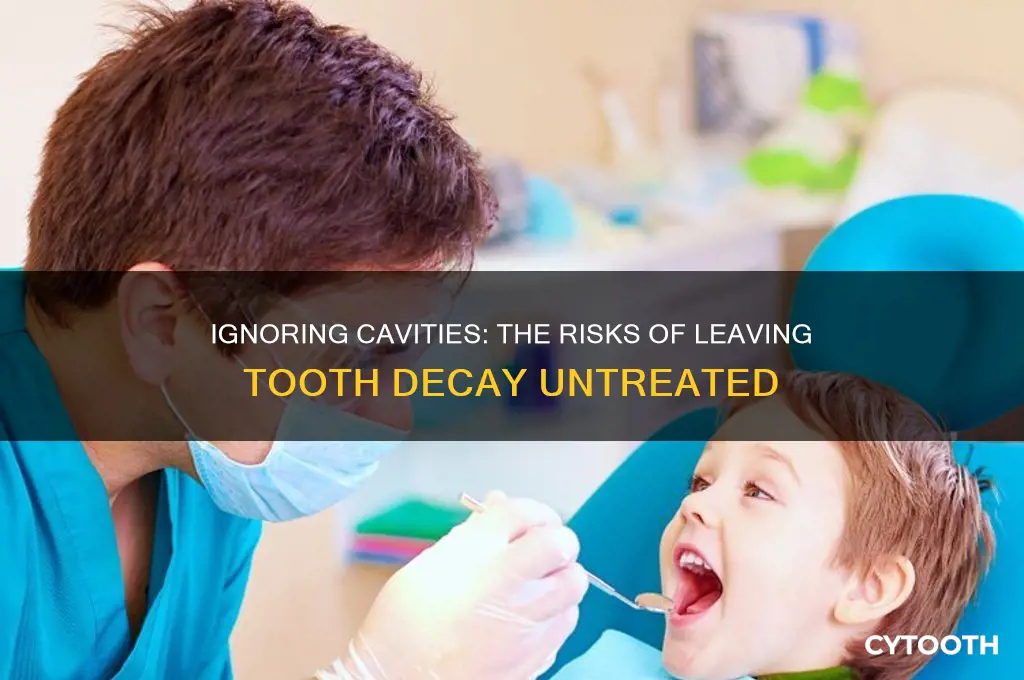
Neglecting to fill cavities can lead to a cascade of oral health issues, as untreated tooth decay progressively worsens over time. Initially, the decay may cause minor discomfort or sensitivity, but without intervention, it can penetrate deeper into the tooth, reaching the pulp and causing severe pain, infection, or abscess formation. This not only jeopardizes the affected tooth but can also spread bacteria to surrounding teeth and gums, potentially leading to gum disease or systemic health problems like cardiovascular issues. Additionally, advanced decay may necessitate more invasive and costly treatments, such as root canals or extractions, compared to the relatively simple and affordable procedure of filling a cavity early on.
| Characteristics | Values |
|---|---|
| Tooth Decay Progression | Untreated cavities worsen over time, leading to deeper enamel erosion. |
| Pain and Sensitivity | Increased tooth sensitivity to hot, cold, sweet, or acidic foods/drinks. |
| Infection Risk | Bacteria can reach the pulp, causing abscesses or severe infections. |
| Tooth Loss | Advanced decay may lead to tooth fracture or extraction. |
| Systemic Health Impact | Oral infections can spread, affecting overall health (e.g., heart, lungs). |
| Cost of Treatment | Delaying treatment increases costs (e.g., root canals vs. simple fillings). |
| Aesthetic Concerns | Visible decay, discoloration, or tooth damage affects appearance. |
| Difficulty Eating/Speaking | Pain or structural damage can impair chewing and speech. |
| Spread of Decay | Bacteria can spread to adjacent teeth, causing multiple cavities. |
| Chronic Bad Breath | Decay and infection contribute to persistent halitosis. |
| Impact on Overall Oral Health | Compromises gum health and increases risk of gum disease. |
| Potential for Emergency Care | Severe infections may require urgent medical attention. |
What You'll Learn
- Pain and Discomfort: Untreated cavities cause persistent toothaches, sensitivity, and discomfort while eating or drinking
- Infection Spread: Decay can lead to abscesses, infecting gums, jawbone, and even bloodstream
- Tooth Loss: Advanced cavities weaken teeth, leading to breakage or extraction
- Systemic Health Risks: Oral infections may contribute to heart disease, diabetes, and other health issues
- Costly Treatments: Delaying fillings results in more expensive procedures like root canals or crowns

Pain and Discomfort: Untreated cavities cause persistent toothaches, sensitivity, and discomfort while eating or drinking
Untreated cavities are a ticking time bomb for your oral health, and the first casualty is often your comfort. Persistent toothaches become a constant, unwelcome companion, signaling that the decay has reached the inner layers of your tooth where nerves reside. This isn’t just a fleeting annoyance—it’s a progressive pain that intensifies as the cavity deepens. Over-the-counter pain relievers like ibuprofen (400–600 mg every 6 hours) may offer temporary relief, but they’re not a solution. The real fix? Addressing the root cause before it escalates.
Sensitivity to hot, cold, sweet, or acidic foods and drinks is another hallmark of untreated cavities. This occurs as the protective enamel erodes, exposing the dentin—a porous layer directly connected to nerve endings. Imagine wincing every time you sip your morning coffee or bite into an ice cream cone. For children and adults alike, this sensitivity can disrupt daily routines and make meals a source of dread rather than enjoyment. Using desensitizing toothpaste (applied twice daily) can help manage symptoms, but it’s a band-aid on a bullet wound. The only way to truly resolve this discomfort is by treating the cavity itself.
Discomfort while eating or drinking isn’t just about sensitivity—it’s also about structural damage. As cavities progress, they weaken the tooth, making it more prone to cracking or chipping. Chewing becomes a gamble, with sharp pain or even breakage possible. This is particularly risky for older adults, whose teeth may already be more fragile due to age-related wear. Soft, nutrient-rich foods like mashed vegetables or smoothies might become necessary to avoid pain, but this dietary limitation can lead to nutritional deficiencies over time. The takeaway? Ignoring a cavity doesn’t just hurt—it alters your quality of life.
The progression from mild discomfort to debilitating pain is swift and unforgiving. What starts as a twinge after dessert can evolve into a throbbing ache that keeps you up at night. At this stage, the infection may have reached the pulp of the tooth, requiring a root canal or extraction. The moral of the story is clear: early intervention is far less invasive and costly than dealing with the consequences of neglect. Don’t wait until the pain forces your hand—schedule that dental appointment now. Your teeth—and your peace of mind—will thank you.
Smoking Weed Post-Tooth Filling: Risks and Recovery Tips
You may want to see also
Infection Spread: Decay can lead to abscesses, infecting gums, jawbone, and even bloodstream
Untreated cavities are not just a local problem; they are a gateway to systemic infection. As decay progresses, it creates a breeding ground for bacteria, which can infiltrate the pulp of the tooth, leading to a painful abscess. This pus-filled pocket doesn’t remain contained. It spreads, infecting the gums and, if left unchecked, the jawbone. In severe cases, bacteria enter the bloodstream, causing sepsis—a life-threatening condition requiring immediate medical intervention. This isn’t mere speculation; studies show that dental abscesses account for 10% of all sepsis cases in emergency departments, highlighting the critical link between oral neglect and systemic health.
Consider the progression step-by-step. First, the cavity weakens the tooth’s structure, allowing bacteria to penetrate the pulp chamber. Next, the body responds with inflammation, forming an abscess. Without treatment, this infection erodes surrounding tissues, including the periodontal ligament and alveolar bone. Advanced cases may require surgical intervention, such as a root canal or tooth extraction, to halt the spread. For children and older adults, whose immune systems are more vulnerable, the risk escalates. For instance, a 2019 study found that untreated dental infections in seniors increased their risk of pneumonia by 30%, as oral bacteria can be aspirated into the lungs.
Preventing this cascade starts with early intervention. Regular dental check-ups every six months allow for the detection of cavities before they progress. For those at higher risk—diabetics, smokers, or individuals with dry mouth—more frequent visits are advised. At home, fluoride toothpaste and antimicrobial mouthwash can reduce bacterial load. If an abscess develops, symptoms like throbbing pain, fever, and facial swelling warrant immediate attention. Antibiotics may be prescribed to control infection, but they are not a cure; the source of the infection—the decayed tooth—must be addressed.
Comparing the cost of prevention to the cost of treatment underscores the urgency. A dental filling averages $150–$300, while a root canal ranges from $700–$1,500, and hospitalization for sepsis can exceed $20,000. Beyond finances, the physical toll is immense. Sepsis survivors often face long-term complications, including organ damage and chronic pain. In contrast, maintaining oral hygiene requires minimal effort: brushing twice daily, flossing, and limiting sugary snacks. For parents, teaching children these habits early can prevent a lifetime of complications.
Finally, the societal impact of untreated cavities cannot be ignored. In the U.S. alone, over 40 million school hours are lost annually due to dental issues, many stemming from avoidable infections. Schools and workplaces can play a role by promoting oral health education and providing access to affordable care. For individuals, recognizing that a cavity is not an isolated issue but a potential trigger for systemic illness can be a powerful motivator. Act now—before a small hole in your tooth becomes a threat to your entire body.
Veneers with a Missing Tooth: What Are Your Options?
You may want to see also
Tooth Loss: Advanced cavities weaken teeth, leading to breakage or extraction
Untreated cavities are a silent predator, gradually eroding the structural integrity of your teeth. As decay progresses, it weakens the enamel and dentin, the protective layers of your tooth. This structural compromise makes the tooth increasingly susceptible to physical stress. Everyday activities like chewing hard foods or even accidental impacts can cause the tooth to crack, chip, or break. Imagine biting into an apple only to feel a sharp pain followed by a piece of your tooth coming loose—a stark reminder of the consequences of neglect.
The progression from cavity to tooth loss is not immediate but follows a predictable path. Initially, the decay might only affect the outer layers of the tooth, causing sensitivity or minor discomfort. Left untreated, it advances deeper, reaching the pulp where nerves and blood vessels reside. At this stage, the risk of infection skyrockets, leading to abscesses and severe pain. Eventually, the tooth’s structure becomes so compromised that it can no longer withstand normal forces, resulting in breakage. In extreme cases, the damage is irreversible, and extraction becomes the only viable option to prevent further complications.
Consider the financial and emotional toll of tooth loss. Replacing a missing tooth with implants, bridges, or dentures is significantly more costly and invasive than treating a cavity in its early stages. Beyond the financial burden, tooth loss can impact your ability to chew properly, affect your speech, and alter your facial appearance. It’s not just about losing a tooth—it’s about losing a piece of your confidence and quality of life. Prevention through regular dental check-ups and timely cavity fillings is far less daunting than dealing with the aftermath of tooth loss.
Practical steps can mitigate the risk of tooth loss due to advanced cavities. Brush twice daily with fluoride toothpaste, floss regularly to remove plaque from between teeth, and limit sugary snacks and beverages that fuel decay. Schedule dental check-ups every six months, or more frequently if you’re at higher risk. If you notice symptoms like persistent toothache, sensitivity to hot or cold, or visible holes in your teeth, seek treatment immediately. Early intervention can save your tooth and spare you the trauma of extraction or breakage. Remember, a small cavity today can become a major problem tomorrow—act now to protect your smile.
Pregnancy and Dental Implants: What You Need to Know
You may want to see also
Systemic Health Risks: Oral infections may contribute to heart disease, diabetes, and other health issues
Untreated cavities are more than just a local problem in your mouth; they can trigger a cascade of systemic health issues. Oral infections, particularly those stemming from advanced tooth decay, introduce harmful bacteria into the bloodstream. These pathogens, such as *Streptococcus mutans* and *Porphyromonas gingivalis*, don’t stay confined to the oral cavity. They travel, causing inflammation and damage in distant organs and systems. Research increasingly links this bacterial invasion to serious conditions like heart disease, diabetes, and even respiratory infections. Ignoring a cavity isn’t just about saving a tooth—it’s about safeguarding your overall health.
Consider the heart, for instance. Studies show that oral bacteria can attach to fatty plaques in arteries, contributing to atherosclerosis, a leading cause of heart attacks and strokes. The inflammation triggered by these bacteria exacerbates arterial damage, increasing the risk of cardiovascular events. For example, individuals with periodontal disease—often a consequence of untreated cavities—are nearly twice as likely to develop coronary artery disease. Similarly, diabetes patients face a two-way street: high blood sugar levels worsen oral infections, while untreated oral infections make it harder to control blood sugar, creating a vicious cycle. Managing cavities isn’t just dental hygiene—it’s a critical step in preventing systemic complications.
Practical steps can mitigate these risks. Adults over 30 should prioritize biannual dental check-ups, as this age group is more susceptible to gum disease and its systemic effects. If a cavity is detected, prompt treatment with fillings or crowns is essential. For those with diabetes, maintaining a hemoglobin A1c level below 7% reduces the risk of oral infections and their complications. Additionally, incorporating antimicrobial mouthwashes containing chlorhexidine (0.12% concentration) can help control bacterial growth in the mouth. These measures aren’t just about oral health—they’re about protecting your heart, stabilizing blood sugar, and preserving overall well-being.
Comparatively, the cost of treating systemic complications far outweighs the expense of a simple cavity filling. A single heart bypass surgery can cost upwards of $70,000, while a dental filling averages $150–$300. Beyond finances, the physical toll of untreated oral infections—chronic pain, fatigue, and reduced quality of life—is immeasurable. For example, a 45-year-old with untreated cavities might eventually face not only tooth loss but also increased hospitalizations for diabetes management or cardiovascular interventions. Addressing cavities early is a small investment with significant long-term returns.
Finally, awareness is key. Many people underestimate the connection between oral and systemic health, viewing cavities as minor nuisances. However, the science is clear: oral infections are not isolated incidents. They are red flags signaling potential systemic risks. By treating cavities promptly, you’re not just preserving your smile—you’re taking a proactive step toward preventing life-altering conditions. Prioritize oral health, and you’ll be protecting far more than your teeth.
Can You Get a Root Canal on a Broken Tooth?
You may want to see also
Costly Treatments: Delaying fillings results in more expensive procedures like root canals or crowns
A small cavity, if left untreated, can progress into a full-blown dental emergency. What starts as a minor inconvenience—a twinge of sensitivity or a dark spot on your tooth—can escalate into severe pain, infection, and the need for extensive, costly treatments. The progression is predictable: enamel erosion leads to dentin exposure, which then reaches the tooth's pulp, causing irreversible damage. At this stage, a simple filling, which might have cost around $150 to $300, is no longer sufficient. Instead, you’re looking at procedures like root canals, which can range from $700 to $1,500 per tooth, or crowns, which can cost $1,000 to $2,500 depending on the material. Delaying treatment isn’t just a gamble with your oral health—it’s a financial risk that multiplies over time.
Consider the anatomy of a tooth and how decay progresses. Enamel, the hardest substance in the human body, is the first line of defense. Once breached, decay moves swiftly to the softer dentin beneath, where it spreads laterally and vertically. If it reaches the pulp—the nerve center of the tooth—infection becomes inevitable. At this point, a root canal is often the only way to save the tooth, involving the removal of infected tissue, cleaning the canals, and sealing the tooth. If the tooth is too weakened, a crown is required to restore its structure and function. These procedures are not only more invasive but also require specialized care, driving up costs significantly. Ignoring a cavity is like ignoring a small leak in your roof—what starts as a minor repair can turn into a major renovation.
From a financial perspective, delaying a filling is a false economy. While the upfront cost of a filling might seem steep, it pales in comparison to the expenses incurred when decay advances. For instance, a root canal often requires follow-up appointments, medication for infection, and a custom crown, easily totaling over $2,000. In contrast, a filling can often be completed in a single visit with minimal discomfort and no need for additional procedures. Insurance coverage typically favors preventive care, meaning a filling might be partially or fully covered, while more complex treatments may have higher out-of-pocket costs. By addressing cavities early, you’re not just saving your teeth—you’re saving money.
Practically speaking, preventing the need for costly treatments starts with vigilance and proactive care. Regular dental check-ups every six months allow your dentist to detect cavities in their earliest stages, often before symptoms appear. At-home care, including twice-daily brushing with fluoride toothpaste, flossing, and limiting sugary snacks, can slow or even halt the progression of decay. If you notice sensitivity, pain, or visible discoloration, don’t wait—schedule an appointment immediately. Early intervention is key. For parents, teaching children good oral hygiene habits from a young age can prevent a lifetime of dental issues. Remember, the cost of a filling is a small price to pay compared to the alternative.
In the end, the decision to delay a filling is a trade-off between short-term convenience and long-term consequences. While it might be tempting to put off dental care, especially if symptoms are mild or nonexistent, the potential for more expensive, invasive treatments looms large. Root canals and crowns are not just financial burdens—they’re time-consuming and often uncomfortable. By prioritizing early treatment, you’re investing in your oral health and your wallet. As the saying goes, an ounce of prevention is worth a pound of cure. When it comes to cavities, that pound can be heavy indeed.
Partial Denture for a Single Tooth: Is It a Viable Option?
You may want to see also
Frequently asked questions
If left untreated, cavities can progress deeper into the tooth, causing more extensive damage, pain, and potential infection.
Yes, untreated cavities can weaken the tooth structure, leading to fractures, abscesses, or severe decay that may require tooth extraction.
Yes, as the cavity progresses, it can expose the tooth's nerve, leading to sensitivity, pain, and possible infection, which can be extremely painful.
Yes, untreated cavities can lead to infections that may spread to other parts of the body, potentially causing systemic health issues like heart problems or diabetes complications.
No, cavities cannot heal on their own. Once tooth enamel is damaged, it requires professional intervention, such as a filling, to restore the tooth and prevent further decay.