Ethan Brooks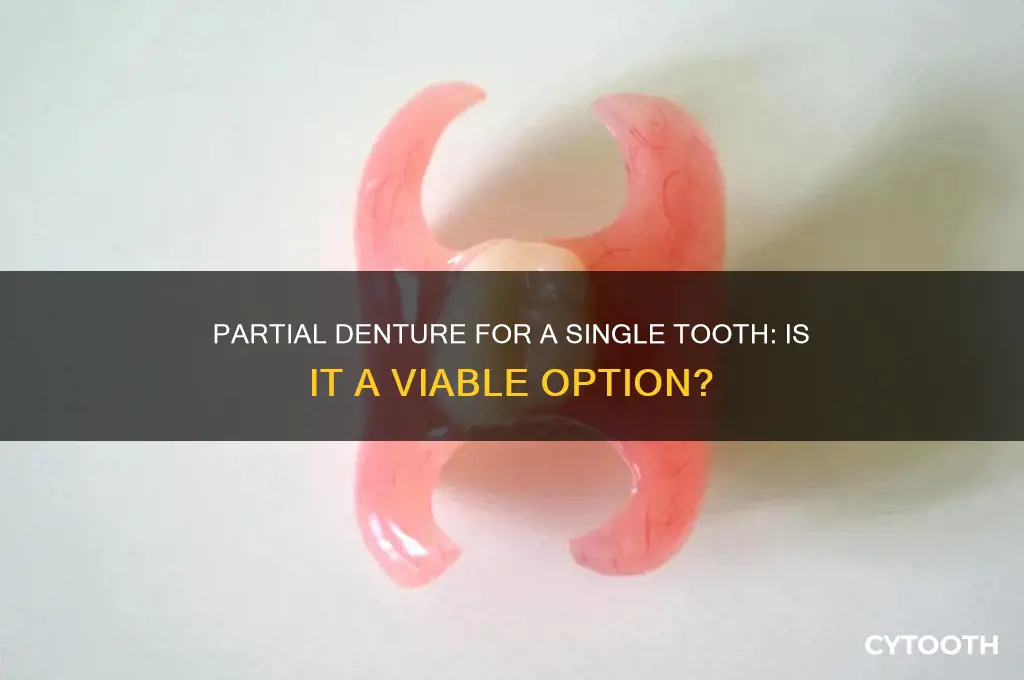
Partial dentures are a common solution for replacing missing teeth, and they can indeed be customized to replace just one tooth if necessary. A partial denture for a single tooth, often referred to as a single-tooth partial or a unidental prosthesis, is designed to fit seamlessly into the gap left by the missing tooth, restoring both function and aesthetics. This option is particularly useful when a dental implant or bridge isn’t feasible due to cost, health considerations, or personal preference. The partial denture typically consists of a replacement tooth attached to a gum-colored base, sometimes with clasps or other attachments to secure it to adjacent natural teeth. While it may not be as permanent as an implant, it offers a practical and affordable alternative for individuals looking to fill a single-tooth gap effectively.
| Characteristics | Values |
|---|---|
| Feasibility | Yes, partial dentures can be made for a single missing tooth. |
| Type of Partial Denture | Removable partial denture (RPD) or fixed partial denture (e.g., bridge). |
| Material Options | Acrylic, metal (e.g., cobalt-chromium), or flexible resin. |
| Cost Range (USD) | $300–$1,500 (RPD); $1,000–$3,000 (fixed bridge). |
| Durability | 5–15 years (RPD); 10–15+ years (fixed bridge). |
| Aesthetic Appeal | High, with tooth-colored materials matching natural teeth. |
| Comfort | RPD may require adjustment; fixed bridge is more stable. |
| Maintenance | RPD requires daily cleaning; fixed bridge needs regular oral hygiene. |
| Procedure Time | 2–4 weeks (RPD); 2–3 visits over 2–6 weeks (fixed bridge). |
| Invasiveness | RPD is non-invasive; fixed bridge requires altering adjacent teeth. |
| Suitability | Ideal for patients with healthy gums and adjacent teeth. |
| Alternative Options | Dental implants, Maryland bridge, or no replacement (if feasible). |
| Insurance Coverage | Partial coverage varies; typically 50–80% depending on the plan. |
| Long-Term Impact | Prevents shifting of adjacent teeth and maintains jaw alignment. |
What You'll Learn
- Single Tooth Replacement Options: Partial dentures as a solution for one missing tooth
- Partial Denture Design: Custom-made to fit one tooth gap comfortably
- Cost of Single Tooth Partial: Affordable compared to implants or bridges
- Procedure and Fitting: Quick process with minimal adjustments for one tooth
- Care and Maintenance: Easy cleaning and longevity tips for partial dentures

Single Tooth Replacement Options: Partial dentures as a solution for one missing tooth
Missing a single tooth can significantly impact your smile, speech, and chewing ability. While dental implants are often the gold standard for replacing a single tooth, partial dentures offer a viable, cost-effective alternative. These removable appliances consist of a replacement tooth attached to a gum-colored base, designed to fit seamlessly into the gap left by your missing tooth.
Partial dentures for a single tooth are custom-made to match the shape, size, and color of your natural teeth, ensuring a natural-looking and comfortable fit. They are typically secured in place with metal or plastic clasps that attach to adjacent teeth, providing stability and functionality.
Understanding the Process: From Consultation to Fitting
The journey to a partial denture begins with a consultation with your dentist. They will examine your mouth, assess the health of your gums and remaining teeth, and discuss your suitability for a partial denture. Impressions of your teeth will be taken to create a precise mold, which serves as the basis for crafting your custom denture.
The fabrication process typically takes a few weeks. Once your partial denture is ready, your dentist will carefully fit it, making any necessary adjustments to ensure comfort and proper alignment. They will also provide you with instructions on cleaning and caring for your new denture.
Benefits and Considerations: Weighing the Pros and Cons
Partial dentures offer several advantages for single tooth replacement. They are generally more affordable than dental implants and can be a good option for individuals who are not suitable candidates for implant surgery. Partial dentures are also removable, making them easier to clean and maintain compared to fixed bridges.
However, it's important to consider some potential drawbacks. Partial dentures may not be as stable as implants or bridges, and they can sometimes feel bulky or uncomfortable. Additionally, the clasps used to secure the denture can put pressure on adjacent teeth, potentially leading to wear and tear over time.
Caring for Your Partial Denture: Ensuring Longevity and Comfort
Proper care is essential for maintaining the longevity and comfort of your partial denture. Regular cleaning with a soft-bristled toothbrush and denture cleaner is crucial to remove food particles and plaque. Avoid using abrasive toothpaste or harsh chemicals, as these can damage the denture material.
It's also important to remove your partial denture at night to give your gums a rest and allow them to breathe. Soak your denture in a denture cleaning solution overnight to keep it clean and fresh. Regular dental checkups are essential to monitor the fit of your denture and ensure the health of your gums and remaining teeth.
With proper care and maintenance, a partial denture can be a durable and effective solution for replacing a single missing tooth, restoring your smile and confidence.
Pregnancy and Dental Care: Is It Safe to Fill a Tooth?
You may want to see also
Partial Denture Design: Custom-made to fit one tooth gap comfortably
A single missing tooth can significantly impact your smile, speech, and chewing ability. While dental implants are a popular solution, they’re not always feasible due to cost, bone density, or personal preference. Here’s where a custom-made partial denture for one tooth steps in as a practical alternative. Unlike traditional partials that replace multiple teeth, this design is tailored to fit the unique contours of your gum line and adjacent teeth, ensuring a snug, natural-looking replacement. The process begins with a dental impression, allowing the denture to mimic the shape, size, and shade of your missing tooth for seamless integration.
Crafting a partial denture for one tooth requires precision. The base is typically made from gum-colored acrylic, designed to blend with your natural gum tissue. A single artificial tooth, crafted from durable materials like porcelain or composite resin, is then attached. Metal clasps or precision attachments may be used to secure the denture to neighboring teeth, though advancements in design often allow for clasp-free options that rely on undercuts or adhesive for retention. This minimizes visibility and maximizes comfort, ensuring the denture stays in place without irritating surrounding tissues.
One of the key advantages of this custom design is its adaptability. For instance, if the missing tooth is a front incisor, the denture can be sculpted to match the slight translucency and texture of natural teeth, ensuring it doesn’t stand out. For molars, the focus shifts to durability and bite alignment, ensuring the denture can withstand chewing forces without shifting. Patients often report that after a brief adjustment period, the denture feels indistinguishable from their natural teeth, allowing them to eat, speak, and smile with confidence.
While this solution is non-invasive and cost-effective, proper care is essential to prolong its lifespan. Daily cleaning with a soft brush and non-abrasive cleaner prevents plaque buildup and staining. Avoid hot water or harsh chemicals that could warp the acrylic base. Regular dental check-ups are also crucial to monitor the fit and health of your gums. With proper maintenance, a custom partial denture for one tooth can last 5–10 years, making it a reliable option for those seeking a functional and aesthetic fix.
In comparison to other single-tooth replacement options, this partial denture offers a balance of affordability and convenience. Unlike implants, it doesn’t require surgery or extensive healing time. Unlike a Maryland bridge, it doesn’t involve altering adjacent teeth. While it may not stimulate bone growth like an implant, its removable nature allows for easy cleaning and adjustments as needed. For individuals seeking a quick, reversible solution, this custom-made partial denture stands out as a tailored, comfortable, and effective choice.
Pregnancy and Dental Care: Is Tooth Extraction Safe for Expecting Moms?
You may want to see also
Cost of Single Tooth Partial: Affordable compared to implants or bridges
Partial dentures for a single tooth are a cost-effective solution for those seeking to replace a missing tooth without breaking the bank. Compared to dental implants or bridges, which can cost thousands of dollars, a single tooth partial denture typically ranges from $300 to $1,500, depending on factors like material, location, and dentist expertise. This price disparity makes partial dentures an attractive option for individuals on a budget or those who prefer a less invasive and more reversible treatment.
When considering the cost of a single tooth partial, it's essential to weigh the pros and cons of each replacement option. While implants offer a permanent solution with a natural look and feel, their high cost and lengthy procedure time may not be feasible for everyone. Bridges, on the other hand, require altering adjacent teeth, which can lead to additional complications. A partial denture, however, is a removable appliance that replaces the missing tooth and surrounding gums, providing a functional and aesthetic solution at a fraction of the cost. For instance, a basic acrylic partial denture may cost around $300-$500, while a more durable cast metal partial can range from $700-$1,500.
The affordability of single tooth partials extends beyond the initial cost, as they also require less maintenance compared to implants or bridges. With proper care, a partial denture can last 5-10 years, whereas implants may require periodic adjustments or replacements. To ensure longevity, it's recommended to: clean the denture daily with a soft-bristled brush and mild soap, avoid abrasive cleaners or toothpaste, and store it in a denture-cleaning solution or water when not in use. Additionally, regular dental check-ups (every 6 months) are crucial to monitor the fit and condition of the partial, as well as overall oral health.
For those concerned about the visibility of a partial denture, modern advancements have led to more natural-looking and comfortable designs. Flexible partials, made from thin, lightweight materials like nylon or thermoplastic, can be nearly invisible when worn. These options may cost slightly more (around $500-$800) but offer a more aesthetically pleasing and comfortable alternative to traditional acrylic or metal partials. When consulting with a dentist, discuss your preferences and budget to determine the best material and design for your single tooth partial.
In conclusion, the cost of a single tooth partial denture makes it an appealing option for those seeking an affordable and practical solution to replace a missing tooth. By understanding the factors influencing cost, maintenance requirements, and available materials, individuals can make an informed decision that balances their budget, oral health, and aesthetic goals. As with any dental procedure, consulting with a qualified dentist is essential to ensure the best outcome and long-term success of the partial denture.
Can Root Canal Teeth Develop Cavities? Debunking Dental Myths
You may want to see also
Procedure and Fitting: Quick process with minimal adjustments for one tooth
Partial dentures for a single tooth are a streamlined solution, often completed in fewer appointments compared to more complex dental procedures. The process begins with a consultation where your dentist evaluates the health of your gums and surrounding teeth to ensure a partial denture is the best option. Impressions of your mouth are then taken, either digitally or with traditional molds, to create a precise model for the denture. This step is crucial for ensuring a comfortable fit and natural appearance.
Next, a dental lab crafts the partial denture, typically using acrylic or metal frameworks with a single artificial tooth attached. The material choice depends on factors like durability, aesthetics, and your budget. For a single tooth, the design is minimalistic, focusing on stability and seamless integration with your natural teeth. This phase usually takes about 1–2 weeks, after which you’ll return to the dentist for fitting.
The fitting appointment is where precision meets practicality. Your dentist will place the partial denture in your mouth, checking for alignment, bite compatibility, and comfort. Minor adjustments are often made on the spot using specialized tools to refine the fit. For a single-tooth partial, these adjustments are typically minimal, as the appliance is less complex than full or multi-tooth partials. You’ll be instructed on how to insert and remove the denture, as well as cleaning techniques to maintain oral hygiene.
Post-fitting, you may experience a brief adjustment period as your mouth adapts to the new appliance. Initially, it’s advisable to start with soft foods and gradually reintroduce harder items as you grow accustomed to the denture. Regular follow-ups with your dentist are essential to monitor the fit and address any discomfort or shifting. With proper care, a partial denture for one tooth can last 5–10 years, making it a practical and efficient solution for tooth replacement.
Veneers with a Missing Tooth: What Are Your Options?
You may want to see also
Care and Maintenance: Easy cleaning and longevity tips for partial dentures
Partial dentures for a single tooth are indeed an option, offering a discreet and functional solution for those with a missing tooth. However, their longevity and effectiveness heavily rely on proper care and maintenance. Neglecting this aspect can lead to discomfort, damage, or even the need for replacement.
Daily Cleaning Rituals: Start by rinsing your partial denture under warm water to remove loose food particles. Use a soft-bristled toothbrush and non-abrasive denture cleaner to gently brush all surfaces, including the clasps and artificial tooth. Avoid harsh toothpaste, as it can scratch the material. For hard-to-reach areas, consider a denture brush with a long handle. Soak your partial denture daily in a denture cleaning solution, following the manufacturer's instructions for dosage and duration. This helps remove stains and bacteria, ensuring a fresh and hygienic appliance.
Handling and Storage: When handling your partial denture, be cautious to avoid dropping or bending it. Always remove it over a folded towel or a full sink of water to prevent breakage if it slips. At night, store your partial denture in a denture cup filled with water or a denture cleaning solution, ensuring it stays moist and maintains its shape. Never use hot water, as it can warp the material. For those with limited dexterity or visual impairments, consider using a denture handling tool to facilitate removal and insertion.
Longevity Tips: Regular dental check-ups are essential for monitoring the fit and condition of your partial denture. Your dentist can make adjustments to ensure comfort and functionality, especially as your gums and jawbone may change over time. Avoid exposing your partial denture to excessive heat or cold, as extreme temperatures can cause warping or cracking. When eating, cut food into small pieces and chew slowly, distributing the pressure evenly. Be cautious with sticky or hard foods that can dislodge or damage the appliance.
Troubleshooting and Repairs: If your partial denture becomes loose or uncomfortable, refrain from using over-the-counter adhesives without consulting your dentist. They can assess the issue and recommend appropriate solutions, such as relining or rebasing the denture. In case of damage, like a cracked tooth or broken clasp, avoid DIY repairs, as they may cause further harm. Instead, contact your dentist immediately for professional repair or replacement.
By following these care and maintenance guidelines, you can ensure your partial denture remains a reliable and long-lasting solution for your missing tooth. Proper cleaning, handling, and regular dental check-ups are key to preserving its functionality and aesthetics, allowing you to smile and eat with confidence. Remember, a well-maintained partial denture is an investment in your oral health and overall well-being.
Frequently asked questions
Yes, a partial denture can be designed to replace a single missing tooth. It is called a single-tooth partial denture or a unidental partial denture.
A partial denture for one tooth typically uses clasps or precision attachments to anchor onto adjacent natural teeth, ensuring it stays securely in place.
While a partial denture is an option, alternatives like dental implants or bridges are often considered more stable and long-lasting for replacing a single tooth. Consult your dentist to determine the best solution for your needs.