Logan Hayes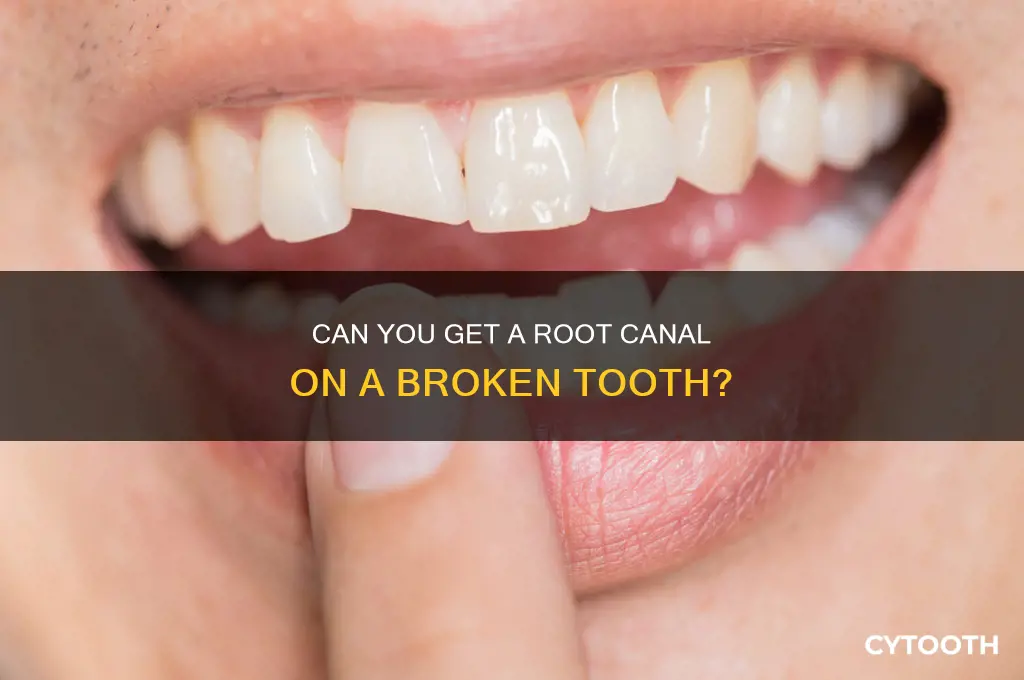
A broken tooth can be a painful and distressing experience, often leaving individuals wondering about their treatment options. One common question that arises is whether a root canal can be performed on a broken tooth. The answer depends on the extent and location of the fracture, as well as the overall health of the tooth and its surrounding structures. In many cases, if the break has exposed the tooth's pulp (the innermost layer containing nerves and blood vessels) or if infection is present, a root canal may be necessary to save the tooth. During this procedure, the damaged pulp is removed, the area is cleaned and disinfected, and the tooth is sealed to prevent further infection. However, if the fracture extends below the gum line or compromises the tooth's structural integrity, extraction might be the only viable option. Consulting a dentist promptly is crucial to determine the best course of action and ensure the best possible outcome for oral health.
| Characteristics | Values |
|---|---|
| Feasibility | Yes, a root canal can be performed on a broken tooth, depending on severity. |
| Tooth Condition | Must have enough healthy structure remaining to support the procedure. |
| Nerve Exposure | If the pulp (nerve) is exposed due to the break, a root canal is often necessary. |
| Infection Risk | Broken teeth are prone to infection, making root canal therapy essential. |
| Restoration Post-Procedure | A crown or filling is typically required to restore the tooth's structure. |
| Success Rate | High success rate if the tooth is treatable and not severely fractured. |
| Alternative Treatments | Extraction may be necessary if the tooth is irreparably damaged. |
| Pain Management | Local anesthesia is used during the procedure to minimize discomfort. |
| Recovery Time | Typically a few days of mild discomfort; full recovery varies by case. |
| Cost | Varies based on location, dentist, and additional treatments (e.g., crown). |
| Long-Term Outlook | With proper care, a treated tooth can last a lifetime. |
What You'll Learn

Root Canal Success Rates on Fractured Teeth
Consider the case of a 45-year-old patient with a fractured molar due to trauma. If the fracture is limited to the crown and does not extend below the gum line, a root canal followed by a post and crown restoration can yield a success rate comparable to that of an intact tooth. However, if the fracture extends into the root, the prognosis becomes less favorable. Dentists often employ advanced imaging techniques like cone-beam computed tomography (CBCT) to assess fracture depth and plan treatment accordingly. For such cases, the patient should be informed of the higher risk of complications, including potential tooth extraction if the fracture cannot be adequately managed.
From a procedural standpoint, the success of a root canal on a fractured tooth relies heavily on meticulous cleaning, shaping, and sealing of the root canal system. Endodontists may use calcium hydroxide or mineral trioxide aggregate (MTA) to enhance sealing in cases where fractures compromise the apical region. Post-treatment, the tooth should be monitored for signs of infection or further fracture. Patients are advised to avoid excessive biting forces on the treated tooth, especially during the initial healing phase, which typically spans 3-6 months. Customized night guards can be prescribed for patients with bruxism to prevent additional stress on the compromised structure.
Comparatively, teeth with horizontal fractures below the gum line often present a more favorable prognosis than those with vertical fractures. Horizontal fractures can sometimes be managed with a combination of root canal therapy and surgical intervention, such as apicoectomy, to remove the fractured portion while preserving the remaining tooth structure. Success rates for such cases can reach up to 85%, provided the fracture does not extend into the periodontal ligament space. This highlights the importance of a tailored treatment approach based on fracture type and patient-specific factors.
In conclusion, while root canals on fractured teeth are feasible, their success rates are contingent on fracture characteristics, diagnostic accuracy, and treatment precision. Patients should be educated about the risks and potential need for alternative interventions, such as implants or bridges, if the fracture proves unmanageable. Regular follow-ups and adherence to post-treatment care guidelines are essential to maximize the longevity of the treated tooth. By understanding these nuances, both dentists and patients can make informed decisions to optimize outcomes in challenging clinical scenarios.
Veneers with a Missing Tooth: What Are Your Options?
You may want to see also
Types of Tooth Fractures Suitable for Root Canals
Tooth fractures vary widely in severity, and not all are candidates for root canals. However, certain types of fractures, when accompanied by pulp involvement, can be effectively treated with this procedure. Vertical root fractures, for instance, are often caused by excessive biting force or weakened tooth structure due to prior restorations. While these fractures may not always be visible on X-rays, symptoms like persistent pain and gum swelling indicate pulp damage, making a root canal a viable option to save the tooth.
Another suitable candidate is a complex fracture involving the cusp or chewing surface of the tooth, especially when it extends into the pulp chamber. These fractures commonly result from trauma, such as a fall or sports injury. If the pulp is exposed or infected, a root canal can remove the damaged tissue, followed by a crown to restore function and prevent further breakage. Early intervention is crucial here, as delaying treatment increases the risk of abscess formation.
Split teeth, where the fracture extends from the chewing surface to below the gum line, present a unique challenge. While extraction is often recommended, a root canal combined with a stabilizing splint or post-and-core buildup can sometimes preserve the tooth, particularly if the fracture is not complete. This approach is more successful in younger patients with healthy periodontal support, as older adults may face higher risks of complications.
Lastly, fractured cusps, typically occurring in molars, are often treatable with root canals if the break compromises the pulp. These fractures are usually painless unless the pulp becomes infected. A root canal followed by a crown or onlay can restore the tooth’s integrity, allowing it to function normally. Dentists may use digital imaging to assess the extent of the fracture and determine the most appropriate treatment plan.
In summary, while not all broken teeth require root canals, specific fracture types—vertical root fractures, complex fractures, split teeth, and fractured cusps—can benefit from this procedure when pulp involvement is confirmed. Timely diagnosis and tailored treatment are key to preserving the tooth and preventing further damage. Always consult a dentist for a thorough evaluation to determine the best course of action.
Can Root Canal Teeth Develop Cavities? Debunking Dental Myths
You may want to see also
Post-Root Canal Restoration Options for Broken Teeth
A broken tooth can be a painful and distressing experience, but modern dentistry offers solutions that not only alleviate discomfort but also restore functionality and aesthetics. After a root canal procedure on a broken tooth, the focus shifts to post-restoration options, which are crucial for long-term success. The choice of restoration depends on the extent of the damage, the tooth's location, and the patient's preferences. Here’s a detailed look at the options available.
Analytical Perspective: Crowns as the Gold Standard
For severely broken teeth, a dental crown is often the most reliable post-root canal restoration. Crowns act as a protective cap, encasing the entire visible portion of the tooth above the gum line. They are typically made from materials like porcelain, ceramic, or zirconia, which mimic the natural appearance of teeth while providing durability. A study published in the *Journal of Endodontics* highlights that crowned teeth after root canal treatment have a 90% success rate over 10 years, compared to 65% for teeth without crowns. The process involves filing down the remaining tooth structure and taking impressions to create a custom crown, which is then cemented in place. This option is ideal for molars or teeth subjected to heavy biting forces.
Instructive Approach: When to Consider a Post and Core Buildup
If a broken tooth lacks sufficient structure to support a crown, a post and core buildup is often necessary. This two-step procedure begins with the placement of a post (usually made of metal or fiber) into the root canal space to provide stability. A core material, such as composite resin or amalgam, is then added to rebuild the tooth’s shape. Once the core is in place, a crown can be fitted. Patients should be aware that this method requires careful planning, as improper post placement can weaken the tooth. Dentists often recommend this for front teeth or cases where the fracture extends below the gum line.
Persuasive Argument: The Aesthetic Appeal of Porcelain Veneers
For broken front teeth where the root canal has been completed, porcelain veneers offer a minimally invasive yet highly effective restoration option. Veneers are thin shells bonded to the front surface of the tooth, correcting chips, cracks, and discoloration simultaneously. Unlike crowns, veneers preserve more of the natural tooth structure, making them a conservative choice. However, they are best suited for teeth with minor to moderate damage and are not recommended for molars due to their fragility under heavy pressure. Patients seeking a seamless, natural-looking smile often find veneers to be a superior aesthetic solution.
Comparative Analysis: Fillings vs. Inlays/Onlays
For smaller fractures or when the tooth’s integrity is partially intact, direct restorations like fillings or indirect options like inlays/onlays may suffice. Composite fillings are a quick and cost-effective solution but may not withstand the same forces as crowns or inlays. Inlays and onlays, on the other hand, are custom-made restorations that fit into or onto the tooth, offering greater strength and longevity. While fillings are ideal for minor damage, inlays/onlays are better suited for larger cavities or fractures that don’t require a full crown. The choice depends on the extent of the damage and the patient’s budget.
Practical Tips for Post-Restoration Care
Regardless of the restoration chosen, proper aftercare is essential to ensure longevity. Avoid chewing hard foods like ice or nuts, especially in the first 24–48 hours after the procedure. Maintain excellent oral hygiene by brushing twice daily with fluoride toothpaste and flossing regularly. Schedule follow-up appointments with your dentist to monitor the restored tooth and address any issues early. For patients with bruxism (teeth grinding), a night guard can prevent additional damage to the restored tooth. With the right restoration and care, a broken tooth can function and look as good as new for years to come.
Partial Denture for a Single Tooth: Is It a Viable Option?
You may want to see also
Risks of Root Canal Treatment on Severely Damaged Teeth
Root canal treatment on a severely damaged tooth is a delicate procedure that carries inherent risks, particularly when the tooth's structural integrity is compromised. The success of the treatment hinges on the dentist's ability to access and clean the infected pulp chamber effectively. However, in cases of severe damage, such as a tooth fractured below the gum line or one with extensive decay, the remaining tooth structure may not provide adequate support for the filling material or crown. This can lead to long-term complications, including fracture of the restored tooth or recurrent infections due to incomplete sealing of the root canal system.
Consider the scenario of a tooth broken at the gum line, where the fracture extends into the root. In such cases, the dentist may struggle to remove all infected tissue and debris, increasing the likelihood of bacterial persistence. Even with advanced techniques like ultrasonic instrumentation and microscopic visualization, the risk of leaving behind infected material in the root's intricate anatomy is heightened. This residual infection can lead to abscess formation, bone loss, and eventual treatment failure, necessitating more invasive procedures like tooth extraction or apical surgery.
From a comparative perspective, the risk profile of root canal treatment on severely damaged teeth is significantly higher than that of treating a minimally damaged tooth. For instance, a tooth with a small cavity and intact enamel has a predictable treatment outcome, whereas a tooth with a vertical root fracture or significant loss of coronal structure often presents a guarded prognosis. Dentists must carefully weigh the benefits of attempting root canal therapy against the potential risks, sometimes recommending extraction and implant placement as a more reliable long-term solution.
Practical tips for patients facing this dilemma include seeking a second opinion from an endodontist, a specialist in root canal therapy, who can provide a more nuanced assessment of the tooth's salvageability. Additionally, patients should inquire about the use of advanced imaging techniques, such as cone-beam computed tomography (CBCT), to evaluate the extent of damage and plan the treatment accordingly. Post-treatment, strict adherence to oral hygiene practices and regular follow-up appointments are crucial to monitor the tooth's health and address any emerging issues promptly.
In conclusion, while root canal treatment can save severely damaged teeth, it is not without risks. The complexity of the procedure, combined with the compromised state of the tooth, can lead to complications that may ultimately jeopardize the treatment's success. Patients and dentists alike must approach such cases with caution, considering all available options and employing advanced diagnostic and therapeutic tools to optimize outcomes.
Pregnancy and Dental Care: Is It Safe to Fill a Tooth?
You may want to see also
Alternative Treatments for Broken Teeth Besides Root Canals
A broken tooth can be a painful and distressing experience, often leaving individuals wondering about their treatment options. While root canals are a common solution, they are not the only path to relief and restoration. Alternative treatments exist, each with its own merits and considerations, offering patients a range of choices to suit their specific needs and circumstances.
Dental Crowns: A Protective Shield
Imagine a custom-made cap that fits over your damaged tooth, restoring its shape, size, and strength. Dental crowns are a popular alternative, providing a long-lasting solution for broken teeth. This treatment involves preparing the remaining tooth structure, taking impressions, and then fitting a crown made from materials like porcelain, ceramic, or gold. Crowns not only protect the tooth but also improve its appearance, making them an aesthetically pleasing option. For instance, a study published in the *Journal of Prosthetic Dentistry* found that all-ceramic crowns had a 95% success rate over 5 years, offering both durability and natural-looking results.
Dental Fillings: A Conservative Approach
For minor breaks or chips, dental fillings can be a simple and effective solution. This procedure involves removing the decayed or damaged portion of the tooth and filling the area with a suitable material, such as composite resin or amalgam. Composite fillings, in particular, are tooth-colored and can be shaped to match the natural tooth, making them a discreet choice. According to the American Dental Association, composite fillings are a viable option for small to medium-sized cavities and can be completed in a single visit, making it a quick fix for minor dental trauma.
Dental Bonding: Artistry in Repair
Dental bonding is a creative approach to repairing broken teeth, especially for front teeth where appearance is crucial. This technique uses a tooth-colored resin material that is applied and sculpted to the tooth, then hardened with a special light. Bonding can close gaps, change the shape of teeth, and repair chips or cracks. It is a minimally invasive procedure, often requiring little to no anesthesia, and can be completed in a single visit. However, it may not be as durable as other options, with a lifespan of 5-10 years, and is best suited for small cosmetic repairs.
Tooth Extraction and Replacement: A Last Resort
In some cases, when a tooth is severely broken or damaged, extraction may be necessary. While it might seem counterintuitive, this can be a viable alternative to a root canal, especially if the tooth is beyond repair. After extraction, various replacement options are available, such as dental implants, bridges, or dentures. Dental implants, for instance, offer a permanent solution, providing a natural-looking and functional replacement tooth. This process involves surgically placing a titanium post into the jawbone, allowing it to fuse with the bone, and then attaching a custom-made crown. Although it requires multiple steps and a longer healing period, implants have a high success rate and can last a lifetime with proper care.
Each of these alternative treatments presents a unique approach to managing broken teeth, catering to different levels of damage and patient preferences. From the conservative nature of fillings to the artistic precision of bonding and the comprehensive solution of implants, patients have a spectrum of choices. It is essential to consult with a dental professional to determine the most suitable treatment, considering factors like the extent of damage, location of the tooth, and individual oral health needs. With these alternatives, individuals can make informed decisions, ensuring their smile remains healthy and confident.
Pregnancy and Dental Care: Is Tooth Extraction Safe for Expecting Moms?
You may want to see also
Frequently asked questions
Yes, a root canal can often be performed on a broken tooth, depending on the extent of the damage. If the break exposes the pulp (inner tissue) or causes infection, a root canal may be necessary to save the tooth.
If a broken tooth is left untreated, it can lead to infection, abscess formation, and potential loss of the tooth. The infection may also spread to other parts of the body, causing more serious health issues.
Not always. If the break is minor and doesn’t affect the pulp, a root canal may not be necessary. However, if the break exposes the pulp or causes pain and infection, a root canal is typically required.
Recovery time varies, but most people can resume normal activities within a few days. The treated tooth may feel sensitive for a week or two, and a permanent crown is often placed afterward to protect the tooth.