Logan Hayes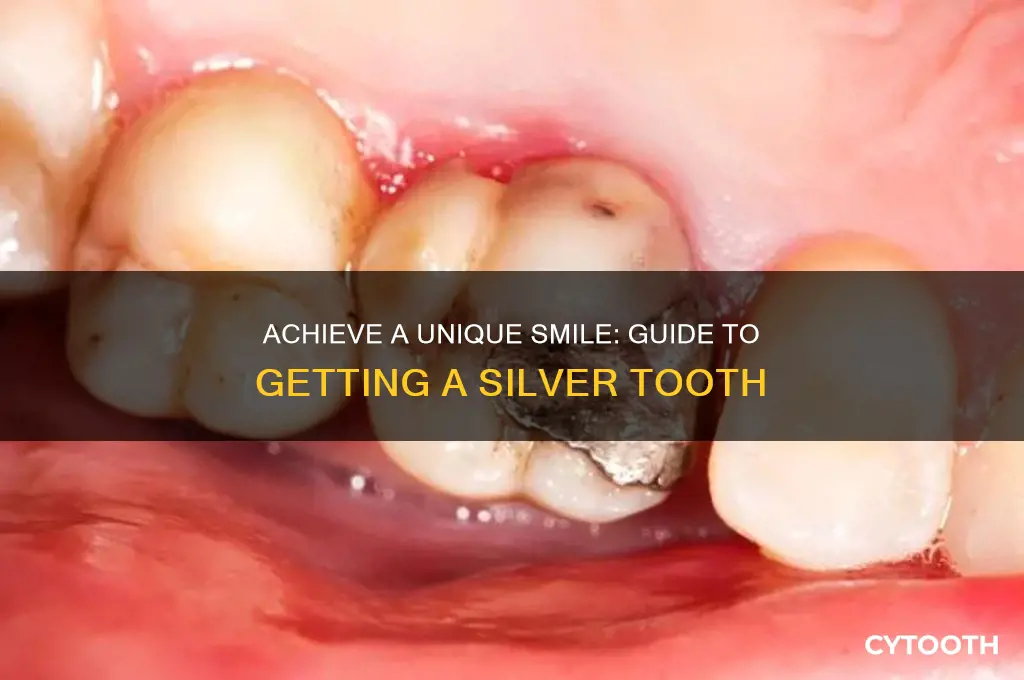
Getting a silver tooth, also known as an amalgam filling, is a common dental procedure used to repair cavities or decayed teeth. The process begins with a dentist numbing the affected area to ensure comfort, followed by the removal of the decayed portion of the tooth. Once the tooth is thoroughly cleaned, the dentist prepares the cavity to hold the filling material, which is a mixture of silver, mercury, tin, and copper. This durable and cost-effective material is then packed into the cavity, shaped to match the natural contours of the tooth, and allowed to set. While silver fillings are long-lasting and widely used, they are more noticeable than tooth-colored alternatives, making them a practical choice for molars or less visible teeth.
| Characteristics | Values |
|---|---|
| Procedure | Dental Amalgam Filling |
| Material | Silver Amalgam (mixture of mercury, silver, tin, copper, and other metals) |
| Purpose | Repair cavities, restore damaged teeth |
| Durability | 10-15 years (varies based on care and wear) |
| Cost | $50-$150 (varies by location and dentist) |
| Aesthetic | Noticeable silver color, not tooth-colored |
| Safety | Considered safe by ADA, FDA, and WHO despite mercury content |
| Alternatives | Composite resin, gold, porcelain, ceramic fillings |
| Aftercare | Avoid chewing hard foods for 24 hours, maintain oral hygiene |
| Availability | Widely available but less common due to aesthetic preferences |
| Time | 30-60 minutes per tooth |
| Pain Level | Minimal (local anesthesia used) |
| Insurance | Often covered by dental insurance |
| Environmental Impact | Concerns over mercury disposal, regulated by dental practices |
What You'll Learn
- Consult a Dentist: Discuss your desire for a silver tooth and explore options like amalgam fillings
- Choose Amalgam Fillings: Opt for durable silver amalgam fillings for cavities or tooth restoration
- Dental Crowns: Consider silver-colored crowns for damaged teeth, offering strength and aesthetics
- Cost and Insurance: Check insurance coverage and costs for silver fillings or crowns
- Aftercare Tips: Maintain oral hygiene and avoid hard foods to prolong the life of your silver tooth

Consult a Dentist: Discuss your desire for a silver tooth and explore options like amalgam fillings
Silver teeth, once a symbol of necessity, now carry a blend of nostalgia and edgy aesthetic appeal. If you’re considering one, your first step should be consulting a dentist. This isn’t just about looks—it’s about ensuring the procedure aligns with your oral health. Dentists are trained to assess whether a silver tooth, typically achieved through amalgam fillings, is suitable for your specific needs. Amalgam fillings, composed of mercury, silver, tin, and copper, are durable and cost-effective, but they’re not one-size-fits-all. Your dentist will evaluate factors like tooth location, decay extent, and your overall dental history to determine if this option is viable.
The conversation with your dentist should be open and detailed. Discuss your motivation for wanting a silver tooth—whether it’s for aesthetic reasons, cultural significance, or a nod to vintage dental trends. Be prepared for a frank dialogue about the pros and cons. While amalgam fillings are long-lasting and less expensive than alternatives like composite resins, they are noticeable and may not suit everyone’s preferences. Your dentist might also suggest alternatives, such as stainless steel crowns for molars or even gold fillings, depending on your goals and budget.
Practical considerations matter too. Amalgam fillings require minimal tooth preparation, making the procedure relatively quick and straightforward. However, they expand and contract with temperature changes, which can potentially weaken the tooth over time. If you grind your teeth or have large cavities, your dentist may recommend reinforcing the tooth with a crown or inlay. Age can also play a role—children under 6 and pregnant women are often advised to avoid amalgam due to mercury concerns, though scientific consensus deems it safe for most adults.
Finally, maintenance is key. Silver fillings can last 10–15 years with proper care, but they require regular check-ups to monitor wear and tear. Avoid chewing hard foods directly on the filled tooth, and maintain good oral hygiene to prevent further decay. While the silver tooth trend may be driven by style, its success hinges on professional guidance. Your dentist isn’t just a gatekeeper—they’re a partner in crafting a solution that’s both functional and fashionable.
Quick Fix: Removing Popcorn Kernels Stuck in Your Teeth Easily
You may want to see also
Choose Amalgam Fillings: Opt for durable silver amalgam fillings for cavities or tooth restoration
Silver amalgam fillings have been a staple in dentistry for over 150 years, offering a tried-and-true solution for cavities and tooth restoration. Their durability is unmatched, with studies showing they can last 10-15 years or more, often outperforming newer materials like composite resins in high-stress areas like molars. This longevity makes them a cost-effective choice, as they require fewer replacements over time. However, their metallic appearance is a trade-off, visible in the mouth and potentially less aesthetically pleasing than tooth-colored alternatives.
If you’re considering silver amalgam fillings, the process is straightforward. Your dentist will first remove the decayed portion of the tooth, clean the area, and then pack the cavity with the amalgam material. The amalgam, a mixture of mercury, silver, tin, and copper, hardens quickly, allowing you to use the tooth almost immediately. While some patients express concern about mercury, regulatory bodies like the FDA and ADA affirm that the levels used in dental amalgam are safe for adults and children over six. For those with allergies to metals or specific health concerns, consulting your dentist is crucial.
One of the key advantages of amalgam fillings is their strength under pressure. They’re ideal for back teeth, which endure the most force during chewing. Unlike composite fillings, which can chip or wear down faster, amalgam fillings maintain their integrity even in the most demanding conditions. This makes them a practical choice for individuals with a history of frequent cavities or those who grind their teeth. However, their silver color limits their use to less visible areas, making them less suitable for front teeth.
Despite their benefits, amalgam fillings aren’t without drawbacks. Their expansion and contraction with temperature changes can occasionally cause minor cracks in the tooth over time, though this is rare. Additionally, their placement requires more removal of healthy tooth structure compared to composite fillings. To maximize their lifespan, maintain good oral hygiene, avoid excessive chewing on hard foods, and schedule regular dental check-ups. With proper care, silver amalgam fillings can be a reliable, long-term solution for tooth restoration.
Unraveling the Mystery: Why Some People Never Get Cavities
You may want to see also
Dental Crowns: Consider silver-colored crowns for damaged teeth, offering strength and aesthetics
Silver-colored dental crowns, often made from durable alloys like nickel-chromium or cobalt-chromium, provide a robust solution for damaged teeth. These materials are renowned for their strength, resisting wear and tear better than many alternatives. Unlike porcelain or ceramic crowns, which can chip or fracture under pressure, silver crowns are ideal for molars or teeth subjected to heavy biting forces. This makes them a practical choice for individuals with bruxism (teeth grinding) or those needing long-term durability. While their metallic appearance may not mimic natural teeth, they offer a unique aesthetic that some find appealing, blending functionality with a distinctive look.
Choosing a silver-colored crown involves a straightforward process, typically completed in two dental visits. During the first appointment, the dentist prepares the damaged tooth by removing decay and shaping it to accommodate the crown. Impressions are then taken to create a custom-fit restoration. Patients receive a temporary crown while the permanent one is fabricated in a dental lab. At the second visit, the temporary crown is removed, and the silver crown is cemented into place. Proper oral hygiene, including regular brushing, flossing, and dental check-ups, ensures the crown’s longevity. Avoid chewing hard objects like ice or pens to prevent damage.
For those concerned about aesthetics, silver crowns may not be the first choice for front teeth due to their noticeable color. However, they excel in posterior regions where visibility is minimal. Patients seeking a balance between strength and cost often find silver crowns advantageous. Compared to gold crowns, which are more expensive, silver-colored options provide similar durability at a lower price point. Additionally, silver crowns are biocompatible, meaning they rarely cause allergic reactions, making them suitable for a wide range of patients.
A key consideration when opting for silver crowns is their long-term maintenance. While they are highly durable, the underlying tooth structure must remain healthy to support the crown. Regular dental exams are essential to monitor for issues like decay or gum disease. Patients should also be aware that silver crowns may darken over time due to oxidation, though this does not affect their functionality. For those prioritizing strength and affordability over natural appearance, silver-colored crowns are a reliable and practical solution for restoring damaged teeth.
Single Tooth Veneer: Is It Possible and What You Need to Know
You may want to see also
Cost and Insurance: Check insurance coverage and costs for silver fillings or crowns
Silver fillings, also known as amalgam fillings, are a cost-effective option for dental restoration, but their coverage under insurance plans can vary widely. Before scheduling a procedure, contact your insurance provider to verify if silver fillings or crowns are covered under your plan. Some policies may fully cover the cost, while others might only offer partial coverage or exclude them altogether. Understanding your benefits beforehand can prevent unexpected out-of-pocket expenses. For instance, many PPO plans cover up to 80% of the cost of amalgam fillings, but HMOs may require a copay or limit the number of fillings per year.
The cost of silver fillings or crowns typically ranges from $50 to $150 for fillings and $500 to $1,200 for crowns, depending on the complexity of the procedure and your geographic location. Urban areas often have higher dental fees compared to rural regions. If your insurance doesn’t cover the full cost, consider discussing payment plans with your dentist or exploring dental savings plans, which can offer discounts on services. Additionally, some dentists provide sliding scale fees based on income, making silver restorations more accessible for those on a budget.
When comparing silver fillings to other materials like composite resin or gold, the cost difference is significant. Silver fillings are generally the most affordable option, but they may not be suitable for visible teeth due to their metallic appearance. Crowns, on the other hand, are more expensive but offer durability and a natural look. If aesthetics are a concern, weigh the long-term value against the upfront cost. For example, a silver crown may last 10–15 years, while a porcelain crown could last 15–20 years but at a higher initial investment.
Insurance companies often categorize silver fillings as a basic service, but crowns may fall under major restorative care, which typically has higher deductibles and lower coverage percentages. Review your policy’s Explanation of Benefits (EOB) to understand how these procedures are classified. If your plan excludes silver restorations, ask your dentist to submit a pre-authorization request, which can sometimes persuade insurers to approve coverage based on medical necessity. Keep detailed records of all communications with your insurer to resolve potential disputes later.
Finally, consider preventive measures to avoid the need for extensive dental work. Regular checkups, fluoride treatments, and proper oral hygiene can reduce the risk of cavities, potentially saving you from costly procedures. If you’re uninsured, look for community health clinics or dental schools, which often offer services at reduced rates. By proactively managing your dental health and understanding your insurance options, you can make informed decisions about getting a silver tooth without breaking the bank.
Can You Get a Root Canal on a Broken Tooth?
You may want to see also
Aftercare Tips: Maintain oral hygiene and avoid hard foods to prolong the life of your silver tooth
Silver fillings, or amalgams, are a durable and cost-effective solution for tooth restoration, but their longevity depends heavily on proper aftercare. The mouth is a harsh environment, constantly exposed to acids, sugars, and mechanical stress from chewing. Without diligent maintenance, even the most robust silver tooth can deteriorate prematurely. Regular brushing and flossing are non-negotiable; plaque buildup around the filling can lead to decay at the margins, compromising its integrity. Use a soft-bristled toothbrush and fluoride toothpaste twice daily, ensuring you clean all surfaces of the tooth, including the area around the filling. Floss at least once a day, using a technique that allows the floss to wrap around the tooth and slide gently under the gumline to remove debris.
Diet plays a pivotal role in preserving your silver tooth. Hard foods like nuts, ice, or unpopped popcorn can exert excessive force on the filling, causing it to crack or dislodge. Similarly, sticky foods such as caramel or taffy can pull at the filling, weakening its bond to the tooth. Opt for softer alternatives like yogurt, mashed vegetables, or well-cooked grains. If you must consume hard or crunchy items, cut them into smaller pieces and chew slowly, using the opposite side of your mouth from the silver tooth. Additionally, limit acidic foods and beverages like citrus fruits, soda, and wine, as they can erode the metal surface over time.
Professional care is another cornerstone of silver tooth maintenance. Schedule dental check-ups every six months or as recommended by your dentist. During these visits, your dentist can inspect the filling for signs of wear, corrosion, or leakage, addressing issues before they escalate. X-rays may be taken periodically to assess the condition of the tooth beneath the filling, as decay can sometimes develop undetected. If you experience sensitivity, pain, or notice any changes in the appearance or feel of the filling, seek dental attention promptly. Early intervention can often prevent the need for a complete replacement.
Lastly, consider lifestyle adjustments to protect your investment. Teeth grinding, or bruxism, can place immense pressure on fillings, leading to fractures or failure. If you suspect you grind your teeth, especially at night, consult your dentist about a custom mouthguard. Similarly, avoid using your teeth as tools—opening packaging, biting nails, or chewing on pens—as these habits can damage both natural teeth and fillings. By combining meticulous oral hygiene, mindful eating, regular dental visits, and protective measures, you can maximize the lifespan of your silver tooth, ensuring it remains functional and aesthetically pleasing for years to come.
Does a Dental Crown Hurt? What to Expect During the Procedure
You may want to see also
Frequently asked questions
A silver tooth, often made of amalgam (a mixture of metals including silver), is a type of dental filling used to repair cavities. Some people opt for silver fillings for their durability and cost-effectiveness, while others may choose them for aesthetic reasons or cultural preferences.
To get a silver tooth, visit a dentist who can assess your dental health. If you have a cavity or need a filling, discuss your preference for a silver amalgam filling with the dentist. They will then remove the decayed portion of the tooth and fill it with the silver material.
Yes, silver amalgam fillings are considered safe by major dental and health organizations, including the FDA and ADA. They have been used for over 150 years and are known for their strength and longevity. However, some people may have concerns about mercury content, which is minimal and not harmful in this form.
Yes, you can replace an existing filling with a silver amalgam filling. Consult your dentist to evaluate the condition of your current filling and discuss whether a replacement is necessary or beneficial.
A silver tooth can last 10–15 years or more with proper care. Its durability depends on factors like oral hygiene, the size of the filling, and your dietary habits. Regular dental check-ups are essential to maintain its longevity.