Matthew Grant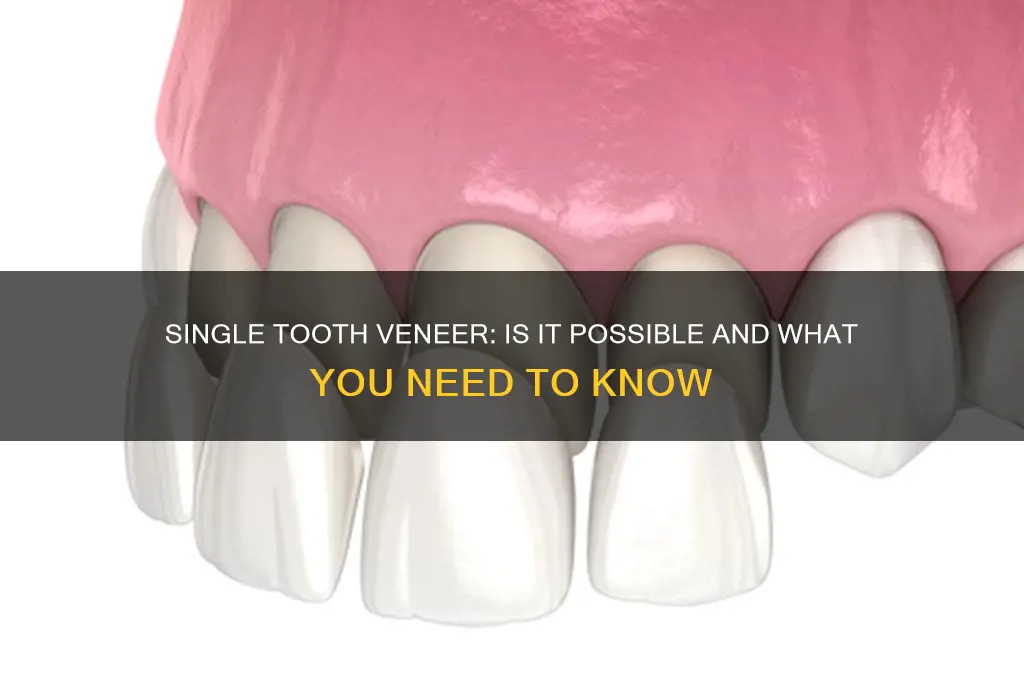
Dental veneers are thin, custom-made shells designed to cover the front surface of teeth, primarily used to improve their appearance. While veneers are often applied to multiple teeth for a uniform smile, it is entirely possible to get a veneer on just one tooth. This option is ideal for individuals looking to address a specific issue, such as a chipped, discolored, or misshapen tooth, without altering the rest of their natural teeth. A single veneer can blend seamlessly with the surrounding teeth, providing a natural and aesthetically pleasing result. However, it’s essential to consult with a dentist to determine if a single veneer is the best solution for your unique dental needs.
| Characteristics | Values |
|---|---|
| Feasibility | Yes, it is possible to get a veneer on just one tooth. |
| Purpose | To improve the appearance of a single tooth (e.g., discoloration, chips, misalignment). |
| Types of Veneers | Porcelain, composite resin, or no-prep veneers. |
| Procedure Time | Typically 2-3 visits to the dentist (composite veneers may be done in one visit). |
| Durability | Porcelain veneers: 10-15 years; Composite veneers: 5-7 years. |
| Cost | $925 - $2,500 per tooth (porcelain); $250 - $1,500 per tooth (composite). |
| Tooth Preparation | Minimal to moderate (porcelain requires more enamel removal than composite). |
| Reversibility | Porcelain veneers are irreversible due to enamel removal; composite may be reversible. |
| Aesthetic Match | Customizable to match the color and shape of adjacent teeth. |
| Maintenance | Regular brushing, flossing, and dental check-ups required. |
| Suitable Candidates | Individuals with a single tooth issue (e.g., stain, chip, gap, or misalignment). |
| Recovery Time | Minimal discomfort; no downtime required. |
| Alternatives | Dental bonding, crowns, or teeth whitening (depending on the issue). |
What You'll Learn
- Cost of Single Veneer: Factors affecting price, average cost, and financing options for one dental veneer
- Procedure for One Tooth: Steps involved, preparation, and duration of getting a veneer on a single tooth
- Material Options: Comparison of porcelain, composite, and other materials for single-tooth veneers
- Pros and Cons: Benefits and drawbacks of getting a veneer on just one tooth
- Aftercare Tips: Maintenance, cleaning, and longevity of a single-tooth veneer post-procedure

Cost of Single Veneer: Factors affecting price, average cost, and financing options for one dental veneer
Getting a single veneer is entirely possible and often sought after to correct imperfections like chips, discoloration, or misalignment in one tooth. However, the cost of a single veneer isn’t fixed; it varies widely based on several factors. Understanding these factors can help you budget effectively and make informed decisions.
Material choice is a primary cost driver. Porcelain veneers, known for their durability and natural appearance, typically range from $925 to $2,500 per tooth. Composite resin veneers are more affordable, costing between $250 and $1,500, but they’re less durable and prone to staining. Your dentist will recommend the best material based on your needs, but the price difference is significant.
Geographic location and dentist expertise also impact the price. In metropolitan areas with higher living costs, such as New York or Los Angeles, prices tend to be steeper compared to rural areas. Additionally, experienced cosmetic dentists with a proven track record may charge more for their services. For instance, a single veneer in a high-cost city could exceed $2,000, while the same procedure in a smaller town might cost closer to $1,000.
Preparation and additional procedures can add to the expense. If your tooth requires significant preparation, such as reshaping or a root canal, the overall cost will increase. Some patients may also need temporary veneers during the waiting period for permanent ones, which adds to the total. Always ask for a detailed breakdown of costs during your consultation to avoid surprises.
Financing options can make a single veneer more accessible. Many dental offices offer payment plans, allowing you to spread the cost over several months. Third-party financing companies like CareCredit provide loans specifically for medical and dental procedures, often with low or no-interest introductory periods. Dental insurance rarely covers veneers since they’re considered cosmetic, but it’s worth checking your policy. Some employers also offer flexible spending accounts (FSAs) or health savings accounts (HSAs), which can be used to pay for veneers tax-free.
In summary, the cost of a single veneer depends on material, location, dentist expertise, and additional procedures. While the average price ranges from $250 to $2,500, financing options can help manage expenses. Research thoroughly, consult with your dentist, and explore payment plans to achieve your desired smile without breaking the bank.
Pregnancy and Dental Care: Is It Safe to Fill a Tooth?
You may want to see also
Procedure for One Tooth: Steps involved, preparation, and duration of getting a veneer on a single tooth
Getting a veneer on a single tooth is a precise and tailored procedure, often chosen to address specific cosmetic concerns like discoloration, chips, or misalignment. The process begins with a consultation, where your dentist evaluates the tooth’s condition, discusses your goals, and determines if a veneer is the best solution. This step is crucial, as not all teeth are ideal candidates—factors like tooth structure, gum health, and bite alignment play a significant role. For instance, if the tooth is severely damaged or weakened, a crown might be recommended instead.
Once approved, the preparation phase involves removing a thin layer of enamel—typically 0.5 to 0.7 millimeters—from the front surface of the tooth. This step is irreversible, so it’s essential to proceed with a clear understanding of the commitment. Local anesthesia is often used to ensure comfort during this process. After preparation, your dentist takes impressions or digital scans of the tooth, which are sent to a dental lab to craft the custom veneer. This usually takes 1–2 weeks, during which a temporary veneer may be placed to protect the prepared tooth.
The placement appointment is where the veneer is bonded to your tooth. First, the temporary veneer is removed, and the tooth is cleaned and etched to create a rough surface for better adhesion. The veneer is then carefully positioned, adjusted for fit and color, and secured using a special dental cement. A curing light is used to harden the cement, ensuring a strong bond. Finally, the dentist polishes the veneer and makes any necessary adjustments to ensure comfort and functionality.
The entire process, from consultation to final placement, typically spans 3–4 weeks, depending on lab turnaround times and scheduling. While it’s a relatively quick procedure, patience is key to achieving the desired aesthetic outcome. Proper care post-placement, such as avoiding hard or sticky foods and maintaining good oral hygiene, ensures the longevity of your veneer, which can last 10–15 years with proper maintenance.
For those considering a single veneer, it’s a practical solution for targeted cosmetic enhancement. However, it’s not just about aesthetics—the procedure requires careful planning and commitment. If you’re unsure, consult with a cosmetic dentist to explore whether this option aligns with your dental health and goals. With the right approach, a single veneer can transform not just your smile, but also your confidence.
Missing Tooth? Here’s How Braces Can Still Work for You
You may want to see also
Material Options: Comparison of porcelain, composite, and other materials for single-tooth veneers
Porcelain veneers are the gold standard for single-tooth restorations due to their durability, natural appearance, and stain resistance. Crafted in a dental lab, these thin shells are custom-fitted to match the shape and color of adjacent teeth, ensuring seamless integration. While the process requires two visits—one for preparation and temporary placement, another for permanent bonding—porcelain veneers can last 10–15 years with proper care. Their biocompatibility and ability to mimic light reflection like natural enamel make them ideal for high-visibility teeth, though their cost, typically ranging from $925 to $2,500 per tooth, reflects their premium quality.
Composite veneers offer a more budget-friendly alternative, often completed in a single visit. Applied directly to the tooth, the resin material is sculpted and hardened with a curing light, allowing for immediate results. While composite veneers cost significantly less ($250–$1,500 per tooth), they are less durable than porcelain, lasting 5–7 years on average. They are also more prone to staining and chipping, making them better suited for low-stress teeth or as a temporary solution. However, their reparability—damaged areas can be easily patched—is a distinct advantage over porcelain.
For those seeking a reversible, non-invasive option, no-prep or minimal-prep veneers like Lumineers may be considered. These ultra-thin porcelain shells require little to no tooth reduction, preserving natural tooth structure. While this makes them a conservative choice, their bulkier appearance compared to traditional veneers can sometimes look unnatural, particularly on already prominent teeth. Lumineers typically cost $800–$2,000 per tooth and last 10–20 years, but their success depends heavily on proper placement to avoid an unnatural "chicklet" effect.
Other materials, such as zirconium or ceramic veneers, cater to specific needs. Zirconium veneers combine the strength of metal with the aesthetics of porcelain, making them ideal for bruxers or those with high bite forces. However, their opacity can limit their use in cosmetic cases. Ceramic veneers, a broader category encompassing porcelain and other ceramics, offer versatility but vary widely in quality and price. When selecting a material, consider factors like tooth location, bite force, and budget, consulting with a dentist to determine the best fit for longevity and aesthetics.
Partial Denture for a Single Tooth: Is It a Viable Option?
You may want to see also
Pros and Cons: Benefits and drawbacks of getting a veneer on just one tooth
Getting a veneer on just one tooth is entirely possible and can be a targeted solution for specific dental concerns. However, it’s not a one-size-fits-all approach. The decision hinges on factors like tooth alignment, shade matching, and long-term oral health. For instance, a single veneer can correct a chipped or discolored tooth without altering adjacent teeth, but achieving a seamless blend with natural teeth requires precise craftsmanship and high-quality materials.
Benefits of a Single Veneer: Precision and Efficiency
Opting for a veneer on one tooth offers several advantages. First, it’s cost-effective compared to treating multiple teeth. A single porcelain veneer typically ranges from $925 to $2,500, depending on location and dentist expertise, making it a budget-friendly option for isolated issues. Second, it’s minimally invasive, preserving the structure of surrounding teeth. For example, if a front tooth is severely stained from trauma or tetracycline use, a veneer can restore its appearance without altering neighboring teeth. Lastly, the procedure is quick, often completed in two visits, with the first involving tooth preparation (removing 0.5mm of enamel) and the second for placement.
Drawbacks: The Challenge of Seamless Integration
While a single veneer can be transformative, it’s not without challenges. The most significant drawback is shade matching. Porcelain veneers are custom-made, but achieving an exact match with natural teeth can be difficult, especially if surrounding teeth have yellowed over time. For instance, a veneer on a central incisor might look whiter than adjacent teeth unless they’re also whitened beforehand. Additionally, veneers don’t respond to bleaching agents, so future discoloration of natural teeth could create a mismatch. Another concern is the risk of sensitivity post-procedure, as enamel removal can expose dentin, though this typically subsides within 1–2 weeks.
Practical Tips for Success: Preparation and Maintenance
To maximize the benefits of a single veneer, proactive steps are essential. First, consult a cosmetic dentist with experience in single-tooth restorations to ensure precise shade matching and placement. Consider professional whitening for adjacent teeth before the procedure to create a uniform smile. After placement, maintain oral hygiene rigorously—brush twice daily with a non-abrasive fluoride toothpaste and floss regularly. Avoid biting hard objects like ice or pens, as veneers, though durable, can chip under excessive pressure. Lastly, schedule biannual dental check-ups to monitor the veneer’s condition and overall oral health.
Long-Term Considerations: Weighing Durability and Aesthetics
A single veneer can last 10–15 years with proper care, but its longevity depends on oral habits and material quality. While it’s an excellent solution for isolated issues, it may not be ideal for patients with widespread dental concerns or those seeking a complete smile makeover. For example, if multiple teeth are misaligned or severely worn, a single veneer might stand out rather than blend in. In such cases, alternatives like bonding or full-mouth veneers may be more appropriate. Ultimately, the decision should balance immediate aesthetic goals with long-term dental health, guided by a thorough consultation with a qualified professional.
Quick Fix: Removing Popcorn Kernels Stuck in Your Teeth Easily
You may want to see also
Aftercare Tips: Maintenance, cleaning, and longevity of a single-tooth veneer post-procedure
A single-tooth veneer can transform your smile, but its longevity depends heavily on proper aftercare. Think of it as an investment—one that requires consistent maintenance to retain its aesthetic appeal and functionality. The first 48 hours post-procedure are critical. Avoid hot or cold foods and beverages, as your tooth may be sensitive. Stick to soft, lukewarm meals like mashed potatoes or oatmeal to minimize stress on the veneer. Additionally, refrain from biting into hard objects like ice or pens, as this can compromise the integrity of the restoration.
Cleaning a single-tooth veneer isn’t drastically different from caring for natural teeth, but precision is key. Use a non-abrasive fluoride toothpaste and a soft-bristled toothbrush to gently clean the veneer and surrounding teeth twice daily. Flossing is equally important—opt for unwaxed floss or a water flosser to avoid scratching the veneer’s surface. For added protection, consider incorporating an antimicrobial mouthwash into your routine to reduce plaque buildup and gum inflammation. Remember, the healthier your gums, the longer your veneer will last.
Longevity is directly tied to habits. Bruxism, or teeth grinding, is a silent veneer killer. If you suspect you grind your teeth, especially at night, consult your dentist about a custom night guard. This simple device can prevent unnecessary wear and potential chipping. Similarly, avoid using your teeth as tools—opening packaging, cracking nuts, or holding objects can exert undue pressure on the veneer. Treat it with the same care you’d give a natural tooth, but with heightened awareness of its limitations.
Lastly, regular dental check-ups are non-negotiable. Schedule visits every six months for professional cleaning and inspection. Your dentist can spot early signs of issues like discoloration, chipping, or improper fit, addressing them before they escalate. Think of these appointments as tune-ups for your veneer, ensuring it remains a seamless part of your smile for years to come. With diligence and the right practices, a single-tooth veneer can last a decade or more, making it a worthwhile enhancement to your dental health and confidence.
Can You Get a Root Canal on a Broken Tooth?
You may want to see also
Frequently asked questions
Yes, it is possible to get a veneer on just one tooth. Veneers are often applied individually to address specific issues like discoloration, chips, or misalignment.
A skilled dentist will match the color, shape, and size of the veneer to your natural teeth, ensuring it blends seamlessly.
Yes, getting a veneer on one tooth is generally more affordable than getting multiple veneers, as the cost is per tooth.
With proper care, a single veneer can last between 10 to 15 years, similar to veneers on multiple teeth.
Minimal tooth preparation is usually required, involving a small amount of enamel removal to ensure a proper fit. The process is similar to getting veneers on multiple teeth.