Matthew Grant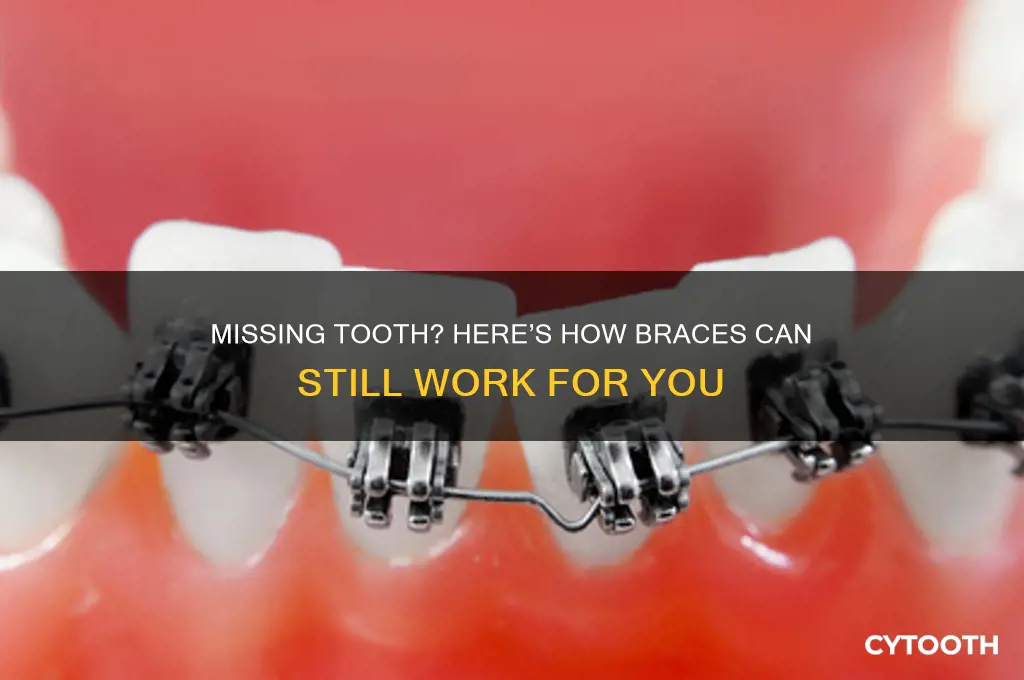
If you’re considering getting braces but have a missing tooth, you’re not alone in wondering whether orthodontic treatment is still an option. The good news is that having a missing tooth doesn’t necessarily disqualify you from getting braces. In fact, braces can often be part of a comprehensive treatment plan to address both alignment issues and the gap left by the missing tooth. Your orthodontist will evaluate your specific situation, considering factors like the location of the missing tooth, the overall health of your teeth and gums, and your treatment goals. In some cases, braces may be combined with other procedures, such as dental implants or bridges, to achieve optimal results. It’s important to consult with an orthodontic professional who can create a tailored plan to improve your smile and oral health, even with a missing tooth.
| Characteristics | Values |
|---|---|
| Feasibility | Yes, braces can be used even with a missing tooth. |
| Purpose | Align remaining teeth, close gaps, and prepare for tooth replacement. |
| Treatment Options | Traditional braces, clear aligners (e.g., Invisalign). |
| Gap Closure | Braces can move adjacent teeth to close the gap left by the missing tooth. |
| Tooth Replacement Timing | Replacement (e.g., implant, bridge) can be done before or after braces. |
| Treatment Duration | Varies (12–24 months on average, depending on case complexity). |
| Cost | Higher due to combined orthodontic and restorative treatments. |
| Orthodontist Consultation | Required to assess feasibility and plan treatment. |
| Aesthetic Concerns | Temporary gap during treatment; aligners may be more discreet. |
| Oral Health Impact | Improves bite, alignment, and prepares for stable tooth replacement. |
| Common Scenarios | Missing tooth due to extraction, trauma, or congenital absence. |
| Post-Treatment Care | Retainers and proper maintenance of replaced tooth (if applicable). |
What You'll Learn

Options for braces with missing teeth
Missing teeth don't automatically disqualify you from braces. In fact, orthodontic treatment can be a strategic step in preparing your mouth for a replacement tooth, whether it's an implant, bridge, or denture. The key lies in understanding the options available and how they address the unique challenges posed by the gap.
Strategic Tooth Movement: Braces can be used to create space for a future implant or bridge by gently moving adjacent teeth into optimal positions. This ensures a more natural-looking and functional outcome for your tooth replacement. For instance, if you're missing a front tooth, braces can close the gap temporarily, preventing surrounding teeth from shifting and creating a more stable foundation for an implant later.
Anchorage Considerations: Traditional braces rely on anchoring teeth to move others. With a missing tooth, your orthodontist might employ creative solutions like temporary anchorage devices (TADs) – small screws implanted in the jawbone – to provide the necessary leverage for tooth movement.
Combined Treatment Planning: Successful outcomes often hinge on collaboration between your orthodontist and a restorative dentist. They'll work together to determine the best sequence of treatment, ensuring braces prepare your mouth for the most suitable tooth replacement option.
Beyond Aesthetics: While closing a gap is often a primary concern, braces can also address bite issues exacerbated by a missing tooth. Misaligned teeth can lead to uneven wear, jaw pain, and difficulty chewing. Orthodontic treatment can improve overall oral health and function, even with a missing tooth.
Case-by-Case Evaluation: Every situation is unique. Factors like the location of the missing tooth, the health of surrounding teeth and gums, and your overall oral health will influence the treatment plan. A thorough consultation with an experienced orthodontist is crucial to determine the most appropriate course of action.
Embracing the Possibilities: Don't let a missing tooth deter you from exploring orthodontic treatment. With careful planning and the right approach, braces can be a valuable tool in achieving a healthy, functional, and aesthetically pleasing smile, even when a tooth is absent.
Can You Get a Root Canal on a Broken Tooth?
You may want to see also
Impact of gaps on orthodontic treatment
Gaps in your teeth, whether from missing teeth or natural spacing, significantly influence orthodontic treatment planning. Orthodontists must assess the size, location, and cause of the gap to determine the best approach. For instance, a small gap between front teeth might be closed with traditional braces or clear aligners, while a larger gap due to a missing molar could require a more complex strategy, such as prosthetic replacement before or during orthodontic treatment. Understanding the gap’s impact ensures a tailored treatment plan that addresses both alignment and functionality.
Closing gaps with braces involves applying controlled pressure to shift teeth into the desired position. However, gaps from missing teeth introduce challenges, as adjacent teeth may tilt or drift into the empty space, complicating alignment. Orthodontists often use temporary anchors or space maintainers to prevent this unwanted movement. For adults, the bone density around the gap also plays a role; reduced bone support can limit tooth movement, requiring longer treatment times or adjunctive procedures like bone grafting. Early intervention is key—addressing gaps promptly minimizes these complications.
From a comparative perspective, treating gaps in children versus adults differs markedly. Children’s jaws are still developing, making it easier to guide tooth eruption and close gaps naturally. For example, a child with a missing primary tooth might wear a space maintainer until the permanent tooth erupts, followed by braces to refine alignment. Adults, however, often require a multi-step approach: implants or bridges to replace the missing tooth, followed by orthodontic treatment to align the surrounding teeth. This phased strategy ensures both aesthetic and functional success.
Practical tips for managing gaps during orthodontic treatment include maintaining excellent oral hygiene, as gaps can trap food and increase the risk of decay. Patients should also avoid hard or sticky foods that could dislodge appliances or widen gaps. Regular follow-ups with the orthodontist are essential to monitor progress and adjust treatment as needed. For those with missing teeth, consulting a prosthodontist alongside an orthodontist can provide a comprehensive solution, ensuring the final result is both stable and visually appealing.
In conclusion, gaps—whether from missing teeth or natural spacing—demand a nuanced approach in orthodontic treatment. By understanding the unique challenges they pose and adopting targeted strategies, patients can achieve optimal alignment and oral health. Whether through early intervention, phased treatment, or interdisciplinary collaboration, addressing gaps effectively ensures a functional and confident smile.
Quick Fix: Removing Popcorn Kernels Stuck in Your Teeth Easily
You may want to see also
Timing for braces and tooth replacement
The timing of braces and tooth replacement is a delicate balance, requiring careful planning to achieve optimal results. If you're considering braces with a missing tooth, the sequence of treatments matters. Ideally, orthodontic treatment should precede tooth replacement in cases where the missing tooth affects overall dental alignment. This approach allows braces to create the necessary space and alignment, ensuring a more natural fit for the replacement tooth. For instance, if a missing molar is causing adjacent teeth to shift, braces can realign them before a dental implant or bridge is placed.
From a procedural standpoint, starting braces before tooth replacement often simplifies the process. Orthodontists can use braces to close gaps or create space as needed, depending on the location of the missing tooth. For example, in younger patients (typically under 18), early intervention with braces can guide jaw growth and tooth movement more effectively. However, in adults, the timeline may differ due to slower bone remodeling, requiring a longer orthodontic phase. In such cases, temporary solutions like partial dentures can be used during braces treatment to maintain aesthetics and function.
A critical consideration is the type of tooth replacement planned. If a dental implant is the chosen solution, timing becomes even more crucial. Implants require sufficient bone density and proper alignment of adjacent teeth, which braces can help achieve. Typically, braces are worn for 12–24 months, followed by a 3–6 month healing period after implant placement. For bridges or dentures, the timeline may be shorter, but coordination between the orthodontist and restorative dentist remains essential to avoid complications like ill-fitting prosthetics.
Practical tips for managing this process include maintaining open communication between your orthodontist and general dentist or prosthodontist. Regular check-ins ensure that each phase of treatment aligns with the overall plan. Additionally, patients should be prepared for a potentially longer treatment duration, especially if bone grafting or other preparatory procedures are needed for tooth replacement. Adhering to orthodontic care instructions, such as wearing aligners or rubber bands as directed, can also expedite the process.
In conclusion, the timing of braces and tooth replacement is not one-size-fits-all. It depends on factors like age, the location of the missing tooth, and the chosen replacement method. By prioritizing orthodontic alignment before tooth replacement, patients can achieve better functional and aesthetic outcomes. Careful planning and collaboration among dental professionals are key to navigating this complex but achievable process.
Can Root Canal Teeth Develop Cavities? Debunking Dental Myths
You may want to see also
Types of braces suitable for gaps
Braces can effectively address gaps caused by missing teeth, but the type of braces chosen depends on the specific needs of the patient. Traditional metal braces remain a popular option due to their durability and effectiveness in closing gaps. These braces use metal brackets and wires to apply consistent pressure, gradually shifting teeth into the desired position. For patients with missing teeth, metal braces can be particularly useful because they allow for precise control over tooth movement, ensuring that adjacent teeth do not shift into the empty space. However, their visibility may be a concern for adults seeking a more discreet solution.
For those prioritizing aesthetics, clear ceramic braces offer a less noticeable alternative. Made from tooth-colored or clear materials, these braces blend in with natural teeth, making them a preferred choice for individuals with cosmetic concerns. While ceramic braces are effective for closing gaps, they require careful maintenance to avoid staining and may be slightly more fragile than metal braces. Patients with missing teeth can benefit from this option if they desire a less conspicuous treatment but should be prepared for potentially longer treatment times compared to metal braces.
Lingual braces, attached to the back of the teeth, provide another discreet option for addressing gaps. This type of brace is entirely hidden from view, making it ideal for adults who want to avoid the appearance of traditional braces. However, lingual braces can be more challenging to adjust to, as they may cause initial discomfort or difficulty with speech. Additionally, they are typically more expensive and require a skilled orthodontist for placement. For patients with missing teeth, lingual braces can be an excellent choice if the gap is in a visible area and the patient prioritizes invisibility.
Clear aligners, such as Invisalign, have gained popularity for their nearly invisible appearance and removable design. These custom-made trays gradually shift teeth into place and are particularly appealing for adults seeking a minimally invasive option. While clear aligners are effective for mild to moderate gaps, they may not be suitable for complex cases involving missing teeth. Patients must wear the aligners for 20–22 hours per day for optimal results, and compliance is crucial. For those with missing teeth, clear aligners can help close gaps by moving adjacent teeth into proper alignment, but a thorough consultation with an orthodontist is essential to determine suitability.
In conclusion, the choice of braces for addressing gaps depends on factors such as visibility, comfort, and the complexity of the case. Metal braces offer reliability, ceramic braces provide aesthetic appeal, lingual braces ensure invisibility, and clear aligners offer convenience. Each option has its advantages and limitations, making it essential to consult with an orthodontist to determine the most suitable treatment plan for closing gaps caused by missing teeth.
Pregnancy and Dental Implants: What You Need to Know
You may want to see also
Cost considerations for braces with missing teeth
The cost of braces with missing teeth can vary widely, influenced by factors such as the type of braces, the complexity of your case, and your geographic location. Traditional metal braces, for instance, typically range from $3,000 to $7,000, while clear aligners like Invisalign can cost between $3,500 and $8,500. When a missing tooth is part of the equation, additional procedures like dental implants or bridges may be required, which can add $1,000 to $3,000 per tooth to the total cost. Understanding these variables is crucial for budgeting effectively.
Instructively, it’s essential to consult with an orthodontist for a personalized treatment plan. They will assess whether the missing tooth needs to be replaced before or during orthodontic treatment. For example, if a missing tooth is in a visible area, a temporary prosthetic might be used during braces to maintain aesthetics. Alternatively, if the missing tooth affects bite alignment, an implant might be placed first, followed by braces to ensure proper tooth movement. Each scenario carries different cost implications, so a detailed evaluation is key.
Persuasively, investing in braces with missing teeth is not just about aesthetics but also about long-term oral health. Misaligned teeth can lead to issues like gum disease, uneven wear, and difficulty chewing. Addressing both the missing tooth and alignment simultaneously can prevent these problems, making the higher upfront cost a worthwhile investment. Additionally, many orthodontic offices offer financing plans or payment options, making treatment more accessible.
Comparatively, the cost of braces with missing teeth often outweighs the expense of addressing issues separately. For instance, ignoring a missing tooth while getting braces might lead to shifting teeth, requiring additional corrective measures later. Conversely, combining treatments can streamline the process and reduce overall costs. It’s also worth noting that dental insurance may cover part of the expense, depending on your plan and the medical necessity of the treatment.
Descriptively, the financial journey of getting braces with missing teeth involves more than just the orthodontist’s fee. Pre-treatment consultations, X-rays, and molds can add $100 to $300. Post-treatment retainers, which are essential to maintain results, typically cost $100 to $500. If a missing tooth requires extraction or preparatory work, these procedures can add another $100 to $400. Factoring in these additional costs ensures a comprehensive budget and avoids unexpected expenses.
Practically, here are actionable tips to manage costs: shop around for orthodontists to compare prices, inquire about discounts for upfront payments, and explore dental schools for lower-cost treatment options. Additionally, maintaining good oral hygiene during treatment can prevent complications that might increase costs. By being proactive and informed, you can navigate the financial aspects of braces with missing teeth more confidently.
Ignoring Cavities: The Risks of Leaving Tooth Decay Untreated
You may want to see also
Frequently asked questions
Yes, you can get braces even with a missing tooth. Orthodontists can plan treatment to align your remaining teeth while considering the gap left by the missing tooth.
Braces can close the gap from a missing tooth by moving adjacent teeth into the empty space, but this depends on your specific case and your orthodontist’s recommendation.
Not necessarily. Your orthodontist may recommend replacing the missing tooth (e.g., with an implant or bridge) after braces, but treatment can often proceed without it.
Braces are generally safe with a missing tooth, but the gap may affect treatment planning. Your orthodontist will assess your case to ensure the best outcome.
A missing tooth may slightly alter treatment time, as the orthodontist will need to account for the gap. However, the overall duration depends on your specific dental needs.