Hailey Morgan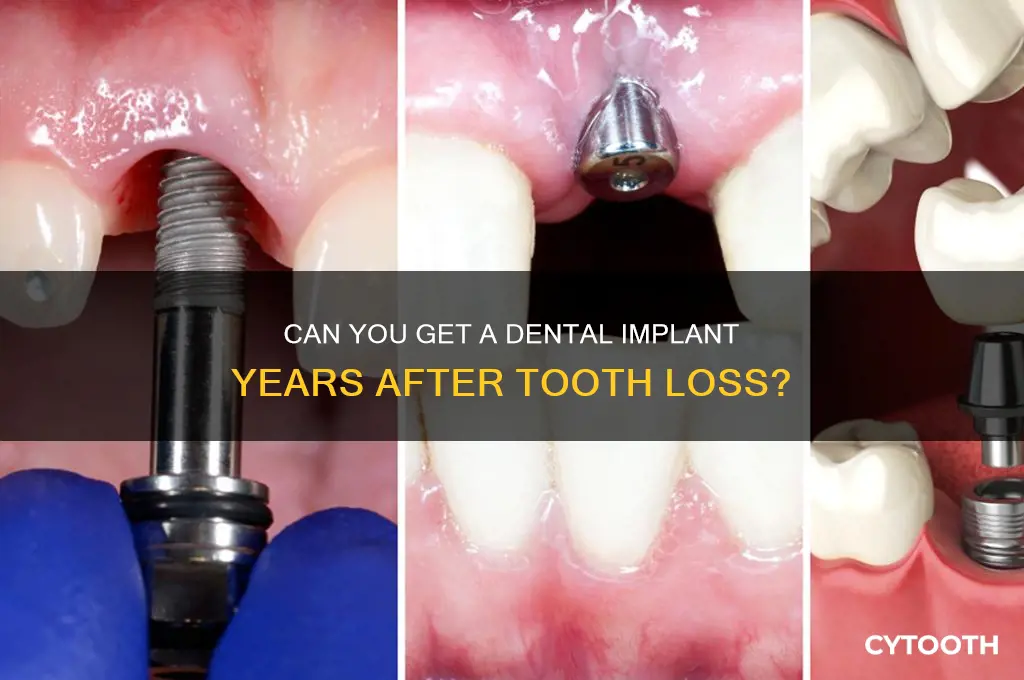
Considering a tooth implant years after losing a tooth is a common concern for many individuals. While it’s ideal to replace a missing tooth as soon as possible to prevent bone loss and maintain oral health, it’s often possible to get a dental implant even years later. The success of the procedure depends on the condition of the jawbone, which may require a bone graft if it has deteriorated over time. Advances in dental technology and techniques have made it feasible to restore missing teeth effectively, even after significant delays. Consulting with a dental professional is essential to evaluate your specific case, determine the need for preparatory procedures, and create a personalized treatment plan to achieve a functional and aesthetically pleasing result.
| Characteristics | Values |
|---|---|
| Feasibility | Yes, tooth implants can be done years after tooth loss. |
| Bone Health Requirement | Sufficient bone density is necessary; bone grafting may be required if bone has deteriorated. |
| Time Since Tooth Loss | No strict time limit, but earlier implantation is generally recommended. |
| Success Rate | High success rate (90-95%) even years later, provided proper conditions are met. |
| Pre-Implant Assessment | Comprehensive dental exam, X-rays, and 3D imaging to evaluate bone structure and oral health. |
| Procedure Time | Typically 3-6 months, including healing and osseointegration (bone fusion). |
| Cost | Varies widely ($1,500 to $6,000 per implant), depending on location, complexity, and additional procedures. |
| Age Considerations | No strict age limit; older adults can receive implants if healthy. |
| Maintenance | Regular oral hygiene and dental check-ups are essential for long-term success. |
| Alternatives | Bridges, dentures, or partial dentures if implants are not feasible. |
| Risks | Infection, implant failure, nerve damage, or sinus issues (rare). |
| Advancements | Modern techniques like guided implant surgery and immediate loading improve outcomes. |
| Patient Suitability | Depends on overall health, bone condition, and commitment to oral care. |
| Longevity | Can last a lifetime with proper care. |
What You'll Learn

Ideal Timing for Implants
The timing of a dental implant is a critical factor in its success, and it’s a common misconception that there’s a strict window for placement. In reality, the ideal timing depends on individual circumstances, such as the health of the jawbone, gum tissue, and overall oral hygiene. For instance, after a tooth extraction, waiting 3 to 6 months allows the socket to heal and the bone to stabilize, reducing the risk of implant failure. However, waiting years doesn’t necessarily disqualify you from the procedure. Advances in bone grafting and sinus lifts have made it possible to rebuild lost bone structure, even decades after tooth loss, though these additional steps can extend treatment time and costs.
From an analytical perspective, the key to successful implant placement years later lies in bone density and volume. The jawbone naturally begins to resorb after tooth loss, shrinking by about 25% in the first year alone. If you’ve waited several years, a dentist will likely perform a 3D scan (CBCT) to assess bone levels. If the bone is insufficient, a graft using synthetic materials, donor bone, or your own bone (often from the chin or hip) may be required. This preparatory step can add 3 to 6 months to the timeline but is essential for long-term implant stability. Interestingly, studies show that implants placed in grafted bone have a success rate of over 90%, comparable to those in natural bone.
For those considering implants years after tooth loss, a step-by-step approach ensures the best outcome. First, consult a periodontist or oral surgeon for a comprehensive evaluation, including X-rays and bone density measurements. If bone grafting is needed, plan for a healing period of 4 to 8 months before implant placement. The implant itself is then surgically inserted into the jawbone, followed by a 3 to 6-month osseointegration phase, where the bone fuses with the implant. Finally, an abutment and crown are attached. Practical tips include maintaining excellent oral hygiene during the process and avoiding smoking, as it impairs healing and increases failure risk by up to 20%.
Comparatively, immediate implants placed shortly after extraction offer faster results but aren’t always feasible if the tooth loss was due to infection or trauma. Delayed implants, on the other hand, provide time to address underlying issues like gum disease or bone loss, ensuring a healthier foundation. For example, a patient who lost a tooth at 30 and seeks an implant at 50 might require more preparatory work but can still achieve excellent results. The trade-off is time and potential additional procedures, but the longevity and functionality of implants often outweigh these considerations.
Persuasively, waiting years to get an implant isn’t a reason to abandon the idea altogether. Modern dentistry has solutions for nearly every scenario, and the benefits of implants—such as preserving facial structure, preventing adjacent teeth from shifting, and restoring full chewing function—are significant. Even if the process takes longer due to bone grafting or other prerequisites, the end result is a permanent, natural-looking replacement that can last a lifetime with proper care. The key is to act before further bone loss complicates treatment, as advanced resorption may limit options to less ideal solutions like bridges or dentures.
Veneers with a Missing Tooth: What Are Your Options?
You may want to see also
Bone Loss Considerations
Time is a critical factor in the success of dental implants, and bone loss is the silent adversary that complicates delayed procedures. When a tooth is extracted, the jawbone begins to resorb, losing density and volume at a rate of approximately 25% in the first year alone. This natural process, known as alveolar bone resorption, accelerates the longer the gap remains untreated. For patients considering implants years after tooth loss, this means the foundation for the implant may no longer be intact, requiring additional procedures like bone grafting to rebuild the necessary structure.
Bone grafting, while effective, is not a one-size-fits-all solution. The type of graft (autogenous, allogenic, xenograft, or synthetic) and the extent of bone loss dictate the complexity and success rate. For instance, autogenous grafts, harvested from the patient’s own body (e.g., chin or hip), offer the highest success rates due to their osteoinductive properties but are more invasive. In contrast, synthetic grafts are less predictable but avoid the need for a second surgical site. Patients must weigh these options with their dentist, considering factors like healing time, cost, and overall health.
Age plays a significant role in bone regeneration and implant success. Younger patients, with their faster metabolic rates, typically heal more efficiently post-grafting. However, older adults, particularly those over 65, may face challenges due to reduced bone density and slower healing. For this demographic, a comprehensive evaluation of bone quality and quantity is essential. Advanced imaging techniques, such as cone-beam computed tomography (CBCT), provide precise measurements of bone dimensions, helping dentists plan implants with minimal risk of failure.
Prevention remains the most effective strategy for mitigating bone loss. Immediate implant placement, when feasible, preserves the alveolar ridge and eliminates the need for grafting. For those who cannot opt for immediate implants, provisional solutions like dental bridges or partial dentures can maintain the space and reduce resorption. Additionally, adjunctive therapies like platelet-rich plasma (PRP) or platelet-rich fibrin (PRF) can enhance bone regeneration when used in conjunction with grafting, though their efficacy varies among patients.
Ultimately, the feasibility of receiving a tooth implant years after extraction hinges on the extent of bone loss and the patient’s willingness to undergo preparatory procedures. While advancements in grafting materials and techniques have expanded possibilities, they also underscore the importance of timely intervention. Patients should consult with a periodontist or oral surgeon to assess their candidacy and explore tailored solutions, ensuring the best possible outcome for long-term oral health.
Effective Tips to Remove Food Stuck in Tooth Holes Easily
You may want to see also
Success Rates Over Time
The longevity of dental implants is a testament to their success, with studies showing that implants can last for decades when properly maintained. However, the question remains: can you get a tooth implant years after the initial tooth loss, and what are the success rates over time? Research indicates that the timing of implant placement plays a crucial role in the overall success rate. Implants placed within the first year of tooth extraction have a success rate of around 95-98%, but this rate remains impressively high even when implants are placed several years later. For instance, a study published in the *Journal of Oral and Maxillofacial Surgery* found that implants placed 5-10 years after tooth loss still had a success rate of approximately 90-95%.
From an analytical perspective, the success of delayed implants can be attributed to advancements in implant technology and surgical techniques. Modern implants are designed with biocompatible materials like titanium, which promotes osseointegration—the fusion of the implant with the jawbone. Even if bone loss has occurred due to the delay, techniques such as bone grafting can restore the necessary structure for implant placement. For example, a patient who lost a tooth 15 years ago might require a sinus lift or block bone graft to rebuild the atrophied jawbone, followed by implant placement with a success rate comparable to that of immediate implants.
Instructively, patients considering delayed implants should prioritize oral health maintenance to maximize success. Regular dental check-ups, proper hygiene, and addressing issues like gum disease are essential. For those with significant bone loss, a staged approach may be recommended: first, bone augmentation, followed by a 3-6 month healing period, and finally, implant placement. Post-surgery, adherence to aftercare instructions—such as avoiding hard foods and using prescribed medications—is critical. For instance, a 50-year-old patient with a 10-year-old tooth gap should consult a periodontist or oral surgeon to assess bone density and plan a tailored treatment.
Comparatively, while immediate implants boast slightly higher success rates, delayed implants are not only feasible but highly successful in the long term. The key difference lies in the preparatory steps required for delayed cases. Immediate implants leverage the existing bone structure, whereas delayed implants often necessitate additional procedures like bone grafting. However, the 5-year success rates for both approaches are remarkably similar, typically exceeding 90%. For example, a patient who delayed implant placement due to financial constraints or fear of surgery can still achieve excellent outcomes with proper planning and care.
Persuasively, the evidence overwhelmingly supports the viability of delayed tooth implants, dispelling the myth that timing alone determines success. What matters most is the patient’s overall health, bone quality, and commitment to post-operative care. Even decades after tooth loss, implants can restore function and aesthetics effectively. Practical tips include quitting smoking, as it impairs healing and reduces success rates by up to 20%, and maintaining a balanced diet rich in calcium and vitamin D to support bone health. With the right approach, a 60-year-old patient with a 20-year-old tooth gap can enjoy a success rate comparable to someone half their age.
Where to Get a Gold Tooth Implant: Top Clinics and Options
You may want to see also
Pre-Implant Preparation Steps
Time is a critical factor in dental health, and the success of a tooth implant years after a tooth loss hinges on meticulous pre-implant preparation. Bone resorption, or the gradual loss of jawbone density, is a natural consequence of missing teeth, and it poses a significant challenge for implant placement. The longer the gap since the tooth was lost, the more likely it is that bone grafting will be necessary to create a stable foundation for the implant. This preparatory step, though adding time and complexity to the process, is often indispensable for ensuring the long-term viability of the implant.
A comprehensive dental examination is the cornerstone of pre-implant preparation, especially when considering an implant years after tooth loss. This evaluation typically includes detailed X-rays, 3D imaging, and a thorough review of your medical history. The dentist will assess the quality and quantity of available bone, the health of adjacent teeth and gums, and any underlying conditions that might affect healing, such as diabetes or osteoporosis. For older adults, particular attention is paid to medication use, as certain drugs can impact bone density and healing. For instance, bisphosphonates, commonly prescribed for osteoporosis, may require a modified treatment plan to mitigate the risk of complications.
Gum health is another critical aspect of pre-implant preparation, often overlooked by patients. Periodontal disease, if present, must be treated before implant surgery to prevent infection and ensure proper healing. Scaling and root planing, a deep-cleaning procedure, may be necessary to remove plaque and tartar below the gumline. In some cases, antibiotic therapy or antimicrobial mouth rinses are prescribed to control bacterial growth. Maintaining excellent oral hygiene at home, including regular brushing, flossing, and the use of interdental brushes, is essential to support gum health during this preparatory phase.
Finally, lifestyle adjustments play a pivotal role in pre-implant preparation, particularly for those seeking implants years after tooth loss. Smoking, for example, significantly impairs blood flow to the gums and bone, increasing the risk of implant failure. Patients are strongly advised to quit smoking at least two weeks before surgery and to avoid it during the healing period. Similarly, excessive alcohol consumption can hinder the healing process and should be minimized. A balanced diet rich in vitamins and minerals, particularly calcium and vitamin D, supports bone health and overall recovery. For older adults, incorporating weight-bearing exercises, such as walking or yoga, can help maintain bone density and improve surgical outcomes.
In summary, pre-implant preparation for a tooth implant years after tooth loss is a multifaceted process that requires careful planning and patient commitment. From addressing bone resorption through grafting to managing gum health and making lifestyle adjustments, each step is crucial for ensuring the success of the implant. By working closely with a dental professional and adhering to tailored preparatory measures, patients can significantly enhance their chances of achieving a functional and aesthetically pleasing result.
Front Tooth Cavities: Causes, Symptoms, and Prevention Tips
You may want to see also
Cost and Long-Term Benefits
The decision to get a tooth implant years after losing a tooth often hinges on weighing the upfront cost against the long-term benefits. Initial expenses can range from $3,000 to $6,000 per implant, depending on geographic location, the dentist’s expertise, and additional procedures like bone grafting. While this may seem steep, it’s crucial to consider the investment in oral health and functionality. Unlike dentures or bridges, implants prevent bone loss by stimulating the jawbone, a benefit that compounds over decades. This makes them a cost-effective solution for those seeking a permanent, low-maintenance option.
Analyzing the long-term benefits reveals why implants are often the superior choice. With proper care, dental implants can last a lifetime, outperforming alternatives that require frequent replacements. For instance, a bridge typically lasts 5–15 years, while dentures may need adjustments every 5–8 years. Implants also preserve adjacent teeth by eliminating the need to alter surrounding structures, reducing the risk of decay or damage. Additionally, they restore bite force to near-natural levels, allowing for unrestricted diet choices, which can improve nutrition and overall quality of life.
For those concerned about affordability, financing options and payment plans can make implants more accessible. Many dental offices offer in-house financing, while third-party lenders provide loans tailored to medical procedures. Some patients also explore dental tourism, where costs in countries like Mexico or Thailand can be 50–70% lower than in the U.S. or Europe. However, it’s essential to research the credentials of overseas providers and factor in travel and follow-up care expenses. Insurance coverage varies, but some plans may cover a portion of the implant or related procedures like extractions or bone grafts.
A comparative look at the hidden costs of delaying implants highlights their value. Waiting years to replace a missing tooth can lead to complications such as misaligned teeth, gum disease, or further bone loss, which may require more extensive (and expensive) treatments later. For example, bone grafting, necessary if the jawbone has deteriorated, can add $500–$3,000 per graft. Moreover, the psychological and social impacts of living with a missing tooth—such as reduced confidence or difficulty speaking—can affect personal and professional life. Addressing the issue sooner rather than later often proves more economical in the long run.
Finally, practical tips can help maximize the return on investment in dental implants. Maintaining impeccable oral hygiene, including regular brushing, flossing, and check-ups, is non-negotiable. Avoiding habits like smoking or chewing hard objects can extend implant lifespan. Patients should also be proactive in addressing issues like gum inflammation or loose components early to prevent complications. While the initial cost may be significant, the long-term benefits of durability, functionality, and oral health preservation make dental implants a wise choice for those eligible.
Ignoring Cavities: The Risks of Leaving Tooth Decay Untreated
You may want to see also
Frequently asked questions
Yes, you can get a tooth implant years after losing a tooth, but the success of the implant may depend on the condition of your jawbone. Bone loss can occur over time, so a bone graft might be necessary to ensure sufficient bone density for the implant.
There is no strict time limit for getting a dental implant, but the longer you wait, the higher the risk of bone deterioration. It’s best to consult a dentist as soon as possible after tooth loss to discuss your options.
Waiting too long to get a tooth implant can lead to significant bone loss, making the procedure more complex. You may require additional treatments like bone grafting or sinus lifts to restore adequate bone structure before the implant can be placed.
Yes, you can still get an implant even with bone loss, but preparatory procedures like bone grafting or sinus lifts may be needed to rebuild the jawbone. Your dentist will evaluate your case to determine the best approach.