Ethan Brooks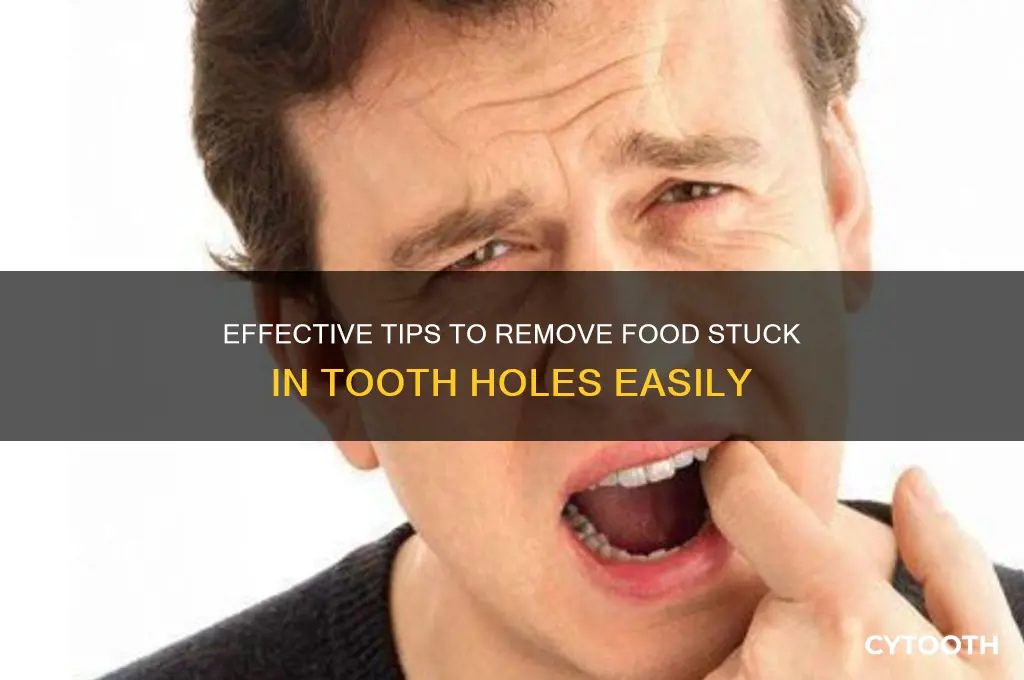
Getting food stuck in a tooth hole, whether from a recent extraction or a natural gap, can be uncomfortable and frustrating. This common issue often occurs when chewing sticky or fibrous foods, and if left unaddressed, it can lead to irritation, bad breath, or even infection. Fortunately, there are several effective methods to safely remove the trapped food, ranging from gentle rinsing with warm water or saltwater to using dental tools like interdental brushes or water flossers. It’s important to avoid aggressive methods, such as poking with sharp objects, which can damage gums or the healing site. By following proper techniques and maintaining good oral hygiene, you can alleviate discomfort and prevent future occurrences.
| Characteristics | Values |
|---|---|
| Methods | Flossing, water flossing, interdental brushes, toothpicks, rubber tip stimulators, rinsing with warm salt water, using a syringe, brushing gently, dental tape, orthodontic wax, oil pulling, hydrogen peroxide rinse, dental air/water syringe, professional dental cleaning. |
| Tools | Dental floss, water flosser, interdental brushes, wooden/plastic toothpicks, rubber tip gum stimulators, syringe, toothbrush, dental tape, orthodontic wax, coconut oil, hydrogen peroxide, dental air/water syringe. |
| Precautions | Avoid sharp objects, do not force tools into tight spaces, be gentle to avoid gum damage, consult a dentist if pain or swelling occurs, avoid using metal tools, do not overuse hydrogen peroxide or oil pulling. |
| Effectiveness | Flossing and water flossing are highly effective; interdental brushes work well for larger gaps; rinsing is mild but helpful; professional cleaning is most thorough. |
| Pain Level | Generally low, but depends on method and sensitivity; professional cleaning may cause discomfort. |
| Time Required | 1-10 minutes depending on method; professional cleaning takes 30-60 minutes. |
| Cost | Low-cost (floss, toothpicks) to moderate (water flosser, professional cleaning). |
| Frequency | As needed, but regular flossing is recommended daily. |
| Side Effects | Possible gum irritation, bleeding, or sensitivity if tools are used incorrectly. |
| Suitable For | Most individuals, but consult a dentist for braces, dental work, or sensitive gums. |
| Long-Term Solution | Regular oral hygiene practices prevent food from getting stuck. |
| Professional Recommendation | Dentists recommend flossing and regular check-ups for persistent issues. |
What You'll Learn
- Floss gently between teeth to dislodge trapped food particles without damaging gums
- Use a water flosser to flush out food from tooth holes effectively
- Rinse with warm saltwater to loosen and remove debris naturally
- Brush teeth thoroughly, focusing on areas where food gets stuck
- Visit a dentist if food remains stuck despite home remedies

Floss gently between teeth to dislodge trapped food particles without damaging gums
Trapped food particles between teeth can cause discomfort, bad breath, and even lead to cavities if left unattended. One of the most effective and gentle ways to dislodge these particles is by using dental floss. However, the key to success lies in the technique: flossing must be done gently to avoid damaging the gums, which can lead to irritation, bleeding, or even gum recession over time.
To begin, select a floss that suits your needs—unwaxed for tight spaces, waxed for ease of use, or flavored for a fresher experience. Tear off about 18 inches of floss and wrap most of it around your middle fingers, leaving about 2–3 inches to work with. Hold the floss taut between your thumbs and index fingers, forming a tight, straight line. Gently guide the floss between the teeth in a back-and-forth motion, avoiding snapping it into the gums, which can cause trauma.
Once the floss reaches the gum line, curve it into a "C" shape around one tooth. Slide it gently up and down against the tooth’s surface, reaching slightly beneath the gum line to dislodge hidden particles. Repeat this process for the adjacent tooth, using a clean section of floss to avoid transferring debris. For children or individuals with sensitive gums, consider using a water flosser on a low setting as a gentler alternative.
A common mistake is applying too much force, which can lead to gum damage. Instead, focus on precision and patience. If the floss gets stuck or feels tight, don’t force it—try unwaxed floss or a floss threader for tighter spaces. After flossing, rinse your mouth with water or an antimicrobial mouthwash to remove any loosened particles and reduce bacterial growth.
Incorporating gentle flossing into your daily oral care routine not only removes trapped food but also promotes overall gum health. For best results, floss at least once daily, preferably before brushing, to ensure debris is removed before it can contribute to plaque buildup. With consistent, careful practice, flossing becomes a painless and effective way to maintain a clean, healthy mouth.
Veneers with a Missing Tooth: What Are Your Options?
You may want to see also
Use a water flosser to flush out food from tooth holes effectively
Food particles lodged in tooth holes can be both uncomfortable and a breeding ground for bacteria. A water flosser, also known as an oral irrigator, offers a powerful yet gentle solution to this common problem. By emitting a targeted stream of water, it dislodges debris from hard-to-reach areas, including the crevices around teeth and within holes caused by cavities or dental work. This method is particularly effective because it combines pressure and volume to flush out particles without the risk of damaging gums or enamel, as traditional flossing sometimes can.
To use a water flosser effectively, start by filling the reservoir with lukewarm water—avoid extremes of hot or cold to prevent sensitivity. Adjust the pressure setting to a comfortable level, especially if you have sensitive gums or are new to the device. Begin with the lowest setting and gradually increase as needed. Position the flosser tip at a 90-degree angle to your gum line, aiming directly at the tooth hole. Activate the device and allow the water to flush out the trapped food. Move systematically around your mouth, spending a few seconds on each problem area. For deeper holes or stubborn particles, consider adding a small amount of antimicrobial mouthwash to the water for added cleaning benefits.
While water flossers are generally safe for all ages, they are particularly beneficial for adults with braces, bridges, or implants, where food tends to accumulate. Children under 12 should use the device under supervision to ensure proper technique and avoid injury. It’s also important to clean the flosser tip regularly to prevent bacterial buildup. Pairing this method with regular brushing and traditional flossing ensures comprehensive oral hygiene, reducing the risk of decay and gum disease.
One of the standout advantages of a water flosser is its ability to clean without causing irritation, making it ideal for those with gum sensitivity or periodontal issues. Unlike string floss, which can sometimes aggravate inflamed gums, the water stream is soothing and non-abrasive. Additionally, the pulsating action of the water can stimulate blood flow to the gums, promoting healthier tissue over time. For maximum effectiveness, use the water flosser at least once daily, preferably after meals, to prevent food from settling into tooth holes.
Incorporating a water flosser into your oral care routine is a practical, efficient way to address the persistent issue of food trapped in tooth holes. Its ease of use, combined with its ability to clean deeply and gently, makes it a valuable tool for maintaining oral health. Whether you’re dealing with occasional discomfort or chronic food impaction, this device offers a reliable solution that complements traditional dental care practices. By investing a few minutes daily, you can enjoy cleaner teeth, fresher breath, and a reduced risk of dental complications.
Single Tooth Replacement: Exploring Denture Options for One Missing Tooth
You may want to see also
Rinse with warm saltwater to loosen and remove debris naturally
Warm saltwater rinses have been a go-to home remedy for oral discomfort for generations, and their effectiveness in dislodging food particles from tooth holes is well-documented. The science behind this simple solution lies in its ability to mimic the body's natural fluids, creating an environment that encourages debris to detach from the affected area. When you mix half a teaspoon of salt in a cup of warm water, the saline solution helps to reduce inflammation and neutralize acids in the mouth, making it easier to flush out trapped food remnants. This method is particularly useful for those with sensitive gums or recent dental work, as it provides a gentle yet effective cleaning action without the need for aggressive tools or chemicals.
To maximize the benefits of a warm saltwater rinse, it’s essential to follow a precise technique. Start by heating a cup of water until it’s comfortably warm—not hot enough to cause discomfort. Dissolve the salt completely, ensuring the solution is evenly mixed. Swish the saltwater in your mouth for at least 30 seconds, focusing on the area where the food is lodged. The gentle pressure and movement help to dislodge particles, while the salt acts as a natural antiseptic, reducing the risk of infection. Repeat this process 2–3 times daily, especially after meals, to maintain oral hygiene and prevent further debris accumulation.
While warm saltwater rinses are generally safe for all ages, there are a few considerations to keep in mind. Children under 6 should be supervised to avoid swallowing the solution, as ingesting too much salt can be harmful. Additionally, if you have high blood pressure or are on a low-sodium diet, consult a healthcare provider before using this method regularly. For those with braces or dental appliances, the rinse can help clean hard-to-reach areas, but it should complement, not replace, regular brushing and flossing.
Comparatively, warm saltwater rinses stand out as a cost-effective and accessible alternative to commercial mouthwashes or dental tools. Unlike chemical-based products, this natural remedy is free from artificial ingredients, making it suitable for individuals with allergies or sensitivities. Its simplicity also ensures that it can be prepared and used anywhere, whether at home, work, or while traveling. While it may not be as immediately powerful as a water flosser, its consistent use can yield significant results in maintaining oral health and addressing minor issues like trapped food.
In practice, incorporating warm saltwater rinses into your oral care routine is straightforward and requires minimal effort. Keep a small container of salt handy in your bathroom or kitchen for quick preparation. For added convenience, pre-measure salt packets can be stored in a purse or desk drawer for on-the-go use. Over time, this habit not only helps in removing food from tooth holes but also promotes overall gum health and reduces the likelihood of future oral problems. By embracing this natural approach, you’re taking a proactive step toward preserving your dental well-being.
Ignoring Cavities: The Risks of Leaving Tooth Decay Untreated
You may want to see also
Brush teeth thoroughly, focusing on areas where food gets stuck
Food particles lodged between teeth aren't just annoying—they're a breeding ground for bacteria that cause cavities and gum disease. Brushing thoroughly, especially in these trouble spots, is your first line of defense.
Technique Matters: Angle your toothbrush at 45 degrees to your gums, using short, circular strokes. This motion effectively dislodges debris without damaging enamel. Spend at least 2 minutes brushing, dedicating extra time to areas prone to food traps like molars and spaces between teeth.
Tool Selection: A soft-bristled toothbrush is essential to avoid gum irritation. Consider an electric toothbrush with a rotating head, proven to remove more plaque than manual brushing. For tight spaces, interdental brushes (small, cone-shaped brushes) are invaluable.
Frequency is Key: Brush twice daily, ideally after meals. If brushing isn't feasible, rinse vigorously with water to dislodge larger particles.
Beyond the Basics: Flossing is non-negotiable. It reaches where bristles can't, removing 80% of plaque. For stubborn debris, a water flosser can provide a powerful yet gentle cleanse.
Professional Insight: Dentists recommend scheduling cleanings every six months. They can identify hidden food traps and remove hardened plaque (tartar) that brushing alone can't tackle.
Pregnancy and Dental Implants: What You Need to Know
You may want to see also
Visit a dentist if food remains stuck despite home remedies
Food particles lodged in tooth holes can be more than a nuisance—they can lead to infection, bad breath, and gum irritation if not addressed promptly. While home remedies like flossing, water irrigation, or using interdental brushes often resolve the issue, persistent cases warrant professional attention. If food remains stuck despite your best efforts, visiting a dentist is not just advisable—it’s essential. Dentists have specialized tools and techniques to safely remove debris without damaging gums or enamel, ensuring the problem is fully resolved.
Consider the risks of ignoring the issue. Trapped food can lead to bacterial growth, causing cavities or gum disease over time. For individuals with diabetes, compromised immune systems, or pre-existing dental conditions, these risks are amplified. A dentist can not only remove the debris but also assess the underlying cause, such as a cracked tooth or gum recession, which may require further treatment. Delaying this visit could turn a minor inconvenience into a major dental problem.
The process of professional removal is straightforward and minimally invasive. Dentists often use tools like dental explorers, curettes, or ultrasonic scalers to dislodge stubborn particles. In some cases, a dental X-ray may be necessary to identify hidden issues, such as a deep cavity or impacted food beneath the gum line. The procedure is typically quick, often completed within 15–30 minutes, and may include a thorough cleaning to prevent future buildup. Patients are usually advised to avoid hard or sticky foods for 24 hours post-treatment to allow the area to heal.
Persuasively, the cost of a dental visit pales in comparison to the potential expenses of untreated complications. While home remedies are cost-effective, they are not foolproof. A dentist’s intervention ensures the problem is addressed comprehensively, saving you from more extensive—and expensive—treatments down the line. Think of it as an investment in your oral health, particularly if you’re prone to food impaction due to misaligned teeth, gaps, or previous dental work.
In conclusion, while home remedies are a logical first step for dislodging food from tooth holes, their failure should prompt immediate dental care. Dentists provide not only immediate relief but also long-term solutions to prevent recurrence. Ignoring the issue risks complications that far outweigh the time and cost of a professional visit. Prioritize your oral health—schedule an appointment if home methods fall short.
Partial Denture for a Single Tooth: Is It a Viable Option?
You may want to see also
Frequently asked questions
Rinse your mouth with warm saltwater, gently floss around the area, or use a water flosser to dislodge the food without damaging the gums.
Avoid using toothpicks, as they can damage gums or push food deeper. Opt for dental floss or interdental brushes instead.
If home remedies fail, visit a dentist to safely remove the food and check for any underlying issues like infection or decay.
Avoid using your tongue or fingers, as this can introduce bacteria and potentially harm the gums. Stick to dental tools designed for cleaning.
Maintain good oral hygiene by brushing twice daily, flossing regularly, and using an antiseptic mouthwash to reduce debris buildup.