Samantha Blake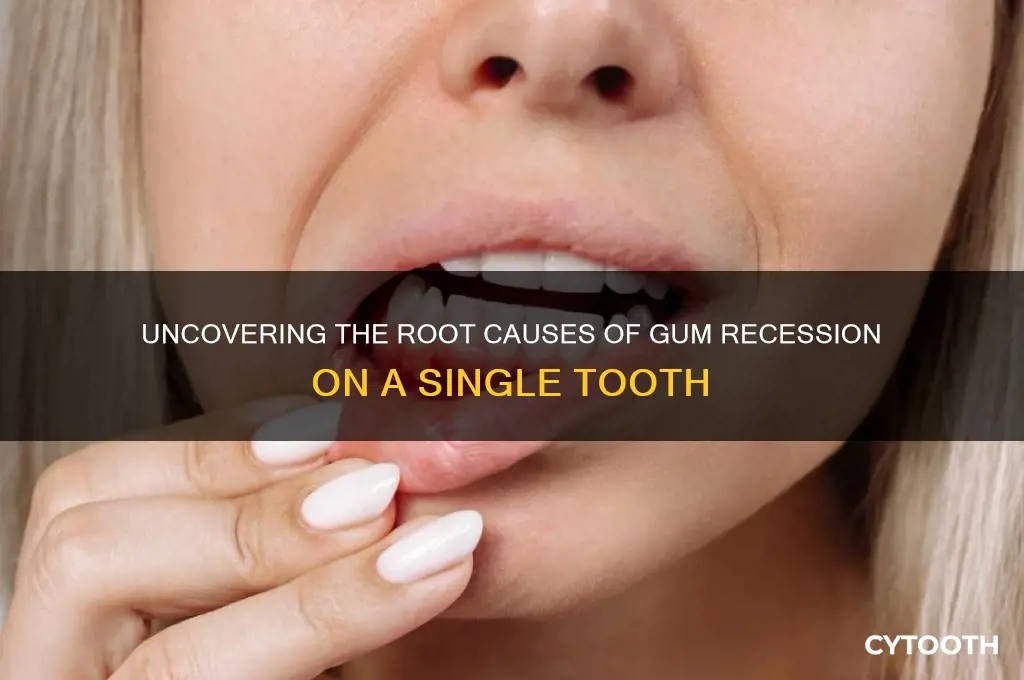
Gum recession on a single tooth can be caused by various factors, including aggressive brushing, periodontal disease, hormonal changes, or localized trauma. Poor oral hygiene allows plaque buildup, leading to gum inflammation and eventual recession, while improper brushing techniques can wear away gum tissue over time. Additionally, genetic predispositions, teeth grinding (bruxism), or misaligned teeth may exert uneven pressure, contributing to recession in specific areas. Understanding the underlying cause is crucial for effective treatment and prevention of further gum loss.
| Characteristics | Values |
|---|---|
| Trauma or Injury | Physical damage from accidents, sports injuries, or aggressive brushing. |
| Aggressive Brushing | Using a hard-bristled toothbrush or applying excessive force while brushing. |
| Poor Oral Hygiene | Inadequate brushing or flossing leading to plaque buildup and gum disease. |
| Periodontal Disease | Bacterial infection causing inflammation and destruction of gum tissue. |
| Teeth Grinding (Bruxism) | Excessive pressure on teeth and gums due to grinding or clenching. |
| Misaligned Teeth | Crooked or overcrowded teeth causing uneven pressure on gums. |
| Genetic Predisposition | Inherent susceptibility to gum recession due to thinner gum tissue. |
| Hormonal Changes | Fluctuations during puberty, pregnancy, or menopause affecting gum health. |
| Tobacco Use | Smoking or chewing tobacco contributing to gum tissue deterioration. |
| Piercings | Oral piercings rubbing against gums, causing irritation and recession. |
| Aging | Natural thinning of gum tissue over time, increasing recession risk. |
| Localized Infections | Abscesses or infections affecting a specific tooth and surrounding gums. |
| Orthodontic Treatment | Improperly fitted braces or aligners causing pressure on gums. |
| Nutritional Deficiencies | Lack of essential nutrients like vitamin C, affecting gum health. |
| Medications | Certain drugs reducing saliva production or causing gum tissue changes. |
| Occlusal Trauma | Malocclusion or bite issues leading to excessive force on specific teeth. |
| Chronic Inflammation | Prolonged irritation from food particles or foreign objects near the gumline. |
What You'll Learn

Aggressive brushing technique
Brushing your teeth is a fundamental part of oral hygiene, but the way you brush matters more than you might think. Aggressive brushing, characterized by using a hard-bristled toothbrush or applying excessive force, can lead to gum recession on one tooth or multiple teeth. The enamel at the gum line is particularly vulnerable, and over time, vigorous scrubbing wears it away, exposing the sensitive root surface. This not only causes discomfort but also increases the risk of cavities and gum disease in the affected area.
Consider this scenario: a 35-year-old individual who believes firmer brushing equates to cleaner teeth. They press down hard with a medium or hard-bristled brush, focusing on one stubborn area where plaque tends to accumulate. Within months, they notice the gum line around that tooth receding, leaving it more sensitive to hot and cold. This localized damage is a direct result of the concentrated force applied during brushing. The American Dental Association recommends using a soft-bristled toothbrush and gentle circular motions to avoid such issues.
To prevent gum recession from aggressive brushing, start by evaluating your technique. Hold your toothbrush at a 45-degree angle to your gums and use short, gentle strokes. Avoid sawing back-and-forth motions, which can further irritate the gum tissue. Replace your toothbrush every three months or sooner if the bristles become frayed. For those who struggle with controlling force, consider using a toothbrush with a pressure sensor or switching to an electric toothbrush with a sensitive mode. These tools provide feedback to help you maintain a safe brushing pressure.
Comparing aggressive brushing to proper technique highlights the importance of moderation. While thorough cleaning is essential, it’s the consistency and gentleness of your approach that protect your gums. Aggressive brushing may yield temporary results but compromises long-term oral health. For instance, a study published in the *Journal of Periodontology* found that individuals who brushed aggressively were twice as likely to experience gum recession compared to those using a gentle technique. This underscores the need to prioritize method over force.
In conclusion, aggressive brushing is a preventable cause of gum recession on one tooth. By adopting a softer approach, using the right tools, and being mindful of your technique, you can maintain healthy gums and avoid unnecessary damage. Remember, the goal is not to scrub harder but to clean smarter. Your gums will thank you for the gentler treatment.
Dry Mouth and Gum Recession: Uncovering the Surprising Connection
You may want to see also
Gum disease (periodontal issues)
Gum disease, specifically periodontal issues, is a leading cause of localized gum recession, often affecting just one tooth. This occurs when the gum tissue surrounding a tooth pulls away, exposing more of the tooth or its root. The primary culprit here is the bacterial buildup that leads to inflammation and infection in the gums. Unlike generalized recession, which may stem from aging or genetic factors, periodontal disease targets specific areas, making it a critical concern for oral health. Understanding this condition is the first step toward preventing further damage and maintaining a healthy smile.
Periodontal disease progresses in stages, starting with gingivitis, where gums become red, swollen, and prone to bleeding. If left untreated, it advances to periodontitis, where the infection spreads below the gum line, destroying the bone and tissue that hold the tooth in place. This localized destruction can cause recession around a single tooth, especially if the infection is more severe in one area due to factors like poor oral hygiene or tobacco use. Regular dental check-ups are essential to catch these early signs, as gingivitis is reversible, but periodontitis requires more invasive treatment.
Treating gum recession caused by periodontal disease involves a multi-step approach. First, deep cleaning procedures like scaling and root planing remove plaque and tartar below the gum line, reducing bacterial presence. In advanced cases, antimicrobial medications or antibiotics may be prescribed to control infection. For significant recession, surgical interventions such as gum grafting can restore lost tissue. Patients must also commit to rigorous oral care at home, including twice-daily brushing with a soft-bristled toothbrush, daily flossing, and the use of antimicrobial mouthwash. Avoiding tobacco and maintaining a balanced diet further support gum health.
Prevention is key when it comes to periodontal-related gum recession. Adults over 30, in particular, should be vigilant, as this age group is more susceptible to periodontitis. Practical tips include using a fluoride toothpaste, replacing toothbrushes every three months, and scheduling dental cleanings every six months. For those with a history of gum disease, more frequent visits may be necessary. Early intervention not only saves teeth but also prevents the discomfort and complications associated with advanced periodontal issues, ensuring long-term oral health.
Braces and Gum Recession: Uncovering the Truth Behind the Myth
You may want to see also
Misaligned teeth or bite
Misaligned teeth or an uneven bite can exert uneven pressure on specific areas of the mouth, leading to localized gum recession. When teeth are not properly aligned, the force of chewing or even routine jaw movements can concentrate on one tooth, causing the gum tissue to wear away over time. This is particularly evident in cases where a tooth is tilted or positioned too far forward or backward relative to its neighbors. For instance, a protruding front tooth is more susceptible to trauma and gum recession due to its exposed position and the direct force it bears during biting.
To mitigate this issue, orthodontic treatment is often recommended. Braces or clear aligners can gradually shift teeth into proper alignment, redistributing the forces exerted on the gums and teeth. For adults, clear aligners are a popular choice due to their discreet appearance and ease of use. However, it’s crucial to address misalignment early, as prolonged pressure on a single tooth can lead to irreversible gum damage. Regular dental check-ups can help identify misalignment before it progresses to gum recession, allowing for timely intervention.
A comparative analysis reveals that misaligned teeth not only contribute to gum recession but also increase the risk of other oral health issues, such as tooth decay and periodontal disease. The gaps created by misalignment can trap food particles and bacteria, accelerating gum deterioration. In contrast, properly aligned teeth are easier to clean and maintain, reducing the likelihood of localized gum problems. For children and teenagers, early orthodontic evaluation—ideally by age 7—can prevent complications later in life.
Practical tips for managing misalignment-related gum recession include using a soft-bristled toothbrush to avoid further irritation and incorporating antimicrobial mouthwash into your daily routine. If you notice sensitivity or receding gums around a specific tooth, consult a dentist promptly. They may recommend a night guard to reduce pressure from teeth grinding or suggest gum grafting in severe cases. Remember, addressing the root cause—the misalignment—is key to preventing further recession and preserving oral health.
Invisalign and Gum Health: Does Clear Aligners Cause Recession?
You may want to see also
Hormonal changes impact gums
Hormonal fluctuations, particularly in women, can significantly influence gum health, sometimes leading to localized gum recession around a single tooth. Puberty, pregnancy, menstruation, and menopause are key life stages where estrogen and progesterone levels shift dramatically. These hormones increase blood flow to the gums, making them more sensitive and prone to inflammation. For instance, during pregnancy, nearly 50% of women experience "pregnancy gingivitis," where gums become red, swollen, and more susceptible to recession if oral hygiene is neglected.
Consider the menstrual cycle as a monthly example. In the luteal phase (post-ovulation), elevated progesterone can cause gums to react more intensely to plaque, even if oral care remains consistent. Women may notice tenderness or bleeding around a specific tooth, often a sign of early recession. Similarly, menopause-related hormonal shifts reduce saliva production, leaving gums drier and less resilient. This localized vulnerability can cause recession, particularly around molars or teeth with pre-existing weaknesses.
To mitigate hormonal impacts, proactive oral care is essential. During high-risk periods, increase flossing frequency to twice daily, focusing on tight spaces where recession often starts. Use a soft-bristled toothbrush at a 45-degree angle to avoid abrasive damage. Incorporate an antimicrobial mouthwash with 0.12% chlorhexidine (prescription-strength) to reduce inflammation, but limit use to two weeks to avoid staining. For persistent issues, consult a dentist for a custom fluoride treatment or periodontal evaluation.
Comparatively, hormonal gum changes differ from typical recession causes like aggressive brushing or misalignment. While those factors are mechanical, hormonal effects are systemic, requiring a tailored approach. For example, a 30-year-old woman experiencing recession during pregnancy might need a gentler cleaning technique and more frequent dental check-ups, whereas a man with similar recession due to brushing habits would benefit from technique correction alone. Understanding this distinction ensures targeted prevention.
Finally, dietary adjustments can complement oral care during hormonal shifts. Increase vitamin C intake (120 mg daily for adults) through citrus fruits or supplements to strengthen gum tissue. Avoid sugary snacks, especially during pregnancy or menstruation, as hormones amplify their plaque-forming effects. Stay hydrated to counteract dry mouth during menopause. By combining these strategies, individuals can minimize the risk of hormonal-induced gum recession, preserving oral health through life’s transitions.
Stress and Gum Recession: Uncovering the Surprising Connection and Prevention Tips
You may want to see also
Trauma or injury to tooth
A forceful impact to a tooth can sever the delicate fibers connecting gum tissue to enamel, triggering a localized recession. This trauma doesn't have to be dramatic – a sports injury, accidental fall, or even aggressive tooth brushing can cause enough damage. Imagine a rubber band stretched too tightly; once it snaps, it can't return to its original length. Similarly, once these periodontal fibers are torn, the gum tissue loses its anchor and recedes, exposing the tooth's sensitive root.
Unlike systemic causes of gum recession, trauma-induced recession is often confined to the affected tooth, making it a telltale sign of past injury.
Consider a scenario: a teenager playing basketball takes an elbow to the mouth, chipping a front tooth. While the chip is repaired, the force of the impact also damaged the surrounding gum tissue. Over time, the gumline recedes, leaving the tooth appearing longer and more vulnerable. This localized recession serves as a permanent reminder of the injury, even after the tooth itself is restored.
Dentists often look for this specific pattern of recession when diagnosing the aftermath of dental trauma.
Preventing trauma-induced recession relies on proactive measures. For children and adults engaged in contact sports, custom-fitted mouthguards are essential. These devices act as shock absorbers, distributing the force of impact and protecting teeth and gums from direct trauma. Even seemingly minor activities like biking or skateboarding warrant mouthguard use, as accidents can happen unexpectedly.
If trauma does occur, immediate dental attention is crucial. A dentist can assess the extent of the damage, stabilize the tooth, and provide guidance on managing potential gum recession. In some cases, surgical intervention may be necessary to regenerate lost gum tissue and protect the exposed root. Early intervention significantly improves the chances of a successful outcome and minimizes long-term complications.
Skipping Brushing: How Poor Oral Hygiene Leads to Gum Recession
You may want to see also
Frequently asked questions
Yes, aggressive brushing, especially with a hard-bristled toothbrush or improper technique, can lead to gum recession on a single tooth. Over time, excessive force wears away the gum tissue and enamel, exposing the tooth root.
Gum disease (periodontal disease) can cause localized recession on one tooth if the infection or inflammation is concentrated in that area. Poor oral hygiene, plaque buildup, or genetic factors may contribute to this.
Yes, a misaligned or crooked tooth can create uneven pressure or friction, causing the gum tissue around it to recede. This is often due to the tooth’s position disrupting the natural gum line.