Ethan Brooks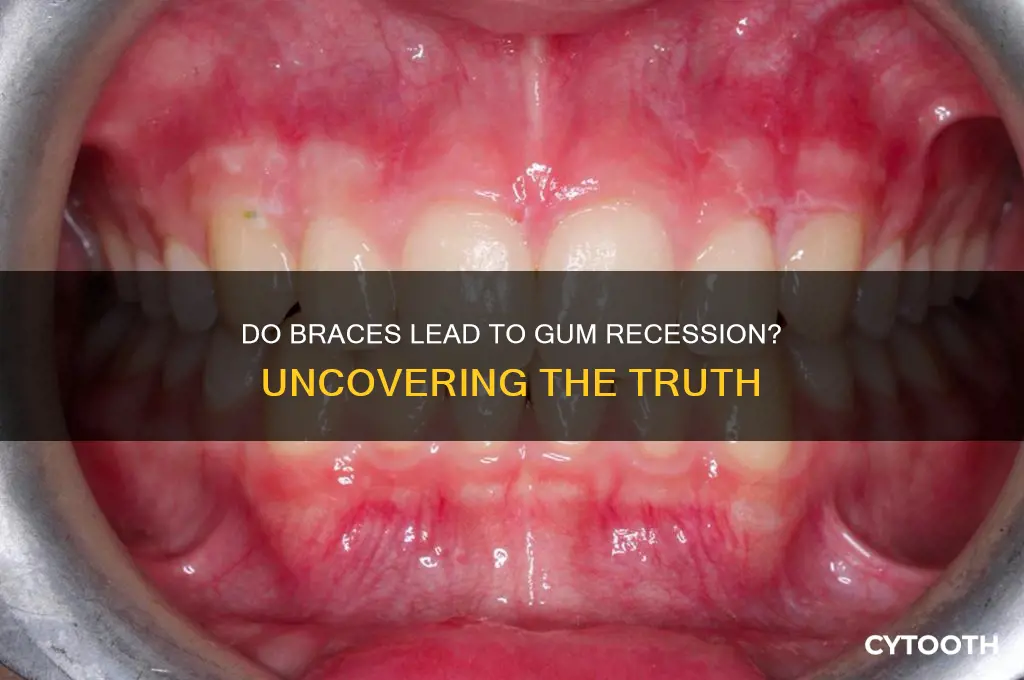
Braces are a common orthodontic treatment used to straighten teeth and correct bite issues, but concerns often arise about their potential side effects, particularly gum recession. Gum recession occurs when the gum tissue surrounding the teeth wears away, exposing more of the tooth or its root, and it can lead to sensitivity, decay, and other oral health problems. While braces themselves do not directly cause gum recession, factors such as poor oral hygiene during treatment, excessive force applied to the teeth, or pre-existing gum conditions can contribute to this issue. Proper care, regular dental check-ups, and following orthodontic guidelines can significantly reduce the risk of gum recession while undergoing braces treatment.
| Characteristics | Values |
|---|---|
| Direct Cause of Gum Recession | Braces themselves do not directly cause gum recession. |
| Indirect Factors Leading to Recession | Poor oral hygiene during orthodontic treatment can contribute to recession. |
| Pressure on Gums | Excessive force from braces may lead to gum inflammation or recession. |
| Pre-existing Conditions | Patients with periodontal disease or thin gums are at higher risk. |
| Orthodontist's Role | Proper treatment planning and monitoring can minimize recession risks. |
| Duration of Treatment | Longer treatment times may increase the risk if hygiene is compromised. |
| Preventive Measures | Regular cleaning, proper brushing, and flossing can prevent recession. |
| Post-Treatment Care | Maintaining oral hygiene post-braces is crucial to avoid further issues. |
| Research Findings | Studies show no significant increase in recession solely due to braces. |
| Patient Compliance | Adherence to orthodontist's instructions reduces recession risks. |
What You'll Learn
- Braces Pressure on Gums: How orthodontic force impacts gum tissue health over time
- Poor Oral Hygiene: Increased risk of recession due to plaque buildup around braces
- Gum Inflammation: Braces-related irritation and its role in gum recession development
- Type of Braces: Comparison of traditional vs. clear aligners on gum recession
- Treatment Duration: Longer orthodontic treatment and its correlation with gum recession

Braces Pressure on Gums: How orthodontic force impacts gum tissue health over time
Orthodontic treatment exerts significant force on teeth, a necessary mechanism for realignment. However, this force doesn't act in isolation; it transmits through the periodontal ligament to the alveolar bone, indirectly affecting the surrounding gum tissue. The pressure can lead to a remodeling of the bone, but the gums, being softer and more vascular, respond differently. They may experience inflammation, a natural reaction to sustained pressure, which can manifest as redness, swelling, or bleeding. This initial response is typically transient, but prolonged or excessive force can lead to more serious issues, including gum recession.
The risk of recession is not uniform across all patients or even all teeth. Factors such as the thickness of the gum tissue, the patient's oral hygiene practices, and the specific mechanics of the braces play critical roles. For instance, thin gingival biotypes are more susceptible to recession because they have less tissue to withstand the forces applied. Poor oral hygiene exacerbates the problem by allowing plaque to accumulate, leading to gingivitis, which can weaken the gum's attachment to the tooth. Orthodontists often recommend meticulous cleaning around brackets and wires to mitigate this risk, emphasizing the use of interdental brushes and fluoride mouthwash.
The force magnitude and duration are pivotal in determining the outcome. Light, continuous forces are generally better tolerated than heavy, intermittent ones, which can cause tissue trauma. Orthodontic adjustments, typically done every 4-6 weeks, are carefully calibrated to apply gradual pressure, allowing the gums and bone to adapt. However, if the force exceeds the tissue's capacity to recover, it can lead to apical migration of the gum margin, a precursor to recession. Monitoring for signs of excessive pressure, such as persistent soreness or visible tissue changes, is crucial during treatment.
Preventive measures can significantly reduce the risk of gum recession during orthodontic treatment. Patients should maintain regular dental check-ups to ensure early detection of any issues. Orthodontists may recommend periodontal evaluations before starting treatment, especially for adults or those with pre-existing gum disease. Additionally, incorporating gum-strengthening practices, such as massaging the gums with a soft toothbrush or using antimicrobial gels, can enhance tissue resilience. While braces inherently apply pressure to the gums, a proactive and informed approach can minimize adverse effects, preserving both tooth alignment and gum health.
Poor Oral Hygiene: Increased risk of recession due to plaque buildup around braces
Braces, while effective in straightening teeth, create numerous nooks and crannies where plaque thrives. This sticky bacterial film is the arch-nemesis of gum health. When plaque accumulates around brackets and wires, it hardens into tartar, a substance only removable by a dental professional. This buildup irritates the gum tissue, leading to inflammation and, over time, recession.
Imagine a tightrope walker carrying a heavy backpack. The added weight makes the journey precarious. Similarly, braces already exert pressure on teeth and gums. Poor oral hygiene adds the burden of plaque, increasing the risk of the gums pulling away from the teeth.
The consequences of neglecting oral hygiene with braces are dire. Gingivitis, the early stage of gum disease, manifests as red, swollen, and bleeding gums. Left unchecked, it progresses to periodontitis, where the infection damages the bone supporting the teeth. This can lead to tooth mobility and even tooth loss. Adolescents, a prime demographic for braces, are particularly vulnerable due to fluctuating hormone levels that can exacerbate gum sensitivity.
A diligent oral care routine is paramount for brace wearers. This includes brushing after every meal using a soft-bristled toothbrush and fluoride toothpaste. Angle the brush to clean around brackets and wires effectively. Flossing daily is equally crucial, utilizing tools like orthodontic floss threaders or water flossers to navigate around braces.
Regular dental checkups and professional cleanings are non-negotiable. Dentists can remove tartar buildup and monitor gum health, intervening at the first sign of trouble. Think of these appointments as pit stops during a long race, ensuring your oral health stays on track. By prioritizing oral hygiene, brace wearers can achieve a straighter smile without compromising the health of their gums.
Gum Inflammation: Braces-related irritation and its role in gum recession development
Braces, while effective in aligning teeth, can inadvertently create conditions ripe for gum inflammation. The mechanical pressure exerted by brackets and wires, coupled with the accumulation of plaque in hard-to-clean areas, often leads to gingivitis—a precursor to gum recession. This localized irritation disrupts the gum tissue’s attachment to the tooth, making it more susceptible to bacterial invasion and tissue breakdown. Patients frequently report symptoms like redness, swelling, and bleeding gums, particularly during the initial weeks of orthodontic treatment. Addressing this inflammation promptly is critical, as prolonged irritation accelerates the loss of gum tissue and underlying bone, setting the stage for irreversible recession.
To mitigate braces-related gum inflammation, a meticulous oral hygiene regimen is non-negotiable. Orthodontists recommend using a soft-bristled toothbrush at a 45-degree angle to the gum line, brushing after every meal to dislodge food particles trapped around brackets. Interproximal brushes, designed to navigate tight spaces, should be used daily to clean under wires. Fluoridated mouthwash, when used twice daily, reduces bacterial load and strengthens enamel, but avoid alcohol-based rinses that can dry out tissues. For adolescents and adults alike, incorporating a water flosser can enhance cleaning efficiency, particularly for those with limited manual dexterity. Consistency in these practices is key, as even minor lapses can exacerbate inflammation.
While proper hygiene is foundational, dietary adjustments play a complementary role in managing braces-induced gum irritation. Sticky and hard foods, such as caramel or nuts, should be avoided as they increase mechanical stress on gums and orthodontic appliances. Instead, opt for soft, nutrient-dense foods like yogurt, steamed vegetables, and smoothies, which minimize physical irritation. Reducing sugar intake is equally vital, as it fuels plaque formation and heightens inflammatory responses. Patients prone to gum issues may benefit from incorporating anti-inflammatory foods like leafy greens, berries, and fatty fish rich in omega-3s into their diet. These dietary modifications, when paired with rigorous hygiene, create a holistic defense against gum recession.
Despite best efforts, some individuals may still experience persistent inflammation due to factors like genetic predisposition or orthodontic appliance design. In such cases, professional interventions become essential. Dentists may prescribe antimicrobial gels containing chlorhexidine (0.12% concentration) for short-term use to control bacterial overgrowth. For severe cases, orthodontic adjustments—such as repositioning wires or replacing irritating brackets—can alleviate pressure points. Regular check-ins every 6–8 weeks allow for early detection of tissue changes, enabling timely interventions. While braces inherently pose a risk, proactive management of inflammation can significantly reduce the likelihood of gum recession, preserving both oral health and treatment outcomes.
Type of Braces: Comparison of traditional vs. clear aligners on gum recession
Braces, whether traditional or clear aligners, are designed to correct dental misalignments, but their impact on gum health varies significantly. Traditional braces, with their brackets and wires, exert constant pressure on teeth, which can sometimes lead to gum recession if not properly managed. This occurs when the gum tissue pulls away from the tooth, exposing the root and potentially causing sensitivity or decay. Clear aligners, on the other hand, are removable and apply a more controlled, gradual force, which may reduce the risk of gum recession. However, improper use or fit of aligners can still contribute to gum issues, highlighting the importance of professional oversight and patient compliance.
When comparing the two, traditional braces require meticulous oral hygiene due to their fixed nature. Food particles can easily get trapped between brackets and wires, increasing the risk of plaque buildup and gum inflammation. Patients must commit to thorough brushing, flossing with threaders, and regular dental check-ups to mitigate these risks. Clear aligners offer the advantage of removability, allowing for easier cleaning of both the aligners and teeth. However, aligners must be worn for 20–22 hours daily to be effective, and failure to do so can prolong treatment and potentially harm gum health. For instance, removing aligners frequently for meals or snacks without proper cleaning can trap acids and sugars against the teeth, accelerating gum recession.
Age and treatment duration also play a role in the comparison. Traditional braces are often recommended for younger patients (teens and pre-teens) whose jaws are still developing, but this demographic may be less disciplined in maintaining oral hygiene, increasing recession risks. Clear aligners are typically prescribed for adults and older teens, who are more likely to follow care instructions. Treatment time varies—traditional braces average 18–24 months, while aligners range from 6–18 months depending on complexity. Shorter treatment times with aligners may reduce prolonged exposure to orthodontic forces, potentially minimizing gum recession.
Practical tips for minimizing gum recession with either option include using a soft-bristled toothbrush and fluoride toothpaste, incorporating an antimicrobial mouthwash, and avoiding hard or sticky foods that can damage braces or dislodge aligners. For traditional braces, orthodontic wax can protect gums from wire irritation, while aligner wearers should rinse aligners daily with mild soap and warm water. Regular monitoring by an orthodontist is crucial for both methods to address early signs of recession, such as gum redness, swelling, or bleeding. Ultimately, the choice between traditional braces and clear aligners should consider not only aesthetic preferences but also the patient’s ability to maintain oral hygiene and adhere to treatment protocols.
Treatment Duration: Longer orthodontic treatment and its correlation with gum recession
Orthodontic treatment duration varies widely, typically ranging from 12 to 36 months, depending on factors like age, case complexity, and compliance. While braces are effective in aligning teeth, prolonged treatment raises concerns about gum health. Studies suggest that longer orthodontic treatment may correlate with increased gum recession, particularly in cases exceeding 24 months. This is attributed to sustained pressure on teeth and gums, which can lead to tissue inflammation and gradual recession. Understanding this relationship is crucial for patients and orthodontists to mitigate risks and ensure optimal oral health outcomes.
From an analytical perspective, the mechanism behind gum recession during extended orthodontic treatment involves biomechanical stress and inflammatory responses. Braces apply continuous force to shift teeth, which can compromise blood flow to the periodontal tissues. Over time, this reduced vascularity weakens the gums, making them more susceptible to recession. Additionally, poor oral hygiene during treatment exacerbates the issue, as plaque buildup accelerates gum disease. Patients with pre-existing gingival issues or those undergoing complex treatments, such as jaw realignment, are at higher risk. Monitoring gum health at regular intervals is essential to detect early signs of recession and adjust treatment plans accordingly.
For those undergoing orthodontic treatment, practical steps can minimize the risk of gum recession. Maintaining impeccable oral hygiene is paramount—brush twice daily with a soft-bristled toothbrush, floss regularly, and use an antimicrobial mouthwash. Orthodontists may recommend fluoride treatments or prescription-strength toothpaste to strengthen gums. Patients should also avoid habits like teeth grinding, which can intensify pressure on the gums. If treatment duration is expected to exceed 24 months, discuss preventive measures with your orthodontist, such as periodic gum assessments or adjustments to the treatment plan. Early intervention can significantly reduce the likelihood of long-term gum damage.
Comparatively, shorter orthodontic treatments, such as those using clear aligners or accelerated orthodontics, may pose a lower risk of gum recession. Aligners, for instance, are removable, allowing for better cleaning and reduced mechanical stress on the gums. However, they may not be suitable for all cases, particularly severe malocclusions. Accelerated orthodontics, which shortens treatment time through techniques like alveolar decortication, also shows promise in minimizing gum-related complications. Patients should weigh the pros and cons of each approach with their orthodontist, considering both aesthetic goals and periodontal health.
In conclusion, while braces are a proven method for achieving a straighter smile, longer treatment durations may increase the risk of gum recession. By understanding the underlying causes and adopting proactive measures, patients can safeguard their gum health during orthodontic treatment. Regular communication with your orthodontist, coupled with diligent oral care, is key to achieving both alignment and periodontal wellness. For those concerned about treatment length, exploring alternative orthodontic options may provide a viable solution to balance efficacy and gum preservation.
Frequently asked questions
Braces themselves do not directly cause gum recession, but poor oral hygiene during orthodontic treatment can lead to gum issues, including recession.
If gum recession is already present, braces may exacerbate the condition if proper care is not taken, as the movement of teeth can put additional stress on the gums.
Maintain excellent oral hygiene by brushing gently with a soft-bristled toothbrush, flossing daily, and using orthodontic-friendly tools like water flossers or interdental brushes. Regular check-ups with your orthodontist and dentist are also essential.