Hailey Morgan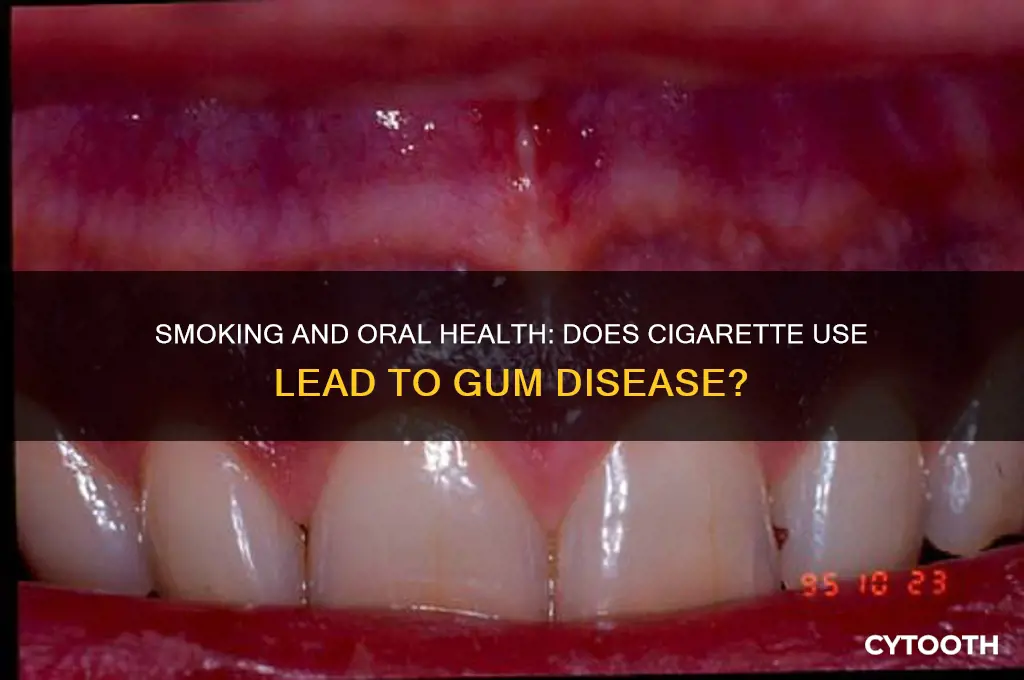
Cigarettes are widely recognized as a major risk factor for numerous health issues, and their impact on oral health, particularly gum disease, is a significant concern. Smoking cigarettes has been strongly linked to the development and progression of periodontal diseases, including gingivitis and periodontitis. The harmful chemicals in cigarette smoke can weaken the immune system, making it harder for the body to fight off bacterial infections in the gums. Additionally, smoking reduces blood flow to the gums, impairing their ability to heal and increasing the likelihood of inflammation and tissue damage. Studies consistently show that smokers are more likely to experience severe gum disease, tooth loss, and slower recovery from oral treatments compared to non-smokers. Understanding the relationship between cigarette use and gum disease is crucial for promoting better oral health and encouraging smoking cessation.
What You'll Learn

Smoking and gum inflammation
Smoking introduces over 7,000 chemicals into the oral cavity, many of which are irritants or toxins. These substances directly inflame the delicate gum tissues, triggering an immune response that, over time, becomes chronic. Unlike occasional inflammation from food particles or minor injuries, smoking-induced inflammation persists, breaking down the gum’s protective barrier. This constant irritation disrupts blood flow to the gums, impairing their ability to heal and fight infection. Even light smokers (fewer than 10 cigarettes daily) experience measurable gum inflammation, though the severity escalates with increased consumption.
Consider the mechanism: nicotine and tar restrict blood vessels, reducing oxygen and nutrient delivery to gum tissues. Simultaneously, chemicals like formaldehyde and acrolein damage cells, accelerating tissue degradation. The gums, deprived of resources and under constant assault, swell, redden, and bleed easily—classic signs of gingivitis. Smokers often overlook these early warnings, mistaking them for normal oral discomfort. However, this stage is critical: without intervention, inflammation progresses to periodontitis, where bone loss and tooth mobility become irreversible.
For those seeking to mitigate smoking-related gum inflammation, immediate steps are crucial. First, reduce cigarette consumption incrementally; cutting daily intake by 50% can significantly lower toxin exposure. Incorporate anti-inflammatory oral care: rinse with alcohol-free, chlorhexidine mouthwash twice daily to reduce bacterial load without drying tissues. Use a soft-bristled toothbrush with gentle, circular motions to avoid further irritation. Hydration is key; drinking water after smoking helps dilute toxins and stimulate saliva production, the mouth’s natural cleanser.
Comparatively, non-smokers with similar oral hygiene habits rarely develop chronic gum inflammation unless exposed to other systemic irritants. Smoking’s unique harm lies in its dual action: direct chemical damage and impaired immune function. Studies show smokers are twice as likely to develop periodontitis as non-smokers, even when controlling for brushing and flossing frequency. This disparity highlights smoking’s role as a primary risk factor, not just a contributing one.
Persuasively, quitting smoking remains the most effective solution. Within days of cessation, blood flow and oxygen levels in gum tissues improve, reducing inflammation. After one year, the risk of gum disease drops by 50%, approaching that of a non-smoker. For those unable to quit, combining nicotine replacement therapy (e.g., patches or gum) with rigorous oral care can minimize damage. Regular dental check-ups every three months are essential for smokers, as early detection of inflammation can prevent progression to advanced disease.
Do Braces Lead to Gum Recession? Uncovering the Truth
You may want to see also
Nicotine's impact on oral health
Smoking cigarettes delivers a potent dose of nicotine, a highly addictive stimulant, directly into the bloodstream. This substance doesn't just affect the lungs; it wreaks havoc on the entire body, including the mouth. Nicotine constricts blood vessels, reducing blood flow to the gums and other oral tissues. This diminished circulation hampers the delivery of essential nutrients and oxygen, impairing the body's natural ability to fight off infection and heal itself.
Imagine your gums as a battlefield. Nicotine acts like a saboteur, weakening the defenses and leaving them vulnerable to bacterial attack. This creates the perfect environment for gum disease to flourish.
The impact of nicotine on oral health extends beyond gum disease. It contributes to a host of other problems. Nicotine stains teeth, leading to unsightly yellow or brown discoloration. It also dulls the sense of taste and smell, diminishing the enjoyment of food. Smokers are more prone to oral infections, bad breath, and delayed healing after dental procedures. Furthermore, nicotine can interfere with the success of dental implants, as the reduced blood flow hinders osseointegration, the process by which the implant fuses with the jawbone.
The dangers are particularly pronounced for young smokers. Adolescents who smoke are at a significantly higher risk of developing gum disease compared to their non-smoking peers. This is because their bodies are still developing, and nicotine can disrupt the normal growth and maturation of oral tissues.
Quitting smoking is the single most effective way to mitigate the harmful effects of nicotine on oral health. Within days of quitting, blood flow to the gums improves, and the body begins to heal. Over time, the risk of gum disease, tooth loss, and other oral health problems decreases significantly. For those struggling to quit, nicotine replacement therapy (NRT) can be a helpful tool. NRT products like patches, gum, or lozenges deliver controlled doses of nicotine without the harmful chemicals found in cigarettes. However, it's crucial to use these products as directed and under the guidance of a healthcare professional.
Remember, the benefits of quitting smoking extend far beyond a healthier smile. It's a decision that positively impacts overall health and well-being.
Cigarettes reducing blood flow to gums
Smoking cigarettes constricts blood vessels, significantly reducing blood flow to the gums. This restriction occurs because nicotine and other chemicals in tobacco cause the vessels to narrow, limiting the delivery of oxygen and essential nutrients. Healthy blood flow is critical for gum tissue to repair itself and fight off infections. Without it, gums become more susceptible to disease, setting the stage for conditions like gingivitis and periodontitis.
Consider the process of wound healing: adequate blood supply is essential for delivering white blood cells and nutrients to the affected area. When blood flow is compromised, as it is in smokers, the gums struggle to combat bacterial infections. This creates a vicious cycle: bacteria thrive in the oxygen-deprived environment, leading to inflammation and further damage. Over time, this can result in gum recession, tooth loss, and systemic health issues.
To mitigate these effects, reducing or quitting smoking is paramount. Studies show that within days of quitting, blood flow begins to improve, and the body’s ability to heal increases. For example, a 2018 study in the *Journal of Periodontology* found that smokers who quit experienced a 25% increase in gum tissue blood flow within two weeks. Practical tips include using nicotine replacement therapy, seeking support groups, and avoiding triggers like alcohol or stressful situations that may prompt smoking.
Comparatively, non-smokers have a significantly lower risk of gum disease due to their uncompromised blood flow. For instance, a 2020 review in *Oral Diseases* highlighted that smokers are up to six times more likely to develop severe periodontitis than non-smokers. This disparity underscores the direct link between cigarette use and reduced blood flow to the gums. By quitting, individuals can not only improve their oral health but also reduce their risk of related conditions like heart disease and diabetes.
In summary, cigarettes reduce blood flow to the gums by constricting blood vessels, impairing the body’s ability to heal and fight infection. This mechanism is a key driver of gum disease in smokers. Quitting smoking, even partially, can reverse some of this damage, restoring blood flow and improving gum health. For those struggling to quit, gradual reduction combined with professional support offers a practical path to better oral and overall health.
Tobacco use and plaque buildup
Smoking cigarettes doesn't just stain teeth—it creates a breeding ground for plaque. Tobacco smoke contains over 7,000 chemicals, many of which interfere with the mouth's natural defenses. Saliva, your body's built-in plaque fighter, decreases in flow and effectiveness when you smoke. This reduction allows bacteria to thrive, forming sticky plaque that hardens into tartar if left unchecked. Think of it as disabling your mouth's cleaning crew while inviting troublemakers to throw a party.
Consider this: a single cigarette contains enough nicotine and tar to disrupt oral health for hours. Nicotine constricts blood vessels, reducing oxygen and nutrient flow to gums, while tar coats teeth, providing a sticky surface for plaque to adhere. Over time, this plaque buildup leads to gingivitis, the early stage of gum disease, characterized by red, swollen gums that bleed easily. It's a direct consequence of tobacco's assault on your mouth's delicate ecosystem.
To combat this, smokers must adopt a rigorous oral hygiene routine. Brush twice daily with a fluoride toothpaste, focusing on the gum line where plaque accumulates. Floss daily to remove debris between teeth, and consider using an antimicrobial mouthwash to reduce bacterial growth. For heavy smokers, professional cleanings every three months are essential to remove tartar buildup that brushing alone can't handle. These steps aren't optional—they're critical to slowing the damage caused by tobacco.
Compare a smoker's mouth to a non-smoker's: the former often shows receding gums, persistent bad breath, and a higher rate of tooth loss. Studies reveal that smokers are twice as likely to develop gum disease as non-smokers, with the risk increasing with the number of cigarettes smoked daily. Quitting tobacco is the most effective way to halt this progression, but until then, proactive oral care is the best defense against plaque's relentless attack.
Finally, a practical tip: if you smoke, keep a travel toothbrush and sugar-free gum handy. Brushing after smoking can minimize immediate plaque buildup, while chewing gum stimulates saliva production, helping to wash away debris. While these measures don't undo tobacco's harm, they're small, actionable steps toward preserving oral health in the face of a damaging habit.
Smoking linked to periodontal disease progression
Smoking doesn’t just stain teeth and cause bad breath—it accelerates the destruction of gum tissue and bone, fueling the progression of periodontal disease. Research consistently shows that smokers are up to six times more likely to develop advanced gum disease compared to nonsmokers. The chemicals in cigarette smoke interfere with the normal function of gum cells, impairing their ability to repair damage and fight infection. This creates a vicious cycle where existing gum disease worsens at an alarming rate, often leading to tooth loss and systemic health complications.
Consider the mechanism: nicotine and other toxins in smoke constrict blood vessels, reducing blood flow to the gums. This deprivation of oxygen and nutrients weakens the gum tissue, making it more susceptible to bacterial invasion. Simultaneously, smoking suppresses the immune system, hindering the body’s ability to combat the bacteria responsible for gum infections. For instance, a study published in the *Journal of Periodontology* found that smokers had significantly higher levels of *Porphyromonas gingivalis*, a key pathogen in periodontal disease, compared to nonsmokers. Even occasional smoking or exposure to secondhand smoke can exacerbate these effects, though the risk increases with the number of cigarettes smoked daily.
To mitigate this progression, practical steps are essential. First, smokers should aim to reduce their daily cigarette consumption, as even cutting back can slow the rate of gum disease advancement. For example, decreasing from 20 cigarettes per day to 10 can improve blood flow to the gums within weeks. Second, incorporating a rigorous oral hygiene routine—brushing twice daily with a fluoride toothpaste, flossing, and using an antimicrobial mouthwash—can help manage bacterial buildup. Third, regular dental check-ups are non-negotiable; dentists can detect early signs of periodontal disease and provide professional cleanings to remove tartar, a major contributor to gum inflammation.
A comparative analysis highlights the stark difference in outcomes between smokers and nonsmokers. While nonsmokers with gum disease often respond well to standard treatments like scaling and root planing, smokers frequently experience slower healing and higher recurrence rates. For instance, a smoker with moderate periodontal disease may require more frequent maintenance visits and advanced interventions, such as gum surgery, to stabilize their condition. In contrast, a nonsmoker with similar disease severity might achieve long-term stability with less invasive measures.
Finally, quitting smoking remains the most effective way to halt periodontal disease progression. Studies show that former smokers who abstain for at least 11 years have gum health comparable to that of nonsmokers. Even partial success in quitting can yield benefits; reducing smoking to fewer than 10 cigarettes per day has been linked to a 30% decrease in the risk of severe gum disease. Resources like nicotine replacement therapy, counseling, and support groups can significantly improve the chances of success. By addressing the smoking habit directly, individuals can not only protect their gums but also reduce their risk of other smoking-related diseases, such as heart disease and lung cancer.
Frequently asked questions
Yes, cigarettes are a direct cause of gum disease. Smoking weakens the immune system, reduces blood flow to the gums, and promotes bacterial growth, all of which contribute to periodontal issues.
Smoking increases the risk by impairing the body’s ability to fight infection, reducing gum tissue’s ability to heal, and creating an environment conducive to harmful bacteria that cause gum inflammation and damage.
Quitting smoking can significantly improve gum health and reduce the progression of gum disease, but existing damage may require professional dental treatment for full recovery.
Yes, smokers are at a much higher risk of tooth loss due to gum disease. Smoking accelerates bone loss and gum recession, which are major factors in tooth loss caused by periodontal disease.
Yes, secondhand smoke exposure can also increase the risk of gum disease by exposing non-smokers to harmful chemicals that damage gum tissue and reduce oral health.