Ethan Brooks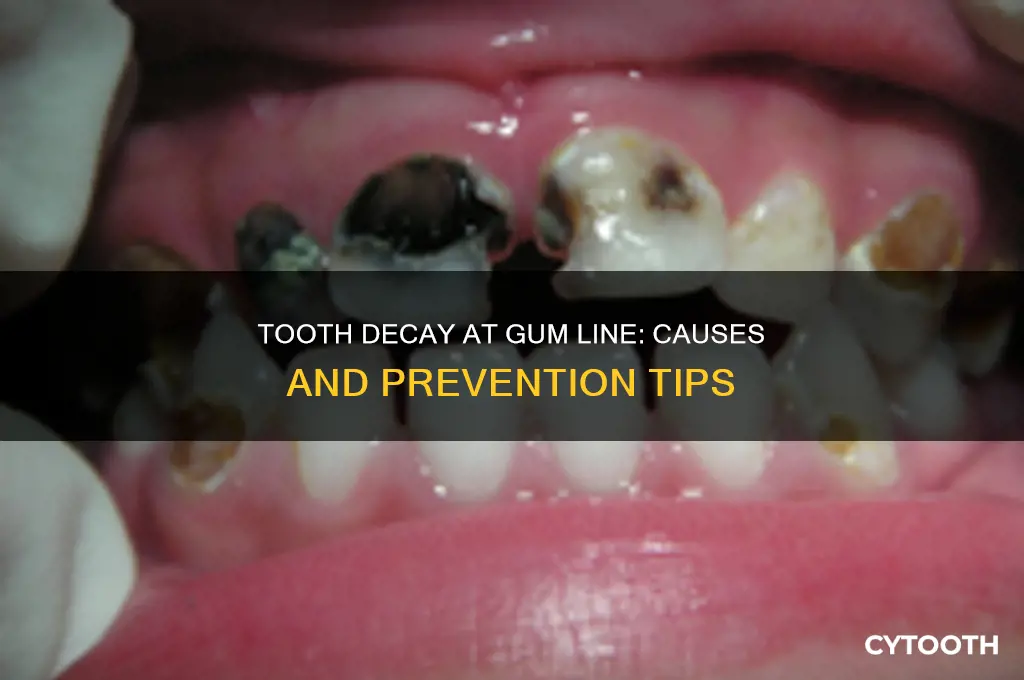
Tooth decay at the gum line, also known as cervical decay, occurs when the area where the tooth meets the gum becomes susceptible to cavities. This type of decay is often caused by a combination of factors, including poor oral hygiene, which allows plaque and bacteria to accumulate along the gum line. Acid erosion from frequent consumption of sugary or acidic foods and drinks can weaken the enamel in this vulnerable area. Additionally, gum recession, which exposes the tooth's root surface, increases the risk of decay since the root lacks the protective enamel layer. Other contributing factors include dry mouth, aging, and improper brushing techniques that may irritate or damage the gums. Understanding these causes is essential for preventing and addressing tooth decay at the gum line effectively.
What You'll Learn

Poor oral hygiene leads to plaque buildup, causing decay near gums
Tooth decay at the gum line often begins with a silent culprit: plaque. This sticky film of bacteria constantly forms on teeth, thriving on sugars and starches from food. When oral hygiene falters—brushing twice daily for at least two minutes and flossing once daily—plaque hardens into tartar, a rough substance that traps bacteria and irritates gums. This irritation, known as gingivitis, causes gums to pull away from teeth, creating pockets where plaque accumulates unchecked. Over time, the acids produced by plaque erode enamel at the gum line, leading to decay.
Consider this: a single missed brushing session allows plaque to start mineralizing into tartar within 24–72 hours. For adults over 30, whose gums naturally recede slightly with age, this process accelerates decay at the vulnerable gum line. Children and teens, especially those with braces, face similar risks due to difficulty cleaning around orthodontic appliances. The solution lies in consistency: use a soft-bristled toothbrush at a 45-degree angle to the gum line, and incorporate an antimicrobial mouthwash to reduce bacterial load.
From a comparative standpoint, individuals who neglect flossing are at a 30% higher risk of gum line decay than those who floss daily. Flossing removes up to 80% of plaque in interdental spaces, areas brushes can’t reach. Electric toothbrushes, particularly those with pressure sensors, offer an advantage by preventing over-brushing, which can damage gums and expose root surfaces to decay. Pairing these tools with biannual dental cleanings removes tartar buildup and catches early signs of decay before they worsen.
Persuasively, the cost of prevention pales compared to treating advanced decay. A $3 tube of fluoride toothpaste and $5 pack of floss are negligible investments against the $500–$2,500 price tag of a crown or root canal. For those with dry mouth, a condition that reduces saliva’s protective effects, sugar-free gum or lozenges containing xylitol can stimulate saliva flow and neutralize acids. Ignoring these measures not only risks pain and tooth loss but also links gum disease to systemic issues like heart disease and diabetes.
Instructively, here’s a daily regimen to combat gum line decay: brush morning and night with fluoride toothpaste, floss before bed to disrupt plaque colonies, and rinse with a fluoride or antibacterial mouthwash. For added protection, limit sugary snacks and beverages, especially before bedtime, when saliva production slows. Parents should supervise children under 8 to ensure proper technique and prevent swallowing toothpaste. By treating oral hygiene as a non-negotiable habit, you safeguard not just your smile but your overall health.
Dark Gums Explained: Causes, Concerns, and Treatment Options Revealed
You may want to see also
Sugary diets fuel bacteria, attacking enamel at the gum line
Tooth decay at the gum line often begins with a simple yet pervasive culprit: sugar. When you consume sugary foods or drinks, bacteria in your mouth feast on these remnants, producing acids as a byproduct. These acids don’t discriminate—they attack the enamel of your teeth, particularly vulnerable at the gum line where plaque accumulates easily. Over time, this relentless assault weakens the enamel, creating cavities that start insidiously and progress rapidly if left unchecked.
Consider this: a single can of soda contains around 39 grams of sugar, far exceeding the daily limit recommended by health organizations. Each sip coats your teeth and gums, providing fuel for bacteria to thrive. Even seemingly harmless snacks like dried fruit or flavored yogurt can contribute to this cycle, as their sugars linger in the crevices where teeth meet gums. The longer sugar remains in contact with these areas, the greater the risk of decay.
To combat this, adopt a two-pronged strategy. First, limit sugar intake by reading labels carefully—aim for less than 25 grams of added sugar per day for adults and even less for children. Swap sugary beverages for water or unsweetened tea, and opt for whole fruits instead of processed snacks. Second, improve oral hygiene by brushing twice daily with fluoride toothpaste, focusing on the gum line. Floss daily to remove plaque buildup in tight spaces, and consider using an antimicrobial mouthwash to reduce bacterial activity.
A comparative look at diets reveals striking differences in decay rates. Populations with low sugar consumption, such as traditional hunter-gatherer communities, rarely experience tooth decay at the gum line. In contrast, industrialized societies, where sugar is ubiquitous, see significantly higher rates, especially in age groups like teenagers and young adults who frequently consume sugary drinks and snacks. This underscores the direct link between diet and dental health.
Finally, regular dental check-ups are non-negotiable. Early detection of decay at the gum line can prevent extensive damage. Dentists can apply sealants or fluoride treatments to strengthen enamel and may spot issues before they become painful or costly to treat. By combining mindful eating habits with diligent oral care, you can protect your teeth from the silent but destructive effects of sugar-fueled bacteria.
Braces and Gum Recession: Uncovering the Truth Behind the Myth
You may want to see also
Dry mouth reduces saliva, increasing decay risk near gums
Saliva is your mouth’s first line of defense against tooth decay, particularly at the gum line. It neutralizes acids produced by bacteria, remineralizes enamel, and washes away food particles. When dry mouth reduces saliva production, this protective system falters, leaving gums and teeth vulnerable. The gum line, where teeth meet gums, is especially susceptible because plaque accumulates easily in this crevice, and without sufficient saliva, acids erode enamel faster, leading to decay.
Consider the mechanics: saliva contains enzymes like amylase and proteins like immunoglobulins that inhibit bacterial growth. It also dilutes sugars and acids from food, slowing the demineralization process. In a dry mouth, this protective environment disappears. For instance, older adults, who often experience dry mouth due to medications or natural aging, are at higher risk for gum line decay. Similarly, individuals with Sjögren’s syndrome or those undergoing radiation therapy face chronic dry mouth, increasing their decay risk exponentially.
To mitigate this risk, start by addressing the root cause of dry mouth. If medications are the culprit, consult your doctor about alternatives or saliva substitutes. Drinking water regularly, chewing sugar-free gum, or using a humidifier at night can stimulate saliva flow. For immediate relief, over-the-counter products like Biotène mouthwash or lozenges can provide temporary moisture. However, avoid mouthwashes with alcohol, as they exacerbate dryness.
Prevention is key. Brush twice daily with fluoride toothpaste, focusing on the gum line, and floss daily to remove plaque buildup. A fluoride mouthwash or gel, applied before bed, can strengthen enamel in high-risk areas. Regular dental check-ups are essential, as dentists can detect early signs of decay near the gums and apply preventive treatments like sealants or fluoride varnishes.
Finally, monitor your diet and habits. Limit sugary and acidic foods, which fuel bacterial growth, and avoid frequent snacking, as it prolongs acid attacks. If you suffer from chronic dry mouth, carry a water bottle and sip throughout the day to maintain moisture. By combining these strategies, you can counteract the effects of dry mouth and protect your gum line from decay.
Stress and Gum Recession: Uncovering the Surprising Connection and Prevention Tips
You may want to see also
Acidic foods erode enamel, making gum line vulnerable to decay
The enamel at the gum line is particularly thin, making it more susceptible to erosion from acidic foods and drinks. Citrus fruits, sodas, vinegar-based dressings, and even seemingly healthy options like kombucha can wear down this protective layer over time. Each acidic exposure softens the enamel, and without proper remineralization, the gum line becomes a weak point for decay to take hold.
A 2018 study published in the *Journal of Dentistry* found that frequent consumption of acidic beverages, especially between meals, significantly increased the risk of enamel erosion near the gums. This is because saliva, which helps neutralize acids and repair enamel, doesn't have enough time to work its magic when acids are constantly introduced.
Imagine your enamel as a suit of armor for your teeth. Acidic foods act like tiny chisels, gradually chipping away at this armor, especially where it's thinnest – at the gum line. Once the enamel weakens, bacteria can easily penetrate, leading to cavities and gum disease. This process is often painless, making it easy to overlook until significant damage has occurred.
A simple way to visualize this is to think of a lemon wedge. The citric acid in the lemon can make your teeth feel sensitive after just a few seconds of contact. Now imagine that sensation repeated multiple times a day, every day, from various sources.
To protect your gum line, limit your intake of highly acidic foods and beverages. When you do indulge, rinse your mouth with water afterward to dilute the acids and encourage saliva production. Wait at least 30 minutes before brushing your teeth, as brushing immediately after acid exposure can further damage the softened enamel.
Consider incorporating enamel-strengthening toothpaste containing fluoride or hydroxyapatite into your oral care routine. These minerals help remineralize weakened enamel, making it more resistant to acid attacks. Additionally, chewing sugar-free gum after meals can stimulate saliva flow, aiding in the natural repair process. Remember, prevention is key – by being mindful of your diet and practicing good oral hygiene, you can safeguard your gum line from the erosive effects of acidic foods.
Does Gum Cause Acne? Unraveling the Myth and Facts
You may want to see also
Receding gums expose roots, making them prone to decay
Receding gums, a condition often associated with aging or poor oral hygiene, leave tooth roots vulnerable to decay. Unlike enamel, which covers the crown of the tooth, roots are protected by a thinner layer called cementum. This cementum is more susceptible to acid erosion from bacteria and dietary sugars, making exposed roots a prime target for cavities.
Imagine a tree with its bark stripped away – the delicate inner layers are exposed to the elements, prone to damage. Similarly, when gums recede, the tooth's root structure is left defenseless against the constant assault of plaque and acids in the mouth.
This vulnerability is further exacerbated by the fact that roots lack the protective mechanisms of enamel. Enamel contains minerals that can remineralize and repair minor damage. Cementum, however, has a limited ability to regenerate, leaving exposed roots more susceptible to permanent damage from decay.
This increased susceptibility to decay is not just a theoretical concern. Studies show that individuals with gum recession are significantly more likely to develop root caries (cavities on the roots) compared to those with healthy gum lines.
Preventing decay on exposed roots requires a multi-pronged approach. Firstly, addressing the underlying cause of gum recession is crucial. This may involve improving oral hygiene practices, treating gum disease, or seeking periodontal treatment to restore gum tissue. Secondly, using desensitizing toothpastes specifically formulated for sensitive teeth can help alleviate discomfort and strengthen the cementum. Additionally, fluoride treatments, either in the form of gels, rinses, or professional applications, can aid in remineralizing the root surface and preventing decay.
Finally, maintaining a balanced diet low in sugary foods and beverages is essential. Limiting sugar intake reduces the fuel source for bacteria, thereby decreasing acid production and the risk of decay. Regular dental checkups and cleanings are also vital for early detection and treatment of any developing cavities on exposed roots.
Uncovering the Root Causes of Gum Recession on a Single Tooth
You may want to see also
Frequently asked questions
Tooth decay at the gum line is often caused by plaque buildup, which contains bacteria that produce acids. These acids erode the enamel near the gums, leading to decay.
Yes, poor oral hygiene is a major contributor to gum line decay. Inadequate brushing and flossing allow plaque to accumulate, increasing the risk of decay in this vulnerable area.
Yes, gum recession exposes the tooth's root surface, which lacks protective enamel. This makes the area more susceptible to decay caused by acids and bacteria.
Yes, a diet high in sugar fuels the bacteria in plaque, leading to increased acid production. Over time, this can weaken the enamel near the gum line and cause decay.
Yes, conditions like dry mouth (reduced saliva) and habits like teeth grinding can contribute to gum line decay. Dry mouth reduces natural protection against acids, while grinding can wear down enamel near the gums.