Samantha Blake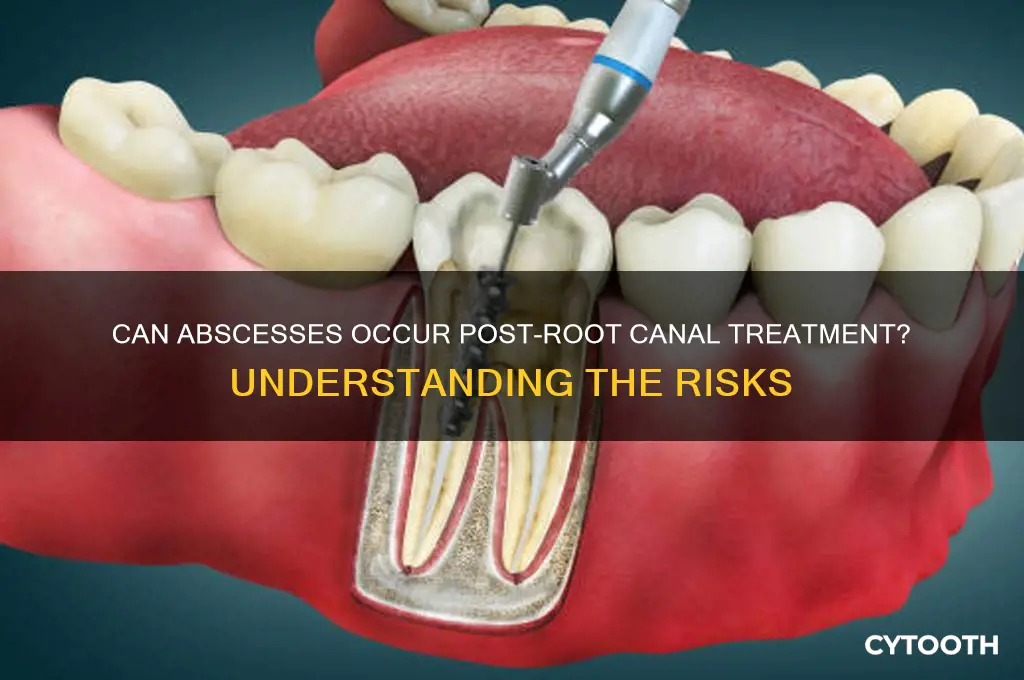
After undergoing a root canal procedure, patients often wonder about potential complications, including the possibility of developing an abscess. An abscess is a painful infection that occurs when bacteria infiltrate the tooth or surrounding tissues, leading to the accumulation of pus. While root canals are designed to remove infected pulp and seal the tooth to prevent further infection, there are instances where bacteria may persist or re-enter the treated area, potentially resulting in an abscess. Factors such as incomplete cleaning during the procedure, cracks in the tooth, or a compromised immune system can increase the risk. Recognizing symptoms like persistent pain, swelling, or fever is crucial, as early intervention can prevent more serious complications. Understanding the causes and signs of an abscess post-root canal is essential for maintaining oral health and addressing issues promptly.
| Characteristics | Values |
|---|---|
| Possibility of Abscess After Root Canal | Yes, it is possible to develop an abscess after a root canal, though it is rare. |
| Causes | - Residual Infection: Bacteria remaining in the tooth or surrounding tissues. - Failed Root Canal: Incomplete cleaning or sealing of the canals. - Cracked Tooth: Allows bacteria to re-enter. - Re-infection: New decay or gum disease. |
| Symptoms | - Swelling around the tooth or face. - Severe, persistent toothache. - Pus drainage. - Fever. - Bad taste or odor in the mouth. - Sensitivity to pressure or temperature. |
| Risk Factors | - Delayed treatment of initial infection. - Poor oral hygiene. - Weakened immune system. - Complex root canal anatomy. |
| Prevention | - Proper root canal procedure by an experienced dentist. - Good oral hygiene practices. - Regular dental check-ups. - Prompt treatment of dental issues. |
| Treatment | - Antibiotics: To control infection. - Drainage: Incision to drain the abscess. - Root Canal Retreatment: Re-cleaning and sealing the canals. - Tooth Extraction: If saving the tooth is not possible. |
| Prognosis | With timely and appropriate treatment, most cases resolve without complications. |
| Frequency | Rare, as root canals are generally successful in eliminating infection. |
What You'll Learn

Causes of post-root canal abscesses
Post-root canal abscesses, though relatively rare, can occur due to several specific factors that compromise the integrity of the treated tooth or the surrounding tissues. One primary cause is residual infection left behind during the root canal procedure. Despite the dentist’s best efforts to remove all infected pulp and bacteria, microscopic remnants can persist in the intricate canal system or hidden accessory canals. Over time, these remnants multiply, leading to reinfection and abscess formation. This risk is higher in teeth with complex anatomy, such as molars, where thorough disinfection is more challenging.
Another significant cause is bacterial microleakage, which occurs when the root canal filling material (gutta-percha) or the temporary or permanent restoration (crown or filling) fails to seal the tooth completely. Saliva, bacteria, or debris can then infiltrate the treated area, reintroducing infection. This is particularly common if the final restoration is delayed or if the temporary filling deteriorates. For instance, a study published in the *Journal of Endodontics* found that teeth without permanent restorations within 30 days of root canal treatment were twice as likely to develop post-treatment abscesses.
Technical errors during the root canal procedure also play a critical role. Inadequate cleaning, shaping, or obturation of the root canal system can leave pockets of infection or create voids where bacteria thrive. Similarly, perforations of the tooth or root during treatment can expose the surrounding tissues to bacteria, leading to abscess formation. Dentists with less experience or those working under challenging conditions (e.g., limited visibility or patient movement) are more prone to such errors, underscoring the importance of skilled and meticulous care.
Lastly, patient-related factors contribute to the risk of post-root canal abscesses. Poor oral hygiene allows bacteria to accumulate around the treated tooth, increasing the likelihood of reinfection. Systemic conditions such as diabetes or immunocompromised states impair the body’s ability to fight infection, making abscesses more probable. Additionally, habits like smoking or chewing tobacco reduce blood flow to the gums, hindering healing and increasing susceptibility to infection. Patients must adhere to post-treatment care instructions, including maintaining oral hygiene and attending follow-up appointments, to minimize these risks.
Understanding these causes empowers both dentists and patients to take proactive measures. Dentists can improve outcomes by ensuring thorough disinfection, precise technique, and timely placement of permanent restorations. Patients, meanwhile, can reduce their risk by practicing diligent oral hygiene, avoiding harmful habits, and promptly addressing any post-treatment discomfort or swelling. While post-root canal abscesses are uncommon, awareness of these causes can help prevent this painful and potentially serious complication.
Pregnancy and Dental Care: Is It Safe to Fill a Tooth?
You may want to see also
Symptoms to watch for after treatment
After a root canal, your mouth is in a delicate state, and vigilance is key to ensuring a smooth recovery. While the procedure itself aims to eliminate infection, rare cases of post-treatment abscesses can occur, making it crucial to monitor specific symptoms. One of the earliest signs of trouble is persistent or worsening pain. Unlike the expected discomfort that gradually subsides within a few days, pain that intensifies or fails to improve with over-the-counter pain relievers like ibuprofen (600–800 mg every 6–8 hours, as directed by your dentist) could indicate an abscess. This pain may radiate to the jaw, ear, or head, signaling infection spreading beyond the tooth.
Another red flag is swelling in the face or gums. Mild swelling is common immediately after a root canal, but if it worsens, spreads, or is accompanied by redness and warmth, it may suggest an abscess. For instance, if the swelling extends to the cheek or neck, or if you notice a pimple-like bump on the gums (a dental fistula), seek immediate dental attention. Applying a cold compress for 15–20 minutes at a time can help reduce swelling temporarily, but it’s not a substitute for professional care.
Fever and general malaise are systemic symptoms that should never be ignored. A low-grade fever (above 100.4°F or 38°C) paired with fatigue, chills, or flu-like symptoms could indicate that the infection has entered the bloodstream, a condition known as sepsis. This is a medical emergency requiring prompt antibiotic treatment, typically prescribed as amoxicillin (500 mg every 8 hours for adults) or clindamycin (300 mg every 6 hours) if allergic to penicillin.
Lastly, pay attention to unusual discharge or taste. If you notice a foul-smelling or bad-tasting fluid draining from the treated tooth, it’s a clear sign of infection. This pus may be visible when pressing on the gums or may leave a persistent bitter taste in your mouth. While it’s tempting to rinse vigorously, avoid aggressive mouthwash use, as it can irritate the site. Instead, gently rinse with warm salt water (1/2 teaspoon of salt in 8 ounces of water) to keep the area clean and soothe irritation.
In summary, post-root canal symptoms like worsening pain, spreading swelling, fever, or unusual discharge demand immediate attention. Early detection and treatment can prevent complications, ensuring the procedure’s success and your overall well-being. Always follow your dentist’s aftercare instructions and report any concerning symptoms promptly.
Pregnancy and Dental Implants: What You Need to Know
You may want to see also
Prevention methods during and after procedure
During a root canal procedure, meticulous adherence to sterile techniques is paramount to prevent abscess formation. The dentist must ensure all instruments are fully sterilized and the treatment area is isolated using a rubber dam to minimize bacterial contamination. Even a single stray bacterium can compromise the success of the procedure, leading to infection and potential abscess development. This step, though seemingly routine, is a critical line of defense against post-operative complications.
After the root canal is completed, proper medication management becomes a key preventive measure. Dentists often prescribe antibiotics, such as amoxicillin (500 mg every 8 hours for adults) or clindamycin (300 mg every 6 hours for those allergic to penicillin), to combat any residual bacteria. Pain management with anti-inflammatory medications like ibuprofen (600 mg every 6 hours) can reduce swelling and discomfort, but it’s crucial to follow the prescribed dosage to avoid masking symptoms of infection. Over-the-counter options should never replace professional advice, especially in high-risk cases.
Patient compliance with post-procedure care instructions is equally vital. Avoiding chewing on the treated tooth until the final restoration is in place prevents mechanical irritation and potential reinfection. Maintaining excellent oral hygiene, including gentle brushing and flossing around the treated area, ensures debris doesn’t accumulate and exacerbate bacterial growth. For the first 24 hours, rinsing with warm saltwater (1/2 teaspoon of salt in 8 ounces of water) can aid healing without disrupting the treatment site.
Comparatively, patients who neglect follow-up appointments are at significantly higher risk for abscesses. A timely placement of a permanent crown or filling seals the tooth, preventing bacteria from re-entering the root canal system. Skipping this step leaves the tooth vulnerable, even if the initial procedure was successful. Think of it as leaving a door ajar in a sterile room—eventually, contaminants will find their way in. Regular dental check-ups, especially within the first six months post-procedure, act as a safeguard against such oversights.
Finally, lifestyle adjustments play an underappreciated role in prevention. Smoking, for instance, impairs blood flow to the gums, slowing healing and increasing infection risk. Limiting alcohol consumption and maintaining a balanced diet rich in vitamins C and D supports immune function and tissue repair. While these changes may seem unrelated to the procedure itself, they create an internal environment less hospitable to bacterial growth, reducing the likelihood of abscess formation. Prevention, in this context, is as much about external care as it is about internal resilience.
Pregnancy and Dental Care: Is Tooth Extraction Safe for Expecting Moms?
You may want to see also
Treatment options for recurring infections
Recurring infections after a root canal often signal persistent bacterial presence or incomplete treatment. Addressing these requires a targeted approach, combining antimicrobial therapy, surgical intervention, and preventive measures. Antibiotics like amoxicillin (500 mg, three times daily for 7–10 days) or clindamycin (300 mg, four times daily for adults) are typically prescribed to combat infection, but they must be paired with definitive dental procedures to eliminate the source. Relying solely on antibiotics without addressing the root cause—such as a missed canal or fractured tooth—will lead to relapse.
Surgical options, such as apicoectomy or root-end resection, are often necessary for cases where conventional root canal retreatment fails. During an apicoectomy, the dentist removes the infected tissue at the tooth’s apex and seals the root end with a biocompatible material like MTA (mineral trioxide aggregate). This procedure boasts a success rate of 85–90% but requires precise execution and post-operative care, including avoiding hard foods for 2–3 weeks. For patients with systemic conditions like diabetes or immunocompromised states, collaboration with a physician to optimize health before surgery is critical.
Non-surgical retreatment is another viable option, involving the removal of the original root canal filling, thorough disinfection with irrigants like sodium hypochlorite (5.25% solution), and re-obliteration of the canal. This method is less invasive than surgery but demands meticulous technique to ensure all infected material is cleared. Patients should be aware that retreatment success depends heavily on the dentist’s expertise and the extent of the initial damage. A cone-beam CT scan may be recommended to assess complex anatomies before proceeding.
Preventive strategies play a pivotal role in avoiding recurrence. Patients must maintain impeccable oral hygiene, including daily flossing and using antimicrobial mouthwash like chlorhexidine (0.12% solution, twice daily for 2 weeks post-treatment). Regular follow-ups every 6 months are essential to monitor healing and detect early signs of reinfection. For those with a history of multiple infections, probiotics containing *Lactobacillus reuteri* (200 million CFU daily) may help restore oral microbiota balance, though evidence is still emerging.
Ultimately, the choice of treatment hinges on the infection’s severity, the tooth’s strategic importance, and the patient’s overall health. While antibiotics and retreatment address immediate concerns, long-term success requires a holistic approach, integrating patient education, advanced diagnostics, and proactive dental care. Ignoring recurring infections risks systemic complications, such as abscesses spreading to facial spaces or bloodstream, underscoring the urgency of decisive intervention.
Missing Tooth? Here’s How Braces Can Still Work for You
You may want to see also
Risk factors for abscess development post-treatment
While root canal treatment is highly effective at saving infected teeth, abscesses can still develop post-procedure. Understanding the risk factors empowers patients and dentists to take proactive measures. One critical factor is residual infection. Even with meticulous cleaning, bacteria can persist in the intricate canal system or surrounding tissues. This is particularly true for cases with extensive infection, calcified canals, or missed accessory canals. Dentists employ advanced techniques like ultrasonic instrumentation and antimicrobial irrigation, but complete eradication isn’t always guaranteed. Patients with compromised immune systems, such as those on immunosuppressive medications or with uncontrolled diabetes, face higher risks due to reduced ability to combat lingering bacteria.
Another significant risk factor is poor restoration following root canal treatment. A temporary filling or crown that doesn’t seal the tooth properly can allow bacteria to re-enter the treated area. Delayed placement of a permanent crown, often due to patient procrastination or financial constraints, leaves the tooth vulnerable. Saliva and debris can seep into the access cavity, reintroducing infection. Dentists emphasize the importance of completing the restoration promptly, typically within 2–3 weeks of root canal therapy. Patients should prioritize this step to minimize the risk of abscess recurrence.
Technical challenges during the procedure also contribute to post-treatment abscesses. For instance, overfilling or underfilling of the root canal with gutta-percha can compromise the seal, leaving voids where bacteria thrive. Similarly, ledges or perforations created during instrumentation can trap bacteria and prevent proper disinfection. While rare, these complications highlight the need for experienced endodontists and advanced imaging, such as cone-beam computed tomography (CBCT), to ensure precise treatment. Patients with complex anatomy or previous dental work are at higher risk and may require specialist referral.
Lastly, patient-related factors play a role in abscess development. Poor oral hygiene allows plaque and bacteria to accumulate, increasing the likelihood of reinfection. Smoking impairs blood flow and delays healing, creating an environment conducive to infection. Certain systemic conditions, like Sjögren’s syndrome, reduce saliva production, depriving the mouth of its natural antimicrobial defense. Patients should maintain rigorous oral care post-treatment, including twice-daily brushing, flossing, and regular dental check-ups. Avoiding smoking and managing underlying health conditions are equally vital in preventing complications.
In summary, while root canal treatment is a reliable solution for infected teeth, abscesses can occur post-treatment due to residual infection, inadequate restoration, technical errors, and patient-related factors. Awareness of these risks allows for targeted interventions, such as advanced disinfection techniques, timely permanent restorations, and improved patient compliance. By addressing these factors, both dentists and patients can significantly reduce the likelihood of abscess development and ensure long-term tooth health.
Where to Get a Gold Tooth Implant: Top Clinics and Options
You may want to see also
Frequently asked questions
Yes, it is possible to develop an abscess after a root canal, though it is rare. This can occur if the infection was not fully removed during the procedure or if bacteria re-enter the treated tooth.
Symptoms include severe pain, swelling in the face or gums, fever, a pimple-like bump on the gums (draining pus), and a bad taste in the mouth.
Treatment may involve draining the abscess, prescribing antibiotics to fight infection, and possibly re-treating the root canal or performing a surgical procedure like an apicoectomy.
Follow your dentist’s post-procedure care instructions, maintain good oral hygiene, attend regular dental check-ups, and address any persistent pain or discomfort immediately.