Olivia Bennett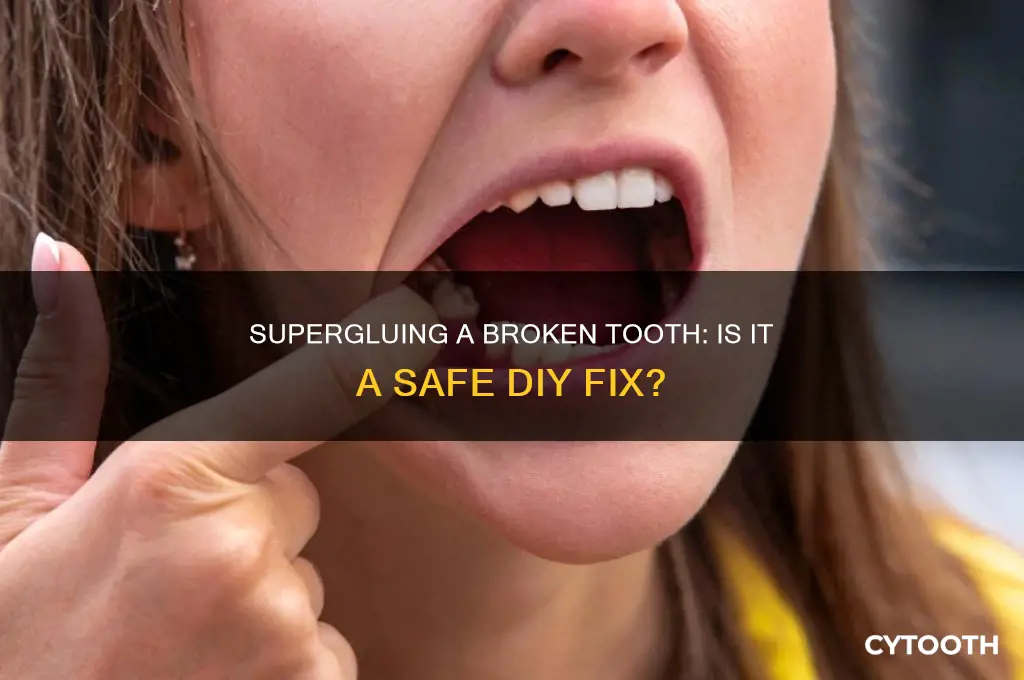
Supergluing a broken tooth is a question that often arises in emergencies, but it’s important to approach this with caution. While superglue can temporarily hold a fractured tooth together, it is not a safe or recommended long-term solution. Dental-grade adhesives used by professionals are specifically designed for oral use, whereas household superglue may contain harmful chemicals and lack the necessary biocompatibility. Attempting to fix a broken tooth with superglue can lead to complications such as gum irritation, infection, or further damage to the tooth structure. Instead, it’s crucial to seek immediate professional dental care to address the issue properly and ensure the best possible outcome for oral health.
| Characteristics | Values |
|---|---|
| Safety | Not recommended; superglue is toxic and not intended for dental use. |
| Temporary Fix | May hold temporarily but is not a long-term solution. |
| Dental Professional Recommendation | Dentists strongly advise against using superglue for broken teeth. |
| Risk of Infection | High risk due to chemicals in superglue and improper application. |
| Alternative Solutions | Dental cement, temporary dental filling kits, or immediate dental visit. |
| Pain and Discomfort | Superglue can cause irritation, burns, or allergic reactions in the mouth. |
| Durability | Very low; superglue is not designed to withstand oral conditions. |
| Cost-Effectiveness | Cheap but ineffective and potentially harmful compared to professional care. |
| Aesthetic Appearance | Poor; superglue may not match the natural color or shape of the tooth. |
| Long-Term Effects | Can damage tooth structure, gums, and overall oral health. |
What You'll Learn
- Superglue Safety for Teeth: Is it safe to use superglue on a broken tooth
- Temporary Fix Options: How to temporarily fix a broken tooth with superglue
- Dental Risks: Potential risks of using superglue on a broken tooth
- Professional Alternatives: When to see a dentist instead of using superglue
- Superglue vs. Dental Adhesives: Comparing superglue to professional dental adhesives for repairs

Superglue Safety for Teeth: Is it safe to use superglue on a broken tooth?
Superglue contains cyanoacrylate, a fast-acting adhesive that bonds skin, plastic, and even teeth. While it might seem like a quick fix for a broken tooth, its safety and effectiveness in the mouth are questionable. Dental professionals warn against using superglue for tooth repair due to potential risks, including chemical burns, allergic reactions, and long-term damage to tooth structure. Unlike dental-grade adhesives, superglue is not designed for oral use and lacks biocompatibility, meaning it may not interact safely with oral tissues.
If you’re considering superglue as a temporary solution, proceed with extreme caution. First, clean the broken tooth gently with warm water to remove debris. Apply a minimal amount of superglue only to the fractured surface, avoiding contact with gums or other teeth. Hold the pieces together firmly for at least 60 seconds to ensure bonding. However, this is strictly a stopgap measure. Superglue does not address underlying issues like infection or nerve damage, and it can complicate professional repairs. Seek dental care immediately, as prolonged use of superglue on a tooth can lead to irreversible harm.
Comparing superglue to professional dental adhesives highlights its limitations. Dental adhesives, such as those used in bonding or temporary crowns, are formulated to be non-toxic, durable, and compatible with oral environments. They also allow for proper reshaping and polishing of the tooth, ensuring functionality and aesthetics. Superglue, on the other hand, hardens rigidly and can create sharp edges or uneven surfaces, increasing the risk of injury or further breakage. Its chemical composition may also degrade over time, especially when exposed to saliva and chewing forces.
Persuasively, the risks of using superglue on a broken tooth far outweigh the convenience. Chemical burns from cyanoacrylate can cause pain, swelling, and tissue damage, particularly if it comes into contact with gums or lips. Allergic reactions, though rare, can lead to severe discomfort or systemic issues. Moreover, superglue can trap bacteria within the tooth, increasing the risk of infection or abscess. Instead of risking these complications, opt for over-the-counter dental cement as a temporary measure until you can see a dentist. These products are specifically designed for oral use and pose fewer hazards.
In conclusion, while superglue might seem like a handy solution for a broken tooth, its use in the mouth is unsafe and ill-advised. The potential for chemical burns, allergic reactions, and long-term damage makes it a poor substitute for professional dental care. If you’re in a pinch, use dental cement as a temporary fix and prioritize scheduling a dental appointment. Your oral health is too important to gamble with household adhesives. Always consult a dentist for proper diagnosis and treatment to ensure the best outcome for your broken tooth.
Can Adult Teeth Regenerate? Exploring the Science Behind Tooth Regrowth
You may want to see also
Temporary Fix Options: How to temporarily fix a broken tooth with superglue
Superglue can seem like a quick fix for a broken tooth, especially in emergencies. Its cyanoacrylate base bonds rapidly to surfaces, including tooth enamel, offering a temporary hold. However, this method is not without risks. While it might seem convenient, superglue is not designed for oral use and can lead to irritation, chemical burns, or even more damage to the tooth or surrounding tissues. Despite these risks, some people still consider it as a stopgap measure before professional dental care.
If you’re contemplating using superglue as a temporary fix, follow these steps cautiously. First, clean the broken tooth and your hands thoroughly to avoid introducing bacteria. Apply a minimal amount of superglue to the fractured edge, ensuring it doesn’t touch gums or other soft tissues. Hold the pieces together firmly for 30–60 seconds until the glue sets. Avoid eating or drinking for at least an hour to let the bond stabilize. This fix is strictly temporary—it won’t withstand chewing forces for long and can degrade in a moist environment like the mouth.
Comparing superglue to dental-specific adhesives highlights its limitations. Dental adhesives, like those in temporary filling kits, are formulated for oral safety and durability. They often contain eugenol or zinc oxide, which are biocompatible and less likely to cause harm. Superglue, on the other hand, lacks these properties and can harden too quickly, trapping bacteria or debris between the tooth surfaces. While it might hold a chip or crack momentarily, it’s no substitute for professional materials.
The takeaway is clear: superglue should only be used as a last resort in dire situations, such as when immediate dental care is inaccessible. Even then, it’s crucial to see a dentist as soon as possible. Prolonged use of superglue can complicate repairs, as dentists may need to remove the hardened adhesive before treating the tooth. Always prioritize dental-approved solutions, but if superglue is your only option, use it sparingly and seek professional help promptly.
Can You Glue a Tooth Back In? Dental Emergency Tips
You may want to see also
Dental Risks: Potential risks of using superglue on a broken tooth
Superglue contains cyanoacrylate, a chemical that bonds rapidly to surfaces, including skin and teeth. While it might seem like a quick fix for a broken tooth, this adhesive is not designed for oral use. The risks of applying superglue to a tooth far outweigh any temporary benefits, and the consequences can be severe and long-lasting.
From an analytical perspective, the primary danger lies in the glue's toxicity and its interaction with oral tissues. Cyanoacrylate can cause chemical burns, irritation, and allergic reactions when it comes into contact with gums, lips, or the tongue. If ingested, even in small amounts, it can lead to gastrointestinal issues, such as nausea, vomiting, or diarrhea. For children or individuals with sensitive oral cavities, the risks are amplified, potentially resulting in more severe complications.
Consider the following scenario: a small child accidentally breaks a tooth and, in a panic, a parent applies superglue as a temporary solution. The child might bite their lip or tongue, leading to glued soft tissues, which can be extremely painful and difficult to separate. In such cases, immediate medical attention is required to prevent further damage. This example highlights the importance of understanding the potential hazards before attempting any at-home dental repairs.
A comparative analysis reveals that professional dental adhesives, used by dentists for repairs, are specifically formulated for oral safety. These materials are biocompatible, meaning they are designed to coexist with living tissues without causing harm. In contrast, superglue is not regulated for dental use and can lead to infection, tooth decay, or even tooth loss if used improperly. The temporary bond it provides may seem appealing, but it can hinder proper dental treatment and exacerbate the original issue.
To mitigate these risks, it is crucial to seek professional dental care for any tooth fractures or damage. Dentists have the expertise and tools to assess the extent of the injury and provide appropriate treatment, such as dental bonding, crowns, or veneers. These procedures not only restore the tooth's appearance but also ensure its functionality and long-term health. While superglue might offer a temporary aesthetic fix, it is not a substitute for proper dental care and can lead to more extensive and costly treatments in the future.
Can One Tooth Have Multiple Cavities? Surprising Dental Truths Revealed
You may want to see also
Professional Alternatives: When to see a dentist instead of using superglue
Superglue might seem like a quick fix for a broken tooth, but its adhesive properties are not designed for the complex, moist environment of the mouth. While it may temporarily hold a fragment in place, it can trap bacteria, irritate gums, or even cause an allergic reaction. For these reasons, professional dental care is almost always the safer, more effective option.
Dentists have access to specialized materials like composite resins, porcelain, and dental cements that bond securely to tooth structure without compromising oral health. These materials are biocompatible, meaning they’re designed to coexist harmlessly within the body, unlike superglue, which can degrade or release toxins over time.
Consider this scenario: a chipped front tooth. A dentist might use a composite resin, carefully shaded to match the natural tooth color, to rebuild the missing structure. This process involves etching the tooth surface, applying the resin in layers, and curing it with a special light. The result is a seamless repair that restores both function and aesthetics. Superglue, on the other hand, would likely leave a visible, uneven surface prone to further damage.
Knowing when to skip the DIY approach and seek professional help is crucial. If the break is painful, exposes the inner layers of the tooth (dentin or pulp), or affects biting and chewing, immediate dental attention is necessary. Even minor chips or cracks warrant a dentist visit, as they can worsen over time, leading to more extensive—and expensive—repairs. For children under 12, whose teeth are still developing, professional care is especially important to avoid disrupting natural growth patterns.
Here’s a practical tip: if you’re tempted to use superglue, try a temporary measure like covering the sharp edge with orthodontic wax (available at pharmacies) until you can see a dentist. Avoid chewing on the affected side and rinse your mouth with warm salt water to keep it clean. These steps can minimize discomfort and prevent further damage while you wait for professional treatment.
In summary, while superglue might appear convenient, its risks far outweigh its temporary benefits. Professional dental repairs offer durable, safe, and aesthetically pleasing solutions tailored to your specific needs. Prioritizing expert care ensures not only the longevity of your tooth but also the overall health of your mouth.
Fixing a Broken Tooth with a Filling: Repair Options Explained
You may want to see also
Superglue vs. Dental Adhesives: Comparing superglue to professional dental adhesives for repairs
Superglue, chemically known as cyanoacrylate, is a household adhesive often considered in emergencies for broken teeth due to its quick bonding properties. While it might seem like a temporary fix, using superglue in the mouth poses significant risks. Cyanoacrylate is not biocompatible, meaning it can irritate gums, damage oral tissues, and release toxic fumes when exposed to moisture. Additionally, its rigid bond lacks the flexibility needed to withstand the forces of chewing, potentially leading to further tooth fracture or discomfort. Despite its accessibility, superglue is not a safe or effective solution for dental repairs.
Professional dental adhesives, on the other hand, are specifically formulated for oral use, ensuring biocompatibility and safety. These adhesives, such as resin-based composites, are designed to bond to tooth structure while remaining flexible enough to handle the stresses of daily chewing. Dentists use these materials in controlled environments, applying them in precise quantities and curing them with specialized light to ensure a durable repair. For instance, a common dental adhesive like 3M ESPE Scotchbond Universal Adhesive is applied in thin layers, with a recommended application time of 20 seconds before light curing for optimal bonding strength. This level of precision and safety is unattainable with superglue.
Comparing the two, superglue’s immediate bonding strength might seem appealing, but it lacks the longevity and safety of dental adhesives. Dental adhesives not only bond effectively but also integrate with the tooth structure, promoting better durability and reducing the risk of complications. For example, a study in the *Journal of Dental Research* found that resin-based dental adhesives maintain 85% of their bond strength after 5 years, whereas superglue’s bond degrades significantly within months due to saliva and chewing forces. This highlights the importance of using materials designed for oral environments.
If faced with a broken tooth, the best course of action is to avoid superglue entirely and seek professional dental care immediately. As a temporary measure, cover sharp edges with orthodontic wax or sugar-free gum to prevent injury to the mouth. A dentist can assess the damage and recommend appropriate repairs, such as bonding, crowns, or veneers, using materials like composite resin or porcelain. These solutions not only restore function but also ensure aesthetic appeal and long-term oral health, something superglue cannot achieve. In dental emergencies, professional intervention always trumps DIY fixes.
Can You Spot a Tooth Filling Without a Microscope?
You may want to see also
Frequently asked questions
While superglue can temporarily hold a broken tooth fragment in place, it is not recommended. Dental-grade adhesives are safer and more effective for temporary repairs.
Superglue is not designed for dental use and can be toxic if ingested. It may also damage tooth enamel or gums, so it’s best to avoid it and seek professional dental care.
Rinse your mouth with warm water, save any broken pieces, and see a dentist immediately. They can provide a proper repair using dental materials like composite resin or a crown.