Matthew Grant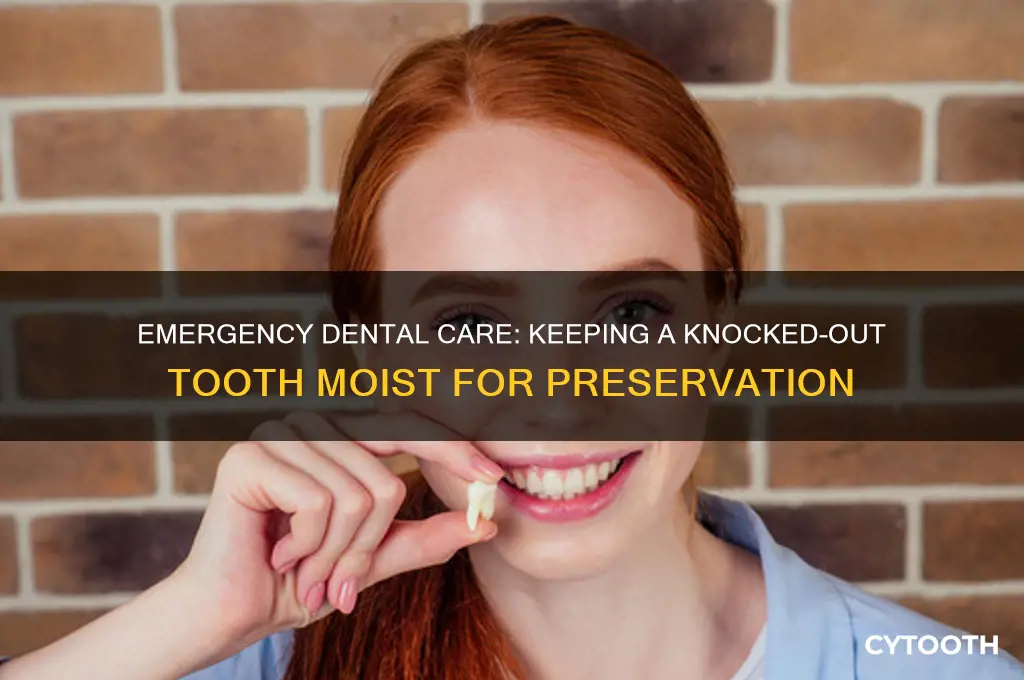
Keeping a knocked-out tooth moist is crucial for increasing the chances of successful reimplantation. When a tooth is dislodged, its root and delicate cells are exposed, making it essential to preserve the tooth’s viability until it can be professionally reattached. The best way to do this is by placing the tooth in a moist environment immediately after it is knocked out. Options include submerging it in milk, which provides nutrients and maintains pH balance, or using a saline solution or Hank’s Balanced Salt Solution (HBSS) if available. Alternatively, holding the tooth gently between the cheek and gum or placing it in the mouth (if the person is conscious and able) can also keep it moist. Avoid storing the tooth in water, as it can damage the root cells, and never let it dry out, as this can significantly reduce the chances of saving the tooth. Time is critical, so seek emergency dental care as soon as possible.
| Characteristics | Values |
|---|---|
| Storage Medium | Milk (preferably whole or 2%), saline solution, or Hank's Balanced Salt Solution (HBSS) |
| Avoidance | Water (can damage tooth cells), alcohol-based solutions, or air drying |
| Time Sensitivity | Reimplantation should occur within 30 minutes to 1 hour for best survival |
| Handling | Hold the tooth by the crown (top), not the root, to avoid damage |
| Transport | Keep the tooth in a sealed container with the chosen storage medium |
| Patient Age | Applicable to both children and adults with knocked-out permanent teeth |
| Emergency Care | Seek immediate dental care; do not delay reimplantation attempts |
| Alternative Method | If no storage medium is available, place the tooth inside the cheek (adults only) |
| Temperature | Keep the storage medium at room temperature or slightly cool (not frozen) |
| Root Protection | Avoid scrubbing or cleaning the root surface; gently rinse with saline if visibly dirty |
| Child Safety | For children, do not place the tooth inside the cheek; use milk or saline instead |
What You'll Learn
- Use Milk or Saline: Submerge tooth in cold milk or saline solution to preserve it
- Store in Mouth: Place tooth between cheek and gum, avoiding swallowing
- Use Tooth Preservation Kit: Use a kit with storage liquid for safe keeping
- Avoid Tap Water: Never soak tooth in tap water; it can damage cells
- Act Quickly: Keep tooth moist and seek dental help within 30 minutes

Use Milk or Saline: Submerge tooth in cold milk or saline solution to preserve it
Milk and saline solutions are go-to options for preserving a knocked-out tooth because they mimic the natural environment of the mouth, keeping the tooth's root cells alive until reimplantation. Cold milk, with its balanced pH and nutrient content, provides a protective medium that prevents the tooth from drying out. Similarly, a saline solution, made by dissolving ½ teaspoon of salt in a cup of warm water, offers an isotonic environment that safeguards the tooth's delicate cells. Both methods are widely recommended by dental professionals as effective, accessible, and safe for all age groups, from children to adults.
Steps to Use Milk or Saline:
- Retrieve the tooth by handling it only by the crown (the white part), not the root.
- Gently rinse the tooth with sterile saline or cold milk if visibly dirty, avoiding tap water, which can damage cells.
- Submerge the tooth in a small container filled with cold milk or freshly prepared saline solution.
- Keep it cold by placing the container in a cooler or insulated bag if transport to a dentist takes longer than 30 minutes.
- Avoid storage solutions like alcohol or honey, which are harmful to tooth cells.
Cautions and Considerations:
While milk and saline are ideal, they are not perfect substitutes for the natural socket. Time is critical—the tooth's survival rate drops significantly after 60 minutes outside the mouth. For children under 12, whose teeth are still developing, reimplantation within 20 minutes is crucial. Additionally, if milk or saline is unavailable, placing the tooth between the cheek and gum (for adults only) or rushing to a dentist without any storage medium is preferable to letting it dry out.
Comparative Analysis:
Milk often edges out saline due to its additional nutrients and proteins that support cell viability. However, saline is hypoallergenic and a better choice for individuals with lactose intolerance or dairy allergies. Both methods outperform tap water, which can cause root cells to swell and die, or worse alternatives like soda or juice, which accelerate decay. In emergencies, either milk or saline is a reliable choice, but milk’s slight advantage makes it the preferred option when available.
Practical Tips for Success:
Always keep a small container with a lid in your first-aid kit for such emergencies. If using saline, prepare it fresh each time to avoid contamination. For families with young children, pre-measure salt packets and store them with a clean container for quick preparation. When transporting the tooth, ensure the container is sealed tightly to prevent spills. Finally, call your dentist immediately—most offer emergency services and can guide you through the process while preparing for reimplantation.
Tooth Gems and Brushing: A Safe Dental Care Combination?
You may want to see also
Store in Mouth: Place tooth between cheek and gum, avoiding swallowing
One of the most immediate and effective ways to preserve a knocked-out tooth is to store it in your mouth, specifically between the cheek and gum. This method leverages the body’s natural environment to keep the tooth moist and viable for reimplantation. Saliva contains enzymes and proteins that help protect the tooth’s root surface and maintain its integrity, increasing the chances of successful reattachment by a dentist. However, this approach requires careful execution to avoid accidental swallowing or damage to the tooth.
To implement this method, gently pick up the tooth by its crown (the white part), avoiding contact with the root, as it is delicate and easily damaged. Place the tooth between your cheek and gum, ensuring it is secure but not forced. This area provides a safe, moist environment without exposing the tooth to digestive enzymes or bacteria from other parts of the mouth. For children or individuals at risk of swallowing the tooth, this step should be supervised by an adult or avoided in favor of other preservation methods, such as storing the tooth in milk or a specialized tooth preservation kit.
While storing the tooth in the mouth is a practical solution, it is not without risks. The primary concern is accidental swallowing, which can occur if the tooth is not properly positioned or if the individual becomes distracted. Additionally, prolonged storage in the mouth may not be suitable for extended periods, as saliva alone may not provide sufficient nutrients to sustain the tooth’s cells. Time is critical in such situations, and this method should only be used as a temporary measure while en route to a dentist, ideally within 30 minutes of the injury.
A comparative analysis of this method reveals its advantages and limitations. Unlike storing the tooth in water, which can cause cells on the root surface to burst due to osmotic pressure, saliva provides a balanced environment that supports cellular survival. However, it falls short compared to specialized storage mediums like Hank’s Balanced Salt Solution (HBSS) or milk, which offer additional nutrients and stability. For individuals without access to these alternatives, the cheek-and-gum method remains a viable, if imperfect, option.
In conclusion, storing a knocked-out tooth between the cheek and gum is a simple yet effective way to keep it moist and viable for reimplantation. It requires minimal preparation and utilizes the body’s natural resources, making it an accessible solution in emergencies. However, it should be executed with caution to avoid swallowing and should only serve as a temporary measure until professional dental care can be obtained. When time is of the essence, this method can make the difference between saving and losing a tooth.
Can You Spot a Tooth Filling Without a Microscope?
You may want to see also
Use Tooth Preservation Kit: Use a kit with storage liquid for safe keeping
A knocked-out tooth is a dental emergency, and time is critical. Every minute counts in preserving the tooth for successful reimplantation. While milk or saliva can temporarily keep the tooth moist, a tooth preservation kit offers a scientifically formulated solution designed specifically for this purpose.
These kits typically contain a sterile, balanced salt solution that mimics the natural environment of the mouth, providing essential nutrients and maintaining the tooth's viability.
Tooth preservation kits are readily available at most pharmacies and dental offices. They are compact, portable, and easy to use, making them ideal for emergency situations. The kits usually include a small container filled with the storage liquid and detailed instructions for proper use. It's crucial to follow these instructions carefully to ensure the best possible outcome.
Generally, the tooth should be gently rinsed with the solution, placed root-side down in the container, and fully submerged in the liquid.
The storage liquid in these kits is specifically formulated to maintain the tooth's cellular integrity. It contains a balanced mix of salts, sugars, and other nutrients that help prevent cell damage and keep the tooth alive. This is particularly important for avulsed teeth, as the cells within the tooth's root are responsible for reattaching it to the jawbone after reimplantation. By providing a suitable environment, the storage liquid significantly increases the chances of successful reattachment.
For optimal results, the tooth should be placed in the storage liquid as soon as possible after the injury, ideally within 5 minutes. The kit can then be transported to the dentist, where the tooth can be properly cleaned, examined, and reimplanted.
While tooth preservation kits are highly effective, it's important to remember that they are not a substitute for immediate dental care. Time is of the essence, and seeking professional help as soon as possible is crucial. Dentists have the expertise and equipment to properly handle the reimplantation process, maximizing the chances of saving the tooth. Keep a tooth preservation kit in your first-aid supplies, especially if you or your family members are involved in high-risk activities. Being prepared can make all the difference in a dental emergency.
Can You Superglue a Tooth? Risks, Alternatives, and Dental Advice
You may want to see also
Avoid Tap Water: Never soak tooth in tap water; it can damage cells
Tap water, despite its ubiquitous presence in our daily lives, is not a suitable medium for preserving a knocked-out tooth. The reason lies in its composition: tap water contains various minerals, chemicals, and microorganisms that can be harmful to the delicate cells of the tooth. When a tooth is knocked out, its root surface is exposed, making it vulnerable to damage from these foreign substances. Soaking the tooth in tap water can lead to cell dehydration, mineral imbalance, and even bacterial contamination, ultimately reducing the chances of successful reimplantation.
From an analytical perspective, the issue with tap water stems from its variability. The quality and composition of tap water differ significantly depending on geographical location, treatment processes, and infrastructure. While some areas may have relatively clean tap water, others might contain high levels of chlorine, fluoride, or heavy metals. These substances can disrupt the tooth's cellular structure, causing irreversible damage. For instance, chlorine, commonly used as a disinfectant, can be toxic to cells in high concentrations, while excessive fluoride exposure can lead to mineralization imbalances. Given these uncertainties, it's clear that tap water is not a reliable option for keeping a knocked-out tooth moist.
If you find yourself in a situation where a tooth has been knocked out, it's crucial to act quickly and avoid using tap water. Instead, consider the following alternatives: milk, saline solution, or a specialized tooth preservation product. Milk, particularly whole milk, provides a balanced environment that helps maintain the tooth's cellular integrity. It contains essential nutrients, such as calcium and phosphate, which support cell survival. For children and adults alike, placing the tooth in a small container of cold milk (not flavored or sweetened) can be an effective temporary solution. Ensure the milk is cold, as room temperature or warm milk may promote bacterial growth.
A comparative analysis of preservation methods highlights the superiority of milk and saline solution over tap water. Saline solution, which mimics the body's natural fluid composition, is another excellent option. You can create a simple saline solution by dissolving 1/2 teaspoon of salt in 1 cup of warm distilled water, then allowing it to cool. This solution provides a gentle, isotonic environment that minimizes cell damage. Specialized tooth preservation products, often available at pharmacies, are also designed to maintain the tooth's viability. These products typically contain a balanced mix of nutrients, growth factors, and antimicrobial agents, ensuring optimal conditions for cell survival.
In conclusion, avoiding tap water is a critical step in preserving a knocked-out tooth. By understanding the potential risks associated with tap water and opting for safer alternatives like milk, saline solution, or specialized preservation products, you can significantly increase the chances of successful reimplantation. Remember, time is of the essence – act quickly, handle the tooth gently, and seek professional dental care as soon as possible. By following these guidelines, you'll be better equipped to respond to a dental emergency and potentially save a knocked-out tooth.
Can You Glue a Tooth Back In? Dental Emergency Tips
You may want to see also
Act Quickly: Keep tooth moist and seek dental help within 30 minutes
Time is of the essence when a tooth is knocked out. The survival of the tooth outside the mouth is measured in minutes, not hours. Every second counts, and the first 30 minutes are critical. This is because the cells on the root surface of the tooth, which are essential for reattachment, begin to die after just 15 minutes of dry storage. Therefore, the primary goal is to keep the tooth moist and seek emergency dental care immediately.
Steps to Keep a Knocked-Out Tooth Moist:
- Handle the Tooth Carefully: Pick up the tooth by the crown (the white part), not the root. Touching the root can damage the delicate cells needed for reattachment.
- Rinse Gently (if dirty): If the tooth is visibly dirty, rinse it briefly with milk or saline solution. Do not scrub or use soap, as this can harm the root surface.
- Store in Milk or Saline: Place the tooth in a small container of cold whole milk (the best option) or saline solution. If neither is available, use the person’s saliva (e.g., by spitting into a cup) or hold the tooth gently between the cheek and gum, ensuring it stays moist.
- Avoid Tap Water: Do not store the tooth in tap water, as it lacks the necessary nutrients and can cause the root cells to burst.
Cautions to Consider:
While keeping the tooth moist is crucial, avoid wrapping it in tissue or cloth, as this can dry it out. Also, do not attempt to clean the tooth with alcohol or peroxide, as these substances are toxic to the root cells. For children or adults who cannot safely hold the tooth in their mouth, milk or saline storage is the safest option.
Acting within the first 30 minutes dramatically increases the chances of saving the tooth. By keeping it moist and seeking immediate dental care, you create the best possible conditions for successful reimplantation. Remember, the goal is not just to preserve the tooth but to ensure it can be reattached and function properly. Every minute counts—act quickly and decisively.
Super Glue for Teeth: Safe Emergency Fix or Dental Disaster?
You may want to see also
Frequently asked questions
Place the tooth in a container of milk or a saline solution to keep it moist and preserve the root.
Water is not ideal as it can damage the tooth’s root cells; instead, use milk, saline, or a tooth preservation product.
Wrapping in wet tissue or gauze can help, but it’s better to place the tooth in milk or saline for optimal preservation.
A knocked-out tooth can survive up to 60 minutes outside the mouth if kept moist and handled properly.
Storing the tooth in your cheek or under your tongue can help keep it moist, but avoid swallowing it and seek immediate dental care.