Olivia Bennett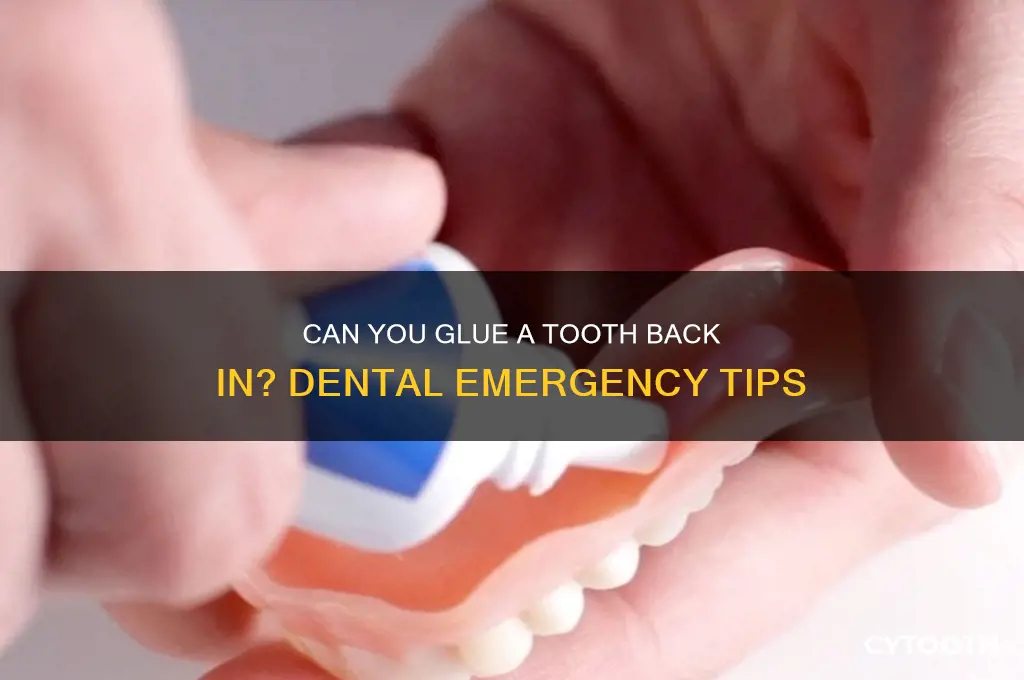
If you’ve accidentally knocked out a tooth, you might be wondering if you can simply glue it back in. While it’s understandable to want a quick fix, using household glue or any adhesive not specifically designed for dental use is highly dangerous and ineffective. Reattaching a natural tooth requires professional intervention, as dentists use specialized materials and techniques to ensure proper placement, stability, and safety. Attempting to glue a tooth back in at home can lead to infection, damage to the tooth or surrounding tissues, and long-term complications. Instead, it’s crucial to handle the situation promptly by preserving the tooth (if possible) and seeking immediate dental care for the best chance of saving it.
| Characteristics | Values |
|---|---|
| Safety | Not recommended; gluing a tooth back in at home can cause infection, nerve damage, or further tooth fracture. |
| Effectiveness | Temporary at best; glue is not a substitute for professional dental procedures like reimplantation or crowns. |
| Materials | Super glue, dental adhesive, or household glues (not designed for oral use). |
| Risks | Infection, allergic reactions, damage to gums, tooth loss, or complications requiring extensive dental work. |
| Professional Alternative | Dentist-performed reimplantation (for avulsed teeth within 30 minutes) or dental restoration (crowns, implants). |
| Cost | Home glue: inexpensive; Professional treatment: varies ($200–$5,000+ depending on procedure). |
| Duration | Glue: temporary (hours to days); Professional repair: long-term or permanent. |
| Pain Level | Gluing at home: may cause pain or sensitivity; Professional treatment: managed with anesthesia. |
| Success Rate | Home glue: very low; Professional treatment: high (especially for timely reimplantation). |
| Recommendation | Always consult a dentist immediately for a knocked-out or damaged tooth. |
What You'll Learn

Types of Dental Glue
Dental adhesives vary widely in composition and application, each designed for specific scenarios. Temporary dental cements like zinc oxide eugenol or glass ionomer are commonly used for short-term fixes, such as holding a crown in place until a dentist can provide a permanent solution. These materials are biocompatible and easy to remove but lack the durability needed for long-term use. For instance, zinc oxide eugenol is often recommended for its sedative properties, which can soothe sensitive teeth, but it should not be used in cases where a permanent bond is required.
In contrast, permanent dental adhesives, such as resin-based composites, are engineered for longevity and strength. These materials chemically bond to the tooth structure, creating a durable seal that can withstand chewing forces. Resin cements, for example, are frequently used in bonding crowns, bridges, and orthodontic appliances. However, their application requires precision and often involves etching the tooth surface to ensure a strong bond. This process is typically performed by a dental professional, as improper use can lead to tooth damage or adhesive failure.
Over-the-counter dental repair kits offer a third category of adhesives, often marketed for emergency use. These kits usually contain temporary cements or dental wax and are intended to provide temporary relief until professional care can be sought. While convenient, these products are not a substitute for professional treatment. For example, a common kit might include a small tube of temporary cement and a spatula for application, with instructions to clean the tooth and apply a small amount of cement to hold a loose crown or filling in place. However, such solutions are not suitable for reattaching a fully avulsed (knocked-out) tooth, which requires immediate professional intervention.
The choice of dental adhesive depends on the specific situation and desired outcome. For instance, a child who loses a primary tooth prematurely might benefit from a space maintainer held in place with a temporary adhesive, while an adult with a fractured crown would require a permanent resin cement. Understanding these distinctions is crucial, as using the wrong type of adhesive can lead to complications, such as infection or further tooth damage. Always consult a dentist to determine the most appropriate solution for your dental issue.
Practical tips for using dental adhesives include following manufacturer instructions carefully, ensuring the tooth and surrounding area are clean and dry before application, and avoiding excessive force when reinserting a dental appliance. For temporary fixes, monitor the area for signs of irritation or discomfort, and seek professional care as soon as possible. While adhesives can provide short-term relief, they are not a replacement for proper dental treatment, especially in cases of trauma or severe damage.
Fixing a Broken Tooth with a Filling: Repair Options Explained
You may want to see also
Temporary vs. Permanent Fixes
A knocked-out tooth demands immediate action, but the decision between a temporary fix and a permanent solution hinges on timing, resources, and long-term oral health goals. While superglue or household adhesives might seem like a quick solution, they’re dangerous and ineffective for dental use. Cyanoacrylate-based glues can irritate gums, damage tooth structure, and create barriers to proper bonding for professional repairs. Temporary dental adhesives, available at pharmacies, are a safer short-term option. These products, often zinc oxide-eugenol based, can hold a tooth in place for 24–48 hours, buying time to reach a dentist. However, they lack the strength and durability of professional materials.
Permanent reattachment of a knocked-out tooth, known as replantation, is a time-sensitive dental procedure with the highest success rates within 30 minutes of the injury. After cleaning the tooth root and socket, a dentist uses specialized dental cement (e.g., glass ionomer or resin-modified glass ionomer) to secure the tooth. Success depends on factors like storage method (milk or saline, not water), patient age (younger teeth have better prognosis), and damage to the periodontal ligament. Root canal treatment is often necessary within 7–15 days to prevent infection, followed by a splint to stabilize the tooth for 2–8 weeks. With proper care, replanted teeth can last years, though periodic monitoring is essential.
For teeth that cannot be saved, permanent solutions like dental implants, bridges, or partial dentures offer functional and aesthetic restoration. Implants, while costly ($1,500–$6,000 per tooth), provide a 95% 10-year success rate and prevent bone loss. Bridges, ranging from $500–$1,200 per artificial tooth, rely on adjacent teeth for support but require filing down healthy enamel. Partial dentures ($300–$5,000) are the most affordable but least stable option. Each choice involves trade-offs in cost, invasiveness, and longevity, making consultation with a dentist critical for personalized planning.
Temporary fixes serve as stopgaps, not substitutes for professional care. Over-the-counter dental wax or orthodontic relief wax can cover sharp edges of a broken tooth, while clove oil (eugenol-based) provides temporary pain relief. For avulsed teeth, storing the tooth in milk, saline, or saliva preserves the root’s viability until a dentist can intervene. Avoid tapping the tooth into the socket or scrubbing it, as this damages delicate cells. While these measures buy time, delaying definitive treatment increases the risk of infection, resorption, or tooth loss.
The choice between temporary and permanent solutions ultimately depends on the tooth’s condition, the patient’s circumstances, and professional guidance. A temporary fix might suffice for a minor chip or a weekend emergency, but structural damage or complete avulsion requires immediate and long-term intervention. Ignoring proper care can lead to complications like ankylosis, infection, or bone loss, turning a salvageable tooth into an irreversible problem. Prioritize speed, safety, and expert advice to maximize the chances of preserving your natural smile.
Sore Tooth, Headache Connection: Understanding the Surprising Link
You may want to see also
Risks of DIY Repairs
DIY tooth repair might seem like a quick fix, but it’s a gamble with your oral health. Using household glues or makeshift adhesives can introduce harmful chemicals into your mouth. Many common adhesives contain toxins like formaldehyde or cyanoacrylate, which are not meant for internal use. Ingesting these substances, even in small amounts, can lead to irritation, allergic reactions, or more severe health issues. For instance, super glue, a popular DIY choice, can cause tissue damage and burning sensations if it comes into contact with gums or soft tissues.
Beyond chemical risks, improper adhesion can worsen the problem. Teeth are not flat surfaces; they have unique contours and require precise placement to function correctly. A misaligned tooth can disrupt your bite, leading to jaw pain, uneven wear, or even TMJ disorders. Additionally, DIY repairs often fail to address underlying issues like decay or infection. A broken tooth might be a symptom of a deeper problem that requires professional intervention. Ignoring this could result in more extensive—and expensive—treatments down the line.
Consider the longevity of a DIY fix versus a professional repair. Temporary solutions like dental wax or over-the-counter dental cement might provide short-term relief, but they’re not designed to withstand the forces of chewing or biting. These materials can degrade quickly, leaving you with a loose or dislodged tooth. In contrast, a dentist can use durable materials like composite resin or crowns, ensuring a secure and long-lasting repair. The cost of a professional fix might seem higher upfront, but it’s an investment in your oral health and peace of mind.
Finally, DIY repairs lack the precision and sterilization standards of a dental office. Using unsterilized tools or materials increases the risk of infection. Oral infections, such as abscesses, can spread rapidly and lead to systemic health issues if left untreated. A dentist not only ensures a sterile environment but also provides x-rays and exams to diagnose hidden issues. While the idea of gluing a tooth back in at home might seem appealing, the risks far outweigh the convenience. Always consult a professional for safe and effective dental care.
Fixing Exposed Tooth Roots: Treatment Options and Solutions Explained
You may want to see also
When to See a Dentist
A knocked-out tooth is a dental emergency, and time is critical. If you’ve lost a tooth due to trauma, act within 30 minutes to an hour for the best chance of saving it. Rinse the tooth gently with milk or saline solution (never water), handle it by the crown (not the root), and try to reinsert it into the socket if possible. Bite down on a clean gauze to hold it in place, and head straight to the dentist. Even if reattachment isn’t feasible, immediate care can prevent infection and address underlying damage.
While DIY solutions like super glue might seem tempting, they’re dangerous and ineffective. Dental adhesives are biocompatible and designed to bond with enamel and dentin, whereas household glues contain toxic chemicals that can burn tissues, cause permanent damage, and complicate professional repair. Attempting to glue a tooth yourself risks infection, nerve damage, and irreversible harm to the tooth and surrounding structures. Always prioritize professional care over makeshift fixes.
Children and adults face different risks with a knocked-out tooth. For a child with a loose baby tooth, reinsertion is rarely recommended, as it could damage the developing permanent tooth beneath. However, a permanent tooth knocked out in a child or teenager requires urgent dental attention. For adults, a lost tooth can lead to bone loss, misalignment, and functional issues if not addressed promptly. Age-specific care ensures the best outcome for preserving oral health.
If you can’t reinsert the tooth, store it properly while en route to the dentist. Place it in a container with milk, saline solution, or your own saliva (as a last resort). Avoid wrapping it in tissue or leaving it exposed to air, as this can dry out the root and reduce the success of reattachment. Once at the dentist, they may perform a root canal, splint the tooth for stability, or discuss replacement options like implants or bridges if reattachment isn’t viable.
Even if the tooth appears intact after reinsertion, follow-up care is essential. Your dentist will monitor for infection, assess the pulp’s health, and determine if additional treatments like a root canal are needed. They’ll also evaluate adjacent teeth and gums for hidden injuries. Ignoring this step can lead to long-term complications, including abscesses, tooth loss, or systemic health issues. Regular check-ins ensure the tooth heals properly and remains functional.
Can Orthodontists Repair Chipped Teeth? Expert Insights and Solutions
You may want to see also
Alternative Emergency Solutions
A knocked-out tooth demands immediate action, but superglue isn't the answer. Its toxic chemicals can damage gums and enamel, leading to infection and permanent harm. Instead, consider these temporary, dentist-approved alternatives while rushing to emergency care.
Clove Oil for Pain Relief: Eugenol, the active compound in clove oil, acts as a natural anesthetic. Dilute 1-2 drops in a teaspoon of coconut oil, then apply directly to the affected area using a cotton swab. This numbing effect provides temporary relief for adults, but avoid use in children under 12 due to potential toxicity.
Temporary Filling Materials: Over-the-counter dental cement (like Dentemp) or orthodontic wax can temporarily seal an empty socket, preventing debris entry and reducing sensitivity. Carefully follow package instructions, ensuring the material is dry before placement. This buys time until professional treatment, but doesn't replace reimplantation.
Cold Compress for Swelling: Apply a cold compress (ice wrapped in a thin cloth) to the outside of the cheek for 15-minute intervals. This constricts blood vessels, reducing swelling and potentially minimizing tissue damage around the empty socket.
Saltwater Rinse for Cleanliness: Gently rinse your mouth with warm saltwater (1/2 teaspoon salt per cup of water) to cleanse the area and reduce the risk of infection. This simple solution helps remove debris and soothes irritated gums.
Remember, these are stopgap measures. A dislodged tooth has a limited window for successful reimplantation – typically within 30 minutes to an hour. Time is critical. Contact your dentist immediately, explaining the situation and following their instructions precisely. They possess the expertise and tools to clean, reposition, and stabilize the tooth, offering the best chance for long-term survival.
Brushing After a Root Canal: What You Need to Know
You may want to see also
Frequently asked questions
No, you should not attempt to glue a tooth back in yourself. Dental glue or household adhesives are not safe or effective for reattaching a tooth. Contact a dentist immediately, as they may be able to save the tooth if treated promptly.
Handle the tooth carefully by the crown (top part), not the root. Rinse it gently with milk or saline solution if it’s dirty, and try to place it back in the socket if possible. If not, store it in milk or saliva and see a dentist as soon as possible.
Time is critical. The best chance of saving a knocked-out tooth is within 30 minutes to 1 hour. After that, the success rate decreases significantly. Seek emergency dental care immediately.