Ethan Brooks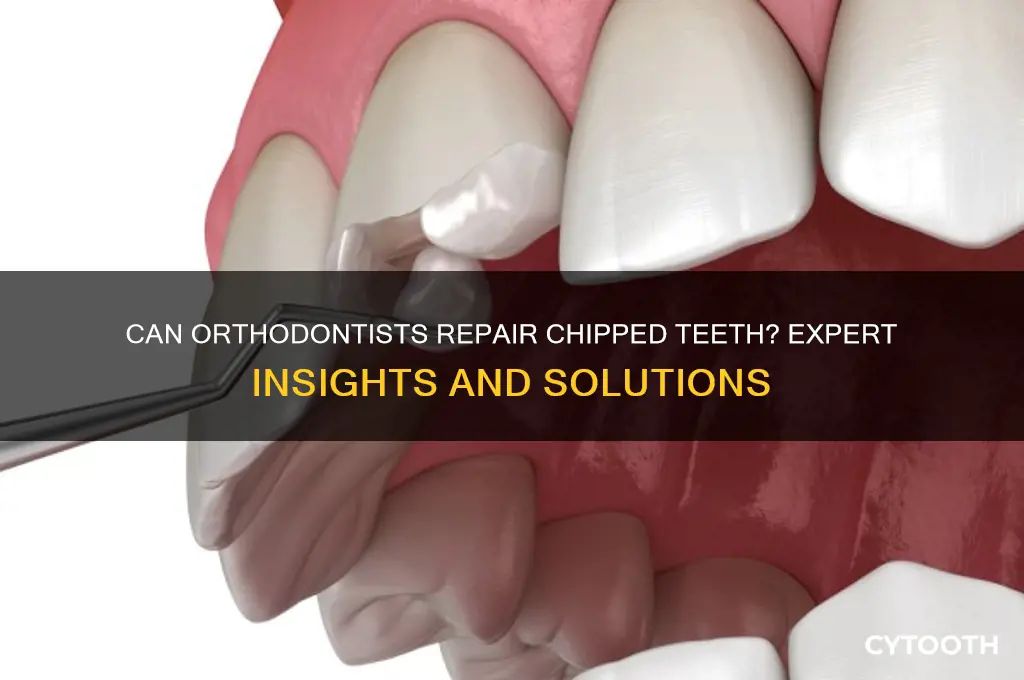
Orthodontists are dental specialists primarily focused on correcting misaligned teeth and jaws, but their expertise often overlaps with other dental issues, including chipped teeth. While an orthodontist may not be the first professional to address a chipped tooth—which typically requires a general dentist or a cosmetic dentist—they can play a role in the overall treatment plan, especially if the chipped tooth affects bite alignment or is part of a broader orthodontic issue. In some cases, an orthodontist might collaborate with other dental professionals to ensure that the chipped tooth is repaired in a way that complements ongoing orthodontic treatment, such as braces or aligners. However, for immediate repair of a chipped tooth, a general or cosmetic dentist is usually the best initial point of contact.
| Characteristics | Values |
|---|---|
| Can an Orthodontist Fix a Chipped Tooth? | Generally, no. Orthodontists specialize in aligning teeth and jaws, not repairing chips. |
| Who Can Fix a Chipped Tooth? | Dentists (general or cosmetic) are trained to repair chipped teeth. |
| Common Repair Methods | Dental bonding, veneers, crowns, or dental contouring. |
| Orthodontist's Role | May refer to a dentist for chip repair but focuses on braces, aligners, etc. |
| Exceptions | Minor chips may be addressed if related to orthodontic treatment. |
| Prevention Tips | Wear mouthguards during sports, avoid chewing hard objects, and maintain good oral hygiene. |
| Cost Considerations | Repair costs vary; orthodontists typically charge for alignment, not chip repairs. |
| Timeframe for Repair | Depends on the severity; simple bonding can be done in one visit. |
| Long-Term Care | Regular dental check-ups and avoiding habits that cause chipping. |
What You'll Learn

Orthodontic vs. Dental Repair
A chipped tooth can be a distressing issue, but understanding the difference between orthodontic and dental repair options is crucial for making an informed decision. While orthodontists specialize in aligning teeth and jaws, their role in fixing a chipped tooth is limited. Orthodontic treatments like braces or clear aligners focus on moving teeth into proper position, not repairing damage. However, in some cases, an orthodontist might collaborate with a dentist to ensure that a chipped tooth is restored in a way that aligns with ongoing orthodontic treatment. For instance, if a patient has braces and chips a tooth, the orthodontist may need to adjust the treatment plan to accommodate the dental repair.
Dental repair, on the other hand, is the primary solution for a chipped tooth. Dentists use procedures like bonding, veneers, or crowns to restore the tooth’s shape, function, and appearance. Bonding involves applying a tooth-colored resin to the chipped area, which is then hardened and polished. This is a quick, cost-effective option for minor chips. Veneers, thin porcelain shells placed over the front of the tooth, are ideal for more extensive damage or cosmetic improvements. Crowns, which cover the entire tooth, are used for severe chips or structural weakness. Each method has its pros and cons, and a dentist will recommend the best option based on the chip’s size, location, and the patient’s oral health.
One practical tip is to avoid DIY remedies for a chipped tooth, as they can worsen the damage. Instead, seek immediate dental care. If you’re undergoing orthodontic treatment, inform your orthodontist about the chip, as they may need to coordinate with your dentist. For example, if a chipped tooth is part of an ongoing braces plan, the orthodontist might need to temporarily halt movement in that area to allow for proper repair. Collaboration between the two specialists ensures the best outcome for both alignment and restoration.
Age and lifestyle factors also play a role in choosing the right repair method. Younger patients with developing teeth may require more conservative treatments, while adults might opt for durable solutions like crowns. Athletes or individuals prone to teeth grinding should consider protective measures, such as mouthguards, to prevent future chips. Additionally, maintaining good oral hygiene post-repair is essential to prolong the life of the restoration. Regular check-ups with both your dentist and orthodontist can help monitor the repaired tooth and ensure it remains healthy and functional.
In summary, while an orthodontist cannot directly fix a chipped tooth, their involvement is vital if the chip occurs during orthodontic treatment. Dental repair, performed by a dentist, offers effective solutions like bonding, veneers, or crowns. Understanding the interplay between orthodontic and dental care ensures a comprehensive approach to treating a chipped tooth. By following professional advice and taking preventive measures, patients can restore their smile and maintain long-term oral health.
Fixing a Broken Tooth with a Filling: Repair Options Explained
You may want to see also
Braces and Chipped Teeth
Orthodontists primarily focus on aligning teeth and jaws, but their expertise often intersects with cosmetic and restorative dental procedures, especially when braces are involved. A chipped tooth during orthodontic treatment isn’t uncommon—accidents happen, and the added hardware in your mouth can sometimes make teeth more susceptible to damage. While orthodontists aren’t typically the ones to repair a chipped tooth, they play a crucial role in managing the situation. For instance, if a tooth chips while wearing braces, the orthodontist will assess whether the damage affects the treatment plan. In some cases, they may collaborate with a general dentist or endodontist to ensure the tooth is stabilized before continuing orthodontic adjustments.
Consider this scenario: a teenager wearing braces bites into a hard candy, chipping a front tooth. The orthodontist’s first step is to evaluate whether the chip compromises the bracket or wire. If the bracket remains intact, the focus shifts to repairing the tooth. Here’s where teamwork comes in—the orthodontist might refer the patient to a cosmetic dentist for bonding or a veneer, while ensuring the repair doesn’t interfere with the braces. For minor chips, composite resin bonding can be a quick fix, but larger fractures may require a crown or root canal. The key is timing: the orthodontist coordinates with the restorative dentist to avoid disrupting tooth movement during treatment.
From a preventive standpoint, patients with braces should take extra precautions to avoid chipped teeth. Wearing a mouthguard during sports is non-negotiable, as braces can exacerbate injuries. Avoid hard, sticky, or chewy foods that increase the risk of chipping. If a chip occurs, rinse your mouth with warm water and apply orthodontic wax to any sharp edges to prevent mouth irritation. Contact your orthodontist immediately—even small chips can lead to bigger problems if left untreated. For example, a jagged edge could cut soft tissues or create an uneven surface that hinders proper tooth alignment.
Comparatively, while braces themselves don’t directly fix chipped teeth, they can indirectly contribute to better oral health that reduces the risk of future chips. Properly aligned teeth are less prone to uneven wear and tear, which can weaken enamel over time. However, the presence of braces does require vigilance. Patients should maintain impeccable oral hygiene to prevent decay around brackets, as weakened teeth are more likely to chip. Regular check-ins with both the orthodontist and general dentist ensure any issues are caught early, blending preventive care with corrective treatment for optimal results.
In conclusion, while orthodontists aren’t the primary providers for chipped tooth repairs, their role in managing such incidents during braces treatment is indispensable. They ensure the chip doesn’t derail the alignment process, coordinate with other dental specialists, and provide preventive guidance to minimize risks. Patients must follow their orthodontist’s advice, from dietary restrictions to protective gear, to safeguard their teeth during treatment. By understanding the interplay between braces and chipped teeth, individuals can navigate orthodontic care more confidently and maintain a healthy, aligned smile.
Sore Tooth, Headache Connection: Understanding the Surprising Link
You may want to see also
Invisalign for Minor Chips
Orthodontists typically focus on aligning teeth and jaws, but they can play a role in addressing minor chips, especially when combined with Invisalign treatment. Invisalign, known for its clear aligners, is primarily designed to straighten teeth, but its versatility extends to minor cosmetic issues like small chips. The aligners can be customized to apply gentle pressure to reshape the tooth’s edge, smoothing out minor irregularities. This approach is particularly effective for chips that do not expose the tooth’s nerve or cause structural damage. For instance, a chipped front tooth with a smooth, non-sharp edge might be a candidate for this method, as the aligner can gradually guide the tooth into a more uniform shape.
The process begins with a consultation, where the orthodontist assesses the chip’s size, location, and severity. If the chip is minor—typically less than 1 millimeter in depth—Invisalign may be recommended as a non-invasive solution. The orthodontist will take digital impressions of the teeth to create a series of custom aligners. Each aligner is worn for about 1–2 weeks, gradually shifting the tooth’s position and reshaping its edge. Patients should wear the aligners for 20–22 hours daily, removing them only for eating, drinking, and oral hygiene. This method is particularly appealing for adults and teens who prefer a discreet, minimally invasive option over traditional bonding or veneers.
While Invisalign can address minor chips, it’s not a one-size-fits-all solution. Chips that expose dentin or cause sensitivity often require restorative procedures like bonding or crowns. Additionally, Invisalign’s effectiveness depends on patient compliance. Skipping aligner wear or not following the orthodontist’s instructions can delay results or render the treatment ineffective. For optimal outcomes, patients should maintain regular check-ins every 6–8 weeks to monitor progress and adjust the treatment plan as needed. Combining Invisalign with good oral hygiene practices, such as using a soft-bristled toothbrush and avoiding hard or sticky foods, can also enhance results.
One practical tip for patients considering Invisalign for minor chips is to discuss the expected timeline with their orthodontist. While traditional Invisalign treatment averages 12–18 months, addressing a minor chip may take less time, often 6–9 months, depending on the case. Cost is another factor; Invisalign treatment typically ranges from $3,000 to $8,000, but insurance may cover part of the expense if the chip affects dental function. Patients should also be aware that while Invisalign can reshape the tooth, it does not restore lost enamel, so additional treatments like bonding might be necessary for long-term durability.
In conclusion, Invisalign offers a unique, non-invasive way to address minor chips, blending orthodontic principles with cosmetic enhancement. Its success hinges on the chip’s severity, patient compliance, and the orthodontist’s expertise. For those seeking a discreet, gradual solution, Invisalign can be a viable option, provided the chip is superficial and does not compromise the tooth’s integrity. Always consult with an orthodontist to determine the best approach for your specific case.
Saving a Cracked Tooth Under a Crown: Is It Possible?
You may want to see also
When to See a Dentist
A chipped tooth can be more than a cosmetic concern; it can lead to sensitivity, pain, or further damage if left untreated. While orthodontists specialize in aligning teeth and jaws, they are not typically equipped to repair chipped teeth. This task falls under the expertise of a general dentist or a specialist like an endodontist or prosthodontist. Understanding when to see a dentist for a chipped tooth is crucial to prevent complications and ensure proper care.
Immediate Action for Minor Chips
For small, painless chips that don’t affect the tooth’s structure, scheduling a dental appointment within a week is advisable. During this visit, the dentist may smooth rough edges or apply dental bonding, a tooth-colored resin that restores the tooth’s shape. This quick fix is minimally invasive and can be completed in a single session. However, avoid delaying treatment, as even minor chips can worsen over time, especially if the tooth is exposed to pressure from chewing or grinding.
Urgent Care for Severe Cases
If the chip is large, exposes the dentin (the layer beneath enamel), or causes pain, seek immediate dental care. A dentist may perform a root canal if the chip reaches the pulp, the innermost part of the tooth containing nerves and blood vessels. In some cases, a dental crown may be necessary to restore the tooth’s function and appearance. Ignoring severe chips can lead to infection, abscesses, or tooth loss, making prompt treatment essential.
Preventive Measures and Follow-Up
After repairing a chipped tooth, follow your dentist’s advice to prevent future damage. This may include wearing a mouthguard during sports or sleep if you grind your teeth. Regular dental check-ups every six months are also vital to monitor the tooth’s condition and address any emerging issues. For children and teens, whose teeth are still developing, early intervention is key to preserving long-term dental health.
When to Bypass the Orthodontist
While orthodontists play a critical role in dental alignment, they are not trained to handle chipped teeth. If you have braces or aligners and chip a tooth, contact your dentist first. They can repair the damage without interfering with your orthodontic treatment. Attempting to address a chipped tooth with an orthodontist may delay proper care and exacerbate the problem. Always prioritize the right specialist for the specific issue at hand.
Can a Tooth Implant Be Removed? Understanding the Process and Possibilities
You may want to see also
Orthodontic Limitations in Repair
Orthodontists specialize in aligning teeth and jaws, not repairing structural damage like chips or cracks. While their expertise lies in moving teeth, they lack the tools and training to restore broken tooth surfaces. A chipped tooth requires a restorative procedure, such as bonding, veneers, or crowns, which falls under the domain of general dentists or cosmetic specialists. Attempting to fix a chip with orthodontic methods could exacerbate the damage or lead to improper alignment.
Consider the analogy of a carpenter and a plumber: both work on homes, but their skills are distinct. Similarly, orthodontists focus on the mechanics of tooth movement, while restorative dentists address issues like chips, decay, or wear. Orthodontic treatments like braces or aligners can improve bite and alignment but cannot rebuild a tooth’s structure. For instance, while braces might close a gap caused by a chip, they cannot repair the chipped area itself. Understanding this distinction ensures patients seek the right professional for their specific needs.
One common misconception is that orthodontic adjustments can "fix" a chipped tooth by repositioning it. However, this approach overlooks the fact that chips often compromise the tooth’s integrity, requiring direct restoration. For example, a minor chip might be bonded with composite resin, a procedure typically performed by a general dentist or prosthodontist. Orthodontists might collaborate with these specialists to ensure alignment and restoration work together, but they cannot perform the restorative work independently. Patients should clarify their treatment goals to avoid confusion and ensure comprehensive care.
Practical tip: If you have a chipped tooth and are undergoing orthodontic treatment, inform both your orthodontist and general dentist. Coordination between the two can prevent complications, such as a chip worsening due to misaligned forces or a restoration failing because of ongoing tooth movement. For children under 12, whose teeth are still developing, early intervention by a dentist is crucial to prevent further damage. Adults, especially those with braces, should avoid hard or sticky foods that could cause additional chips until their restorative work is complete. Clear communication and a multidisciplinary approach yield the best outcomes.
Can Adult Teeth Regenerate? Exploring the Science Behind Tooth Regrowth
You may want to see also
Frequently asked questions
An orthodontist primarily focuses on correcting teeth and jaw alignment issues, not repairing chipped teeth. For a chipped tooth, you should consult a general dentist or a cosmetic dentist who can provide treatments like bonding, veneers, or crowns.
If you have braces and a chipped tooth, an orthodontist may coordinate with a general dentist to repair the chip first. The orthodontist will ensure the repair doesn’t interfere with your orthodontic treatment, but they won’t perform the chip repair themselves.
No, it’s not advisable to wait. A chipped tooth can worsen or cause pain, infection, or further damage if left untreated. Address the chip with a dentist first, then proceed with orthodontic treatment as recommended.