Samantha Blake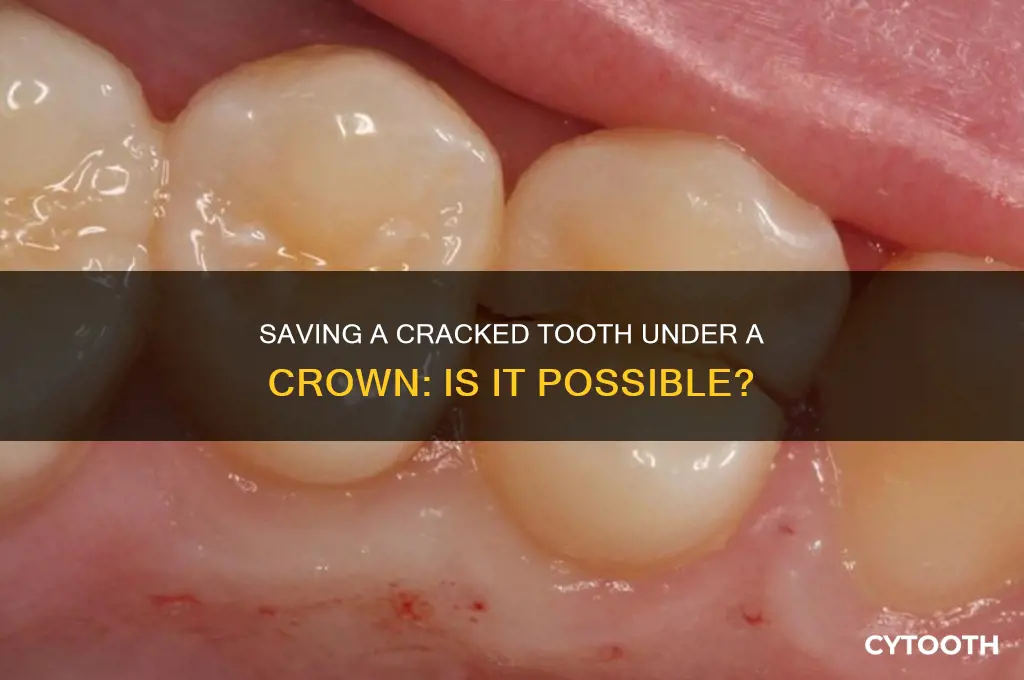
A cracked tooth beneath a crown presents a complex dental issue that requires prompt attention and careful evaluation. While crowns are designed to protect and strengthen damaged teeth, underlying cracks can compromise their structural integrity, potentially leading to further complications such as infection, pain, or even tooth loss. The viability of saving a cracked tooth under a crown depends on factors like the extent and location of the crack, the remaining tooth structure, and the overall oral health of the patient. Early detection and intervention are crucial, as timely treatment options such as root canal therapy, crown replacement, or in some cases, extraction, can determine whether the tooth can be preserved or if more extensive measures are necessary. Consulting a dentist for a thorough examination and personalized treatment plan is essential to address this concern effectively.
| Characteristics | Values |
|---|---|
| Can a cracked tooth under a crown be saved? | Yes, in many cases, depending on the severity and location of the crack. |
| Factors influencing saveability | - Crack depth and location - Presence of infection or nerve damage - Remaining tooth structure - Timeliness of treatment |
| Treatment options | - Minor cracks: Dental bonding or crown repair - Moderate cracks: Root canal therapy followed by crown replacement - Severe cracks: Extraction if the tooth cannot be saved |
| Success rate | High if treated early; decreases with delayed treatment or extensive damage. |
| Prevention | Avoid chewing hard foods, wear a nightguard for bruxism, and maintain regular dental check-ups. |
| Prognosis | Favorable with prompt and appropriate treatment; poor if left untreated. |
| Cost considerations | Varies based on treatment complexity; root canal + crown replacement is more expensive than minor repairs. |
| Recovery time | 1-2 weeks for minor repairs; up to several weeks for root canal and crown replacement. |
| Long-term outlook | Saved tooth can function normally for years with proper care and maintenance. |
What You'll Learn
- Early Detection Signs: Recognize symptoms like pain, sensitivity, or swelling indicating a cracked tooth under a crown
- Treatment Options: Explore procedures like root canals, crown replacement, or extraction to save the tooth
- Prevention Tips: Maintain oral hygiene, avoid hard foods, and wear night guards to prevent cracks
- Diagnosis Methods: Learn how dentists use X-rays, dye tests, or transillumination to identify cracks
- Prognosis Factors: Understand how crack severity, location, and timely treatment affect tooth survival

Early Detection Signs: Recognize symptoms like pain, sensitivity, or swelling indicating a cracked tooth under a crown
A cracked tooth beneath a crown can often be saved if detected early, but the signs can be subtle. Unlike a visible fracture, this type of crack may hide beneath the crown, making it harder to diagnose. Early detection is crucial, as ignoring symptoms can lead to more severe issues like infection or tooth loss. Recognizing the warning signs—such as pain, sensitivity, or swelling—can make the difference between a simple repair and a complex dental procedure.
Pain is often the first red flag, but it’s not always consistent. You might experience discomfort when biting down or releasing pressure, especially if the crack extends into the tooth’s nerve. This pain can be sharp and sudden or dull and lingering. Sensitivity to hot, cold, or sweet foods is another common symptom. If your crowned tooth suddenly reacts to temperature changes or sugary substances, it could indicate a crack allowing stimuli to reach the inner layers of the tooth. Unlike typical sensitivity, this reaction is often localized to the affected tooth and may worsen over time.
Swelling in the gum tissue around the crowned tooth is a more advanced sign but one that should never be ignored. This could signal an infection caused by bacteria entering the crack. If you notice redness, tenderness, or a pimple-like bump (called a dental abscess) on your gums, seek immediate dental care. Swelling may also be accompanied by a foul taste or odor, indicating pus formation. At this stage, saving the tooth becomes more challenging, but prompt treatment can still prevent further complications.
To monitor for these symptoms, perform regular self-checks. Gently press on the crowned tooth and bite down slowly to assess for pain. Test sensitivity by sipping hot or cold water and noting any discomfort. Examine your gums in a mirror for signs of swelling or discoloration. If you notice any of these symptoms, avoid chewing on the affected side and schedule a dental appointment within 48 hours. Early intervention, such as a root canal or crown replacement, can often salvage the tooth and prevent the need for extraction.
Can a Bad Tooth Cause Dizziness? Exploring the Surprising Connection
You may want to see also
Treatment Options: Explore procedures like root canals, crown replacement, or extraction to save the tooth
A cracked tooth beneath a crown presents a unique challenge, as the damage is often hidden and may go unnoticed until symptoms arise. The good news is that, depending on the severity and location of the crack, several treatment options can potentially save the tooth. The key lies in early detection and prompt intervention to prevent further complications.
Root Canal Therapy: A Viable Solution
When a crack extends into the tooth's pulp, causing infection or inflammation, a root canal becomes a critical procedure. During this treatment, the dentist removes the infected pulp, cleans and disinfects the canal, and seals it with a biocompatible material. A crown is then typically replaced to restore the tooth's function and appearance. Success rates for root canals on cracked teeth are high, especially when the crack does not extend below the gum line. Post-treatment, patients are advised to avoid hard or sticky foods to minimize stress on the restored tooth.
Crown Replacement: Addressing Surface-Level Damage
If the crack is superficial and does not affect the tooth's nerve, replacing the crown may be sufficient. Over time, crowns can weaken or become damaged, allowing underlying cracks to worsen. A new, well-fitted crown can redistribute biting forces more evenly, reducing the risk of further fracture. This option is less invasive and more cost-effective than a root canal or extraction, making it a preferred choice when the damage is minimal.
Extraction: A Last Resort with Alternatives
In cases where the crack is extensive, below the gum line, or has caused irreversible damage, extraction may be necessary. However, this is considered a last resort due to the loss of natural tooth structure and the need for replacement options like implants or bridges. Before opting for extraction, consult with an endodontist or prosthodontist to explore all possibilities, as advancements in dental technology often provide alternatives to preserve the tooth.
Comparative Analysis: Weighing the Options
Root canals and crown replacements aim to save the natural tooth, preserving its function and aesthetics. Extraction, while sometimes unavoidable, requires additional procedures to replace the missing tooth, which can be time-consuming and costly. For instance, a dental implant involves multiple stages, including surgery and osseointegration, which can take several months. In contrast, a root canal followed by a new crown can often be completed within a few weeks. Patients should consider factors like cost, recovery time, and long-term outcomes when deciding on the best treatment.
Practical Tips for Prevention and Maintenance
To minimize the risk of a cracked tooth under a crown, avoid habits like chewing ice, biting hard objects, or grinding teeth. Wearing a night guard can protect against bruxism, a common cause of tooth fractures. Regular dental check-ups are essential to detect early signs of cracks or crown wear. If you experience symptoms like pain while chewing, sensitivity to temperature, or swelling, seek immediate dental care to prevent further damage and increase the chances of saving the tooth.
Fixing a Broken Tooth with a Filling: Repair Options Explained
You may want to see also
Prevention Tips: Maintain oral hygiene, avoid hard foods, and wear night guards to prevent cracks
A cracked tooth under a crown is a dental emergency that often requires immediate attention. While treatment options exist, prevention is always the better strategy. Here’s how to minimize the risk of cracks and protect your crowned teeth.
Daily Habits for Long-Term Protection: Maintaining impeccable oral hygiene is the cornerstone of crack prevention. Brush twice daily with a soft-bristled toothbrush and fluoride toothpaste, ensuring you clean all surfaces of the crowned tooth. Floss daily, using unwaxed floss or a water flosser to avoid catching on the crown’s edges. For crowned teeth, consider using a fluoride mouthwash to strengthen enamel and reduce sensitivity. Regular dental check-ups every six months allow your dentist to monitor the crown’s integrity and address issues before they escalate.
Dietary Adjustments to Avoid Damage: Hard and sticky foods are the arch-nemeses of crowned teeth. Avoid biting into hard items like ice, nuts, or unpopped popcorn kernels, as these can exert excessive pressure and cause cracks. Similarly, sticky candies or chewing gum can pull at the crown’s edges, weakening the bond between the crown and the tooth. Opt for softer alternatives like yogurt, steamed vegetables, or well-cooked grains. If you crave crunchy foods, chop them into smaller pieces to reduce the force needed for chewing.
Night Guards: A Shield Against Unseen Stress: Bruxism, or teeth grinding, is a common nocturnal habit that can lead to cracks, especially in crowned teeth. A custom-fitted night guard, prescribed by your dentist, acts as a protective barrier between your upper and lower teeth. Wear it consistently during sleep to distribute grinding forces evenly and prevent localized stress on the crown. While over-the-counter guards are available, custom options offer a better fit and greater comfort, ensuring you’ll use it regularly.
Proactive Measures for High-Risk Individuals: Certain factors, such as age, previous dental work, or a history of bruxism, increase the likelihood of cracked crowns. If you fall into a high-risk category, take extra precautions. For instance, athletes should wear a mouthguard during sports to protect against impact injuries. Smokers should consider quitting, as tobacco weakens gums and reduces blood flow to the teeth, making them more susceptible to damage. Additionally, stay hydrated to maintain saliva production, which helps neutralize acids and protect tooth enamel.
By integrating these prevention tips into your routine, you can significantly reduce the risk of a cracked tooth under a crown. While no strategy guarantees absolute protection, consistent effort in oral hygiene, dietary mindfulness, and protective measures like night guards can help preserve your dental health for years to come. Remember, a proactive approach is always less costly and less painful than dealing with a cracked crown.
Diagnosis Methods: Learn how dentists use X-rays, dye tests, or transillumination to identify cracks
Dentists face a unique challenge when diagnosing cracks beneath a crown, as the restoration obscures direct visual inspection. Three primary methods—X-rays, dye tests, and transillumination—offer distinct advantages and limitations in uncovering hidden fractures. Each technique requires careful application and interpretation to ensure accurate diagnosis and appropriate treatment planning.
X-rays remain a cornerstone of dental diagnostics, providing a non-invasive glimpse into the tooth’s internal structure. Periapical and bitewing radiographs are commonly used to detect cracks, though their effectiveness varies. Hairline fractures may not always be visible due to their size or orientation relative to the X-ray beam. For enhanced detection, dentists may employ cone-beam computed tomography (CBCT), which offers 3D imaging to better visualize crack extent and involvement of the pulp or surrounding bone. While X-rays are essential, they are not infallible and must be complemented by other methods for comprehensive evaluation.
Dye tests serve as a simple yet effective adjunctive tool, particularly for identifying surface-level cracks. A liquid dye, such as methylene blue, is applied to the tooth’s surface, seeping into cracks and highlighting them under ambient light. This method is especially useful for detecting craze lines or minor fractures that X-rays might miss. However, its effectiveness diminishes for deeper cracks beneath the crown’s margins. Dentists must carefully remove the crown or use exploratory techniques to expose the tooth’s surface adequately. While dye tests are non-invasive and cost-effective, they are best used in conjunction with other diagnostic methods for a complete assessment.
Transillumination offers a unique perspective by using a strong light source to pass through the tooth, revealing cracks as dark lines or areas of reduced translucency. This technique is particularly valuable for detecting vertical root fractures, which often elude X-rays. A fiber-optic light or specialized transilluminator is placed behind the tooth, with the darkened room enhancing visibility. While transillumination is highly sensitive, it requires a skilled operator to interpret results accurately. Additionally, the presence of a crown can complicate the procedure, necessitating partial removal or adjustment for optimal light transmission.
In practice, a combination of these methods often yields the most reliable diagnosis. For instance, a dentist might start with X-rays to assess the crack’s depth and location, follow with a dye test to identify surface involvement, and conclude with transillumination to confirm root integrity. Each technique compensates for the limitations of the others, ensuring a thorough evaluation. Early and accurate diagnosis is critical, as a cracked tooth under a crown may still be saved with timely intervention, such as root canal therapy or crown replacement, depending on the fracture’s severity.
Prognosis Factors: Understand how crack severity, location, and timely treatment affect tooth survival
The fate of a cracked tooth beneath a crown hinges on a delicate interplay of factors, each leaving its mark on the tooth's survival. Crack severity acts as the primary prognosticator. Hairline fractures, often termed "craze lines," may cause minimal discomfort and, if stable, can be monitored without intervention. However, deeper cracks extending towards the pulp chamber significantly increase the risk of infection and necessitate prompt attention. Imagine a hairline fracture as a superficial scratch on your skin – annoying but manageable. A deep crack, on the other hand, is akin to a gaping wound, demanding immediate care to prevent further damage.
Location further complicates the picture. Cracks originating near the gum line pose a greater threat due to their proximity to the tooth's nerve and blood supply. These cracks are more susceptible to bacterial invasion, potentially leading to abscess formation and bone loss. Conversely, cracks confined to the chewing surface, while still concerning, may allow for more conservative treatment options.
Timely intervention is paramount. Ignoring a cracked tooth, even under the perceived protection of a crown, is a recipe for disaster. Early detection and treatment significantly improve the chances of saving the tooth. Think of it as addressing a small leak in your roof – prompt action prevents a minor issue from escalating into a major structural problem. Delaying treatment increases the risk of pulp involvement, requiring root canal therapy or even extraction.
A comprehensive examination by a dentist, often aided by X-rays and other diagnostic tools, is crucial for assessing crack severity, location, and potential pulp involvement. Based on this assessment, treatment options range from simple bonding to strengthen the tooth, to root canal therapy and crown replacement, or in severe cases, extraction.
Remember, a cracked tooth under a crown is not a death sentence. By understanding the critical role of crack severity, location, and timely treatment, you empower yourself to make informed decisions and increase the likelihood of preserving your natural tooth. Regular dental checkups and prompt attention to any signs of discomfort are key to safeguarding your oral health.
Frequently asked questions
It depends on the severity of the crack. Minor cracks may be treatable with root canal therapy or reinforcement, but the crown may need to be removed to assess and treat the tooth properly.
Common signs include pain when chewing, sensitivity to hot or cold, swelling around the gum line, or visible cracks in the crown itself.
If the crack extends below the gum line, saving the tooth becomes more challenging. Extraction may be necessary, but a dental professional will evaluate the case to determine the best course of action.
Avoid biting hard foods, wear a night guard if you grind your teeth, and maintain regular dental check-ups to monitor the health of crowned teeth.