Hailey Morgan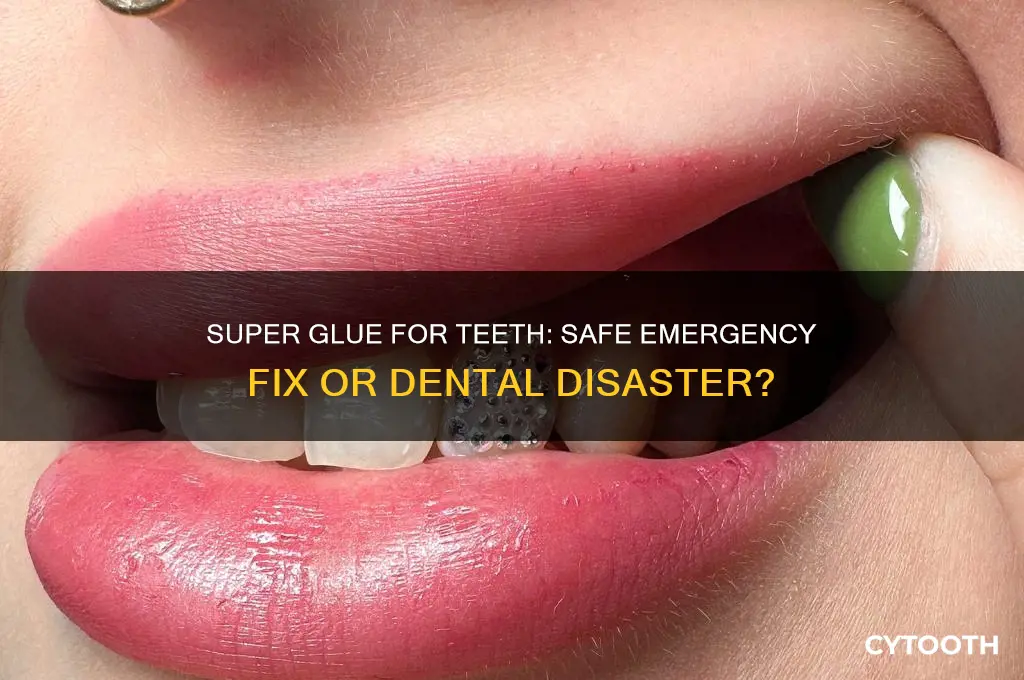
Super gluing a tooth might seem like a quick fix for a lost filling, crown, or even a chipped tooth, but it is not a safe or recommended solution. While super glue is designed to bond materials together, it is not intended for use in the mouth, where it can cause irritation, allergic reactions, or even damage to the tooth and surrounding tissues. Dental adhesives and temporary solutions specifically formulated for oral use are available over-the-counter, but for a permanent and safe repair, it is crucial to consult a dentist. Attempting to use super glue as a dental solution can lead to complications and may exacerbate the underlying issue, making professional treatment more challenging. Always prioritize your oral health by seeking expert advice for any dental concerns.
| Characteristics | Values |
|---|---|
| Safety | Not safe; super glue is toxic and not intended for dental use. |
| Effectiveness | Temporary fix at best; does not address underlying dental issues. |
| Durability | Very low; super glue is not designed to withstand oral conditions. |
| Health Risks | Potential for chemical burns, allergic reactions, or ingestion of toxins. |
| Professional Recommendation | Strongly discouraged; consult a dentist for proper dental repair. |
| Alternative Solutions | Dental cement, temporary filling material, or professional dental repair. |
| Long-Term Consequences | May cause further damage to the tooth or surrounding tissues. |
| Cost | Super glue is cheap, but professional repair is safer and more effective. |
| Availability | Super glue is widely available, but not suitable for dental use. |
| FDA Approval | Super glue is not FDA-approved for dental or medical use. |
What You'll Learn

Is Super Glue Safe for Teeth?
Super glue contains cyanoacrylate, a chemical that bonds quickly to surfaces, including skin and teeth. While it might seem like a quick fix for a loose crown or chipped tooth, using super glue in your mouth poses significant risks. The adhesive is not designed for oral use and can cause irritation, chemical burns, or allergic reactions. Moreover, it does not provide a sterile or long-lasting solution, potentially leading to further dental complications.
From a practical standpoint, applying super glue to a tooth is a temporary and unreliable measure. The moisture in your mouth can weaken the bond, and the adhesive may not withstand the pressure of chewing or biting. For instance, a loose crown secured with super glue could dislodge while eating, causing discomfort or embarrassment. Additionally, removing super glue from a tooth often requires professional intervention, as it can be difficult to clean without damaging the enamel or underlying structures.
Comparatively, dental-grade adhesives used by professionals are specifically formulated for oral safety and durability. These materials, such as temporary dental cement (e.g., eugenol-based cement), are biocompatible and designed to withstand oral conditions. For example, a dentist might use a temporary cement to hold a crown in place until a permanent solution can be applied. This approach ensures both safety and effectiveness, unlike super glue, which lacks these critical properties.
If you’re considering using super glue for a dental issue, it’s essential to weigh the risks against the perceived convenience. For minor issues like a loose bracket or small chip, contact your dentist immediately for advice. They may recommend over-the-counter dental wax to cover sharp edges or provide guidance until an appointment is available. For more severe cases, such as a knocked-out tooth, super glue is not only ineffective but harmful—instead, handle the tooth carefully by the crown, rinse it gently if dirty, and seek emergency dental care within an hour for the best chance of reattachment.
In conclusion, while super glue might appear to be a quick solution for dental emergencies, its risks far outweigh any temporary benefits. The potential for chemical burns, allergic reactions, and further damage to teeth or gums makes it an unsafe choice. Always prioritize professional dental care or approved temporary measures to address oral issues effectively and safely.
Can You Glue a Tooth Back In? Dental Emergency Tips
You may want to see also
Temporary Fixes vs. Dental Treatment
Super glue contains cyanoacrylate, an adhesive that bonds quickly to surfaces, including skin and teeth. While it might seem like a quick fix for a loose crown or chipped tooth, using it in your mouth poses significant risks. Cyanoacrylate is not biocompatible, meaning it’s not designed for oral use. Ingesting even small amounts can irritate tissues, and the glue’s rigidity may cause further damage to the tooth or surrounding gums. Despite online anecdotes of temporary success, this method lacks medical endorsement and could exacerbate the problem.
Temporary fixes like dental wax, over-the-counter dental cement, or even sugarless gum can provide short-term relief for minor dental issues. Dental wax, for instance, can cover sharp edges of a broken tooth to prevent cuts to the tongue or cheek. Over-the-counter dental cement, while not as durable as professional materials, can temporarily reattach a loose crown if applied carefully. However, these solutions are stopgaps, not cures. They buy time until professional treatment can be sought but do not address the underlying issue. Misuse or prolonged reliance on these fixes can lead to infection, decay, or more extensive damage.
Professional dental treatment is the only reliable way to address tooth damage or decay. Dentists use biocompatible materials like composite resin, porcelain, or dental amalgam, which are safe for oral use and designed to withstand chewing forces. For example, a chipped tooth might be repaired with composite bonding, a procedure that takes about 30–60 minutes and requires no downtime. A loose crown would be cleaned, refitted, and secured with permanent cement. While the cost and time commitment may be higher than DIY fixes, professional treatment ensures longevity and prevents complications.
Comparing temporary fixes to professional treatment highlights a trade-off between convenience and efficacy. Temporary solutions are accessible and inexpensive but offer no long-term benefits. Professional care, though requiring an appointment and financial investment, provides durable results and safeguards oral health. For instance, ignoring a cracked tooth and relying on wax to mask discomfort could lead to nerve damage or infection, necessitating a root canal or extraction. In contrast, prompt dental intervention might resolve the issue with a simple filling or crown.
If you’re considering a temporary fix, prioritize safety and practicality. Avoid harmful substances like super glue, and opt for dentist-approved products like dental wax or temporary cement. Clean the affected area gently with water before applying any material, and avoid eating hard or sticky foods. Schedule a dental appointment as soon as possible—most clinics offer emergency slots for urgent cases. Remember, temporary fixes are just that: temporary. Delaying professional care risks turning a minor issue into a major one. Your teeth deserve better than makeshift solutions.
Can a Bad Tooth Cause Dizziness? Exploring the Surprising Connection
You may want to see also
Risks of Using Super Glue on Teeth
Super Glue, or cyanoacrylate adhesive, is not designed for dental use, and applying it to your teeth can lead to severe complications. While it may seem like a quick fix for a loose crown or chipped tooth, the risks far outweigh any temporary benefits. One immediate danger is tissue damage; the glue can bond to gums, lips, or tongue, causing pain and potential injury when removing it. Unlike dental-grade adhesives, Super Glue lacks biocompatibility, meaning it can trigger allergic reactions or chemical burns in the sensitive oral environment.
Consider the long-term consequences of using Super Glue on teeth. Over time, the adhesive can degrade, releasing toxic fumes or particles that may be ingested or inhaled. This exposure can lead to systemic health issues, particularly in children or individuals with compromised immune systems. Additionally, Super Glue does not provide a stable or durable bond for dental restorations, increasing the risk of further damage or tooth loss. A temporary solution could exacerbate the problem, requiring more extensive and costly professional treatment later.
From a practical standpoint, using Super Glue on teeth is a misguided attempt at self-care. Dental issues often stem from underlying problems like decay, infection, or structural weakness, which Super Glue cannot address. For instance, a loose tooth may indicate gum disease or trauma, conditions that require professional diagnosis and treatment. Relying on household adhesives delays proper care and may worsen the condition, leading to irreversible damage or infection. Always consult a dentist for safe and effective solutions tailored to your oral health needs.
Comparing Super Glue to dental adhesives highlights its inadequacy for oral use. Dental-grade materials, such as temporary cement or composite resins, are formulated to be non-toxic, durable, and compatible with oral tissues. They are designed to withstand the unique challenges of the mouth, including moisture, temperature fluctuations, and chewing forces. Super Glue, in contrast, is rigid and brittle, making it unsuitable for the dynamic environment of the mouth. Its use can result in fractured teeth, gum irritation, or even difficulty eating and speaking.
In conclusion, while the idea of using Super Glue on teeth might seem appealing in a pinch, the risks are substantial and multifaceted. From immediate tissue damage to long-term health concerns, this makeshift solution can cause more harm than good. Always prioritize professional dental care to ensure safe, effective, and lasting results. If faced with a dental emergency, opt for temporary measures recommended by dentists, such as over-the-counter dental cement, and schedule an appointment as soon as possible. Your oral health deserves better than a household adhesive.
Fixing Exposed Tooth Roots: Treatment Options and Solutions Explained
You may want to see also
How to Apply Super Glue to a Tooth
Super Glue, chemically known as cyanoacrylate, is a fast-acting adhesive that bonds skin, plastic, and even teeth. While it’s tempting to use it for a quick fix on a loose crown or chipped tooth, applying it correctly is crucial to avoid complications. Start by cleaning the tooth and surrounding area with warm water and mild soap to remove debris. Dry thoroughly, as moisture can weaken the bond. Apply a tiny drop of Super Glue to the affected area, using a toothpick or cotton swab for precision. Hold the tooth or fragment in place for at least 60 seconds, ensuring minimal movement for optimal adhesion.
The effectiveness of Super Glue on teeth hinges on its temporary nature. It’s not a substitute for professional dental work but can serve as a short-term solution until you see a dentist. For a loose crown, apply the glue sparingly to the inner surface, avoiding excess that could irritate gums. For a chipped tooth, focus on bonding the fragment without trapping air bubbles. Note that Super Glue is not suitable for children under 12 or individuals with sensitive gums, as it may cause irritation or allergic reactions.
Comparing Super Glue to dental adhesives reveals key differences. Dental-specific adhesives, like temporary crown cement, are formulated for oral use and are safer for prolonged contact with saliva and gums. Super Glue, while effective in a pinch, can become brittle over time and may not withstand chewing forces. Additionally, its chemical composition can release fumes that are harmful if inhaled, making it less ideal for oral applications. Always prioritize dental adhesives when available, reserving Super Glue for emergencies only.
A practical tip for using Super Glue on a tooth is to test a small area first to check for sensitivity or adverse reactions. If redness, swelling, or discomfort occurs, rinse immediately and seek professional care. After application, avoid hot foods or liquids for at least 2 hours to prevent weakening the bond. Remember, this is a temporary fix—schedule a dental appointment within 24–48 hours to address the issue permanently. Misuse or prolonged use of Super Glue on teeth can lead to decay, infection, or further damage, underscoring the importance of timely professional intervention.
Can Orthodontists Repair Chipped Teeth? Expert Insights and Solutions
You may want to see also
When to See a Dentist Instead
Super glue might seem like a quick fix for a loose or chipped tooth, but it’s a temporary and potentially harmful solution. While it may hold a fragment in place momentarily, it’s not designed for oral use and can trap bacteria, irritate gums, or even damage tooth structure. Instead of reaching for household adhesives, consider these scenarios where professional dental care is non-negotiable.
If the tooth is completely avulsed (knocked out), time is critical. Rinse the tooth gently with milk or saline, avoid touching the root, and seek emergency dental care within 30 minutes to an hour. A dentist can reimplant the tooth and provide a splint to stabilize it, increasing the chances of preservation. Super glue will not only fail to reattach the tooth but also hinder the dentist’s ability to clean and treat it properly.
Persistent pain or sensitivity after a tooth injury signals underlying issues. Super glue cannot address infections, nerve damage, or fractures that extend below the gumline. A dentist can perform X-rays to assess the damage, prescribe antibiotics if necessary, and recommend treatments like root canals or crowns. Ignoring these symptoms in favor of a DIY fix can lead to abscesses, systemic infections, or tooth loss.
Children and older adults require extra caution. For kids with loose baby teeth, super glue can interfere with natural exfoliation and harm developing permanent teeth. In seniors, DIY repairs may exacerbate existing conditions like gum disease or weakened enamel. Dentists can provide age-appropriate solutions, such as pediatric spacers or denture repairs, tailored to individual needs.
Temporary fixes have their limits. While waiting for a dental appointment, use orthodontic wax or sugar-free gum to cover sharp edges, and rinse with warm salt water to reduce discomfort. Avoid chewing on the affected side and stick to soft foods. These measures buy time but are no substitute for professional care. A dentist can offer durable, safe solutions like bonding, veneers, or implants that restore function and aesthetics without risking further harm.
In short, super glue is not a dentist in a tube. It’s a stopgap at best and a hazard at worst. Prioritize your oral health by recognizing when a professional intervention is essential—your teeth, gums, and overall well-being will thank you.
Fixing a Broken Tooth with a Filling: Repair Options Explained
You may want to see also
Frequently asked questions
No, super glue is not safe or suitable for dental repairs. It is toxic and not designed for use in the mouth. Using super glue on a tooth can cause irritation, damage to the tooth and gums, and potential long-term health risks.
Contact your dentist immediately. They can provide proper treatment, such as dental bonding, a crown, or other professional solutions tailored to your specific situation. Avoid DIY fixes like super glue, as they can worsen the problem.
Over-the-counter dental cement or dental wax can be used as a temporary fix to protect the tooth and reduce discomfort. However, these are not permanent solutions and should only be used until you can receive professional dental care. Never use super glue as an alternative.