Hailey Morgan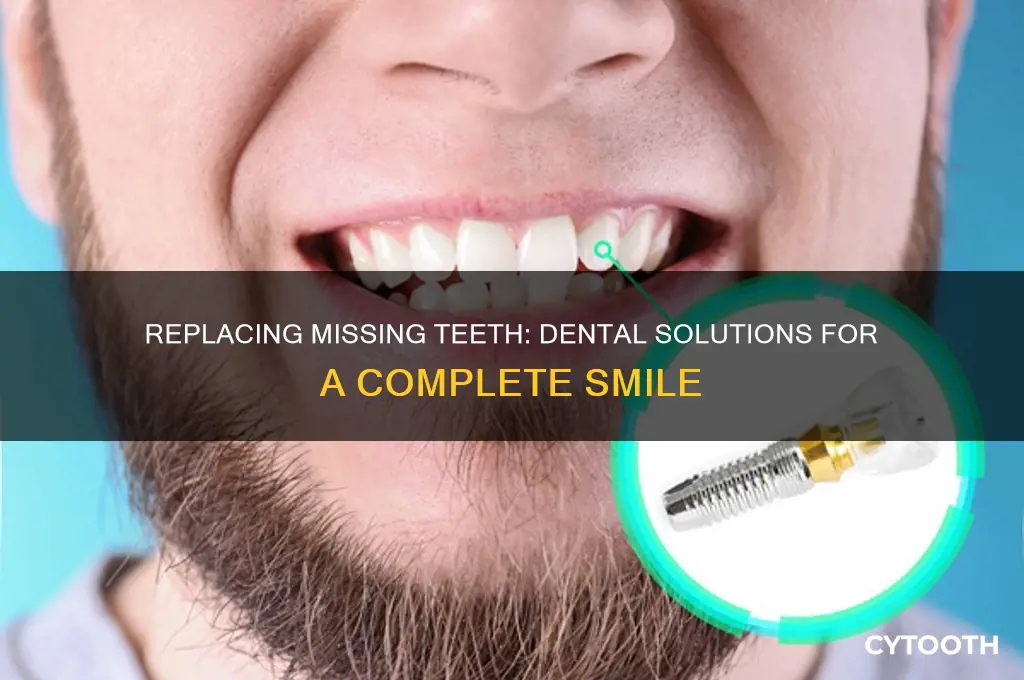
Replacing a missing tooth is a common dental procedure that aims to restore both function and aesthetics to a patient’s smile. Dentists typically offer several options depending on the individual’s needs, including dental implants, bridges, and dentures. Dental implants are a popular choice as they involve inserting a titanium post into the jawbone, which acts as a root for a custom-made crown, providing a durable and natural-looking solution. Bridges, on the other hand, anchor a replacement tooth to adjacent healthy teeth, while dentures offer a removable alternative for those missing multiple teeth. The choice of treatment depends on factors such as oral health, budget, and personal preference, with each method designed to improve chewing ability, speech, and overall confidence.
| Characteristics | Values |
|---|---|
| Dental Implants | Titanium post surgically placed into jawbone, acts as tooth root, supports crown. Considered most durable and natural-looking option. |
| Dental Bridges | Fixed prosthetic anchored to adjacent teeth (or implants). Types include traditional, cantilever, Maryland, and implant-supported bridges. |
| Dentures | Removable partial or complete dentures. Partial dentures replace multiple missing teeth, while complete dentures replace all teeth in an arch. |
| Cost | Implants: $3,000–$4,500 per tooth; Bridges: $1,500–$2,500 per tooth; Dentures: $300–$5,000 (depending on type and material). |
| Durability | Implants: 25+ years with proper care; Bridges: 10–15 years; Dentures: 5–10 years (may require adjustments). |
| Procedure Time | Implants: 6–9 months (including healing); Bridges: 2–3 weeks; Dentures: 4–6 weeks. |
| Invasiveness | Implants: Surgical procedure; Bridges: Minimal (preparation of adjacent teeth); Dentures: Non-invasive. |
| Aesthetics | Implants: Most natural-looking; Bridges: Highly aesthetic; Dentures: Varies based on quality. |
| Maintenance | Implants: Regular brushing, flossing, and check-ups; Bridges: Special floss for cleaning; Dentures: Daily cleaning and removal at night. |
| Bone Health | Implants: Stimulate jawbone growth; Bridges: No bone stimulation; Dentures: May accelerate bone loss. |
| Suitability | Implants: Requires sufficient bone density and good oral health; Bridges: Requires healthy adjacent teeth; Dentures: Suitable for extensive tooth loss. |
| Comfort | Implants: Most comfortable and stable; Bridges: Comfortable but depends on fit; Dentures: May take time to adjust. |
| Success Rate | Implants: 95–98%; Bridges: 90–95%; Dentures: Varies based on patient compliance. |
| Material Options | Implants: Titanium; Bridges: Porcelain, ceramic, or metal alloys; Dentures: Acrylic, nylon, or metal framework. |
| Impact on Adjacent Teeth | Implants: No impact; Bridges: Requires altering adjacent teeth; Dentures: No impact. |
What You'll Learn
- Dental Implants: Titanium posts surgically placed into jawbone, acting as artificial tooth roots for crowns
- Dental Bridges: Fixed prosthetics anchored to adjacent teeth to fill the gap of a missing tooth
- Partial Dentures: Removable appliances with replacement teeth attached to a gum-colored base
- All-on-4 Implants: Full-arch restoration using four implants to support a fixed denture
- Bone Grafting: Procedure to rebuild jawbone density before implant placement for stability

Dental Implants: Titanium posts surgically placed into jawbone, acting as artificial tooth roots for crowns
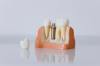
Dental implants stand out as the gold standard for replacing missing teeth, offering a permanent solution that mimics the natural tooth structure. At the heart of this procedure is a titanium post, surgically embedded into the jawbone, which acts as an artificial root. This post fuses with the bone over time—a process called osseointegration—creating a stable foundation for a custom-made crown. Unlike dentures or bridges, implants don’t rely on adjacent teeth for support, preserving the integrity of surrounding teeth and bone.
The process begins with a thorough evaluation, including X-rays and 3D imaging, to assess bone density and plan the implant placement. For adults over 18 with fully developed jawbones, implants are generally recommended, though younger patients may need to wait. The surgery itself is performed under local anesthesia, with sedation options available for anxious patients. Post-surgery, patients are advised to stick to soft foods for 1–2 weeks and avoid smoking, as it can impair healing. Osseointegration typically takes 3–6 months, during which the implant integrates seamlessly with the jawbone.
One of the most compelling advantages of dental implants is their longevity. With proper care, including regular brushing, flossing, and dental check-ups, implants can last a lifetime. This makes them a cost-effective option in the long run, despite the higher upfront cost compared to alternatives like bridges or dentures. Additionally, implants prevent bone loss, a common issue with missing teeth, by stimulating the jawbone just like natural tooth roots. This not only preserves facial structure but also maintains overall oral health.
While dental implants boast a high success rate—around 95%—they aren’t suitable for everyone. Patients with insufficient bone density may require a bone graft before implant placement, adding time and complexity to the process. Conditions like uncontrolled diabetes or autoimmune disorders can also affect healing and eligibility. For those who qualify, however, implants offer unparalleled stability, functionality, and aesthetics, allowing individuals to eat, speak, and smile with confidence.
In summary, dental implants represent a transformative solution for missing teeth, combining durability, natural appearance, and oral health benefits. By replacing both the root and the crown, they address the functional and aesthetic shortcomings of other tooth replacement options. For patients seeking a long-term, reliable solution, implants are often the best choice, provided they meet the necessary health criteria and commit to proper aftercare.
How Braces Gently Pull Teeth Forward: The Orthodontic Process Explained
You may want to see also
Dental Bridges: Fixed prosthetics anchored to adjacent teeth to fill the gap of a missing tooth
Dental bridges are a time-tested solution for replacing a missing tooth, offering both functional and aesthetic benefits. Unlike removable dentures, bridges are fixed prosthetics that rely on adjacent teeth for support, creating a stable and natural-looking restoration. The process begins with the preparation of the neighboring teeth, which are reshaped to accommodate crowns. These crowns act as anchors, holding the artificial tooth—known as a pontic—in place. Made from materials like porcelain, ceramic, or metal alloys, the pontic is custom-designed to match the color, shape, and size of the patient’s natural teeth, ensuring seamless integration into the smile.
The installation of a dental bridge typically requires two or more visits to the dentist. During the first appointment, the adjacent teeth are prepared, and impressions are taken to create a precise model for the bridge. A temporary bridge may be placed to protect the exposed teeth while the permanent one is fabricated in a dental lab. At the second visit, the temporary bridge is removed, and the permanent bridge is carefully fitted, adjusted, and cemented into place. Proper oral hygiene is crucial post-installation, as the anchored crowns can accumulate plaque if not cleaned thoroughly. Regular flossing with a bridge threader or water flosser is recommended to maintain gum health and prevent decay.
While dental bridges are durable and can last 10–15 years with proper care, they are not without limitations. The need to alter healthy adjacent teeth for crown placement is a significant consideration, as this process is irreversible. Additionally, bridges do not address bone loss in the jaw, which can occur after tooth extraction. For patients concerned about preserving bone structure, alternatives like dental implants may be more suitable. However, bridges remain a cost-effective and reliable option for many, particularly those seeking a non-surgical solution.
Choosing a dental bridge involves a collaborative decision between the patient and dentist, factoring in oral health, budget, and personal preferences. For instance, a traditional bridge is ideal when healthy teeth flank the gap, while a cantilever bridge may be used if only one adjacent tooth is available. Maryland bridges, which use a metal or porcelain framework bonded to the back of adjacent teeth, offer a more conservative approach but are typically recommended for front teeth due to their reduced strength. Regardless of the type, bridges restore not only the appearance of a smile but also the ability to chew and speak comfortably, making them a valuable option in tooth replacement.
Understanding the Process: How Dentists Implant a Fake Tooth
You may want to see also
Partial Dentures: Removable appliances with replacement teeth attached to a gum-colored base
Partial dentures are a versatile solution for those missing one or more teeth but not an entire arch. Unlike fixed bridges or implants, these removable appliances offer flexibility and affordability, making them a popular choice for patients seeking a non-invasive option. The key to their design lies in the gum-colored base, typically made from acrylic or nylon, which blends seamlessly with natural gum tissue. Replacement teeth, crafted from durable materials like acrylic or porcelain, are attached to this base, ensuring a natural appearance and functional bite. This combination of aesthetics and practicality addresses both the cosmetic and functional concerns of tooth loss.
The process of obtaining partial dentures begins with a thorough dental examination, during which the dentist assesses the condition of the remaining teeth and gums. Impressions of the mouth are then taken to create a custom-fit appliance. Patients should be aware that adjustments may be necessary to ensure comfort and proper alignment. Once fitted, partial dentures restore the ability to chew and speak clearly, while also preventing remaining teeth from shifting into the gap. However, they require diligent care, including daily cleaning and periodic professional check-ups, to maintain their integrity and appearance.
One of the most appealing aspects of partial dentures is their adaptability. They can replace a single missing tooth or multiple teeth in different areas of the mouth, making them suitable for a wide range of patients. For instance, a patient missing a molar and a front tooth can have both replaced with a single partial denture, tailored to fit their unique oral anatomy. This customization ensures that the appliance feels secure and natural, minimizing the learning curve associated with wearing a removable device.
Despite their benefits, partial dentures are not without limitations. They rely on the support of adjacent teeth, which are often fitted with metal clasps for stability. While these clasps are discreet, they may be visible in certain cases, particularly when smiling or speaking. Additionally, some patients may experience initial discomfort or difficulty adapting to the appliance. Over time, the mouth may change shape due to bone resorption, requiring relining or replacement of the denture. Regular follow-ups with a dentist are essential to address these issues and ensure long-term success.
For those considering partial dentures, practical tips can enhance the experience. Start by practicing speaking and eating with the appliance in place, gradually increasing the complexity of foods as comfort improves. Avoid sticky or hard foods that could damage the denture, and always remove it before cleaning to prevent breakage. Store the denture in water or a soaking solution when not in use to maintain its shape. With proper care and realistic expectations, partial dentures can be a reliable, cost-effective solution for restoring a confident smile and functional bite.
Exploring the Unique Bear Head Tooth Mushroom: Identification and Uses
You may want to see also
All-on-4 Implants: Full-arch restoration using four implants to support a fixed denture
For patients facing the loss of an entire arch of teeth, the All-on-4 implant technique offers a revolutionary solution. This method strategically places four dental implants in the jawbone, acting as a sturdy foundation for a full arch of fixed, non-removable teeth. Unlike traditional dentures that rest on gums, All-on-4 implants provide a more stable, natural-feeling, and long-lasting solution.
Imagine regaining the ability to eat, speak, and smile with confidence, all while enjoying the comfort and security of teeth that function like your own.
The All-on-4 procedure is a meticulously planned process. First, a comprehensive dental examination, including 3D imaging, determines the optimal implant placement. This ensures the implants are positioned in areas of the jawbone with sufficient density to support the prosthesis. During surgery, typically performed under local anesthesia or sedation, the implants are strategically angled to maximize bone utilization and distribute chewing forces evenly. A temporary denture is often attached immediately, allowing patients to leave the office with a functional set of teeth. After a healing period, usually several months, a permanent, custom-made denture is securely attached to the implants.
This immediate loading approach is a key advantage of All-on-4, minimizing the time patients spend without teeth and allowing for faster adaptation to the new prosthesis.
While All-on-4 offers significant benefits, it's not suitable for everyone. Good oral health and sufficient bone density are crucial for implant success. Patients with severe bone loss may require bone grafting procedures prior to implant placement. Additionally, meticulous oral hygiene is essential to prevent implant complications like peri-implantitis, a gum disease that can lead to implant failure. Regular dental checkups and professional cleanings are vital for long-term implant health.
Compared to traditional dentures, All-on-4 implants offer superior stability, comfort, and chewing efficiency. They prevent bone loss, a common issue with dentures, by stimulating the jawbone like natural tooth roots. This helps maintain facial structure and prevents the sunken appearance often associated with tooth loss. While the initial cost of All-on-4 may be higher than dentures, the long-term benefits and improved quality of life make it a worthwhile investment for many patients seeking a permanent solution to full-arch tooth loss.
Understanding the Tooth Bonding Process: A Dentist's Step-by-Step Guide
You may want to see also
Bone Grafting: Procedure to rebuild jawbone density before implant placement for stability
Tooth loss can lead to jawbone deterioration, a natural consequence of the absence of stimulation from the tooth root. This process, known as resorption, compromises the structural integrity of the jaw, making it unsuitable for dental implants without intervention. Bone grafting emerges as a critical procedure in such scenarios, serving as a foundation for successful implant placement by restoring lost bone density and volume.
The bone grafting procedure begins with a thorough assessment of the patient's oral health and the extent of bone loss. Dentists utilize advanced imaging techniques, such as cone-beam computed tomography (CBCT), to create a detailed 3D model of the jaw, enabling precise planning of the grafting process. The graft material, which can be autogenous (from the patient's own body), allogenic (from a donor), xenogenic (from an animal source), or synthetic, is carefully selected based on the specific needs of the case. Autogenous grafts, often harvested from the chin or ramus, are considered the gold standard due to their osteogenic properties, but they require an additional surgical site, which may not be suitable for all patients.
During the procedure, the dentist creates a small incision in the gum tissue to expose the area of bone deficiency. The graft material is then placed into the deficient area, often in conjunction with a membrane to protect the graft and promote healing. In some cases, growth factors or bone morphogenetic proteins (BMPs) may be added to enhance the body's natural ability to regenerate bone. The incision is closed with sutures, and the healing process begins. This phase is crucial, typically requiring several months, during which the graft integrates with the existing bone, fostering new bone growth and strengthening the jaw structure.
Post-operative care is essential to ensure the success of the bone graft. Patients are advised to follow a soft diet, avoid strenuous activities, and maintain excellent oral hygiene to prevent infection. Pain management is typically achieved with over-the-counter medications, such as ibuprofen (600-800 mg every 6-8 hours) or acetaminophen (500-1000 mg every 4-6 hours), as prescribed by the dentist. Regular follow-up appointments are scheduled to monitor healing and determine the optimal timing for implant placement, usually when the graft has fully integrated and the bone is stable.
Bone grafting is a testament to the advancements in dental implantology, offering a second chance for patients with significant bone loss to achieve a stable and functional dental implant. While the procedure requires patience and commitment, the long-term benefits of a restored smile and improved oral health make it a worthwhile investment. For individuals considering dental implants but facing bone density challenges, consulting with a specialized dentist can provide clarity and a tailored treatment plan, ensuring the best possible outcome.
Understanding Dental Implants: A Single Tooth Replacement Solution Explained
You may want to see also
Frequently asked questions
Dentists commonly use dental implants, dental bridges, and removable partial dentures to replace a missing tooth. The choice depends on the patient's oral health, budget, and preferences.
A dental implant involves surgically placing a titanium post into the jawbone, which acts as a root. Once the bone heals and fuses with the implant, a crown is attached to the post, providing a permanent and natural-looking replacement.
A dental bridge is a fixed restoration that uses the adjacent teeth for support. It consists of a false tooth (pontic) held in place by crowns on the neighboring teeth, effectively "bridging" the gap left by the missing tooth.
Removable partial dentures are a cost-effective and non-invasive option. They consist of a replacement tooth attached to a gum-colored base, which clasps onto existing teeth. While they are removable for cleaning, they may not be as stable as implants or bridges.
The timeline varies: dental implants can take 3–6 months due to healing and osseointegration, dental bridges typically take 2–3 weeks, and removable partial dentures can be ready in 2–4 weeks after impressions are taken.