Olivia Bennett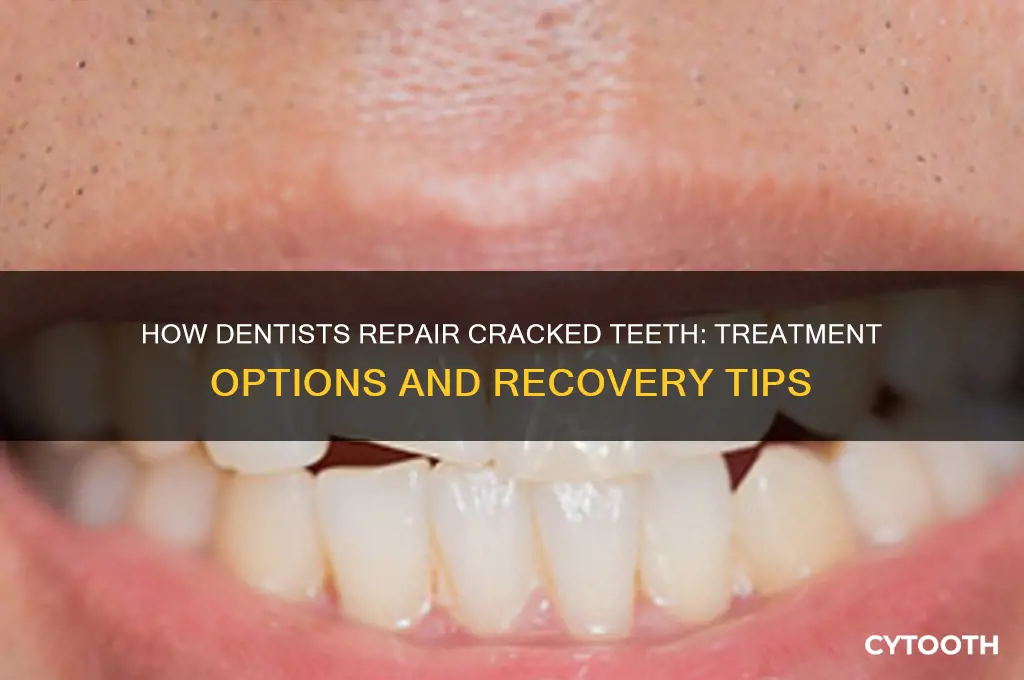
Dentists employ various methods to fix a cracked tooth, depending on the severity and location of the damage. For minor cracks, they may simply smooth the tooth's surface to prevent further issues or apply dental bonding, a tooth-colored resin, to restore its shape and appearance. More extensive cracks might require a dental crown, a custom-fitted cap that covers the entire tooth, providing strength and protection. In cases where the crack extends into the pulp, a root canal treatment may be necessary to remove the damaged tissue and save the tooth. Early diagnosis and treatment are crucial to prevent complications, such as infection or tooth loss, and to ensure the best possible outcome for the patient's oral health.
| Characteristics | Values |
|---|---|
| Treatment Options | Depends on severity: bonding, crowns, root canal, extraction, or veneers. |
| Bonding | Used for minor cracks; resin is applied and shaped to restore the tooth. |
| Crowns | For moderate to severe cracks; a custom cap covers the entire tooth. |
| Root Canal | Required if the crack extends to the pulp, causing infection or pain. |
| Extraction | Last resort for severely cracked teeth that cannot be saved. |
| Veneers | Used for front teeth with minor cracks to improve appearance. |
| Diagnosis Methods | Visual examination, X-rays, dye staining, or transillumination. |
| Prevention | Avoid chewing hard foods, wear mouthguards for sports, and regular checkups. |
| Recovery Time | Varies: bonding (1 visit), crowns (2-3 visits), root canal (1-2 visits). |
| Cost | Bonding ($100-$400), Crowns ($800-$1,500), Root Canal ($1,000-$2,000). |
| Aftercare | Avoid hard or sticky foods, maintain oral hygiene, and follow dentist's advice. |
| Success Rate | High with early treatment; depends on crack severity and treatment type. |
What You'll Learn
- Assessing Crack Severity: Dentists examine crack depth, location, and symptoms to determine treatment
- Cleaning and Prepping: Removing debris and shaping the tooth for repair
- Filling or Bonding: Using composite resin to fill small cracks and restore shape
- Crown Placement: Capping severely cracked teeth with a protective crown
- Root Canal Therapy: Treating cracks affecting the pulp to save the tooth

Assessing Crack Severity: Dentists examine crack depth, location, and symptoms to determine treatment
A cracked tooth isn't a one-size-fits-all problem. Dentists don't just glance and grab a drill. They meticulously assess the crack's severity, considering depth, location, and symptoms, to tailor the most effective treatment. Imagine a hairline fracture on a front tooth versus a deep split reaching the nerve – vastly different scenarios demanding distinct approaches.
Understanding the crack's characteristics is crucial because it dictates the treatment's complexity, potential for saving the tooth, and long-term prognosis.
Depth Matters: Cracks are like icebergs – what's visible above the surface might be just a fraction of the problem. Dentists use specialized tools and sometimes X-rays to determine if the crack extends below the gum line or into the tooth's pulp chamber, where nerves and blood vessels reside. Superficial cracks might require minimal intervention, like smoothing or bonding, while deeper cracks could necessitate a root canal or even extraction.
Think of it like a splinter: a shallow one might just need tweezers, but a deep splinter embedded in muscle requires more invasive removal.
Location Dictates Treatment: The tooth's position in your mouth significantly influences treatment options. A crack on a front tooth, highly visible and crucial for aesthetics, might be treated with cosmetic bonding or a veneer to restore appearance. A crack on a molar, bearing the brunt of chewing forces, might require a crown for strength and protection. It's akin to repairing a crack in a window versus a crack in a load-bearing beam – the structural demands are entirely different.
Symptoms Provide Clues: Pain, sensitivity to hot or cold, and difficulty chewing are all red flags signaling a potentially serious crack. Dentists carefully evaluate these symptoms, their intensity, and their duration to gauge the crack's severity and potential nerve involvement. Imagine a car engine – a slight knocking sound might be a minor issue, but a loud clunking and smoke indicate a major problem requiring immediate attention.
By meticulously assessing crack depth, location, and symptoms, dentists can move beyond a superficial diagnosis and devise a treatment plan that addresses the root cause, preserves the tooth whenever possible, and ensures long-term oral health. This detailed evaluation is the cornerstone of successful cracked tooth treatment.
Understanding Cavity Formation: How Decay Eats Away at Your Teeth
You may want to see also
Cleaning and Prepping: Removing debris and shaping the tooth for repair
Before any repair can begin, the cracked tooth must be thoroughly cleaned and prepared, a critical step often overlooked by those outside the dental profession. This process is not merely about aesthetics; it’s about ensuring the longevity and success of the repair. Debris, bacteria, and damaged tissue left unattended can lead to infection, further decay, or even failure of the restoration. Thus, the dentist’s first task is to transform a compromised tooth into a stable foundation for repair.
The cleaning phase begins with the removal of loose fragments and debris from the crack. Using fine instruments like explorers and scalers, the dentist carefully extracts any foreign material or decayed enamel that could interfere with the bonding process. For deeper cracks, a small round burr or laser may be employed to gently debride the area, ensuring no microscopic particles remain. This step is meticulous, as even the smallest remnant can undermine the repair’s integrity.
Shaping the tooth follows cleaning, a process akin to sculpting. The dentist uses high-speed drills and fine-grit burs to smooth jagged edges and create a uniform surface. This shaping is tailored to the repair method—whether a filling, crown, or veneer. For instance, a tooth receiving a crown may require more reduction to accommodate the restoration, while a minor crack filled with composite resin demands minimal alteration. Precision here is key, as improper shaping can weaken the tooth or compromise the fit of the restoration.
Throughout cleaning and prepping, the dentist must balance aggression with caution. Overzealous debridement or shaping can expose the tooth’s pulp, increasing sensitivity or necessitating a root canal. Conversely, inadequate preparation can lead to poor adhesion or recurrent decay. Techniques like air-water spray and intermittent cooling prevent heat buildup from drilling, which could damage the tooth’s structure. Additionally, rubber dams are often used to isolate the tooth, keeping it dry and free from saliva, which can interfere with bonding materials.
The takeaway is clear: cleaning and prepping are not preliminary steps but foundational ones. They require a blend of technical skill, artistic precision, and clinical judgment. By removing debris and shaping the tooth with care, the dentist sets the stage for a repair that not only restores function but also preserves the tooth’s natural integrity. This phase, though unseen by the patient, is where the true craftsmanship of dentistry shines.
Dentists' X-Ray Humor: Why They Call Them Tooth Pics
You may want to see also
Filling or Bonding: Using composite resin to fill small cracks and restore shape
For minor cracks that haven’t compromised the tooth’s structure, composite resin bonding offers a minimally invasive, aesthetically pleasing solution. This tooth-colored material is meticulously sculpted to fill the crack, restore the tooth’s natural shape, and blend seamlessly with surrounding enamel. Unlike more extensive procedures, bonding requires no removal of healthy tooth structure, making it a conservative yet effective approach.
The process begins with surface preparation: the dentist lightly etches the enamel around the crack to create a rough surface, enhancing the resin’s adhesion. A conditioning liquid is then applied, followed by the composite resin, which is layered into the crack and shaped to match the tooth’s contour. A specialized curing light hardens the resin, and the dentist polishes it to a smooth finish. This procedure typically takes 30–60 minutes per tooth and requires no anesthesia unless the crack is near the nerve.
While bonding is durable, it’s not permanent. The lifespan of composite resin ranges from 5–10 years, depending on oral habits like nail-biting or chewing hard foods, which can chip or wear down the material. Patients are advised to avoid staining agents like coffee, tea, and red wine for the first 48 hours post-procedure, as the resin can absorb pigments during this initial curing period. Regular dental check-ups are essential to monitor the bonding and address any issues early.
Compared to alternatives like veneers or crowns, bonding is cost-effective and immediate, with prices ranging from $100–$400 per tooth, depending on location and complexity. However, it’s best suited for small, superficial cracks; deeper fractures may require more robust solutions. For children and teens, bonding is often preferred for its simplicity and preservation of natural tooth structure, though it may need replacement as the child grows.
In summary, composite resin bonding is an ideal fix for minor cracks, offering quick, affordable, and natural-looking results. While it demands mindful aftercare and periodic replacement, its ability to restore both function and appearance makes it a go-to option for many patients. Always consult a dentist to determine if bonding is the right choice for your specific crack.
Tooth Replacement Options: How Dentists Restore Your Smile Naturally
You may want to see also
Crown Placement: Capping severely cracked teeth with a protective crown
A severely cracked tooth is a dental emergency, and crown placement is often the most effective solution to save the tooth and restore its function. The process begins with a thorough examination, often involving X-rays, to assess the extent of the damage. If the crack extends into the pulp, root canal therapy may be necessary before proceeding with the crown. Once the tooth is prepared, the dentist files down the damaged area to create a stable base for the crown. This step is crucial, as it ensures the crown fits seamlessly and provides the necessary protection.
The crown itself is a custom-made cap, typically crafted from materials like porcelain, ceramic, or metal alloys, designed to mimic the natural appearance and strength of the tooth. Porcelain fused to metal is a popular choice, offering both durability and aesthetic appeal. The fabrication process can take a few weeks if done in a dental lab, though advancements like CAD/CAM technology allow for same-day crowns in some cases. During this waiting period, a temporary crown is placed to protect the tooth from further damage or sensitivity.
Placement of the permanent crown involves a precise fitting process. The dentist checks the crown’s alignment with the surrounding teeth, ensuring proper bite and comfort. Once satisfied, the crown is cemented into place using a strong dental adhesive. Patients are advised to avoid hard or sticky foods for the first 24 hours to allow the cement to fully set. Post-placement care includes maintaining good oral hygiene and regular dental check-ups to monitor the crown’s condition.
While crown placement is highly effective, it’s not without considerations. The cost can range from $800 to $1,500 per tooth, depending on the material and location. Insurance may cover a portion, but out-of-pocket expenses are common. Additionally, crowned teeth are not invincible; poor oral hygiene or habits like teeth grinding can still compromise their longevity. A night guard may be recommended for patients with bruxism to protect the crown and underlying tooth.
In comparison to alternatives like dental bonding or veneers, crowns offer superior strength and coverage for severely cracked teeth. Bonding, for instance, is less invasive but may not provide adequate protection for extensive damage. Veneers, while cosmetic, are not designed to address structural issues. Crowns, however, address both form and function, making them the gold standard for severe cracks. With proper care, a dental crown can last 10–15 years, making it a worthwhile investment in oral health.
Understanding Dental Implants: A Single Tooth Replacement Solution Explained
You may want to see also
Root Canal Therapy: Treating cracks affecting the pulp to save the tooth
A cracked tooth can be a painful and worrying experience, especially when the damage extends deep enough to affect the pulp—the innermost layer of the tooth containing nerves and blood vessels. When this happens, root canal therapy becomes a critical intervention to save the tooth and prevent further complications. This procedure is not just about alleviating pain; it’s about preserving the natural tooth structure and avoiding the need for extraction. By removing the infected or damaged pulp, cleaning the root canal system, and sealing it to prevent reinfection, dentists can restore functionality and extend the life of the tooth.
The process begins with a thorough examination, often involving X-rays, to assess the extent of the crack and its impact on the pulp. Once diagnosed, the dentist administers local anesthesia to ensure the procedure is painless. The next step involves creating a small opening in the tooth’s crown to access the pulp chamber. Using specialized instruments, the dentist carefully removes the damaged pulp tissue, cleans the canal, and shapes it to prepare for filling. This cleaning process is meticulous, as it ensures no bacteria or debris remain that could cause future infections. After cleaning, the canal is filled with a biocompatible material called gutta-percha, which seals the space and prevents microbial invasion.
One of the key advantages of root canal therapy is its ability to save a tooth that might otherwise be lost. While some cracks may seem minor, those affecting the pulp can lead to severe infections, abscesses, or even systemic health issues if left untreated. For instance, an untreated pulp infection can spread to the bone and surrounding tissues, causing significant pain and swelling. Root canal therapy not only addresses the immediate issue but also prevents these long-term consequences. It’s a proactive approach that aligns with modern dentistry’s focus on preservation rather than extraction.
Patients often wonder about the longevity of a tooth after root canal therapy. With proper care, a treated tooth can last a lifetime. However, it’s essential to follow post-procedure instructions diligently. This includes avoiding hard or sticky foods for a few days, maintaining good oral hygiene, and scheduling regular dental check-ups. In some cases, the dentist may recommend a dental crown to strengthen the tooth, especially if it’s a molar or has extensive damage. A crown acts as a protective cap, restoring the tooth’s shape, size, and strength while enhancing its appearance.
Root canal therapy is a testament to the advancements in dental care, offering a reliable solution for cracks that compromise the pulp. It’s a procedure that combines precision, technology, and patient care to achieve optimal outcomes. While the idea of a root canal may evoke anxiety for some, understanding its purpose and process can alleviate concerns. Ultimately, it’s a valuable treatment that not only saves teeth but also preserves smiles and overall oral health. For anyone facing a cracked tooth, consulting a dentist promptly can make all the difference in determining whether root canal therapy is the right path forward.
Understanding the Process: How Dentists Implant a Fake Tooth
You may want to see also
Frequently asked questions
For minor cracks, a dentist may smooth the rough edges or apply a tooth-colored resin (dental bonding) to restore the tooth’s appearance and prevent further damage.
A severely cracked tooth may require a dental crown to hold the tooth together and protect it from breaking further. In some cases, a root canal may be needed if the crack affects the pulp.
Many cracked teeth can be saved with prompt treatment, such as bonding, crowns, or root canals. Extraction is only considered if the crack extends below the gum line or the tooth is severely damaged beyond repair.