Hailey Morgan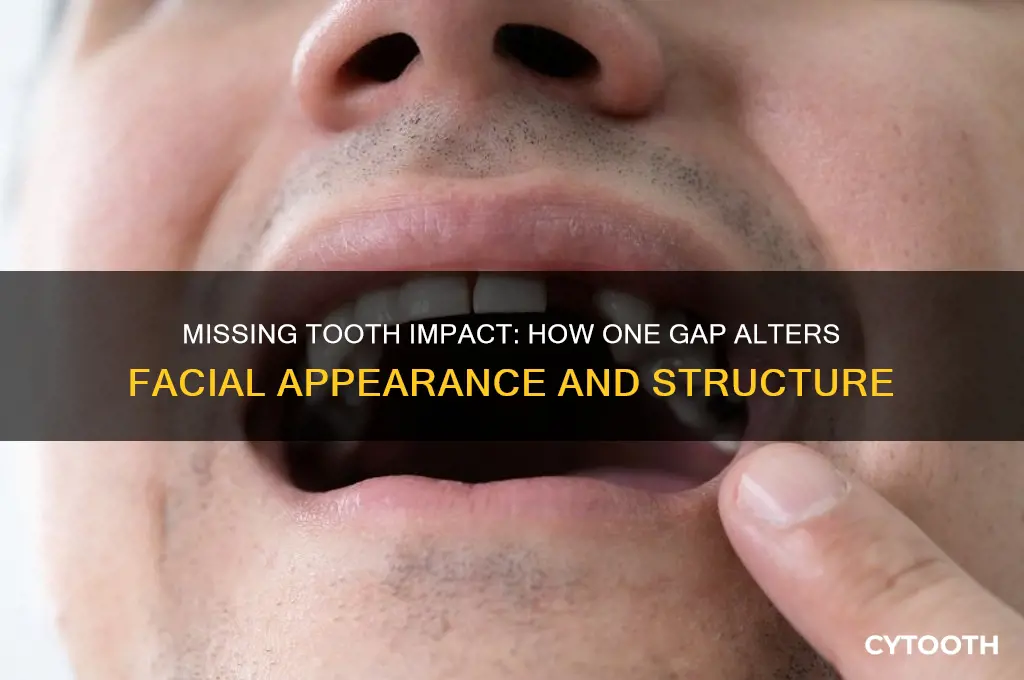
A missing tooth, though seemingly minor, can have a surprising impact on your facial appearance. Beyond the obvious gap in your smile, the absence of a tooth can lead to subtle yet noticeable changes in facial structure over time. The teeth play a crucial role in supporting the lips and cheeks, and when one is missing, the surrounding teeth may shift, causing the jawbone to deteriorate and the facial muscles to sag. This can result in a sunken or asymmetrical appearance, making you look older or altering your overall facial harmony. Understanding these potential changes highlights the importance of addressing a missing tooth not just for oral health, but also for maintaining your facial aesthetics.
| Characteristics | Values |
|---|---|
| Facial Symmetry | Loss of a tooth can disrupt facial symmetry, especially if the missing tooth is visible when smiling or speaking. |
| Jawbone Structure | The jawbone begins to deteriorate (resorb) after tooth loss, leading to a sunken or collapsed appearance in the affected area. |
| Lip Support | Front teeth provide support to the upper lip. A missing front tooth can cause the lip to appear thinner or less defined. |
| Cheek Fullness | Tooth loss can reduce cheek support, leading to a hollow or sunken appearance in the cheeks. |
| Bite Alignment | A missing tooth can cause adjacent teeth to shift, altering the bite and potentially affecting facial contours. |
| Aging Appearance | Premature aging effects, such as deepened nasolabial folds or a more pronounced chin, can occur due to facial structure changes. |
| Speech Changes | Missing teeth, especially front teeth, can alter speech patterns, which may indirectly affect facial expressions. |
| Psychological Impact | Self-consciousness about appearance due to a missing tooth can lead to changes in facial expressions and overall demeanor. |
| Temporal Effects | Changes become more pronounced over time as jawbone loss progresses and facial muscles adapt to the altered structure. |
| Restoration Impact | Proper restoration (e.g., implants, bridges) can mitigate or reverse many of these facial changes. |
What You'll Learn
- Impact on Facial Symmetry: Missing teeth can disrupt facial balance, altering overall appearance subtly or significantly
- Jawbone and Gum Changes: Tooth loss leads to bone resorption, causing sunken cheeks and gum recession
- Aging Effects: Premature aging signs like wrinkles and sagging skin may appear due to tooth absence
- Bite and Speech Alterations: Shifts in bite alignment can change facial structure and speech clarity
- Psychological and Social Effects: Confidence and self-esteem may drop, indirectly affecting facial expressions and demeanor

Impact on Facial Symmetry: Missing teeth can disrupt facial balance, altering overall appearance subtly or significantly
Missing a single tooth might seem insignificant, but its impact on facial symmetry can be profound. The human face relies on a delicate balance of proportions, where each feature contributes to an overall harmonious appearance. When a tooth is lost, especially in the anterior region, this equilibrium is disrupted. The gap left behind can cause the surrounding teeth to shift, leading to misalignment and an uneven smile. Over time, this asymmetry becomes more pronounced, affecting not just the mouth but the entire facial structure. For instance, the absence of a front tooth can make the face appear lopsided, drawing attention to the imbalance rather than the individual’s natural features.
Consider the skeletal and muscular changes that occur due to a missing tooth. The alveolar bone, which supports the teeth, begins to resorb when a tooth is lost, causing the jawbone to shrink. This bone loss can alter the lower third of the face, making it appear sunken or collapsed. Additionally, the muscles around the mouth may sag or become less supported, contributing to a more aged appearance. These changes are often subtle at first but can become more noticeable over months or years, particularly in individuals over 40, whose natural bone density and skin elasticity are already declining.
To mitigate these effects, early intervention is key. Dental implants are the gold standard for restoring both function and aesthetics, as they replace the missing tooth root and prevent bone loss. Alternatively, bridges or partial dentures can fill the gap, though they do not address bone resorption. For those seeking non-invasive options, orthodontic treatments like clear aligners can sometimes close small gaps, but their effectiveness depends on the case. Regardless of the method, addressing the issue promptly can preserve facial symmetry and prevent further deterioration of the jaw structure.
A comparative analysis reveals that the impact of a missing tooth varies based on its location. Anterior teeth, being highly visible, have a more immediate effect on facial aesthetics. Posterior teeth, while less noticeable, can still influence symmetry by affecting chewing mechanics and causing the face to appear asymmetrical over time. For example, losing a molar might lead to over-eruption of the opposing tooth, altering the bite and indirectly affecting facial contours. This highlights the interconnectedness of dental health and facial appearance, emphasizing the need for comprehensive care.
In practical terms, maintaining facial symmetry after tooth loss requires a multifaceted approach. Regular dental check-ups are essential to monitor bone health and detect early signs of shifting teeth. Patients should also be aware of lifestyle factors that exacerbate bone loss, such as smoking or poor nutrition, and take steps to mitigate them. For those already experiencing asymmetry, combining dental restoration with facial rejuvenation techniques, like dermal fillers or muscle relaxants, can help restore balance. Ultimately, understanding the relationship between teeth and facial structure empowers individuals to make informed decisions about their oral and overall health.
Fixing a Broken Tooth with a Filling: Repair Options Explained
You may want to see also
Jawbone and Gum Changes: Tooth loss leads to bone resorption, causing sunken cheeks and gum recession
Tooth loss isn't just a gap in your smile; it's a catalyst for a chain reaction in your jawbone and gums. When a tooth is missing, the alveolar bone, which supports the teeth, no longer receives the stimulation it needs from the tooth's root. This lack of stimulation triggers a process called bone resorption, where the body begins to break down and reabsorb the bone tissue. Over time, this can lead to a noticeable change in facial structure, particularly in the area where the tooth is missing.
Imagine your jawbone as a foundation supporting a house. If one of the pillars is removed, the surrounding structure starts to weaken and shift. Similarly, when a tooth is lost, the adjacent teeth may begin to tilt or shift into the empty space, causing misalignment. This movement can exacerbate bone resorption, as the remaining teeth no longer provide adequate support to the jawbone. The result? A gradual collapse of the facial structure, often manifesting as sunken cheeks or a hollowed appearance around the mouth.
Gum recession is another silent consequence of tooth loss. The gums rely on the presence of teeth for support and stability. When a tooth is missing, the gums lose their anchor, leading to a receding gum line. This recession not only affects the aesthetics of your smile but also exposes the roots of adjacent teeth, increasing the risk of decay and sensitivity. For instance, a study published in the *Journal of Periodontology* found that gum recession progresses at an average rate of 0.1 mm per year in areas with missing teeth, compared to 0.05 mm in areas with intact teeth.
To mitigate these changes, proactive measures are essential. Dental implants are a gold standard solution, as they mimic the natural tooth structure, including the root, which helps preserve the jawbone and prevent resorption. Alternatively, bone grafting can be performed to rebuild lost bone tissue before implant placement. For those not suitable for implants, removable partial dentures or fixed bridges can provide support to the facial structure, though they do not halt bone resorption. Regular dental check-ups are crucial, as early intervention can slow down the progression of bone and gum changes.
In summary, one missing tooth can set off a cascade of changes in your jawbone and gums, altering your facial appearance over time. Understanding the mechanisms of bone resorption and gum recession empowers you to take timely action. Whether through implants, bone grafts, or other restorative options, addressing tooth loss promptly can help maintain not just your smile, but the integrity of your facial structure.
Saving a Cracked Tooth Under a Crown: Is It Possible?
You may want to see also
Aging Effects: Premature aging signs like wrinkles and sagging skin may appear due to tooth absence
A single missing tooth can trigger a cascade of changes in your facial structure, accelerating the aging process in ways that might surprise you. When a tooth is lost, the alveolar bone in the jaw begins to resorb, shrinking over time. This bone loss doesn’t just affect your bite—it alters the foundation of your face, leading to a sunken appearance around the cheeks and lips. As the skin loses its underlying support, it starts to sag, creating folds and wrinkles that weren’t there before. This isn’t merely a cosmetic concern; it’s a structural shift that can age your face prematurely, often within just a few years of tooth loss.
Consider the mechanics of facial aging: the skin relies on the underlying bone and muscle structure for its tautness. Without the support of a full set of teeth, the facial muscles lose their anchoring points, causing the skin to droop. For instance, a missing molar can lead to a hollowed-out look in the lower face, while a missing incisor might cause the upper lip to collapse inward, deepening nasolabial folds. These changes are particularly noticeable in individuals over 40, as skin elasticity naturally declines with age, making it less resilient to structural changes. However, even younger adults aren’t immune—prolonged tooth absence can expedite these aging signs, regardless of age.
To mitigate these effects, proactive measures are essential. Dental implants are the gold standard for replacing missing teeth, as they stimulate the jawbone and prevent resorption. Unlike dentures or bridges, implants act as artificial tooth roots, preserving facial contours and preventing the skin from sagging. For those hesitant about surgery, bone grafting can be performed to rebuild the jawbone before implant placement, ensuring a stable foundation. Additionally, facial fillers or non-surgical skin tightening treatments can temporarily address sagging skin, though they don’t address the root cause. Combining dental and dermatological interventions often yields the best results, restoring both structure and appearance.
A practical tip for anyone with a missing tooth: don’t delay treatment. The longer you wait, the more pronounced the aging effects become. Start by consulting a prosthodontist or oral surgeon to explore replacement options. If cost is a concern, consider staged treatments—for example, beginning with a bone graft and following up with an implant once finances allow. Meanwhile, incorporate skincare routines that boost collagen production, such as retinoids or vitamin C serums, to improve skin elasticity. While these won’t reverse bone loss, they can help minimize the visibility of wrinkles and sagging caused by tooth absence.
In summary, a single missing tooth isn’t just a gap in your smile—it’s a catalyst for premature aging. By understanding the structural link between teeth and facial skin, you can take targeted steps to preserve your youthful appearance. Whether through dental implants, bone grafts, or complementary skincare, addressing tooth loss promptly is key to maintaining facial harmony and staving off the signs of aging.
Alcohol After Tooth Filling: Safe or Risky? Expert Advice
You may want to see also
Bite and Speech Alterations: Shifts in bite alignment can change facial structure and speech clarity
A single missing tooth can trigger a cascade of changes, not just in your smile, but in the very structure of your face and the clarity of your speech. This isn't mere vanity; it's a biomechanical reality. Your teeth are not isolated units; they're part of a complex system where each tooth relies on its neighbors for support and proper alignment. Remove one, and the delicate balance is disrupted.
Imagine a row of dominoes. Knock one down, and the rest follow suit. Similarly, a missing tooth creates a gap, allowing surrounding teeth to shift, tilting and rotating into the empty space. This gradual movement, often imperceptible at first, alters your bite alignment. Over time, this misalignment can lead to a chain reaction, affecting the position of your jawbone and ultimately, the contours of your face.
Think of your jawbone as the foundation of your facial structure. When teeth are missing, the bone beneath them begins to resorb, shrinking due to lack of stimulation. This bone loss can lead to a sunken appearance around the mouth, making you look older and potentially altering your facial profile.
The impact isn't solely aesthetic. Your bite alignment plays a crucial role in speech production. Teeth act as articulators, helping to shape sounds and form words. A misaligned bite can lead to difficulties in pronouncing certain sounds, causing lisps, slurring, or even making it hard to enunciate clearly. Imagine trying to whistle with a gap in your teeth – the principle is similar.
The tongue, another key player in speech, relies on the teeth for precise positioning. When teeth shift due to a missing tooth, the tongue's resting position and movement patterns can be affected, further compromising speech clarity.
Addressing a missing tooth promptly is crucial to prevent these bite and speech alterations. Dental implants, bridges, or partial dentures can effectively fill the gap, restoring proper bite alignment and preventing further bone loss. Early intervention not only preserves your facial structure but also safeguards your ability to speak clearly and confidently. Remember, a healthy smile isn't just about aesthetics; it's about maintaining the intricate balance of your facial anatomy and its functional harmony.
Super Glue for Teeth: Safe Emergency Fix or Dental Disaster?
You may want to see also
Psychological and Social Effects: Confidence and self-esteem may drop, indirectly affecting facial expressions and demeanor
A single missing tooth can trigger a cascade of psychological effects, subtly reshaping how you present yourself to the world. The absence of a tooth, especially in the front of the mouth, can become a focal point of self-consciousness. Imagine a young professional, let's call her Sarah, who loses a front tooth in an accident. Suddenly, her once-confident smile, a tool she relied on to connect with clients, feels like a liability. She might find herself covering her mouth when she laughs or speaking with a hand instinctively placed over her lips. This subconscious shift in behavior is a direct result of the dent in her self-esteem.
The impact isn't just internal. Our facial expressions are a powerful form of nonverbal communication, conveying emotions and shaping social interactions. A missing tooth can lead to a tightening of the lips, a reluctance to smile fully, or even a slight downward turn at the corners of the mouth. These subtle changes, though seemingly minor, can project an air of sadness, insecurity, or even disinterest, potentially hindering social connections and professional opportunities.
Consider the social implications. A study published in the *Journal of Oral Rehabilitation* found a strong correlation between tooth loss and decreased social participation, particularly in older adults. While this study focused on multiple missing teeth, the psychological mechanisms at play are likely similar. The fear of judgment or embarrassment can lead to social withdrawal, impacting relationships and overall well-being.
Imagine a teenager, self-conscious about a missing molar, avoiding school pictures or group activities. This avoidance can snowball, leading to feelings of isolation and a diminished sense of belonging.
Addressing the psychological impact of a missing tooth is crucial. It's not just about aesthetics; it's about restoring confidence and reclaiming a full range of facial expressions. Dental implants, bridges, or dentures can not only fill the physical gap but also bridge the emotional one, allowing individuals to smile, laugh, and engage with the world with renewed self-assurance. Remember, a healthy smile is not just about teeth; it's about the confidence and joy it radiates.
Can You Glue a Tooth Back In? Dental Emergency Tips
You may want to see also
Frequently asked questions
Yes, one missing tooth can alter your facial appearance over time. The gap can cause surrounding teeth to shift, leading to changes in your bite and jaw alignment. Additionally, the loss of a tooth can result in bone loss in the jaw, causing the face to appear sunken or asymmetrical.
Facial changes after losing a tooth are gradual and may not be immediately noticeable. However, within a few months to a year, you may start to see subtle changes, such as a sunken appearance in the cheek area or slight misalignment of the jaw.
Yes, replacing a missing tooth with options like dental implants, bridges, or dentures can help restore your facial structure and prevent further changes. These solutions support the jawbone and maintain the natural contours of your face.
If a missing tooth is not replaced, the facial changes can become more pronounced over time. The jawbone may deteriorate, leading to a collapsed or aged appearance in the affected area. Replacing the tooth is essential to preserving facial aesthetics and oral health.