Logan Hayes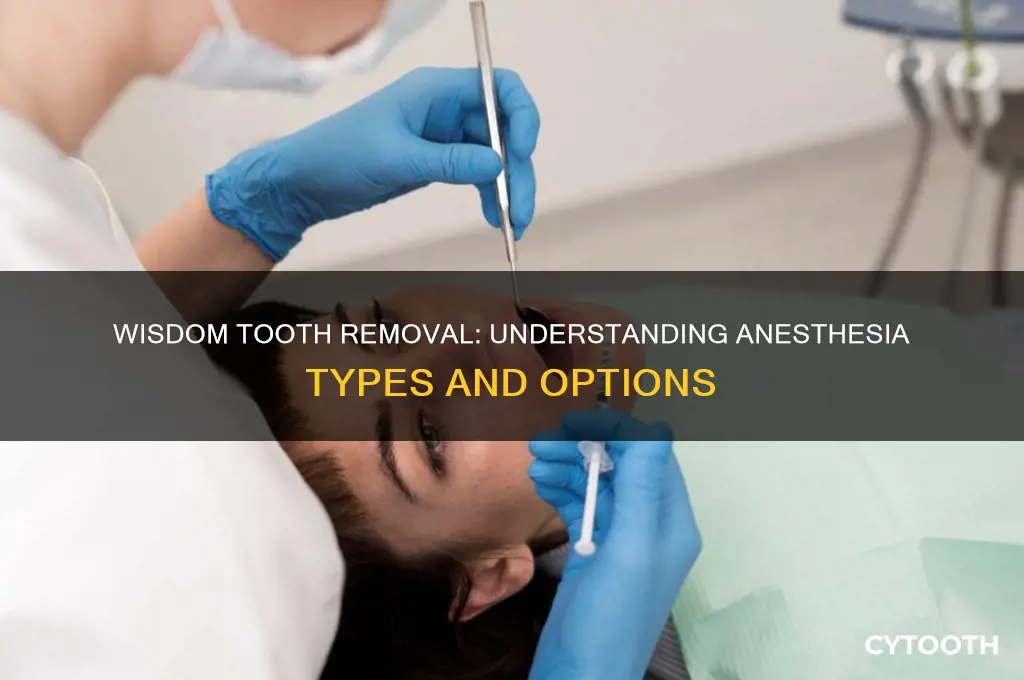
Wisdom tooth removal is a common dental procedure, and the type of anesthesia used depends on the complexity of the extraction and the patient’s comfort level. For simple extractions, local anesthesia, such as lidocaine or novocaine, is typically administered to numb the area around the tooth, allowing the patient to remain awake during the procedure. However, for more complex cases or patients with anxiety, sedation options like nitrous oxide (laughing gas), oral sedatives, or intravenous (IV) sedation may be used to induce relaxation or even a light sleep. In rare or particularly challenging cases, general anesthesia might be employed, though this is less common and usually reserved for surgical centers or hospitals. The choice of anesthesia is determined by the oral surgeon or dentist based on individual needs and the specifics of the extraction.
What You'll Learn
- Local Anesthesia: Numbing the area around the tooth, commonly used for simple extractions
- IV Sedation: Administered through a vein, induces relaxation and reduces anxiety during the procedure
- General Anesthesia: Patient is fully asleep, typically reserved for complex or multiple extractions
- Nitrous Oxide: Laughing gas for mild sedation, helps patients relax during the surgery
- Combination Techniques: Mixing local anesthesia with sedation for comfort and pain control

Local Anesthesia: Numbing the area around the tooth, commonly used for simple extractions
Local anesthesia is the cornerstone of simple wisdom tooth extractions, offering a targeted and effective solution for pain management during the procedure. By administering a numbing agent directly to the area surrounding the tooth, dentists can isolate the site, ensuring patient comfort without the need for more invasive techniques. This method is particularly suited for straightforward cases where the tooth is fully erupted and easily accessible, making it a go-to choice for many oral surgeons.
The process begins with the application of a topical anesthetic gel to the gums, reducing discomfort from the subsequent injection. Lidocaine, a commonly used local anesthetic, is then delivered via a fine needle into the gum tissue near the wisdom tooth. The dosage typically ranges from 1.8 to 3.6 mL, depending on the patient’s needs and the complexity of the extraction. This numbing effect takes hold within minutes, allowing the dentist to proceed with the removal while the patient remains awake and alert but free from pain.
One of the key advantages of local anesthesia is its precision. Unlike general anesthesia, which affects the entire body, local anesthesia confines its effects to the targeted area, minimizing risks such as nausea, dizziness, or prolonged recovery times. This makes it an ideal option for healthy adults and older teenagers undergoing routine wisdom tooth extractions. However, it’s essential for patients to communicate any allergies or sensitivities to anesthetics beforehand to ensure safety.
Practical tips for patients include avoiding eating or drinking for at least 6 hours before the procedure to reduce the risk of nausea during the extraction. After the procedure, patients should refrain from rinsing, spitting, or using straws for 24 hours to prevent dislodging the blood clot that forms in the extraction site. While the numbing effect typically lasts 1 to 2 hours, patients may experience mild soreness as it wears off, which can be managed with over-the-counter pain relievers.
In summary, local anesthesia provides a safe, efficient, and minimally invasive solution for wisdom tooth removal, particularly in simple cases. Its targeted approach ensures patient comfort while allowing for a quicker recovery compared to more extensive anesthesia methods. By understanding the process and following post-procedure care guidelines, patients can navigate the experience with confidence and ease.
Soothe Sore Wisdom Tooth Pain: Essential Remedies and Relief Tips
You may want to see also
IV Sedation: Administered through a vein, induces relaxation and reduces anxiety during the procedure
IV sedation stands out as a highly effective option for wisdom tooth removal, particularly for patients experiencing anxiety or those undergoing complex extractions. Administered directly into the bloodstream, this method ensures rapid onset of relaxation, typically within minutes. The sedative, often a combination of medications like midazolam, fentanyl, and propofol, is carefully titrated to achieve the desired level of consciousness. Unlike general anesthesia, IV sedation allows patients to remain responsive to verbal cues while significantly reducing awareness of the procedure. This balance makes it a preferred choice for oral surgeons seeking to minimize patient discomfort without inducing complete unconsciousness.
The process begins with the insertion of an intravenous line, usually in the arm or hand, through which the sedative is delivered. Dosage is tailored to factors such as the patient’s weight, age, and medical history, with typical adult doses ranging from 1–5 mg of midazolam and 25–100 mcg of fentanyl. For younger patients, dosages are adjusted based on weight, often calculated as 0.1–0.2 mg/kg for midazolam. Patients are monitored continuously throughout the procedure, with vital signs like heart rate, oxygen saturation, and blood pressure tracked to ensure safety. This real-time oversight allows the anesthesiologist or oral surgeon to adjust the sedation level as needed, ensuring optimal comfort and stability.
One of the key advantages of IV sedation is its ability to induce a state of "twilight sleep," where patients remain in a dream-like condition with little to no memory of the procedure. This amnesia effect is particularly beneficial for individuals with dental phobia or those undergoing lengthy surgeries. However, it’s essential for patients to follow pre-procedure instructions carefully, such as fasting for 6–8 hours beforehand to reduce the risk of nausea. Post-procedure, patients should arrange for a responsible adult to drive them home, as the effects of sedation can linger for several hours, impairing coordination and judgment.
While IV sedation is generally safe, it’s not suitable for everyone. Patients with certain medical conditions, such as severe respiratory issues or allergies to sedative medications, may require alternative anesthesia options. Additionally, pregnant women and individuals with a history of adverse reactions to sedation should discuss their concerns with their oral surgeon. For most candidates, however, IV sedation offers a reliable and efficient way to manage pain and anxiety during wisdom tooth removal, enhancing both the patient experience and surgical outcomes.
In summary, IV sedation provides a tailored, patient-centric approach to anesthesia for wisdom tooth extraction. Its quick onset, adjustable depth, and amnesic properties make it a versatile choice for a wide range of patients. By combining medical precision with a focus on comfort, IV sedation transforms a potentially stressful procedure into a manageable experience, ensuring patients can focus on recovery rather than anxiety.
Healed Wisdom Tooth Appearance: What to Expect After Recovery
You may want to see also
General Anesthesia: Patient is fully asleep, typically reserved for complex or multiple extractions
General anesthesia for wisdom tooth removal is a powerful tool, but it’s not for everyone. Reserved primarily for complex cases or patients undergoing multiple extractions, it renders the individual completely unconscious, eliminating pain, awareness, and memory of the procedure. This deep sedation is achieved through a combination of intravenous (IV) medications and inhaled gases, administered by an anesthesiologist or certified registered nurse anesthetist (CRNA). Unlike local anesthesia, which numbs only the extraction site, general anesthesia affects the entire body, requiring careful monitoring of vital signs like heart rate, blood pressure, and oxygen levels throughout the surgery.
The decision to use general anesthesia is made on a case-by-case basis, considering factors like the difficulty of the extraction, the patient’s medical history, and their anxiety levels. For instance, impacted wisdom teeth that are deeply rooted or positioned awkwardly may necessitate this approach. Similarly, patients with severe dental phobia or those unable to tolerate local anesthesia due to allergies or other reasons may benefit from general anesthesia. It’s also common for younger patients, particularly adolescents, to opt for this method due to its ability to ensure complete comfort and cooperation during the procedure.
While general anesthesia offers significant advantages, it’s not without risks. Common side effects include nausea, vomiting, and grogginess post-surgery. More serious complications, though rare, can include allergic reactions to medications, respiratory issues, or prolonged recovery times. Patients are typically advised to fast for at least 8 hours before the procedure to reduce the risk of aspiration, where stomach contents enter the lungs. After the surgery, a designated caregiver is required to escort the patient home, as the effects of anesthesia can impair coordination and decision-making for several hours.
Practical preparation for general anesthesia involves clear communication with the surgical team. Patients should disclose all medications, supplements, and pre-existing conditions, such as asthma or sleep apnea, which could influence anesthesia management. On the day of the procedure, wearing loose, comfortable clothing and avoiding jewelry or contact lenses can streamline the process. Post-operatively, sticking to soft foods, staying hydrated, and following pain management instructions are crucial for a smooth recovery. While general anesthesia may seem daunting, its use in wisdom tooth removal is highly controlled and tailored to ensure safety and efficacy for those who need it most.
Cavity in Wisdom Tooth? Here’s What to Do Next
You may want to see also
Nitrous Oxide: Laughing gas for mild sedation, helps patients relax during the surgery
Nitrous oxide, commonly known as laughing gas, is a mild sedative used to help patients relax during wisdom tooth removal. Administered through a mask placed over the nose, it induces a calm, euphoric state within minutes. The gas is typically mixed with oxygen, and the dentist adjusts the concentration to achieve the desired level of sedation, usually ranging from 30% to 70% nitrous oxide. This method is particularly effective for patients with mild to moderate anxiety, allowing them to remain conscious and responsive while feeling detached from the procedure.
One of the key advantages of nitrous oxide is its rapid onset and offset. Unlike other sedatives, it takes effect within 3–5 minutes of inhalation and wears off just as quickly once the mask is removed. This means patients can drive themselves home after the procedure, as there are no lingering effects. Additionally, nitrous oxide is safe for most age groups, including teenagers and adults, though it may not be suitable for pregnant women or individuals with certain respiratory conditions. Dentists often pair it with local anesthesia to ensure pain-free extraction while maintaining patient comfort.
For patients considering nitrous oxide, it’s important to follow pre-procedure instructions carefully. Avoid eating a heavy meal 2–3 hours before the appointment to minimize the risk of nausea, a rare but possible side effect. During the procedure, patients should breathe normally through their nose and communicate any discomfort or changes in how they feel. The dentist will monitor vital signs throughout to ensure safety and adjust the gas mixture as needed. This level of control makes nitrous oxide a versatile and patient-friendly option for wisdom tooth removal.
While nitrous oxide is effective for mild sedation, it may not be sufficient for patients with severe dental anxiety or complex extractions. In such cases, deeper sedation methods like intravenous (IV) sedation or general anesthesia might be recommended. However, for straightforward procedures, nitrous oxide strikes a balance between relaxation and awareness, making it a popular choice. Its minimal side effects, quick recovery time, and ability to enhance patient cooperation without full unconsciousness set it apart as a valuable tool in oral surgery.
Practical tips for maximizing the benefits of nitrous oxide include wearing loose, comfortable clothing to the appointment and bringing noise-canceling headphones to listen to calming music during the procedure. Patients should also arrange for someone to accompany them, even if they can drive afterward, as a precautionary measure. By understanding how nitrous oxide works and preparing accordingly, patients can approach wisdom tooth removal with greater confidence and ease, turning a potentially stressful experience into a manageable one.
Understanding Wisdom Teeth: Location, Purpose, and Common Concerns
You may want to see also
Combination Techniques: Mixing local anesthesia with sedation for comfort and pain control
Wisdom tooth removal often requires a tailored approach to anesthesia, balancing pain control with patient comfort. One effective strategy is combining local anesthesia with sedation, a technique that addresses both physical discomfort and anxiety. This method is particularly useful for patients with complex extractions, low pain tolerance, or dental phobia. By administering a local anesthetic to numb the surgical site and pairing it with a sedative, dentists can ensure a pain-free procedure while keeping the patient relaxed and cooperative.
The process begins with the application of local anesthesia, typically lidocaine or articaine, injected near the wisdom tooth to block nerve signals in the area. Dosages vary depending on the patient’s weight, age, and medical history, but a common range is 1.8–3.6 mL of 2% lidocaine with 1:100,000 epinephrine to reduce bleeding. Once the area is numb, sedation is introduced to induce a calm, semi-awake state. Oral sedatives like diazepam (5–10 mg) or intravenous options such as midazolam (1–5 mg) are frequently used, with the latter allowing for more precise control during the procedure. This combination ensures the patient remains comfortable and responsive while the dentist works efficiently.
A key advantage of this approach is its adaptability. For younger adults (ages 18–30), who make up the majority of wisdom tooth extraction patients, this technique minimizes the risks associated with general anesthesia while providing adequate pain relief. For older patients or those with comorbidities, lower doses of sedatives can be used to avoid complications. Dentists often monitor vital signs throughout the procedure, adjusting sedation levels as needed to maintain safety and efficacy.
Practical tips for patients include fasting for at least 6 hours before the procedure if sedation is involved and arranging for a ride home, as the effects of sedatives can linger. Dentists should communicate clearly about what to expect, including potential side effects like drowsiness or mild bruising at the injection site. Post-procedure, patients are advised to avoid hot foods and strenuous activity for 24 hours to prevent complications like dry socket.
In conclusion, combining local anesthesia with sedation offers a versatile and patient-centered solution for wisdom tooth removal. It maximizes comfort, minimizes anxiety, and allows for precise pain control, making it an ideal choice for a wide range of patients. When executed by an experienced professional, this technique ensures a smoother, more manageable experience for both the patient and the dentist.
Post-Wisdom Tooth Extraction: Foods to Avoid for a Smooth Recovery
You may want to see also
Frequently asked questions
Local anesthesia is most commonly used for wisdom tooth removal, numbing the area around the tooth to prevent pain during the procedure.
Yes, general anesthesia may be used for complex cases, multiple extractions, or patients with anxiety, but it is less common than local anesthesia.
Your oral surgeon or dentist will recommend the best type of anesthesia based on the complexity of the procedure, your health, and your preferences.
IV sedation is a form of conscious sedation administered through an IV to help you relax during the procedure. It is often used alongside local anesthesia for more comfortable wisdom tooth removal.