Ethan Brooks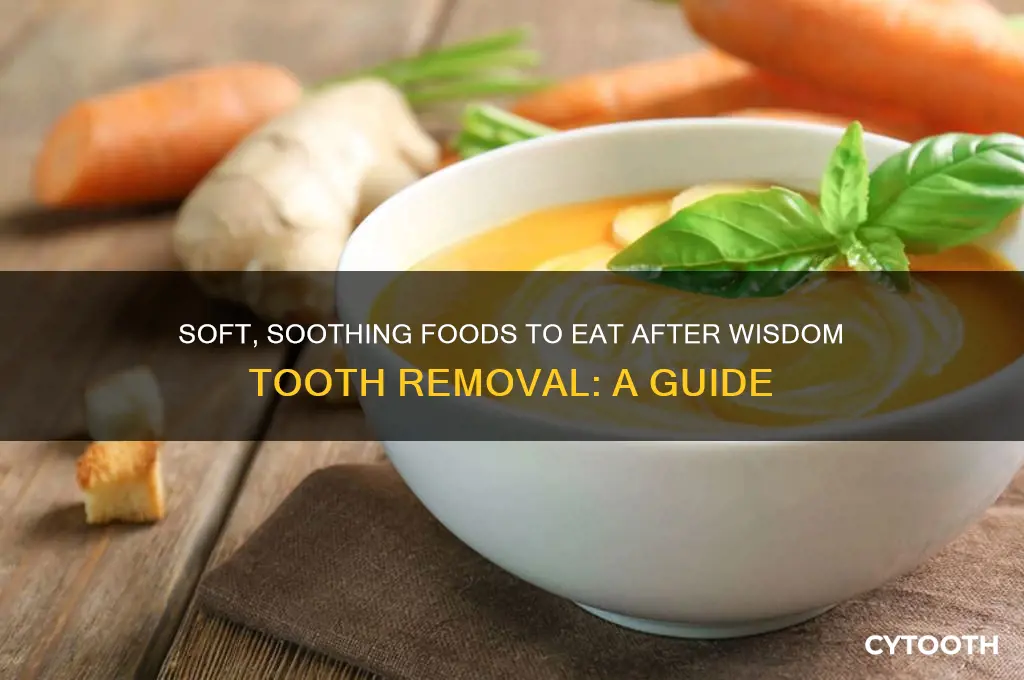
On the day of wisdom tooth removal, it's crucial to prioritize soft, easy-to-chew, and nutrient-dense foods to aid healing and minimize discomfort. Opt for options like yogurt, mashed potatoes, smoothies, or warm soups, avoiding hot, spicy, or crunchy items that could irritate the surgical site. Staying hydrated with water or lukewarm beverages is essential, while steering clear of straws to prevent dry socket. Incorporating foods rich in vitamins and minerals, such as bananas or avocado, can support recovery, and it’s best to follow your dentist’s specific recommendations for a smooth and complication-free healing process.
| Characteristics | Values |
|---|---|
| Type of Food | Soft, cool, and easy-to-chew foods |
| Temperature | Cool or room temperature (avoid hot foods) |
| Texture | Smooth, non-chewy, and free of seeds, nuts, or hard particles |
| Examples | Yogurt, mashed potatoes, applesauce, smoothies, oatmeal, scrambled eggs |
| Hydration | Drink plenty of water, but avoid using straws (can disrupt blood clots) |
| Avoid | Spicy, crunchy, chewy, or hard foods (e.g., chips, nuts, steak) |
| Alcohol | Avoid alcohol, as it can interfere with healing and medications |
| Caffeine | Limit caffeine intake, as it can increase bleeding risk |
| Post-Surgery Timing | Start with clear liquids, then gradually introduce soft foods |
| Chewing Side | Chew on the opposite side of the mouth from the extraction site |
| Saltwater Rinses | Avoid rinsing vigorously for the first 24 hours |
| Supplements | Soft nutritional supplements (e.g., protein shakes) if needed |
| Ice Cream | Allowed, but avoid extreme cold directly on the extraction site |
| Soups | Broth-based soups (avoid chunky or hot soups) |
| Recovery Focus | Prioritize foods that promote healing and minimize irritation |
What You'll Learn
- Soft, Cool Foods: Opt for yogurt, smoothies, and mashed potatoes to minimize discomfort and promote healing
- Avoid Hard, Chewy Items: Skip nuts, chips, and steak to prevent irritation and damage to the extraction site
- Stay Hydrated: Drink water and clear broths, but avoid straws to prevent dry socket complications
- Nutrient-Rich Choices: Include protein-rich foods like eggs and soups to aid recovery and tissue repair
- Gentle Snacks: Choose applesauce, pudding, or oatmeal for easy-to-eat, nourishing options post-surgery

Soft, Cool Foods: Opt for yogurt, smoothies, and mashed potatoes to minimize discomfort and promote healing
After wisdom tooth removal, your mouth becomes a delicate ecosystem, demanding gentle care and nourishment. Soft, cool foods emerge as the heroes of this post-operative phase, offering both comfort and healing. Imagine a spoonful of creamy yogurt gliding effortlessly across your tongue, its coolness soothing inflamed gums. This isn't just a culinary indulgence; it's a strategic choice. Yogurt, rich in probiotics, aids digestion and bolsters your immune system, crucial when your body is focused on recovery. Opt for plain, unsweetened varieties to avoid irritating the extraction site with acidic or sugary residues.
Smoothies, another ally in this soft food arsenal, provide a nutrient-packed punch without the chewing dilemma. Blend together ripe bananas, spinach, and a splash of almond milk for a concoction that's both gentle and nourishing. The key here is texture – ensure the smoothie is silky smooth, free from any fibrous bits that could irritate the wound. For an extra healing boost, add a scoop of protein powder or a dollop of Greek yogurt, providing essential amino acids to support tissue repair.
Mashed potatoes, a classic comfort food, take on a new role post-surgery. Their soft, malleable texture is perfect for a mouth in recovery. Prepare them with care, mashing until lump-free and adding a touch of butter or cream for smoothness. Avoid seasoning with salt, which can sting sensitive areas, and opt for a sprinkle of black pepper or a dash of garlic powder for flavor. This dish not only provides energy but also delivers potassium and vitamin C, aiding in reducing inflammation and promoting healing.
The science behind these food choices is straightforward. Soft foods require minimal chewing, reducing the risk of dislodging blood clots that form in the extraction sockets, a critical part of the healing process. Cool temperatures help constrict blood vessels, minimizing swelling and discomfort. By incorporating these foods into your diet, you're not just feeding your body; you're actively participating in your recovery, ensuring a smoother, more comfortable healing journey.
Incorporating these soft, cool foods into your post-operative diet is a practical, effective strategy. Start with small, frequent meals to maintain energy levels without overwhelming your system. Gradually, as healing progresses, you can reintroduce more textured foods. Remember, the goal is to nurture your body, allowing it to focus on healing. With these dietary choices, you're not just eating; you're optimizing your recovery, one spoonful at a time.
Cavity in Wisdom Tooth? Here’s What to Do Next
You may want to see also
Avoid Hard, Chewy Items: Skip nuts, chips, and steak to prevent irritation and damage to the extraction site
The first 24 hours after wisdom tooth removal are critical for healing, and your diet plays a pivotal role. Imagine your extraction site as a delicate wound—one wrong move, and it could reopen or become infected. Hard, chewy foods like nuts, chips, and steak are the culprits here. These foods require vigorous chewing, which can dislodge blood clots (essential for healing) and irritate the sensitive tissue. A single almond or crispy chip fragment can turn a smooth recovery into a painful setback.
Consider the mechanics of chewing. Nuts, with their uneven surfaces, can scrape against the extraction site, causing micro-tears. Chips, even when seemingly soft, often have sharp edges that can poke and prod the wound. Steak, though tempting, demands extensive jaw movement and pressure, increasing the risk of inflammation. These foods aren’t just risky—they’re unnecessary luxuries during this vulnerable period. Opting for softer alternatives isn’t just a suggestion; it’s a safeguard for your recovery.
Let’s compare: a bowl of mashed potatoes versus a bag of pretzels. The former is gentle, requires minimal chewing, and poses no threat to the extraction site. The latter, however, is a minefield of hard, crunchy pieces that could wreak havoc. Similarly, a smoothie provides nutrients without effort, while a handful of trail mix could lead to discomfort or even bleeding. The choice is clear: prioritize foods that nurture, not endanger, your healing process.
Practicality is key. Stick to a soft, bland diet for at least the first 48 hours. Think yogurt, applesauce, oatmeal, and well-cooked vegetables. If you’re craving protein, opt for scrambled eggs or pureed soups instead of steak. Stay hydrated with water or lukewarm broth, avoiding straws to prevent suction that could dislodge clots. Remember, this isn’t a permanent restriction—it’s a temporary measure to ensure a smooth, complication-free recovery. Your future self will thank you for resisting that bag of chips today.
Wisdom Tooth Woes: Essential Steps for Pain Relief and Recovery
You may want to see also
Stay Hydrated: Drink water and clear broths, but avoid straws to prevent dry socket complications
Hydration is a cornerstone of recovery after wisdom tooth removal, yet it’s often overlooked in favor of dietary restrictions. Drinking enough fluids helps maintain blood volume, aids in circulation, and supports the body’s natural healing processes. Water and clear broths are ideal choices because they’re gentle on the stomach and don’t irritate the surgical site. Aim for at least 8–10 glasses of water daily, sipping slowly to avoid pressure on the extraction area. Clear broths, such as chicken or vegetable, provide hydration along with essential electrolytes, making them a dual-purpose recovery tool.
While staying hydrated is critical, the *how* matters just as much as the *what*. Avoid using straws, as the suction created can dislodge blood clots from the extraction site, leading to a painful condition called dry socket. This complication delays healing and can cause intense discomfort. Instead, drink directly from a cup or use a spoon for broths if sipping is uncomfortable. For those who rely on straws for convenience, consider this a temporary but necessary adjustment to protect your recovery.
Clear broths offer more than just hydration—they’re a nutrient-rich option that’s easy to consume post-surgery. Opt for low-sodium varieties to avoid dehydration, and warm them slightly to a lukewarm temperature to prevent temperature sensitivity in the mouth. Homemade broths are ideal, as they allow you to control ingredients and avoid additives. For added flavor and nutrition, include ingredients like ginger or turmeric, which have anti-inflammatory properties.
Practical tips can make hydration simpler during recovery. Keep a water bottle nearby at all times, and set reminders to drink regularly, especially if pain or medication makes thirst less noticeable. Use a thermos for broths to maintain warmth without reheating, which can be cumbersome. If swallowing is difficult, take small sips or use a medicine cup for precise, controlled intake. Remember, consistent hydration is a proactive step toward preventing complications and ensuring a smoother recovery.
Wisdom Tooth Fell Out? Immediate Steps and Care Tips
You may want to see also
Nutrient-Rich Choices: Include protein-rich foods like eggs and soups to aid recovery and tissue repair
After wisdom tooth removal, your body needs a nutritional boost to heal efficiently. Protein is the cornerstone of tissue repair, and incorporating it into your diet is non-negotiable. Eggs, for instance, are a perfect choice. They’re soft, easy to chew, and packed with high-quality protein. A single large egg provides about 6 grams of protein, making it an ideal post-surgery food. Scrambled eggs or a soft-boiled egg can be consumed without straining your jaw, ensuring you get the nutrients needed for recovery.
Soups are another excellent option, especially those rich in protein like chicken noodle or bone broth. Bone broth, in particular, is a powerhouse, containing collagen and amino acids that support tissue repair. Aim for 1–2 cups of protein-rich soup per meal, ensuring it’s lukewarm to avoid irritating the surgical site. Adding soft vegetables like carrots or spinach can provide additional vitamins and minerals, though avoid chunky or fibrous ingredients that could get stuck in the extraction area.
For those who prefer variety, Greek yogurt or protein smoothies can be great alternatives. Greek yogurt offers 15–20 grams of protein per 6-ounce serving and can be paired with mashed bananas or honey for added flavor. If opting for a smoothie, blend protein powder (whey or plant-based) with soft fruits like mango or avocado, ensuring the consistency is smooth and easy to sip through a straw. Avoid using crunchy add-ins like nuts or seeds, which could pose a risk.
While protein is essential, it’s equally important to stay hydrated. Pair your protein-rich meals with water or herbal tea, avoiding hot beverages that could disrupt blood clotting. Aim for at least 8–10 glasses of water daily, but sip slowly to prevent dislodging blood clots. Remember, the goal is to nourish your body without causing discomfort, so prioritize soft, nutrient-dense foods that require minimal chewing.
Incorporating these protein-rich choices into your post-surgery diet not only aids recovery but also prevents muscle loss and fatigue. Plan your meals ahead of time, preparing soft, protein-packed options like egg custard or blended vegetable soup. By focusing on these nutrient-rich foods, you’ll support your body’s healing process while staying comfortable during the critical first day after wisdom tooth removal.
Broken Wisdom Tooth? Immediate Steps and Remedies for Quick Relief
You may want to see also
Gentle Snacks: Choose applesauce, pudding, or oatmeal for easy-to-eat, nourishing options post-surgery
After wisdom tooth removal, your mouth needs a break. Chewing can aggravate sensitive gums and stitches, so opt for foods that require minimal effort. Enter the trifecta of gentle snacks: applesauce, pudding, and oatmeal. These options are not only easy to consume but also packed with nutrients to aid your recovery. Applesauce, for instance, provides vitamins C and A, which support healing, while pudding offers a soothing texture and a quick energy boost. Oatmeal, when cooked to a soft consistency, delivers fiber and protein, helping to keep you satiated without straining your jaw.
Consider the preparation and temperature of these snacks to maximize comfort. Applesauce and pudding are best served at room temperature or slightly chilled to avoid sensitivity in the mouth. Oatmeal should be cooked longer than usual to achieve a creamy, lump-free texture, and allow it to cool before eating. For added flavor and nutrition, mix cinnamon into applesauce or add a drizzle of honey to oatmeal. Avoid topping pudding with crunchy granola or nuts, as these can pose a risk to healing gums.
Portion size matters, especially when your appetite might be diminished post-surgery. Start with small servings—about half a cup of applesauce, a 4-ounce cup of pudding, or a quarter-cup of dry oats cooked in water or milk. Gradually increase as tolerated. Hydration is equally important, so alternate these snacks with sips of water or electrolyte-rich drinks to maintain fluid balance. Remember, the goal is to nourish your body without overwhelming your recovery process.
For those with dietary restrictions, these snacks offer versatility. Opt for unsweetened applesauce or make your own by blending cooked apples with a splash of water. Choose sugar-free pudding or prepare it with almond milk for a dairy-free option. Oatmeal can be made with water, plant-based milk, or even bone broth for added collagen, which supports tissue repair. Always check labels for allergens and adjust recipes to suit your needs.
Incorporating these gentle snacks into your post-surgery diet not only ensures comfort but also promotes healing. Their soft textures and nutrient profiles make them ideal for the first 24–48 hours after wisdom tooth removal. By prioritizing ease and nourishment, you’ll give your body the support it needs to recover smoothly. Keep these staples on hand, and you’ll navigate the first day with confidence and care.
Post-Wisdom Tooth Extraction: Foods to Avoid for a Smooth Recovery
You may want to see also
Frequently asked questions
Stick to soft, cool foods like applesauce, yogurt, mashed potatoes, or smoothies. Avoid hot, spicy, or hard foods that can irritate the extraction site.
It’s best to avoid solid foods for at least the first 24 hours. Focus on liquids and soft foods to prevent disrupting the blood clot and promoting healing.
Yes, avoid crunchy, chewy, spicy, or hot foods, as well as alcohol and straws, as they can delay healing or cause complications like dry socket.
Gradually reintroduce solid foods after 3–4 days, depending on your healing progress. Start with soft solids and avoid chewing on the extraction side until fully healed.