Olivia Bennett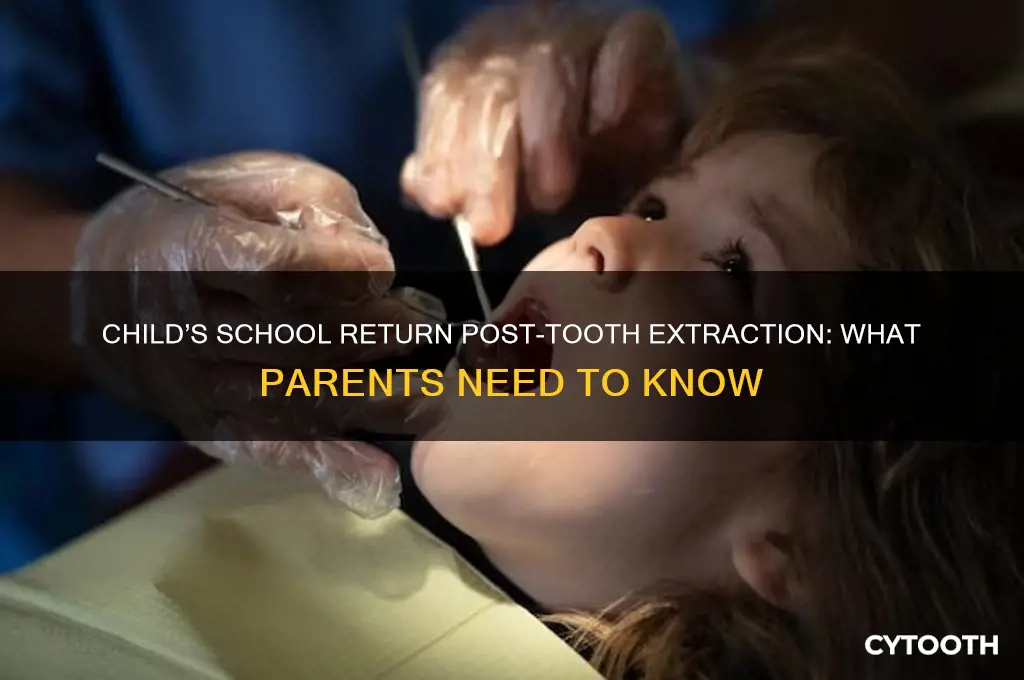
After a tooth extraction, many parents wonder if it’s safe for their child to return to school. Generally, children can resume attending school within a day or two, depending on how they feel and the complexity of the procedure. Simple extractions typically cause minimal discomfort, allowing kids to return to their routine quickly, though they should avoid strenuous activities. However, if the extraction was more involved or if your child is experiencing significant pain, swelling, or bleeding, it’s best to keep them home until they feel better. Always follow your dentist’s post-extraction care instructions and monitor your child for any signs of complications, such as infection or prolonged bleeding. If in doubt, consult your dentist or pediatrician for personalized advice.
| Characteristics | Values |
|---|---|
| Immediate Post-Extraction | Child should rest at home for at least 24 hours after the procedure. |
| Pain Management | If pain is well-managed with medication, school attendance may be possible. |
| Bleeding Risk | Avoid school if bleeding persists beyond a few hours post-extraction. |
| Physical Activity Restrictions | No strenuous activities for 24-48 hours; school attendance may be allowed if activities are minimal. |
| Dietary Restrictions | Soft foods only; school lunch may need adjustment. |
| Swelling and Discomfort | Mild swelling is normal; if severe, keep child home. |
| Age of Child | Younger children may need more recovery time than older children. |
| Type of Extraction | Simple extractions may allow quicker return to school compared to surgical extractions. |
| School Policy | Check school’s policy on attending after medical procedures. |
| Follow-Up Care | Ensure no follow-up appointments conflict with school hours. |
| Child’s Comfort Level | If the child feels well enough, school attendance may be considered. |
| Risk of Infection | Keep child home if signs of infection (e.g., fever, pus) appear. |
| Transportation | Avoid bumpy rides to school if possible. |
| Teacher Notification | Inform the teacher about the procedure and any special needs. |
| General Guideline | Most children can return to school within 1-2 days if recovering well. |
What You'll Learn
- Immediate Post-Extraction Care: Guidelines for the first 24 hours after tooth extraction
- Pain Management at School: Tips for handling discomfort during school hours
- Activity Restrictions: Safe physical activities and limitations post-extraction
- Diet and Lunch Options: Soft food ideas for school meals after extraction
- Signs of Complications: When to keep your child home from school

Immediate Post-Extraction Care: Guidelines for the first 24 hours after tooth extraction
The first 24 hours after a tooth extraction are critical for healing and preventing complications. Immediate post-extraction care focuses on managing pain, reducing swelling, and protecting the extraction site. For children, this period is especially important as their compliance with care instructions may vary, and their activities, like attending school, need careful consideration.
Pain Management and Comfort: Administer pain relief as prescribed by the dentist, typically starting with acetaminophen (10–15 mg/kg every 4–6 hours for children) or ibuprofen (5–10 mg/kg every 6–8 hours). Avoid aspirin in children under 18 due to the risk of Reye’s syndrome. Encourage your child to rest with their head elevated on pillows to minimize swelling. A cold compress applied to the cheek for 15–20 minutes at a time during the first 6 hours can reduce inflammation and numb the area.
Protecting the Extraction Site: The formation of a blood clot in the socket is essential for healing. Instruct your child to avoid rinsing, spitting forcefully, or using a straw for the first 24 hours, as these actions can dislodge the clot. Soft foods like yogurt, mashed bananas, or smoothies are ideal; avoid hot, crunchy, or spicy foods that could irritate the site. Gentle rinsing with warm salt water (1/2 teaspoon of salt in 8 ounces of water) can begin after the first 24 hours, but only if your child can manage it without forceful spitting.
Activity and School Attendance: While rest is crucial, light activities can be resumed after the first few hours. However, attending school the same day as the extraction is generally inadvisable due to potential discomfort, swelling, or bleeding. If your child feels well enough to return the next day, ensure they avoid physical education or recess activities that could cause jostling or trauma to the extraction site. Provide the school with pain medication and written instructions for administration if needed during school hours.
Monitoring for Complications: Keep an eye out for signs of infection, such as increased pain after 48 hours, fever, or pus at the extraction site. Prolonged bleeding (more than a few hours) or severe swelling warrants immediate dental attention. For children, distractions like gentle storytelling or quiet play can help them stay still and avoid touching or probing the extraction site, reducing the risk of complications.
By following these guidelines, parents can ensure their child’s comfort and promote optimal healing during the critical first 24 hours after a tooth extraction, making informed decisions about school attendance and daily activities.
Invisalign and Tooth Extraction: Can They Work Together Effectively?
You may want to see also
Pain Management at School: Tips for handling discomfort during school hours
Children often experience discomfort after a tooth extraction, and managing this pain during school hours can be challenging. The key is to balance their need for rest with their academic responsibilities, ensuring they remain comfortable and focused. Here’s how to approach pain management effectively while they’re at school.
Step 1: Administer Pain Relief Before School
Start with a dose of child-appropriate pain medication, such as acetaminophen (10–15 mg/kg) or ibuprofen (7–10 mg/kg), 30–60 minutes before school begins. This ensures the medication takes effect during the first part of the day, reducing the risk of discomfort during early classes. Always follow the pediatrician’s or dentist’s dosage instructions based on your child’s age and weight.
Step 2: Pack a Pain Relief Kit
Send your child to school with a small kit containing their prescribed pain medication, a note explaining dosage and timing, and a reusable ice pack or cold compress. Most schools allow students to keep medication in the nurse’s office, but confirm their policy beforehand. Include a soft, insulated pouch for the ice pack to keep it cold until needed.
Step 3: Communicate with School Staff
Inform the teacher and school nurse about your child’s condition and pain management plan. Provide written instructions detailing when and how to administer medication, as well as signs of increased discomfort (e.g., restlessness, difficulty concentrating). Ensure the school has your contact information for immediate updates.
Caution: Monitor for Warning Signs
While mild discomfort is normal, severe pain, swelling, or fever (above 101°F or 38.3°C) could indicate complications. If your child reports worsening symptoms or appears unusually lethargic, contact your dentist or pediatrician promptly. Avoid sending them to school if they’re unable to manage pain with medication or if they’re running a fever.
Pain management at school requires proactive planning and clear communication. By combining medication, cold therapy, and collaboration with school staff, you can help your child navigate the day with minimal disruption. Remember, it’s okay to keep them home if their discomfort is too great—their recovery should always come first.
Mandibular Tori Removal: Pre-Extraction Considerations and Surgical Options
You may want to see also
Activity Restrictions: Safe physical activities and limitations post-extraction
After a tooth extraction, your child’s body needs time to heal, and physical activity can either aid or hinder this process. The key is to strike a balance between rest and movement, ensuring the extraction site remains undisturbed while preventing stiffness or discomfort elsewhere. For the first 24 to 48 hours, avoid any strenuous activities, such as running, jumping, or contact sports, as these can increase blood flow to the extraction site, potentially dislodging the blood clot and leading to a painful condition called dry socket. Instead, encourage gentle activities like walking or light stretching to promote circulation without putting pressure on the healing area.
Consider your child’s age and typical activity level when planning their post-extraction routine. Younger children (ages 5–8) may naturally gravitate toward calmer play, while older kids (ages 9–12) might need reminders to avoid roughhousing or competitive sports. For teenagers, who are often more active and independent, emphasize the importance of adhering to restrictions to avoid complications. A practical tip is to schedule the extraction on a Friday, allowing your child to rest over the weekend and return to school on Monday with minimal activity limitations, provided they follow guidelines.
Not all activities are off-limits, but some require modification. For instance, if your child enjoys cycling, ensure they ride on smooth surfaces and avoid bumpy terrain that could jostle the extraction site. Swimming is generally safe after 48 hours, but diving or vigorous strokes should be avoided. School-related activities like recess or physical education classes may need temporary adjustments—opt for observing or participating in low-impact games like tag instead of soccer or basketball. Communicate with teachers or coaches to ensure they understand your child’s limitations.
While physical restrictions are crucial, mental and emotional well-being should not be overlooked. Sedentary activities like reading, drawing, or playing board games can keep your child engaged without risking injury. If they express frustration over being sidelined, validate their feelings while gently reinforcing the temporary nature of these limitations. A reward system, such as earning extra screen time for following restrictions, can motivate compliance. Remember, the goal is not to confine your child but to create a safe environment for healing, ensuring they can return to their full activity level sooner rather than later.
Lidocaine in Surgical Tooth Extractions: Uses, Safety, and Effectiveness
You may want to see also
Diet and Lunch Options: Soft food ideas for school meals after extraction
After a tooth extraction, your child’s diet must prioritize soft, easy-to-chew foods to minimize discomfort and promote healing. School lunches, however, can pose a challenge when typical options like sandwiches or crunchy snacks are off-limits. Planning ahead with soft, nutrient-dense meals ensures your child stays nourished and satisfied during the recovery period. Here’s how to approach it:
Step 1: Choose Soft, Cool, or Lukewarm Foods
Opt for items that require minimal chewing and are gentle on the extraction site. Examples include yogurt, mashed potatoes, scrambled eggs, or smoothies. Avoid hot foods, as they can irritate the wound, and steer clear of straws, which create suction and risk dislodging blood clots. For younger children (ages 5–8), consider finger foods like soft banana slices or well-cooked pasta, which are easy to manage independently.
Step 2: Pack Nutrient-Dense Options
Recovery demands energy, so focus on meals rich in protein, vitamins, and minerals. Greek yogurt with honey, avocado puree on soft bread, or a blended vegetable soup are excellent choices. For older children (ages 9–12), include protein sources like hummus with pita triangles or a small portion of shredded chicken mixed with rice. Avoid sugary or acidic foods, as they can delay healing and cause sensitivity.
Step 3: Incorporate Hydration and Texture Variety
While solid foods are limited, hydration is crucial. Include water or milk, and consider soft, hydrating snacks like watermelon cubes or applesauce. For texture variety, alternate between creamy (e.g., pudding) and slightly firmer but still soft options (e.g., cooked oatmeal or quinoa). This keeps meals interesting and prevents monotony, especially if your child will be eating this way for several days.
Caution: Avoid Hard, Chewy, or Spicy Foods
Steer clear of foods that could irritate the extraction site or require significant chewing, such as chips, nuts, or jerky. Spicy or heavily seasoned dishes can also cause discomfort. If your child is tempted by the school cafeteria’s offerings, remind them that sticking to soft foods will help them return to their favorite meals sooner.
Pack lunches in insulated containers to maintain safe temperatures, and use ice packs if necessary. Communicate with your child’s teacher or school nurse to ensure they understand dietary restrictions and can assist if needed. With thoughtful planning, your child can enjoy school meals that support their recovery without sacrificing taste or nutrition.
Post-Extraction Infections: Causes, Symptoms, and Prevention Tips Explained
You may want to see also
Signs of Complications: When to keep your child home from school
Excessive bleeding, persistent pain, or swelling that worsens after 48 hours are red flags signaling potential complications following a tooth extraction. These symptoms suggest the body is struggling to heal properly, and sending your child to school in this condition could exacerbate the issue. Immediate attention from a dentist is crucial to prevent infection or other serious complications.
Keep a close eye on your child’s behavior and physical symptoms in the days following the procedure. If they exhibit signs of fever, chills, or nausea, these could indicate an infection, which requires prompt medical intervention. School attendance should be postponed until these symptoms subside and a healthcare professional confirms it’s safe to return.
Another critical sign to monitor is difficulty eating or drinking due to prolonged pain or swelling. Children need proper nutrition to heal, and forcing them to attend school while they’re unable to consume food or liquids comfortably can hinder recovery. Offer soft, lukewarm foods like yogurt or mashed bananas, and ensure they stay hydrated with water or clear broths. If they continue to struggle after 24 hours, consult your dentist and consider keeping them home until they can eat without distress.
Unusual discharge or a foul odor from the extraction site is a severe warning sign of infection. This requires immediate dental attention, and your child should not attend school until the issue is addressed. Infections can spread quickly, especially in younger children, and isolating them at home helps prevent complications and protects others from potential exposure.
Finally, trust your instincts. If your child appears unusually lethargic, irritable, or in significant discomfort despite following post-extraction care instructions, err on the side of caution. Keeping them home allows for closer monitoring and ensures they receive the rest and care needed for a smooth recovery. Always consult your dentist if you’re unsure—their guidance is invaluable in determining when it’s safe for your child to return to school.
Post-Tooth Extraction Diet: Is Dry Food Safe for Your Cat?
You may want to see also
Frequently asked questions
Most children can return to school the day after a tooth extraction, provided they feel well and there are no complications. Avoid strenuous activities for 24–48 hours, but light school activities are usually fine.
If your child experiences excessive bleeding, severe pain not relieved by medication, swelling that worsens after 48 hours, or signs of infection (e.g., fever, pus), keep them home and consult the dentist before returning to school.
Stick to soft, cool foods like yogurt, applesauce, or smoothies for the first 24 hours. Avoid hot, spicy, or hard foods that could irritate the extraction site. If your child feels comfortable eating, they can have lunch at school, but pack gentle, easy-to-chew options.