Samantha Blake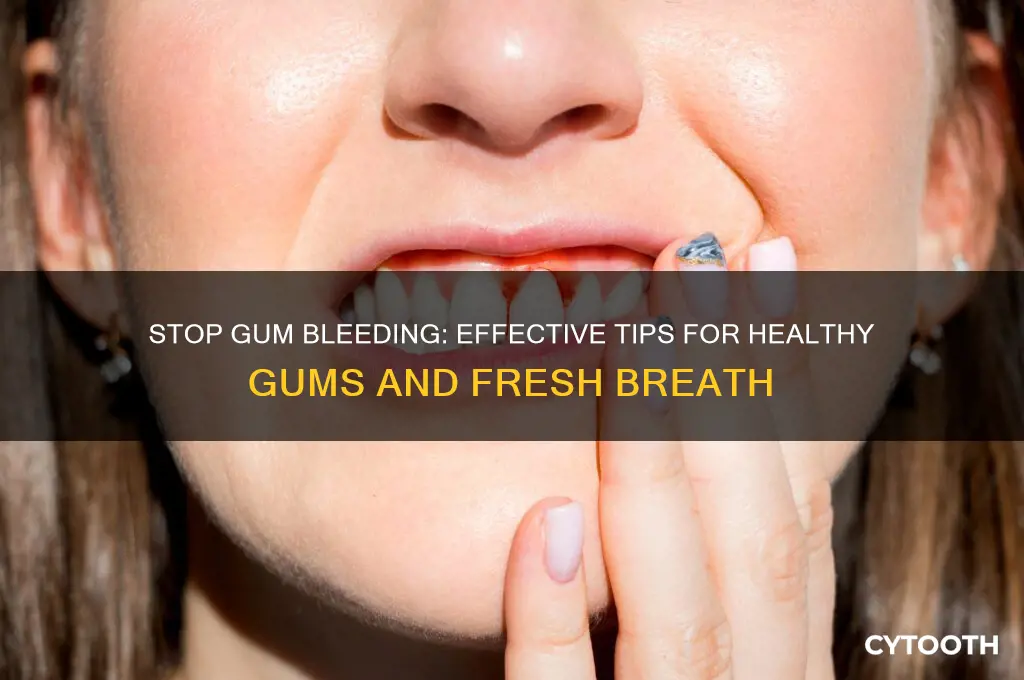
Bleeding gums can be a concerning and uncomfortable issue, often signaling underlying oral health problems such as gingivitis or poor dental hygiene. Addressing this problem promptly is essential to prevent further complications like gum disease or tooth loss. To stop gums from bleeding, it’s crucial to adopt a consistent oral care routine, including twice-daily brushing with a soft-bristled toothbrush, daily flossing to remove plaque and debris, and using an antiseptic mouthwash to reduce bacteria. Additionally, incorporating a balanced diet rich in vitamins C and K, which promote gum health, and avoiding tobacco products can significantly improve gum condition. If bleeding persists, consulting a dentist is vital, as they can provide professional cleanings, diagnose any underlying issues, and recommend targeted treatments to restore gum health.
What You'll Learn
- Brush Gently: Use a soft-bristled toothbrush and fluoride toothpaste to avoid gum irritation
- Floss Daily: Clean between teeth to remove plaque and prevent gum inflammation
- Rinse with Saltwater: Gargle warm salt water to reduce gum swelling and bleeding
- Avoid Hard Foods: Skip crunchy or sticky foods that can harm sensitive gums
- Visit Your Dentist: Regular check-ups help identify and treat gum issues early

Brush Gently: Use a soft-bristled toothbrush and fluoride toothpaste to avoid gum irritation
Bleeding gums often signal irritation or inflammation, and aggressive brushing can exacerbate the problem. The solution lies in the tools you use and the technique you employ. A soft-bristled toothbrush is your first line of defense, designed to clean effectively without damaging delicate gum tissue. Pair it with fluoride toothpaste, which strengthens enamel and supports overall oral health, and you’ve got a gentle yet powerful combination to combat bleeding gums.
Consider the mechanics of brushing: hard bristles or excessive force can wear down enamel and push gums back, leading to recession and bleeding. Soft bristles, on the other hand, conform to the contours of your teeth and gums, removing plaque without causing harm. For optimal results, hold your toothbrush at a 45-degree angle to your gums and use short, circular motions. Brush for at least two minutes twice daily, ensuring you cover all surfaces of your teeth. Avoid sawing back-and-forth motions, which can further irritate gums.
Fluoride toothpaste isn’t just for cavity prevention—it plays a crucial role in gum health too. Fluoride reduces tooth sensitivity, strengthens enamel, and helps repair early stages of tooth decay, all of which indirectly support gum health. When choosing a toothpaste, look for the American Dental Association (ADA) seal of approval to ensure it contains the right amount of fluoride (typically 1,000 to 1,500 parts per million). Avoid whitening or tartar-control toothpastes if you have sensitive gums, as these can sometimes contain abrasives or chemicals that irritate.
For those with persistent bleeding gums, switching to a soft-bristled brush and fluoride toothpaste is often the first step recommended by dentists. However, it’s equally important to monitor your technique. Electric toothbrushes with pressure sensors can be a game-changer, as they ensure you’re not brushing too hard. If you’re unsure about your technique, ask your dentist for a demonstration during your next checkup. Consistency is key—gums respond to gentle, regular care, and over time, you’ll notice reduced bleeding and improved overall oral health.
Finally, remember that while brushing gently is essential, it’s just one part of a comprehensive oral care routine. Flossing daily, using an antimicrobial mouthwash, and maintaining regular dental checkups are equally important. Bleeding gums can be a sign of gingivitis, the early stage of gum disease, so addressing the issue promptly is crucial. By adopting a soft-bristled brush and fluoride toothpaste, you’re taking a proactive step toward healthier gums and a brighter smile.
Restore Healthy Gums: Effective Ways to Reverse Smoking-Induced Black Gums
You may want to see also
Floss Daily: Clean between teeth to remove plaque and prevent gum inflammation
Bleeding gums are often a sign of inflammation caused by plaque buildup along the gum line. Flossing daily is a direct and effective way to remove this plaque, reducing irritation and promoting healthier gums. Unlike brushing, which primarily cleans the surfaces of teeth, flossing targets the tight spaces between teeth and along the gum line where plaque thrives. This simple habit can significantly decrease gum bleeding and prevent more serious issues like gingivitis.
To floss effectively, start with about 18 inches of floss, wrapping most of it around your middle fingers and leaving a small section taut between your thumbs and index fingers. Gently guide the floss between each tooth in a back-and-forth motion, forming a "C" shape around the tooth as you reach the gum line. Avoid snapping the floss into the gums, as this can cause further irritation. Instead, glide it smoothly up and down against the tooth surface. For those with tight spaces or difficulty handling traditional floss, consider using a water flosser or floss picks, which can be equally effective when used correctly.
While flossing might cause slight bleeding initially, especially if your gums are already inflamed, this should subside within a week or two of consistent use. If bleeding persists or worsens, consult a dentist, as it could indicate an underlying issue. Children as young as 2–3 years old can begin flossing with parental assistance, and by age 10, most children can floss independently. Making flossing a daily habit, preferably at night before bed, ensures that plaque doesn’t harden into tartar overnight, further protecting your gums.
Comparing flossing to other oral hygiene practices, it’s clear that its role is irreplaceable. Mouthwash, for instance, can reduce bacteria but won’t physically remove plaque. Brushing alone cleans only about 60% of tooth surfaces, leaving the areas between teeth vulnerable. Flossing complements these practices by addressing the remaining 40%, making it a cornerstone of gum health. By dedicating just a few minutes each day to flossing, you can dramatically reduce gum bleeding and improve your overall oral health.
Effective Ways to Safely Remove Denture Glue from Gums
You may want to see also
Rinse with Saltwater: Gargle warm salt water to reduce gum swelling and bleeding
Bleeding gums are often a sign of inflammation or infection, and saltwater rinses have been a go-to remedy for centuries. The reason? Salt’s natural antiseptic and anti-inflammatory properties help reduce bacteria in the mouth while soothing irritated tissues. This simple, cost-effective solution can provide immediate relief and promote healing when used correctly.
To prepare a saltwater rinse, dissolve 1/2 teaspoon of table salt in 8 ounces (about 240 ml) of warm water. Ensure the water is warm, not hot, to avoid burning sensitive gum tissue. Stir until the salt is fully dissolved, then take a mouthful and gargle for 30 seconds, focusing on swishing the solution around the affected areas. Spit it out and repeat the process 2-3 times daily, especially after meals, to maximize its antibacterial and anti-inflammatory effects.
While saltwater rinses are generally safe for all ages, including children who can rinse and spit effectively (typically ages 6 and up), they are not a substitute for proper oral hygiene or professional care. Overuse of salt can potentially irritate gums or disrupt the mouth’s natural pH balance, so limit rinses to no more than 3 times a day. If bleeding persists after a week of consistent use, consult a dentist to rule out underlying issues like gingivitis or periodontal disease.
Compared to commercial mouthwashes, saltwater rinses are free from alcohol and artificial additives, making them a gentler option for those with sensitive gums. However, their effectiveness lies in consistency and proper technique. For best results, combine saltwater rinses with regular brushing, flossing, and a balanced diet low in sugar. Think of it as a supportive measure, not a standalone cure, in your oral care routine.
Effective Ways to Eliminate White Bumps on Your Gums
You may want to see also
Avoid Hard Foods: Skip crunchy or sticky foods that can harm sensitive gums
Bleeding gums are often a sign of irritation or inflammation, and the foods you eat can either soothe or exacerbate the issue. Hard, crunchy, or sticky foods can act like tiny sandpapers, scraping against sensitive gum tissue and causing further damage. Imagine biting into a crisp apple or a chewy caramel—while these might be enjoyable for most, they can be a nightmare for gums that are already compromised. The mechanical stress from these foods can lead to micro-tears, worsening bleeding and prolonging healing.
To protect your gums, adopt a temporary soft-food diet. Opt for items like mashed potatoes, yogurt, scrambled eggs, or well-cooked vegetables. These foods require minimal chewing and reduce the risk of irritation. For example, instead of raw carrots, steam them until tender. Avoid crusty bread or tough meats, and steer clear of sticky candies or dried fruits that can tug at gumlines. This dietary adjustment doesn’t have to be permanent—think of it as a short-term strategy to give your gums the rest they need to recover.
Contrast this approach with the common misconception that “chewing more” strengthens gums. While proper chewing can stimulate blood flow, it’s counterproductive when gums are already inflamed. Chewing hard foods in this state is akin to running on a sprained ankle—it only delays healing. Instead, focus on gentle, nutrient-rich options that promote tissue repair, such as foods high in vitamin C (like soft citrus segments or smoothies) or omega-3 fatty acids (like canned fish or flaxseed oil in a shake).
Practical tip: If you crave texture, incorporate soft, cool foods like chilled cucumber slices or avocado puree. These provide a satisfying mouthfeel without the risk. Additionally, rinse your mouth with warm salt water after meals to reduce inflammation and dislodge any food particles. By prioritizing gum-friendly foods, you create an environment conducive to healing, allowing your gums to regain strength and stop bleeding naturally.
Quick Fix: Removing Popcorn Kernels from Gum Without Floss
You may want to see also
Visit Your Dentist: Regular check-ups help identify and treat gum issues early
Bleeding gums are often an early warning sign of gum disease, a condition that can escalate if left untreated. While home remedies like gentle brushing, flossing, and rinsing with saltwater can provide temporary relief, they don’t address the root cause. This is where your dentist becomes your most valuable ally. Regular dental check-ups, ideally every six months, are not just about cleaning your teeth—they’re a critical preventive measure to catch gum issues before they worsen. During these visits, your dentist can detect early signs of gingivitis, the mildest form of gum disease, and intervene with professional treatments like scaling and root planing to remove plaque and tartar buildup. Ignoring these appointments can lead to more severe conditions, such as periodontitis, which may require invasive procedures or even tooth extraction.
Consider the analogy of a car’s maintenance schedule. Just as regular oil changes prevent engine damage, dental check-ups prevent gum damage. During an exam, your dentist will assess gum health by measuring pocket depths between your gums and teeth—healthy pockets are typically 1–3 millimeters. If these depths exceed 4 millimeters, it’s a red flag for gum disease. X-rays may also reveal bone loss, a late-stage complication. Early detection allows for non-invasive treatments, saving you from pain, expense, and potential tooth loss. For instance, a patient with mild gingivitis might only need a deep cleaning, while someone with advanced periodontitis could require surgery. The key takeaway? Don’t wait until your gums are bleeding profusely—make dental visits a non-negotiable part of your health routine.
Persuasively speaking, the cost of neglecting dental check-ups far outweighs the cost of attending them. A routine cleaning and exam typically range from $75 to $200, depending on your location and insurance coverage. Compare that to the thousands of dollars periodontal surgery or dental implants can cost. Beyond finances, untreated gum disease is linked to systemic health issues like heart disease and diabetes, making regular dental care a vital component of overall wellness. If you’re hesitant due to dental anxiety, communicate this to your dentist—many offer sedation options or gentle techniques to ensure comfort. Remember, a healthy smile isn’t just about aesthetics; it’s a reflection of your overall health.
Finally, here’s a practical tip to maximize the benefits of your dental visits: keep a symptom journal. Note when your gums bleed, any pain or sensitivity, and changes in your oral health. Sharing this information with your dentist provides a clearer picture of your needs, enabling more targeted care. For example, if you mention bleeding gums only during flossing, your dentist might recommend a water flosser or softer bristles. Pairing professional care with proactive self-monitoring creates a robust defense against gum disease. In the battle to stop bleeding gums, your dentist isn’t just a participant—they’re your strategic partner. Schedule that check-up today; your gums will thank you tomorrow.
Restore Healthy Gums: Simple Tips for Pink, Vibrant Gum Tissue
You may want to see also
Frequently asked questions
Bleeding gums can be caused by poor oral hygiene, gum disease (gingivitis or periodontitis), brushing too hard, hormonal changes, certain medications, or nutritional deficiencies like vitamin C or K.
Improve your oral hygiene by brushing gently twice a day with a soft-bristled toothbrush, flossing daily, and using an antiseptic mouthwash. Rinse with warm salt water to reduce inflammation, and ensure a balanced diet rich in vitamins and minerals.
If bleeding persists for more than a week despite proper care, or if you experience pain, swelling, or loose teeth, consult a dentist. These could be signs of gum disease or other underlying issues requiring professional treatment.