Ethan Brooks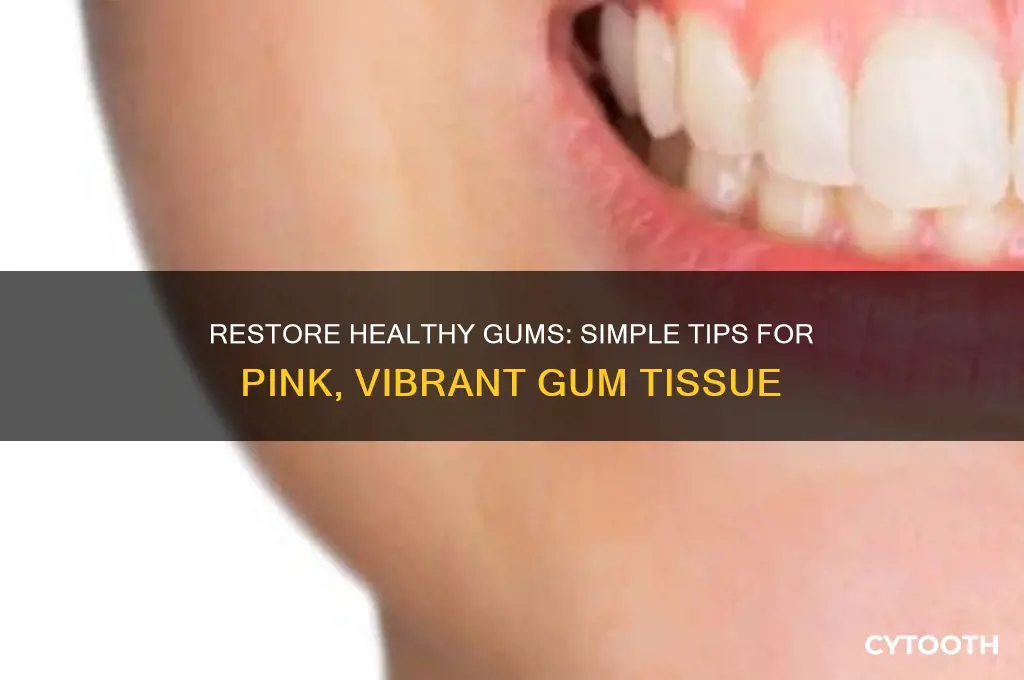
Achieving and maintaining healthy, pink gums is essential for overall oral health and can significantly enhance your smile's appearance. Over time, factors like poor oral hygiene, smoking, or certain medical conditions can cause gums to become inflamed, discolored, or recede, leading to a less vibrant pink hue. To restore your gums to their natural pink color, it’s crucial to adopt a consistent oral care routine, including regular brushing and flossing, using antimicrobial mouthwash, and scheduling routine dental check-ups. Additionally, addressing underlying issues such as gum disease, quitting smoking, and maintaining a balanced diet rich in vitamins and minerals can promote gum health. By combining these practices, you can effectively reverse discoloration and encourage the return of healthy, pink gums.
| Characteristics | Values |
|---|---|
| Maintain Good Oral Hygiene | Brush twice daily with a soft-bristled toothbrush, floss daily, and use an antimicrobial mouthwash. |
| Use a Gum-Friendly Toothpaste | Choose toothpaste with ingredients like fluoride, triclosan, or stannous fluoride to reduce plaque and gingivitis. |
| Regular Dental Check-ups | Visit the dentist every 6 months for professional cleanings and early detection of gum issues. |
| Quit Smoking | Smoking restricts blood flow to gums, hindering healing and causing discoloration. |
| Healthy Diet | Consume foods rich in vitamin C, vitamin D, calcium, and antioxidants to promote gum health. |
| Reduce Sugar Intake | Limit sugary foods and drinks to prevent plaque buildup and gum inflammation. |
| Stay Hydrated | Drink plenty of water to maintain saliva production, which helps clean the mouth. |
| Manage Stress | Chronic stress weakens the immune system, making gums more susceptible to disease. |
| Avoid Teeth Grinding | Use a night guard if you grind your teeth to prevent gum recession and inflammation. |
| Oil Pulling | Swish coconut or sesame oil in the mouth for 10–15 minutes daily to reduce bacteria and inflammation. |
| Saltwater Rinse | Gargle with warm saltwater to reduce gum inflammation and kill bacteria. |
| Herbal Remedies | Use aloe vera gel, tea tree oil, or chamomile tea rinses for their anti-inflammatory properties. |
| Professional Treatments | Consider scaling and root planing, gum grafting, or laser therapy for severe cases. |
| Avoid Aggressive Brushing | Use gentle, circular motions to avoid damaging gum tissue. |
| Replace Toothbrush Regularly | Change your toothbrush every 3 months or sooner if bristles are frayed. |
What You'll Learn
- Brushing Technique: Use soft bristles, 45-degree angle, gentle circular motions, twice daily for two minutes
- Flossing Daily: Remove plaque between teeth and along gum line to prevent inflammation
- Antiseptic Mouthwash: Rinse with antimicrobial mouthwash to reduce bacteria and promote gum health
- Healthy Diet: Eat vitamin C-rich foods and avoid sugary snacks to support gum tissue
- Regular Dental Checkups: Visit the dentist every six months for cleanings and gum evaluations

Brushing Technique: Use soft bristles, 45-degree angle, gentle circular motions, twice daily for two minutes
Soft bristles are the unsung heroes of gum health. Unlike their medium or hard counterparts, which can irritate and damage delicate gum tissue, soft bristles effectively remove plaque and debris without causing harm. This gentle approach is crucial for restoring gum health and achieving that coveted pink hue. When selecting a toothbrush, look for the ADA (American Dental Association) seal of approval, ensuring the bristles are truly soft and safe for daily use.
Opt for a toothbrush with a small head and a comfortable grip, allowing for better maneuverability around your mouth.
The 45-degree angle is a game-changer in oral care. By positioning your toothbrush at this angle against the gum line, you ensure that the bristles reach the area where plaque and bacteria accumulate the most. This technique not only cleans the teeth but also stimulates blood flow to the gums, promoting their health and natural pink color. Imagine this angle as a precise tool, targeting the often-neglected junction between tooth and gum, where gum disease often begins.
Gentle circular motions are the key to effective and safe brushing. This technique allows the soft bristles to sweep away plaque and food particles without causing abrasion to the gums. Aggressive back-and-forth brushing can lead to gum recession, making them appear red and inflamed. Instead, visualize massaging your gums with each stroke, encouraging circulation and reducing the risk of gum-related issues. It's a delicate dance, where the goal is to clean thoroughly without applying excessive force.
Consistency is vital, and that's where the 'twice daily for two minutes' rule comes in. Brushing for two minutes ensures that every tooth surface and gum area receives adequate attention. Use a timer or an electric toothbrush with a built-in timer to ensure you're not cutting your brushing routine short. Morning and night brushing not only removes plaque buildup but also helps prevent the formation of tartar, a major contributor to gum problems. Over time, this consistent and gentle approach will contribute to healthier, pinker gums, reducing the risk of gum disease and its associated complications.
Incorporating this brushing technique into your daily routine is a simple yet powerful step towards achieving and maintaining optimal gum health. It's a testament to the idea that sometimes, the most effective solutions are also the simplest. By choosing the right tools and mastering this technique, you're not just brushing your teeth; you're investing in the long-term health and appearance of your gums. Remember, healthy gums are the foundation of a beautiful smile, and this technique is a cornerstone of that foundation.
Effective Ways to Brighten Dark Gums and Restore Your Smile
You may want to see also
Flossing Daily: Remove plaque between teeth and along gum line to prevent inflammation
Plaque buildup between teeth and along the gum line is a silent saboteur of gum health. This sticky biofilm harbors bacteria that trigger inflammation, leading to redness, swelling, and eventual recession—all culprits behind gums losing their natural pink hue. Flossing daily disrupts this cycle by physically removing plaque before it hardens into tartar, a substance only professional cleaning can tackle. Think of it as daily maintenance for your gums, preventing the inflammation that steals their vitality.
Flossing isn't just about reaching between teeth. It's about technique. Wrap the floss around each tooth in a C-shape, gently gliding it up and down the side, ensuring it reaches just below the gum line. Don't snap or force the floss, as this can damage delicate tissues. Aim for a gentle sawing motion, and use a clean section of floss for each tooth to avoid redistributing bacteria. For those with tight spaces or dexterity challenges, consider floss picks or water flossers, which offer similar benefits with added convenience.
The benefits of daily flossing extend beyond aesthetics. Studies show a clear link between consistent flossing and reduced gum inflammation, a key factor in maintaining healthy, pink gums. By removing plaque, flossing also helps prevent bad breath, tooth decay, and the progression of gum disease, which can lead to tooth loss if left untreated. It's a small habit with a significant impact, contributing to both oral and overall health.
Think of flossing as an investment in your smile's future. While results aren't instantaneous, consistent flossing over weeks and months will gradually reduce inflammation, allowing gums to regain their natural pink color and firmness. Remember, healthy gums are the foundation of a beautiful smile, and flossing is a cornerstone of achieving and maintaining that health.
Restore Healthy Gums: Effective Ways to Reverse Smoking-Induced Black Gums
You may want to see also
Antiseptic Mouthwash: Rinse with antimicrobial mouthwash to reduce bacteria and promote gum health
Unhealthy gums often stem from bacterial overgrowth, which can lead to inflammation, redness, and recession. Antiseptic mouthwash, with its antimicrobial properties, directly targets this root cause by reducing harmful bacteria in the oral cavity. Unlike cosmetic solutions that merely mask symptoms, this approach addresses the underlying issue, paving the way for gums to regain their natural pink hue.
To incorporate antiseptic mouthwash into your routine effectively, follow these steps: rinse with 20 milliliters of the product for 30 seconds, once or twice daily, after brushing. Avoid eating or drinking for 30 minutes post-rinse to maximize its efficacy. Opt for alcohol-free formulas to prevent dryness, especially if you have sensitive gums. Consistency is key—regular use over several weeks can yield noticeable improvements in gum color and overall oral health.
While antiseptic mouthwash is a powerful tool, it’s not a standalone solution. Pair it with proper brushing, flossing, and regular dental check-ups for optimal results. Over-reliance on mouthwash without addressing other oral hygiene practices may lead to temporary relief but won’t resolve long-term gum issues. Think of it as one piece of a comprehensive puzzle, not the entire picture.
For those hesitant to use commercial products, natural antiseptic alternatives like diluted hydrogen peroxide or saltwater rinses can offer similar benefits. However, these options may lack the potency of formulated mouthwashes. Always consult a dentist before switching to natural remedies, especially if you have existing gum conditions. The goal is to choose a method that aligns with your needs and lifestyle while ensuring safety and effectiveness.
In conclusion, antiseptic mouthwash serves as a targeted intervention to combat bacterial buildup and restore gum health. By integrating it thoughtfully into your oral care regimen, you can create an environment conducive to pink, vibrant gums. Remember, the journey to healthier gums is incremental—patience, consistency, and informed choices will yield the best outcomes.
Effective Ways to Safely Remove Objects Stuck in Your Gums
You may want to see also
Healthy Diet: Eat vitamin C-rich foods and avoid sugary snacks to support gum tissue
Vitamin C is a powerhouse nutrient for gum health, playing a critical role in collagen synthesis—the protein that keeps gum tissue firm and resilient. A deficiency can lead to scurvy, historically marked by swollen, bleeding gums, while adequate intake strengthens capillaries and reduces inflammation. Adults should aim for 75–90 mg daily, easily met through citrus fruits, bell peppers, broccoli, or strawberries. For targeted gum care, consider pairing vitamin C-rich foods with mechanical stimulation, like massaging gums with a clean finger after consuming an orange to enhance absorption.
Contrastingly, sugary snacks wage a silent war on gum tissue. Bacteria in plaque metabolize sugar into acids, eroding enamel and inflaming gums—a precursor to gingivitis. Even "healthy" sugars in dried fruit or honey contribute to this process. To minimize damage, limit added sugars to under 25 grams daily (about six teaspoons) and rinse with water after indulging. For a satisfying swap, replace gummy candies with vitamin C-rich gummies fortified with rose hips or acerola cherry, combining pleasure with periodontal protection.
The interplay between vitamin C and sugar avoidance creates a synergistic effect. While vitamin C bolsters gum integrity, reducing sugar starves harmful bacteria, preventing the acidic environment that weakens tissue. A 2019 study in *Nutrients* found that participants who increased vitamin C intake while cutting sugar saw a 37% reduction in gum bleeding within eight weeks. Practical implementation could include swapping morning toast with jam (high sugar) for a spinach omelet topped with kiwi slices (vitamin C boost), or trading soda for sparkling water infused with lemon and cucumber.
For those with existing gum issues, a strategic dietary overhaul is key. Start by tracking sugar intake for three days to identify hidden sources, then replace one sugary item daily with a vitamin C-rich alternative. Incorporate fermented foods like kimchi or yogurt to introduce probiotics, which combat harmful oral bacteria. Finally, pair dietary changes with oil pulling using vitamin C-infused coconut oil for dual antimicrobial and nutrient delivery. Consistency is paramount—gums respond to sustained care, not sporadic efforts.
Effective Ways to Eliminate White Bumps on Your Gums
You may want to see also
Regular Dental Checkups: Visit the dentist every six months for cleanings and gum evaluations
Gum health is a mirror reflecting your overall oral hygiene. Neglecting it can lead to discoloration, inflammation, and even disease. Regular dental checkups every six months are not just a formality; they are a proactive measure to ensure your gums remain pink and healthy. During these visits, dentists perform professional cleanings that remove plaque and tartar buildup—culprits that contribute to gum discoloration and disease. This routine maintenance is akin to a deep cleanse for your gums, restoring their natural color and vitality.
Consider the process as a two-fold approach: prevention and intervention. During the cleaning, dental hygienists use specialized tools to scrape away hardened plaque and tartar that brushing and flossing alone cannot remove. This not only prevents gum disease but also eliminates surface stains that can make gums appear darker or inflamed. Following the cleaning, the dentist evaluates your gum health, checking for signs of gingivitis, periodontitis, or other issues. Early detection is key—catching problems before they escalate ensures that treatments are less invasive and more effective.
For optimal results, pair these checkups with a diligent at-home oral care routine. Brush twice daily with a soft-bristled toothbrush and fluoride toothpaste, and floss daily to remove debris between teeth. Incorporate an antimicrobial mouthwash to reduce bacteria that cause gum inflammation. If you’re prone to gum issues, your dentist might recommend additional tools like a water flosser or interdental brushes. Consistency is crucial; think of your at-home care as the daily maintenance that complements the professional deep cleaning.
Age and lifestyle factors play a significant role in gum health, making regular checkups even more critical. For instance, hormonal changes during pregnancy can increase the risk of gum disease, while smoking or vaping can accelerate gum discoloration and recession. Teens and young adults often overlook gum care, focusing solely on teeth whitening, but neglecting gums can undermine their efforts. Seniors, on the other hand, may face gum recession due to years of wear or conditions like dry mouth. Tailoring your dental visits to address these specific concerns ensures that your gums receive the care they need at every stage of life.
Finally, think of these biannual visits as an investment in your long-term oral health. While the immediate goal is to restore pink, healthy gums, the broader benefit is preventing serious issues like tooth loss or systemic health problems linked to gum disease. Regular checkups are not just about aesthetics; they’re about preserving function and overall well-being. So, mark your calendar, prioritize these appointments, and let your dentist be your partner in achieving and maintaining gum health that’s as vibrant as it is strong.
Effective Ways to Safely Remove a Kernel Stuck in Your Gums
You may want to see also
Frequently asked questions
Gums may lose their pink color due to inflammation, infection (gingivitis or periodontitis), poor oral hygiene, smoking, or certain medications. Addressing the underlying cause is key to restoring gum health and color.
Improve oral hygiene by brushing twice daily, flossing regularly, and using an antimicrobial mouthwash. Visit your dentist for cleanings and treat any gum disease. Avoid smoking and maintain a balanced diet rich in vitamins C and D.
Yes, natural remedies like oil pulling with coconut oil, using turmeric or aloe vera gel, and rinsing with saltwater can reduce inflammation and promote gum health. However, these should complement, not replace, professional dental care.
With consistent oral care and treatment of underlying issues, gums can begin to return to a healthy pink color within 1-2 weeks. However, full recovery may take several weeks to months, depending on the severity of the condition.