Matthew Grant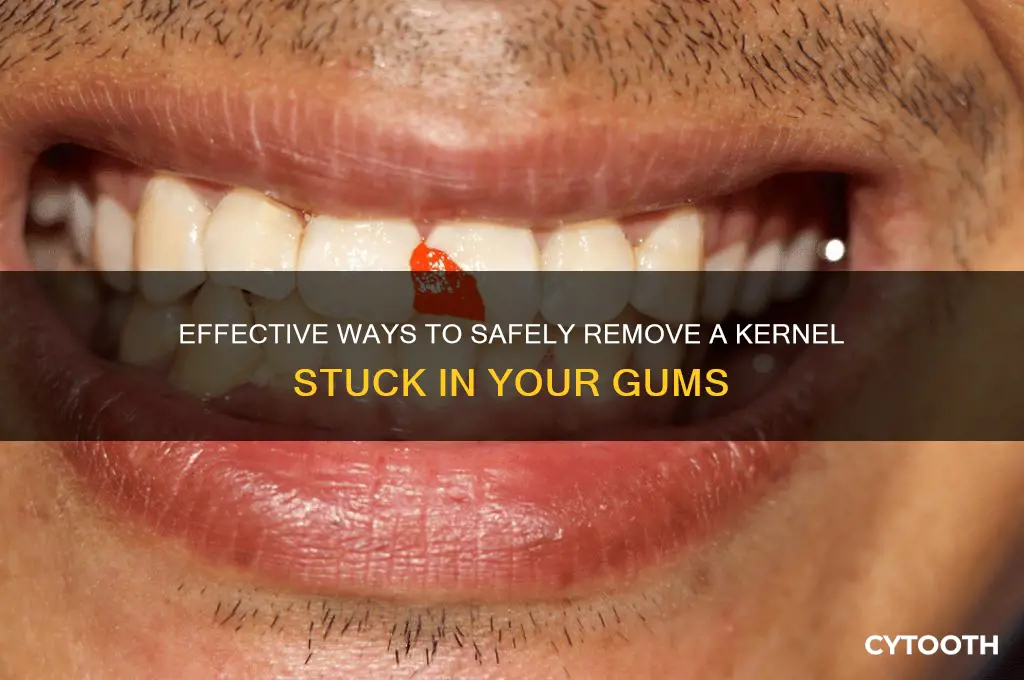
If you've ever experienced the discomfort of a kernel stuck in your gums, you know how frustrating and painful it can be. Whether it's from popcorn, nuts, or seeds, these tiny fragments can wedge themselves between teeth and gums, causing irritation and potential infection if not removed promptly. Knowing how to safely extract a kernel from your gums is essential to alleviate discomfort and prevent further oral health issues. This guide will walk you through effective and gentle methods to dislodge the kernel, ensuring relief without causing harm to your gums or teeth.
| Characteristics | Values |
|---|---|
| Cause of Kernel Lodging | Eating popcorn, nuts, or seeds without proper chewing |
| Common Symptoms | Pain, irritation, swelling, or discomfort in the gum area |
| Immediate Action | Rinse mouth with warm salt water to reduce inflammation |
| Removal Methods | Flossing gently, using a water pick, or a soft-bristled toothbrush |
| Professional Help | Visit a dentist if the kernel cannot be removed at home |
| Prevention Tips | Chew food thoroughly, avoid rushed eating, and be mindful of hard foods |
| Potential Risks | Infection, gum damage, or abscess if the kernel is not removed promptly |
| Home Remedies | Using dental picks or interdental brushes with caution |
| Pain Management | Over-the-counter pain relievers like ibuprofen for temporary relief |
| Time Frame for Removal | Ideally within 24 hours to prevent complications |
What You'll Learn
- Identify Kernel Location: Gently probe gums to pinpoint the exact spot where the kernel is lodged
- Rinse with Warm Saltwater: Use warm saltwater to reduce swelling and loosen the kernel naturally
- Use Dental Tools Safely: Floss or a water pick can help dislodge the kernel without harming gums
- Apply Gentle Pressure: Massage gums around the kernel to encourage it to move out
- Seek Professional Help: If unable to remove, visit a dentist to avoid infection or damage

Identify Kernel Location: Gently probe gums to pinpoint the exact spot where the kernel is lodged
Locating a stubborn kernel embedded in your gums is the critical first step to relief. Before attempting removal, you must identify its exact position to avoid unnecessary discomfort or damage. Start by rinsing your mouth with warm saltwater to reduce inflammation and improve visibility. Use a clean finger or the blunt end of a sterile instrument, like a cotton swab or wooden toothpick, to gently probe the irritated area. Apply minimal pressure, moving systematically along the gum line until you feel a hard, foreign object. This tactile feedback will confirm the kernel’s location, allowing you to proceed with targeted removal methods.
The process of probing requires patience and precision. Begin at the site of discomfort, but expand your search if the kernel isn’t immediately apparent. Kernels often lodge near molars or along the inner gum line, where chewing pressure is highest. Avoid aggressive poking, as this can exacerbate irritation or push the kernel deeper. Instead, use a circular motion to palpate the area, noting any resistance or unusual texture. If the kernel is partially exposed, you may see a small white or yellow fragment, but reliance on touch is more reliable than visual inspection alone.
For children or individuals with sensitive gums, this step demands extra care. Distract the person with calming conversation to minimize squirming, and use a soft, rounded tool to prevent injury. If probing causes pain or bleeding, stop immediately and consider numbing the area with a small amount of oral gel (e.g., 0.5–1 mL of benzocaine gel for adults, following age-appropriate dosing). Once the kernel’s location is confirmed, mark the spot mentally or with a temporary indicator, like a small dot of food-grade dye, to guide subsequent removal efforts.
Comparing this method to blind removal attempts highlights its efficiency. Without precise location, tools like floss or tweezers may cause more harm than good. Probing ensures you address the problem directly, reducing the risk of gum recession or tissue damage. Think of it as a diagnostic step in a dental procedure—accuracy here streamlines the entire process. By investing a few minutes in careful probing, you transform a frustrating ordeal into a manageable task, setting the stage for safe and effective kernel extraction.
Achieve Healthy Pink Gums: Simple Tips for Gum Care and Color
You may want to see also
Rinse with Warm Saltwater: Use warm saltwater to reduce swelling and loosen the kernel naturally
Warm saltwater rinses have been a go-to home remedy for oral discomfort for generations, and their effectiveness in dislodging stubborn kernels from gums is no exception. The science behind this simple solution lies in its osmotic properties. Salt, or sodium chloride, draws out excess fluid from inflamed tissues, reducing swelling and creating a less hospitable environment for the trapped particle. This natural process not only alleviates pain but also helps to loosen the kernel, making it easier to remove.
To harness the benefits of this remedy, start by dissolving half a teaspoon of table salt in a cup of warm water. Ensure the water is not too hot to avoid burning your mouth, but warm enough to facilitate the salt's dissolution. Gently swish the solution around your mouth for 30 seconds, focusing on the affected area. The goal is to allow the saltwater to penetrate the gum tissue and reach the embedded kernel. Repeat this process 2-3 times daily, especially after meals, to maintain a clean environment and promote healing.
While this method is generally safe for all ages, it's essential to consider individual sensitivities. Children under 6 may not be able to gargle effectively, so supervise them closely to prevent swallowing. For adults with high blood pressure or those on sodium-restricted diets, consult a healthcare professional before using this remedy frequently. Overuse of salt can lead to temporary imbalances, so moderation is key.
The beauty of the warm saltwater rinse lies in its simplicity and accessibility. It requires no special equipment or ingredients, making it an ideal first-line approach. However, it's crucial to manage expectations. While this method can be highly effective for minor cases, deeply embedded kernels or severe infections may require professional intervention. If symptoms persist or worsen after 2-3 days of consistent rinsing, seek dental care to prevent complications.
Incorporating this practice into your oral care routine not only addresses the immediate issue but also promotes overall gum health. The gentle antiseptic properties of salt can help prevent bacterial growth, reducing the risk of future irritations. By understanding the mechanism and proper application of this age-old remedy, you can effectively and naturally tackle the discomfort of a kernel lodged in your gums.
Laser Gum Treatment Cost: What to Expect for Your Oral Health
You may want to see also
Use Dental Tools Safely: Floss or a water pick can help dislodge the kernel without harming gums
A stubborn popcorn kernel lodged between your gums can be incredibly irritating. Before reaching for sharp objects or aggressive methods, consider the precision and safety of dental tools designed for oral care. Floss and water picks, when used correctly, can effectively dislodge the kernel without damaging delicate gum tissue.
Technique Matters: Flossing for Precision
Start with unwaxed dental floss, as it’s less likely to shred. Gently guide the floss between the teeth where the kernel is trapped, forming a "C" shape around the tooth to avoid cutting the gums. Slide the floss back and forth in a sawing motion, gradually working it closer to the kernel. Avoid snapping the floss forcefully, as this can bruise the gums or push the kernel deeper. If the kernel is partially exposed, try to hook it with the floss and carefully pull it out. Patience is key—rushing increases the risk of injury.
Hydrodynamic Power: Using a Water Pick
A water pick (oral irrigator) offers a gentler, hands-off approach. Fill the device with warm water and adjust the pressure to a medium setting (around 40–60 PSI) to avoid gum irritation. Position the tip at a 90-degree angle to the gum line and direct the stream into the space where the kernel is lodged. The pulsating water can dislodge the kernel by breaking the suction or debris holding it in place. Move the tip slowly and systematically, ensuring you cover all angles. This method is particularly useful for individuals with sensitive gums or braces.
Comparing the Tools: Floss vs. Water Pick
Floss provides direct mechanical action, making it ideal for kernels that are partially exposed or trapped in tight spaces. However, it requires dexterity and caution to avoid gum trauma. A water pick, on the other hand, relies on hydraulic force, offering a non-contact solution that’s less likely to cause injury. While it may be less precise than floss, it’s effective for dislodging kernels embedded in deeper pockets or for those who struggle with traditional flossing.
Cautions and Best Practices
Never force either tool if resistance is met, as this can worsen the situation. If the kernel doesn’t dislodge after several attempts, stop and consult a dentist to avoid complications like gum recession or infection. For children or individuals with limited dexterity, a water pick may be safer under supervision. Always clean dental tools thoroughly before and after use to prevent bacterial growth.
By leveraging the right technique and tool, you can safely remove a popcorn kernel from your gums without compromising oral health. Whether you opt for the precision of floss or the gentleness of a water pick, the key is to act methodically and avoid aggressive maneuvers.
Effective Ways to Remove Old Gum from Your Carpet Easily
You may want to see also
Apply Gentle Pressure: Massage gums around the kernel to encourage it to move out
A kernel lodged in your gums can be an uncomfortable and persistent nuisance. Applying gentle pressure through massage is a simple yet effective technique to encourage its movement and eventual removal. This method leverages the natural pliability of gum tissue, helping to dislodge the foreign object without causing further irritation. By using circular motions with clean fingers or a soft-bristled toothbrush, you can stimulate blood flow and loosen the kernel’s grip, making it easier to expel.
The key to success lies in the word "gentle." Aggressive force can push the kernel deeper into the gum tissue or cause inflammation, exacerbating the problem. Start by moistening the area with warm water to soften the gums, then apply light pressure in a rhythmic, circular pattern around the kernel. Focus on the area immediately surrounding the object, gradually expanding outward to create a broader area of movement. This technique mimics the natural action of chewing, which often dislodges small particles on its own.
For best results, combine massage with other methods like rinsing with warm salt water to reduce swelling and improve gum flexibility. If the kernel remains stubbornly in place after several attempts, consider using dental floss to gently lift it out, but avoid forcing it. Children or individuals with sensitive gums should proceed with extra caution, as their tissue may be more prone to injury. Always ensure hands and tools are clean to prevent infection.
While this method is effective for minor cases, persistent or painful kernels warrant professional attention. A dentist can safely remove the object and address any underlying issues, such as gum damage or infection. In the meantime, consistent, gentle massage can provide relief and increase the likelihood of natural expulsion. Patience and care are paramount—rushing the process can lead to complications, but steady effort often yields results.
Understanding the Timeline: How Quickly Periodontal Disease Develops
You may want to see also
Seek Professional Help: If unable to remove, visit a dentist to avoid infection or damage
Sometimes, despite your best efforts, a stubborn popcorn kernel or similar object remains lodged in your gums. This isn't a situation to ignore. While home remedies might seem tempting, attempting to dislodge it forcefully with sharp objects or excessive probing can cause more harm than good. You risk damaging delicate gum tissue, pushing the object further in, or introducing bacteria that could lead to infection.
Consider this scenario: a small child manages to wedge a piece of candy between their gum and tooth. Parents, in a well-intentioned but misguided attempt to help, might use a toothpick or pin to try and dislodge it. This can easily scratch the gums, creating an entry point for bacteria and potentially leading to a painful abscess.
The safest and most effective course of action in such cases is to seek professional dental help. Dentists possess the tools, expertise, and sterile environment necessary to safely remove foreign objects from your gums. They can use specialized instruments like dental picks, mirrors, and suction devices to gently dislodge the object without causing further damage.
Don't delay seeking help. The longer a foreign object remains in your gums, the higher the risk of infection. Signs of infection include redness, swelling, pain, and pus around the affected area. If you experience any of these symptoms, visit your dentist immediately. Remember, a quick trip to the dentist can prevent a minor inconvenience from turning into a major dental issue.
Effective Ways to Remove Gum from Leather Car Seats Easily
You may want to see also
Frequently asked questions
Rinse your mouth with warm salt water to help dislodge the kernel. Gently floss around the area to try to remove it. If it remains stuck, avoid poking aggressively, as this can damage your gums, and consult a dentist if it doesn’t come out on its own.
Use dental floss or an interdental brush to gently work the kernel out. Avoid using sharp objects like toothpicks, as they can harm your gums. If it’s deeply lodged, see a dentist for professional removal.
Yes, it’s common, especially with popcorn. To prevent it, chew slowly and thoroughly, and avoid talking or laughing with your mouth full. Drinking water while eating can also help wash away small particles.
Leaving a kernel stuck can cause irritation, swelling, or infection in the gums. It may also lead to bad breath or discomfort. If not removed promptly, it can damage gum tissue, so it’s best to address it as soon as possible.